plastic venetian blind brackets
CN → US| HS Code | Tariff Rate | Origin | Destination | Doc |
|---|---|---|---|---|
| 3926909989 | 22.8% | CN | US | Official Doc |
| 3926909987 | 22.8% | CN | US | Official Doc |
| 3920991000 | 41.0% | CN | US | Official Doc |
| 3920995000 | 40.8% | CN | US | Official Doc |
| 5903102090 | 35.0% | CN | US | Official Doc |
Product Images
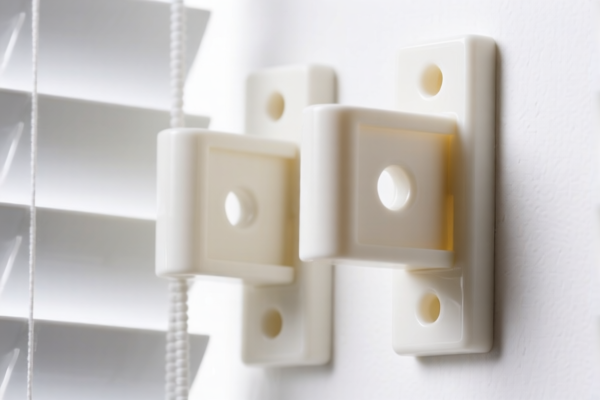
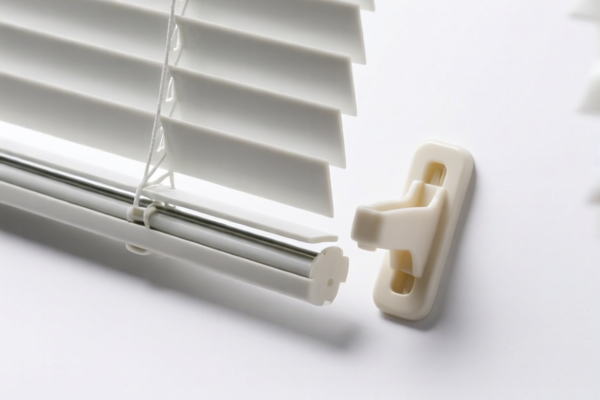
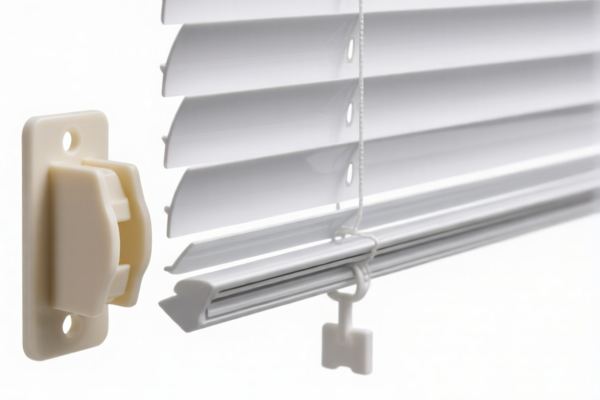
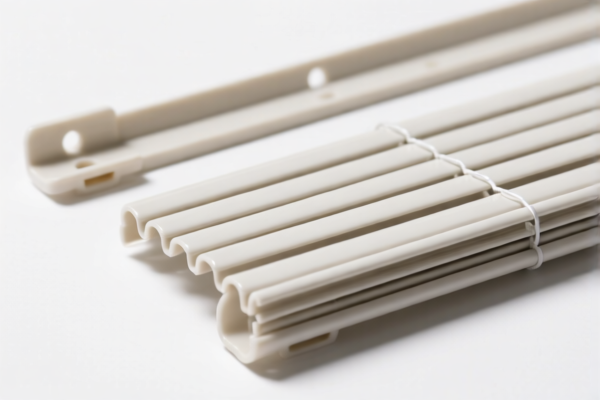
AI Analysis
🪟 Plastic Venetian Blind Brackets (Plastic Blinds Accessories)
🌐 HS Code Reference & Customs Clearance Guide | 2026 Latest Tariff Analysis | Professional Compliance Strategy
📌 I. Product Definition & Classification: Do You Really Understand "Plastic Blind Brackets"?
Plastic Venetian Blind Brackets are essential hardware components used to support, mount, and operate window blinds. In international trade, they are primarily classified under Chapter 39 (Plastics and Articles Thereof) or Chapter 59 (Textile Fabrics Coated, Covered, etc.), depending on their material composition and physical form.
Key Distinction:
- Pure Plastic Parts: Rigid or semi-rigid plastic clips, holders, and mounting arms →归入 Chapter 39
- Fabric/Coated Parts: Brackets made from plastic-coated fabric or treated textiles → 归入 Chapter 59
- Specific Form: If the item is in the form of plates, sheets, or strips (even if used as brackets) → May fall under Chapter 39 Section 2
⚠️ Critical Identification Point:
- If the product is a finished accessory made of pure plastic → Look at 3926.90
- If the product is a flat plastic sheet/strip intended for further fabrication → Look at 3920.99
- If the product involves plastic-coated fabric → Look at 5903.10
📦 II. HS Code Classification Matrix (2026 Latest Tariff Authority Comparison)
| HS Code | Product Description | Application Scenario | Material/Form | Total Tax Rate |
|---|---|---|---|---|
3926.90.99.89 |
Other plastic articles (兜底分类) | Finished plastic bracket parts, generic plastic blind accessories | Pure Plastic, Finished Article | 22.8% |
3926.90.99.87 |
Plastic articles for specific applications | Brackets for blinds, categorized under specific plastic usage | Pure Plastic, Specific Use | 22.8% |
3920.99.10.00 |
Other plates, sheets, film, foil, strips | Plastic strips or plates used in blind manufacturing (semi-finished) | Plastic, Plate/Sheet/Strip Form | 41.0% |
3920.99.50.00 |
Plates, sheets, film, foil, strips (Other) | Plastic sheets/films for blinds, not elsewhere specified | Plastic, Plate/Sheet/Film Form | 40.8% |
5903.10.20.90 |
Textile fabrics coated with PVC/PE | Brackets made of plastic-coated textile or fabric covers | Plastic-Coated Fabric/Textile | 35.0% |
🔍 Key Reminder:
- Finished Plastic Brackets → Typically fall under 3926.90 (Other Plastic Articles).
- Raw Plastic Strips/Sheets → Fall under 3920.99 (Plates, Sheets, Film, Foil, Strip).
- Fabric-Based Components → Fall under 5903.10 (Plastic-Coated Textiles).
💰 III. 2026 Latest Tariff Rate Breakdown (Including Additional Taxes)
✅ Applicable Country: United States (US)
✅ Country of Origin: China (CN)
✅ Effective Date: November 10, 2025 onwards
🎯 1. 3926.90.99.89 & 3926.90.99.87 — Finished Plastic Blind Accessories
| Item | Detail |
|---|---|
| Base Tariff | 5.3% |
| Section 301 Additional Tariff | 7.5% |
| 122 Clause Tariff (IEEPA) | 10% |
| Total Tax Rate | 22.8% |
| Tax Calculation | CIF Value × 22.8% |
| De Minimis Exemption | ❌ Not Applicable |
| Legal Basis Path | 122 Clause: 10% → Section 301: 7.5% → Base: 5.3% |
📌 Explanation:
- These two HS codes represent finished plastic articles.
- The total burden is 22.8%, which is relatively moderate compared to raw plastic materials.
- Ensure the product is described as "Plastic Blind Bracket" or "Plastic Blind Accessory" to avoid misclassification into raw materials.
🎯 2. 3920.99.10.00 — Plastic Plates, Sheets, Strips (Semi-Finished)
| Item | Detail |
|---|---|
| Base Tariff | 6.0% |
| Section 301 Additional Tariff | 25.0% |
| 122 Clause Tariff (IEEPA) | 10% |
| Total Tax Rate | 41.0% |
| Tax Calculation | CIF Value × 41.0% |
| De Minimis Exemption | ❌ Not Applicable |
| Legal Basis Path | 122 Clause: 10% → Section 301: 25% → Base: 6.0% |
📌 Warning:
- If your product is imported as plastic strips or sheets (even if intended for blinds), it faces a 41.0% tariff.
- This is significantly higher than finished brackets.
- Strategy: If possible, import as finished assemblies (3926.90) to reduce tax by 18.2%.
🎯 3. 3920.99.50.00 — Other Plastic Plates, Sheets, Film, Foil
| Item | Detail |
|---|---|
| Base Tariff | 5.8% |
| Section 301 Additional Tariff | 25.0% |
| 122 Clause Tariff (IEEPA) | 10% |
| Total Tax Rate | 40.8% |
| Tax Calculation | CIF Value × 40.8% |
| De Minimis Exemption | ❌ Not Applicable |
| Legal Basis Path | 122 Clause: 10% → Section 301: 25% → Base: 5.8% |
📌 Note:
- Similar to3920.99.10.00, this code applies to various plastic film/sheet forms.
- High tariff due to Section 301’s 25% surcharge on plastic products.
🎯 4. 5903.10.20.90 — Plastic-Coated Textile Fabrics
| Item | Detail |
|---|---|
| Base Tariff | 0.0% |
| Section 301 Additional Tariff | 25.0% |
| 122 Clause Tariff (IEEPA) | 10% |
| Total Tax Rate | 35.0% |
| Tax Calculation | CIF Value × 35.0% |
| De Minimis Exemption | ❌ Not Applicable |
| Legal Basis Path | 122 Clause: 10% → Section 301: 25% → Base: 0.0% |
📌 Observation:
- Although the base tariff is 0%, the high additional tariffs (35% total) make this less competitive.
- Only applicable if the bracket is made of plastic-coated fabric (e.g., vinyl-covered fabric straps).
🛠️ IV. Customs Clearance Practical Advice (Real-World Pitfall Avoidance)
✅ 1. Required Documentation Checklist (Mandatory)
| Document | Must Provide | Purpose |
|---|---|---|
| ✅ Product Specification Sheet | ✔️ | Define material, dimensions, usage |
| ✅ Product Photos (Clear) | ✔️ | Show shape, finish, and assembly parts |
| ✅ Commercial Invoice | ✔️ | Accurate description: "Plastic Venetian Blind Bracket" |
| ✅ Packing List | ✔️ | Separate finished brackets from raw materials |
| ✅ Certificate of Origin (CO) | ✔️ | Confirm China origin for tariff calculation |
| ✅ Material Composition Statement | ✔️ | Declare % of plastic vs. other materials |
✅ 2. Declaration Tips (Key Mnemonics)
🔥 “Finished Brackets: 22.8%! Raw Sheets: 41%! Don’t Mix Them!”
| Scenario | Correct Declaration | Incorrect Approach |
|---|---|---|
| Finished Plastic Brackets | 3926.90.99.89 or 87 |
Misdeclare as "Plastic Sheets" → 41% |
| Plastic Strips for Fabrication | 3920.99.10.00 |
Declare as "Finished Parts" → Risk of reclassification |
| Plastic-Coated Fabric Straps | 5903.10.20.90 |
Declare as "Plastic" → Misclassification penalty |
| Mixed Kits (Brackets + Fabric) | Split declaration or main use test | Single HS Code → Potential audit flag |
✅ 3. Special Case Handling
| Situation | Handling Advice |
|---|---|
| OEM Custom Brackets | Provide design drawings + client order to prove "finished article" status |
| Brackets with Metal Pins | If metal pins are integral, consult customs; usually still 3926 if plastic is dominant |
| Bulk Plastic Sheets | Clearly mark as "Raw Material" to avoid penalty for misdeclaring as finished goods |
| Plastic-Coated Fabric | Provide fabric composition label to support 5903.10 classification |
🌍 V. Global Market Comparison (2026 Latest)
| Country/Region | Recommended HS Code | Tariff | Certification | Remarks |
|---|---|---|---|---|
| 🇺🇸 USA | 3926.90.99.89 |
22.8% | None specific | High additional taxes; avoid raw material classification |
| 🇨🇳 China | 3926.90.99.89 |
5-6% | None | Lower base rate; no Section 301 |
| 🇪🇺 EU | 3926.90.99 |
0-4.5% | REACH/RoHS | No Section 301; lower overall burden |
| 🇬🇧 UK | 3926.90.99 |
0-4.5% | UKCA | Post-Brexit tariffs similar to EU |
| 🇯🇵 Japan | 3926.90.99 |
0-5% | PSE (if electrical) | No additional tariffs for plastic accessories |
📌 Conclusion:
- USA is the highest-cost market due to Section 301 and 122 Clause taxes.
- Optimize by importing finished goods (3926) rather than raw plastics (3920).
- Consider supply chain diversification if targeting the US market extensively.
📌 VI. Common Mistakes & Pitfall Guide (Lessons Learned)
❌ Mistake 1: Declaring finished brackets as "Plastic Plates or Sheets"
👉 Consequence: Tax jumps from 22.8% to 41.0% → Extra 18.2% cost!
❌ Mistake 2: Mixing raw plastic strips with finished brackets in one shipment without separate declaration
👉 Consequence: Customs may apply the highest rate to the entire shipment → Financial loss
❌ Mistake 3: Failing to specify "Plastic-Coated Fabric" when using 5903.10
👉 Consequence: Misclassification → Delays, fines, or reclassification to 3920 (40.8%)
❌ Mistake 4: Using vague descriptions like "Plastic Parts"
👉 Consequence: Customs inquiry → Clearance delay, potential penalties
✅ Correct Approach:
"Plastic Venetian Blind Bracket, Finished Assembly, 100% Polypropylene, Model XYZ, For Window Blinds"
🎯 VII. Conclusion: Precision Classification Saves Money!
🎯 Remember the Mantra:
🔹 “Finished Brackets: 22.8% | Raw Sheets: 41% | Fabric: 35%”
🔹 “HS Code Determines Cost, Declare Accurately, Avoid Penalties!”
📌 Pro Tip:
If your product is originating from Vietnam, Mexico, Thailand, or Malaysia, you may qualify for IEEPA exemptions or lower tariffs.
Recommend Advance Ruling (Pre-classification) to confirm HS Code and avoid surprises at customs.
📣 Take Action Now:
📞 Contact a professional customs broker + Provide product photos + Apply for HS Code Advance Ruling
🚀 Let your plastic blind brackets pass smoothly, save costs, and boost profits!
✨ Professional Clearance Starts with Accurate Classification!
💼 Every dollar of tax saved is a dollar of profit earned!
Customer Reviews
About HS Code Classification
The Harmonized System (HS) is an internationally standardized nomenclature developed by the World Customs Organization (WCO) to classify traded products. Over 200 countries use the HS system as the basis for customs tariffs, trade statistics, and import/export regulations.
Each HS code follows a hierarchical structure:
- Chapter (2 digits) — Broad category of goods (e.g., Chapter 84: Machinery and Mechanical Appliances)
- Heading (4 digits) — More specific grouping within the chapter
- Subheading (6 digits) — Internationally standardized breakdown, used by all WCO member countries
- National subdivisions (8-10 digits) — Country-specific extensions for further classification, such as US HTSUS 10-digit codes
Correct HS code classification is essential for smooth customs clearance, accurate duty payment, and compliance with trade regulations. Misclassification can lead to customs delays, overpayment of duties, or penalties.
When importing from CN to US, the applicable tariff rates may include:
- Most-Favored-Nation (MFN) rate — The standard duty rate applied to WTO members
- General rate — Applied to countries without trade agreements
- Trade remedy duties — Additional tariffs such as Section 301 (anti-dumping), Section 232 (national security), or countervailing duties
The information provided on this page is for reference purposes only. For official classification, please consult with your local customs authority or a licensed customs broker.