plastic venetian manual blinds
CN → US| HS Code | Tariff Rate | Origin | Destination | Doc |
|---|---|---|---|---|
| 3916200020 | 40.8% | CN | US | Official Doc |
| 3925305000 | 22.8% | CN | US | Official Doc |
| 3925301000 | 20.8% | CN | US | Official Doc |
| 3926305000 | 22.8% | CN | US | Official Doc |
| 3926909989 | 22.8% | CN | US | Official Doc |
Product Images
AI Analysis
🪟 Plastic Venetian Manual Blinds (Plastic Window Shutters)
🌐 HS Code Reference & Customs Clearance Guide | 2026 Latest Tariff Analysis | Professional Entry Strategy
📌 I. Product Definition & Classification: Do You Truly Understand "Plastic Venetian Blinds"?
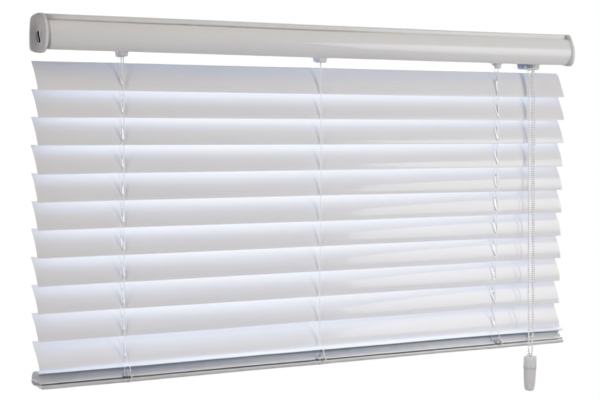
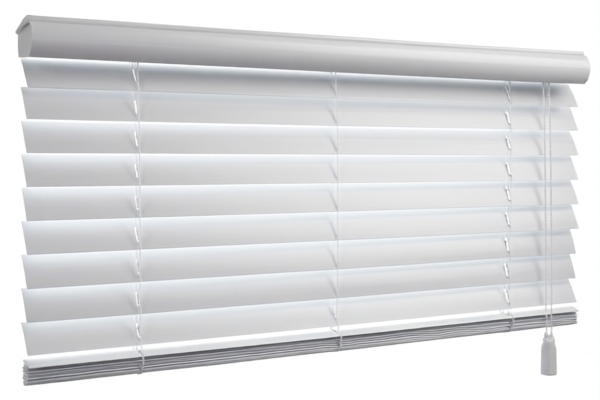
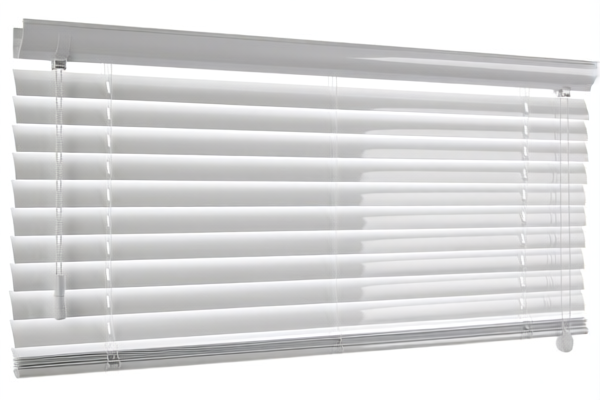
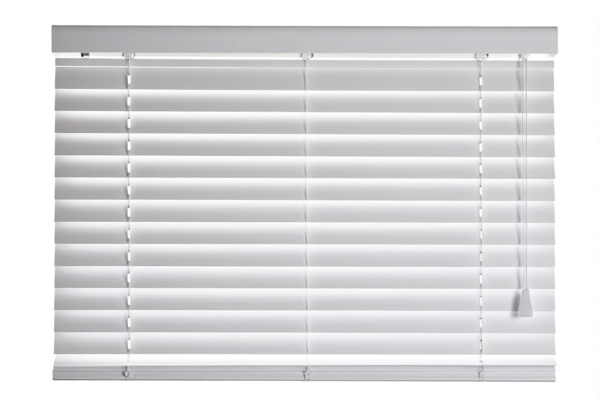
Plastic Venetian Manual Blinds are window covering systems made primarily from polymer materials, featuring slats that can be tilted or lifted manually to control light and privacy. In international trade, their classification is critical because they straddle the line between raw materials/profiles and finished architectural accessories. Misclassification can lead to drastic tariff differences (from ~20% to ~41%).
⚠️ Key Distinction Point:
- Are they extruded profiles not yet assembled into a functional blind? → Likely 3916.20.00.20 (High Tariff).
- Are they finished accessories for buildings? → Likely 3925.30.50.00 or 3925.30.10.00 (Lower Tariff).
- Are they general plastic parts without specific building accessory status? → Likely 3926.30.50.00 or 3926.90.99.89 (Medium Tariff).
📦 II. HS Code Classification Details (2026 Latest Tariff Authority Comparison)
| HS Code | Product Description | Application Scenario | Tax Detail Breakdown | Total Tax Rate |
|---|---|---|---|---|
3916.20.00.20 |
Plastic window shutter profiles, PVC polymer material | Raw extruded profiles for shutters | Base: 5.8% + Sec 301: 25.0% + Sec 122: 10% | 40.8% |
3925.30.50.00 |
Plastic Venetian blinds, finished architectural accessory | Assembled blinds as building fitting | Base: 5.3% + Sec 301: 7.5% + Sec 122: 10% | 22.8% |
3925.30.10.00 |
Plastic Venetian blinds, precise classification match | Assembled blinds, exact functional match | Base: 3.3% + Sec 301: 7.5% + Sec 122: 10% | 20.8% |
3926.30.50.00 |
Plastic window fittings/attachments | General plastic parts for windows | Base: 5.3% + Sec 301: 7.5% + Sec 122: 10% | 22.8% |
3926.90.99.89 |
Other plastic articles (residual category) | Generic plastic制品, no specific fit | Base: 5.3% + Sec 301: 7.5% + Sec 122: 10% | 22.8% |
🔍 Key Reminder:
- 3916.20.00.20 is the highest tax bracket because it classifies the product as a "PVC Polymer Profile" rather than a finished blind. This is often a trap for exporters sending semi-finished goods or mislabeling. - 3925.30.10.00 offers the lowest total tax (20.8%). This requires proving the product is a "Plastic Article for Buildings" specifically recognized as blinds. - The difference between 20.8% and 40.8% is 20 percentage points. On a $10,000 shipment, this is a $2,000 difference.
💰 III. 2026 Latest Tariff Rate Detail (Including Additional Taxes, Policy Add-ons)
✅ Applicable Country: United States (US)
✅ Origin: China (CN)
✅ Effective Time: Post-November 2025 (Current Trade Policy)
🎯 1. 3916.20.00.20 —— Plastic Profiles (Highest Risk)
| Item | Content |
|---|---|
| Base Tariff | 5.8% (General Rate) |
| Section 301 Tariff | +25.0% (US Trade Act 301) |
| Section 122 Tariff | +10.0% (Executive Order 122) |
| Total Tax Rate | 40.8% |
| Tax Calculation | CIF Value × 40.8% |
| De Minimis Eligibility | ❌ No (Denied) |
| Legal Basis Path | USITC:3916.20.00.20 → FOOTNOTE:301 → EO:122 |
📌 Explanation:
- This code classifies the item as a PVC polymer profile, not a finished blind. Customs may view semi-assembled blinds or slats without mounting hardware as profiles. - The 25% Section 301 tax is standard for PVC products. - The 10% Section 122 tax is an additional penalty layer, pushing the total to 40.8%. - Risk: High. Only use if you are exporting raw extruded strips.
🎯 2. 3925.30.10.00 —— Plastic Blinds (Best Case Scenario)
| Item | Content |
|---|---|
| Base Tariff | 3.3% (Preferential/Specific Rate) |
| Section 301 Tariff | +7.5% (Reduced Section 301 for certain building accessories) |
| Section 122 Tariff | +10.0% |
| Total Tax Rate | 20.8% |
| Tax Calculation | CIF Value × 20.8% |
| De Minimis Eligibility | ❌ No (Denied) |
| Legal Basis Path | USITC:3925.30.10.00 → FOOTNOTE:301 → EO:122 |
📌 Explanation:
- This is the optimal classification for finished Venetian blinds. - Base tariff is only 3.3%, significantly lower than the 5.3% for other plastic goods. - Section 301 is 7.5%, not 25%, because it is considered a building accessory rather than industrial plastic. - Strategy: Ensure your product description emphasizes "Finished Blinds for Windows" with all mounting brackets, cords, and slats included.
🎯 3. 3925.30.50.00, 3926.30.50.00, 3926.90.99.89 —— Medium Risk (22.8%)
| Item | Content |
|---|---|
| Base Tariff | 5.3% |
| Section 301 Tariff | +7.5% |
| Section 122 Tariff | +10.0% |
| Total Tax Rate | 22.8% |
| Tax Calculation | CIF Value × 22.8% |
| De Minimis Eligibility | ❌ No (Denied) |
📌 Explanation:
- These codes result in 22.8% total tax. - 3925.30.50.00: "Other plastic building accessories." Good if the product is a blind but doesn't fit the precise 30.10 definition. - 3926.30.50.00: "Other plastic articles for furniture/windows." A fallback if it's not clearly a "building accessory." - 3926.90.99.89: "Other plastic articles." The residual category, often used when no specific code fits. - Difference: Only 2% higher than the best-case scenario, but 20% lower than the worst-case scenario.
🛠️ IV. Customs Clearance Practical Advice (Combat Pitfall Guide)
✅ 1. Preparation Checklist (Non-negotiable)
| Document | Required | Explanation |
|---|---|---|
| ✅ Product Specifications | ✔️ | Must detail: Material (PVC/PE), Dimensions, Weight, Assembly Status. |
| ✅ Photographs | ✔️ | Show finished product with cords, brackets, and slats. Avoid photos of just slats. |
| ✅ Commercial Invoice | ✔️ | Description: "Finished Plastic Venetian Blinds for Residential Use." NOT "Plastic Profiles." |
| ✅ Packing List | ✔️ | Show complete units. Do not list "slats" and "cords" separately if they are sold together. |
| ✅ Certificate of Origin | ✔️ | Essential for proving CN origin to apply correct Section 301 rates. |
✅ 2. Declaration Tips (Key Mantras)
🔥 "Full Assembly, Low Tax. Profiles Only, High Tax!"
| Scenario | Correct HS Code | Wrong Practice | Consequence |
|---|---|---|---|
| Finished Blinds (with cords, brackets, slats) | 3925.30.10.00 (Best) or 3925.30.50.00 |
Mislabel as "Plastic Parts" → 3926... |
22.8% (Acceptable) |
| Semi-Finished (slats only, no cords) | 3916.20.00.20 (High Risk) |
Label as "Finished Blinds" | 40.8% + Potential Penalty |
| Raw Extruded Strips | 3916.20.00.20 |
Label as "Blinds" | Classification Error, Delay |
| Generic Plastic Window Cover | 3926.90.99.89 |
Label as "Building Accessory" | 22.8% (Safe Fallback) |
✅ 3. Special Cases
| Case | Handling Advice |
|---|---|
| OEM Custom Blinds | Provide design drawings showing complete assembly. Use terms like "Window Fitting." |
| Mixed Packaging | If blinds are packed with tools (drills, screws), declare as a set. The principal item (blinds) dictates the code. |
| White Label Goods | Ensure the invoice does not say "PVC Profile" even if the material is PVC. Focus on the function (light control, privacy). |
| Small Samples | If value < $800, check De Minimis rules. However, plastic blinds are often denied De Minimis due to Section 301/122 exclusions. Assume Full Tax. |
🌍 V. Global Market Comparison (2026 Latest)
| Country/Region | Recommended HS Code | Tariff | Certification | Notes |
|---|---|---|---|---|
| 🇺🇸 USA | 3925.30.10.00 |
20.8% (China) | None Specific | Highest Priority: Avoid 3916 code. |
| 🇨🇳 China | 3925.30.10.00 |
3.3% | None | Low import tariff. |
| 🇪🇺 EU | 3925.30.10.00 |
~4.5% | CE (if electrical, but these are manual) | No Section 301/122 equivalent. |
| 🇬🇧 UK | 3925.30.10.00 |
~4.5% | UKCA (if applicable) | Post-Brexit tariff applies. |
| 🇦🇺 Australia | 3925.30.10.00 |
5.0% | None | Free Trade Agreement may apply. |
📌 Conclusion:
- The US market is unique due to the Section 301 (25% vs 7.5%) and Section 122 (10%) additions. - China-origin plastic blinds face a massive tax burden in the US if misclassified as profiles. - Strategy: Always declare as finished blinds (3925.30.10.00) to save 20%.
📌 VI. Common Errors & Pitfall Guide (Lessons Learned)
❌ Error 1: Declaring "Plastic Slats" instead of "Blinds"
👉 Consequence: Customs sees "profiles" → Tax jumps to 40.8%.
❌ Error 2: Splitting the shipment into "Slats + Cords + Brackets" to avoid bulk tax
👉 Consequence: Each part is taxed individually, potentially leading to higher total tax and complex clearance.
❌ Error 3: Using vague description "Plastic Window Cover"
👉 Consequence: Customs may assign residual code 3926.90.99.89 (22.8%) instead of the optimal 3925.30.10.00 (20.8%).
✅ Correct Approach:
"Plastic Venetian Blinds, Manual Operation, Complete Kit with Headrail, Cords, and Slats, for Residential Windows, Model XYZ, Assembled."
🎯 VII. Conclusion: Precision Declaration, Cost Efficiency!
🎯 Remember the Mantra:
🔹 "Finished Blinds = 20.8% (Best). Profiles = 40.8% (Worst). Middle Ground = 22.8%."
🔹 "Define by Function, Not Material. Avoid 'Profile' at All Costs!"
📌 Pro Tip:
If your product is assembled, ensure the HS Code
3925.30.10.00is used. If the manufacturer sends semi-finished goods, negotiate with them to complete assembly before export to the US to avoid the 40.8% rate.
Pre-clearance Ruling: Consider applying for an Advance Ruling from US Customs if your volume is high, to lock in the 20.8% rate legally.
📣 Immediate Action:
📞 Contact your customs broker:
📄 Submit Product Photos + Specs: Highlight "Finished Assembly."
🚀 Goal: Secure 20.8% tax rate, avoid 40.8% penalty, ensure smooth US clearance!
✨ Professional Customs Clearance Starts with Accurate Classification!
💼 Every 1% of tax saved is pure profit added!
Customer Reviews
About HS Code Classification
The Harmonized System (HS) is an internationally standardized nomenclature developed by the World Customs Organization (WCO) to classify traded products. Over 200 countries use the HS system as the basis for customs tariffs, trade statistics, and import/export regulations.
Each HS code follows a hierarchical structure:
- Chapter (2 digits) — Broad category of goods (e.g., Chapter 84: Machinery and Mechanical Appliances)
- Heading (4 digits) — More specific grouping within the chapter
- Subheading (6 digits) — Internationally standardized breakdown, used by all WCO member countries
- National subdivisions (8-10 digits) — Country-specific extensions for further classification, such as US HTSUS 10-digit codes
Correct HS code classification is essential for smooth customs clearance, accurate duty payment, and compliance with trade regulations. Misclassification can lead to customs delays, overpayment of duties, or penalties.
When importing from CN to US, the applicable tariff rates may include:
- Most-Favored-Nation (MFN) rate — The standard duty rate applied to WTO members
- General rate — Applied to countries without trade agreements
- Trade remedy duties — Additional tariffs such as Section 301 (anti-dumping), Section 232 (national security), or countervailing duties
The information provided on this page is for reference purposes only. For official classification, please consult with your local customs authority or a licensed customs broker.