plastic welder
CN → US| HS Code | Tariff Rate | Origin | Destination | Doc |
|---|---|---|---|---|
| 8515800080 | 35.0% | CN | US | Official Doc |
| 8515800040 | 35.0% | CN | US | Official Doc |
| 8479909565 | 35.0% | CN | US | Official Doc |
| 8479909596 | 85.0% | CN | US | Official Doc |
Product Images
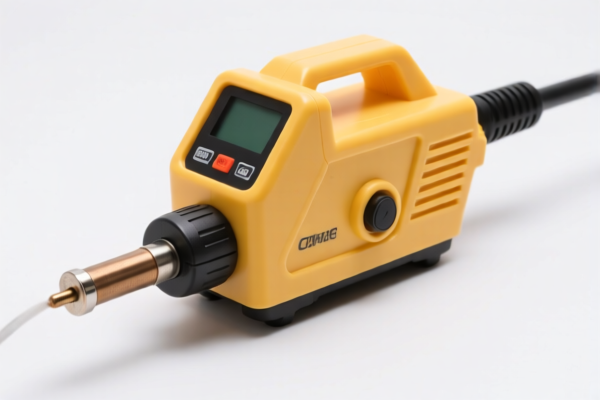
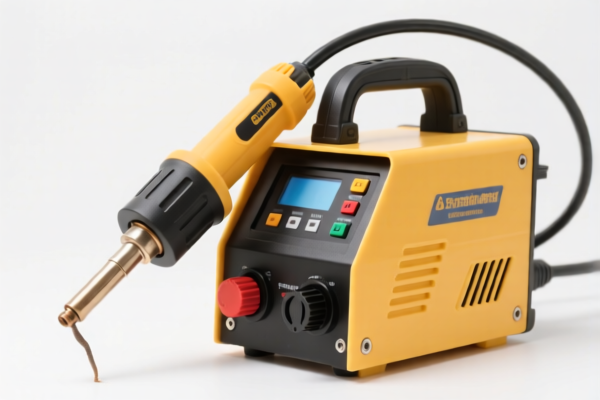


AI Analysis
🔥 Plastic Welder (Plastic Fusion Equipment)
🌐 HS Code Reference & Clearance Guide | 2026 Latest Tariff Analysis | Professional Customs Strategy
📌 I. Product Definition & Classification: What Exactly is a "Plastic Welder"?
In international trade, "Plastic Welder" refers to machinery used to join plastic components by heating the contact surfaces to a molten state. Unlike metal welding (which involves melting the base metal and often using filler materials), plastic welding relies on fusion, hot gas, or ultrasonic vibration.
Crucial Distinction for Classification:
To determine the correct HS Code, you must identify the energy source and the target material:
1. Electric/Laser/Plasma Hot Gas Welders: These are classified under Chapter 85 (Electrical machinery) because they use electrical heating elements or beams to melt plastic.
2. Ultrasonic Plastic Welders: These use high-frequency mechanical vibrations. They are also classified under Chapter 85 (specifically under ultrasonic welding machines).
3. Non-Electric Mechanical Clamps or Hand Tools: If the device is purely mechanical (e.g., a cold press or manual clamp without heating/electronic control), it might fall under Chapter 84, but most commercial "plastic welders" are electrically heated or ultrasonic.
⚠️ Key Classification Point:
- If the machine uses electricity, lasers, or ultrasonic waves to heat/vibrate plastic → Chapter 85.
- If it is a generic mechanical appliance not specified elsewhere → Chapter 84.
- Note: The provided DATA focuses heavily on Chapter 85 (Welding/Soldering equipment) and Chapter 84 (Mechanical appliances). Plastic welding via heat or ultrasound falls squarely into the 8515 or 8479 scope.
📦 II. HS Code Classification Details (Based on Provided DATA)
The provided data highlights two main categories for welding apparatus: Electric/Light Beam/Plasma and Ultrasonic, as well as Parts for other mechanical appliances.
| HS Code | Product Description | Applicable Scenario | Energy Source / Mechanism |
|---|---|---|---|
8515.80.00.80 |
Electric (including electrically heated gas), laser, or other light/photon beam, ultrasonic, electron beam, magnetic pulse or plasma arc soldering, brazing or welding machines; electric machines for hot spraying of metals/cermets; parts thereof: Other machines and apparatus Other | Electric hot air plastic welders, Laser plastic welders, Induction plastic welders. | Electricity, Laser, Plasma, Hot Air (Electrically Heated) |
8515.80.00.40 |
...: Ultrasonic welding machines | Ultrasonic plastic welders (commonly used for PP/PE pipes, automotive interiors, packaging). | Ultrasonic Waves (High-Frequency Mechanical Vibration) |
8479.90.95.65 |
Machines and mechanical appliances having individual functions... parts thereof: Parts: Other Other: Of machines or mechanical appliances for treating metal | Parts of plastic welders that are technically classified as "treating metal" machines? (See Note Below) | N/A (Parts only) |
8479.90.95.96 |
...: Parts: Other Other: Other | Parts of other mechanical appliances for treating metal or other general mechanical treatment. | N/A (Parts only) |
🔍 Critical Analysis of Provided Data:
The data provided contains a slight mismatch for Plastic welding in the Chapter 84 section:
-8479.90.95.65and8479.90.95.96explicitly mention "for treating metal".
- Standard plastic welders (non-metal) typically do not fall under these specific "treating metal" subheadings unless they are dual-purpose or the HS system classifies them broadly under "mechanical appliances."
- However,8515.80.00.80and8515.80.00.40are the correct primary codes for the complete machines, as they cover "Electric... or other light... welding machines" and "Ultrasonic welding machines" without restricting the material (metal vs. plastic) in the heading text. The heading 8515 generally covers welding of materials, including plastics, if the mechanism fits.
💰 III. 2026 Latest Tariff Rate Details (China to USA Context)
✅ Applicable Country: United States (US)
✅ Origin: China (CN)
✅ Effective Time: 2025/2026 (Current Status based on DATA)
🎯 1. 8515.80.00.80 —— Other Electric/Laser/Plasma Plastic Welders
| Item | Content |
|---|---|
| Basic Duty Rate | 0.0% |
| Additional Duty (Section 301) | +25.0% |
| Total Tax Rate | 25.0% |
| Tax Detail | "Basic Tariff: 0.0%, Additional Tariff: 25.0%" |
| Legal Basis | USITC Footnote associated with 8515.80.00.80 |
📌 Explanation:
- Most electric plastic welders (hot air, laser) fall under "Other" in heading 8515.80.
- They are subject to the 25% Additional Tariff under Section 301.
- No IEEPA 10% is listed in this specific data block for this code, only the 25%.
🎯 2. 8515.80.00.40 —— Ultrasonic Plastic Welders
| Item | Content |
|---|---|
| Basic Duty Rate | 0.0% |
| Additional Duty (Section 301) | +25.0% |
| Total Tax Rate | 25.0% |
| Tax Detail | "Basic Tariff: 0.0%, Additional Tariff: 25.0%" |
| Legal Basis | USITC Footnote associated with 8515.80.00.40 |
📌 Explanation:
- Ultrasonic plastic welders are explicitly categorized here.
- Same tax structure: 0% Basic + 25% Additional = 25% Total.
⚠️ 3. Parts: 8479.90.95.65 & 8479.90.95.96 (High Risk!)
If your shipment includes spare parts (e.g., heating nozzles, horns, waveguides) and they are incorrectly classified under Chapter 84 (or if the USCBP interprets them broadly as parts of "metal treating" machines due to similar mechanics):
For 8479.90.95.96 (Other parts):
| Item | Content |
|---|---|
| Basic Duty Rate | 0.0% |
| Additional Duty | +25.0% OR +50.0% (Steel/Aluminum/Copper Products) |
| Total Tax Rate | 25.0% OR 75.0% |
| Tax Detail | "Basic Tariff: 0.0%, Additional Tariff: 25.0% Steel, Aluminum, Copper Products Additional Tariff: 50%" |
🚨 CRITICAL WARNING:
- If the parts are made of steel, aluminum, or copper, and classified under8479.90.95.96, the total tariff could spike to 75%!
- However, plastic welding parts (often plastic or specialized alloys) should ideally be classified as parts of 8515 (8515.90.00.00usually, though not in provided data, or potentially8515.80if bundled).
- Do not classify plastic welding parts under8479unless explicitly instructed by a customs broker, as the "treating metal" description in the DATA makes it risky and expensive.
🛠️ IV. Clearance Practical Advice (Pitfall Avoidance Guide)
✅ 1. Preparation Checklist (Must-Haves)
| Document | Required? | Description |
|---|---|---|
| ✅ Product Specification Sheet | ✔️ | Must clearly state: Type of Welding (Ultrasonic, Hot Air, Laser, Induction) and Material Welded (Plastic). |
| ✅ Photos of Machine | ✔️ | Show the power cord, control panel, and welding head. Distinguish between electric heating elements and ultrasonic transducers. |
| ✅ Power Specifications | ✔️ | Voltage, Frequency, Wattage. Essential for Chapter 85 classification. |
| ✅ Bill of Lading/Invoice | ✔️ | Description should be precise: "Ultrasonic Plastic Welding Machine, Model XYZ, 20kHz, 2500W" or "Electric Hot Air Plastic Welder, Model ABC". Avoid vague terms like "Plastic Joiner." |
| ✅ Parts List (if applicable) | ✔️ | If shipping spare parts, list them separately. Ensure they are not mixed with the main machine if different HS codes apply. |
✅ 2. Classification Tips (Key Mantra)
🔥 "Ultrasonic = 8515.80.00.40 | Electric/Heat = 8515.80.00.80 | Parts = Be Careful!"
| Scenario | Correct HS Code | Why? |
|---|---|---|
| Ultrasonic Welder | 8515.80.00.40 |
Explicitly listed as "Ultrasonic welding machines" in 8515. |
| Hot Air / Laser / Induction Plastic Welder | 8515.80.00.80 |
Falls under "Other" in 8515.80 (Electric, laser, plasma, etc.). |
| Separate Shipping of Spare Parts | Check Specifics | If parts are for an 8515 machine, they should ideally be under 8515.90 (not in DATA). If forced to use 8479 per DATA, beware of the 75% rate for metal parts. |
| Hand-held Electric Hot Air Gun | 8515.80.00.80 |
Still an electric heating apparatus for welding. |
✅ 3. Special Handling for Parts
- Do NOT use
8479.90.95.96for Plastic Welder Parts unless necessary: The description in the DATA says "for treating metal." If you classify a plastic welding horn as a "part for treating metal," you risk the 75% tariff if it's made of steel/aluminum. - Better Approach: If the data allows, try to classify complete machines under 8515. For parts, consult if they fit under 8515.90 (parts of welding machines) which usually has lower or no Section 301 tariffs, though this specific data block does not list 8515.90. If you must use the provided 8479 codes, ensure the parts are not primarily steel/aluminum/copper, or prepare for the 75% rate.
🌍 V. Global Market Comparison (2026 Context)
| Market | Recommended HS Code | Base Duty | Additional Duty | Total Est. | Notes |
|---|---|---|---|---|---|
| 🇺🇸 USA | 8515.80.00.40 / .80 |
0% | 25% | 25% | Section 301 applies. |
| 🇨🇳 China (Import) | 8515.80 |
0-5% | 0% | 0-5% | No Section 301. Check FTA. |
| 🇪🇺 EU | 8515.80 |
0% | 0% | 0% | Generally free trade for machinery. |
| 🇬🇧 UK | 8515.80 |
0% | 0% | 0% | Post-Brexit, generally 0% for this category. |
| 🇻🇳 Vietnam (Transshipment?) | N/A | N/A | N/A | N/A | Risk: If transshipped via Vietnam to USA, still subject to US tariffs if Chinese origin. |
📌 Conclusion:
- The 25% additional tariff is the biggest cost driver for US imports of Chinese plastic welders.
- Ultrasonic and Electric welders have the same rate in this data block.
- Parts are the hidden danger zone due to the potential 75% rate if misclassified under 8479 with metal content.
📌 VI. Common Mistakes & Pitfalls (Blood & Tears Lessons)
❌ Mistake 1: Declaring an Ultrasonic Plastic Welder as "General Purpose Mechanical Mixer" (8479.90.95.96)
👉 Consequence: Risk of 75% tariff if parts are metal, or rejection for incorrect classification. The machine is clearly a welding apparatus under 8515.
❌ Mistake 2: Combining "Plastic Welder" and "Plastic Pipes" in one line item
👉 Consequence: Customs will separate them. The machine is taxed at 25%, the pipes at their own rate. Mixing can cause delays and penalties.
❌ Mistake 3: Ignoring the "Ultrasonic" vs. "Electric Heat" distinction
👉 Consequence: While both are 25% in this data, misclassification can lead to audits. Always specify the technology in the description.
✅ Correct Practice:
"Ultrasonic Plastic Welding Machine, 20kHz, 2500W, for joining PP/PE Plastics, Model US-2500, Origin: China"
HS Code:8515.80.00.40
🎯 VII. Conclusion: Professional Classification Saves Money!
🎯 Remember the Mantra:
🔹 "Ultrasonic = .40 | Electric/Heat = .80 | Both = 25% Tax!"
🔹 "Parts? Watch Out! Metal Parts in 8479 = 75% Disaster!"
🔹 "Describe the Tech, Not Just the Function!"
📌 Tip:
If you are importing parts (e.g., transducers, boosters, horns), check if they can be classified under 8515.90 (Parts of welding machines) which might have different tariff treatments not listed in this specific data block. If you are forced to use the provided 8479 codes for parts, be aware of the 75% risk.
📣 Immediate Action:
📞 Verify if your parts are exclusively for 8515 machines.
📝 Use precise descriptions: "Ultrasonic" vs. "Electric Heated."
🚀 Avoid8479.90.95.96for plastic welding parts if possible to avoid the 75% trap!
✨ Professional Customs Clearance Starts with Precise Classification!
💼 Your Margin Depends on the Decimal Point!
Customer Reviews
About HS Code Classification
The Harmonized System (HS) is an internationally standardized nomenclature developed by the World Customs Organization (WCO) to classify traded products. Over 200 countries use the HS system as the basis for customs tariffs, trade statistics, and import/export regulations.
Each HS code follows a hierarchical structure:
- Chapter (2 digits) — Broad category of goods (e.g., Chapter 84: Machinery and Mechanical Appliances)
- Heading (4 digits) — More specific grouping within the chapter
- Subheading (6 digits) — Internationally standardized breakdown, used by all WCO member countries
- National subdivisions (8-10 digits) — Country-specific extensions for further classification, such as US HTSUS 10-digit codes
Correct HS code classification is essential for smooth customs clearance, accurate duty payment, and compliance with trade regulations. Misclassification can lead to customs delays, overpayment of duties, or penalties.
When importing from CN to US, the applicable tariff rates may include:
- Most-Favored-Nation (MFN) rate — The standard duty rate applied to WTO members
- General rate — Applied to countries without trade agreements
- Trade remedy duties — Additional tariffs such as Section 301 (anti-dumping), Section 232 (national security), or countervailing duties
The information provided on this page is for reference purposes only. For official classification, please consult with your local customs authority or a licensed customs broker.