plastic wire clip
CN → US| HS Code | Tariff Rate | Origin | Destination | Doc |
|---|---|---|---|---|
| 3926908500 | 24.0% | CN | US | Official Doc |
| 3926902500 | 24.0% | CN | US | Official Doc |
| 3925900000 | 40.3% | CN | US | Official Doc |
| 3917390050 | 38.1% | CN | US | Official Doc |
| 3917290090 | 38.1% | CN | US | Official Doc |
| 3926909987 | 22.8% | CN | US | Official Doc |
Product Images
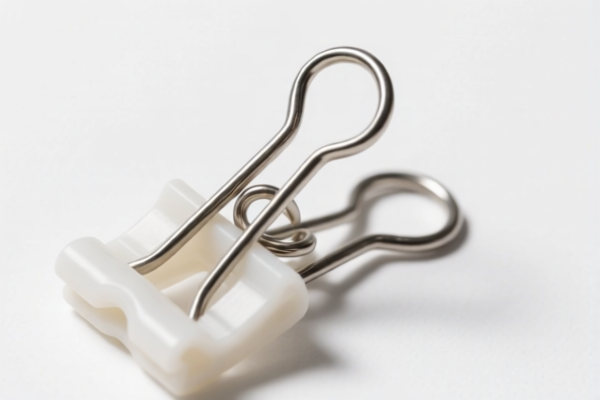
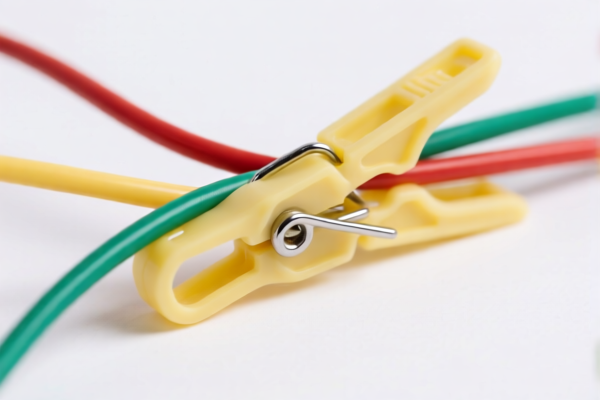
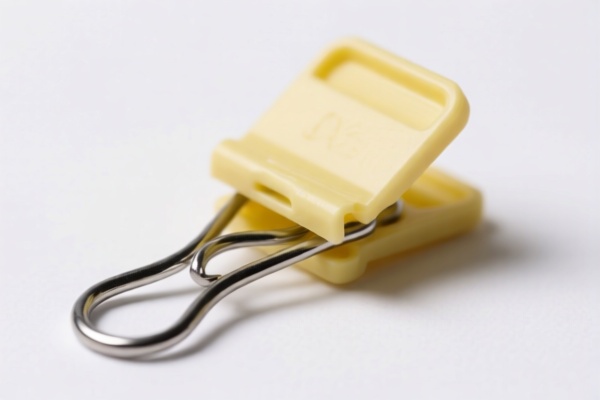
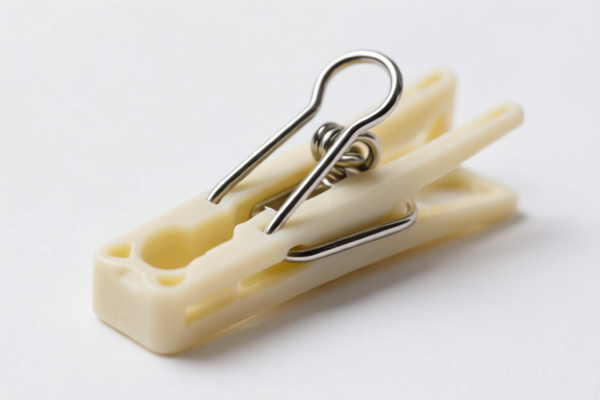
AI Analysis
🖥️ Plastic Wire Clip & Cable Management Hardware
🌐 HS Code Reference & Customs Clearance Guide | 2026 Latest Tariff Analysis | Professional Level Strategy
📌 One, Product Definition and Classification: Do You Really Understand "Plastic Wire Clip"?
Plastic wire clips (also known as cable ties, cord clips, or cable organizers) are essential hardware for organizing, securing, and protecting electrical wires and data cables. In international trade, despite appearing simple, their classification depends heavily on their structure, specific function, and form.
1. Simple Clamps & Fasteners: Simple plastic clips used to attach cables to surfaces (walls, desks, vehicles). These fall under general plastic articles.
2. Conduit & Trunking Systems: Plastic structures designed to house, protect, and route multiple wires, often featuring hollow channels or pipe-like forms. These fall under plastic pipes, tubes, and hoses.
⚠️ Key Distinction Point:
- If the item is a simple fastener (like a hook, snap, or loop) that holds a single wire in place → It is classified as a "Plastic Fastener/Clip" (Chapter 39.26).
- If the item is a channel, trunk, or hollow pipe designed to contain and route wires → It is classified as "Plastic Piping/Conduit" (Chapter 39.17 or 39.25).
📦 Two, HS Code Classification Details (2026 Latest Tariff Authority Comparison)
Based on the provided data, here are the precise classifications for plastic wire clips and related cable management products:
| HS Code | Product Description | Application Scenario | Classification Logic |
|---|---|---|---|
3926.90.85.00 |
Plastic Clip (General) | Simple plastic clips, fasteners, clamps for cables. Material: Plastic. Form: Clip. | ✅ Fastener Category: Fits "Other articles of plastics and articles of other materials of heading 3901 to 3914." |
3926.90.25.00 |
Plastic Clip (Other) | Other plastic clips not specified elsewhere. Material: Plastic. | ✅ Other Plastic Article: Broader category under Chapter 39.26 for plastic fasteners/clips. |
3925.90.00.00 |
Plastic Wire Trunk/Channel | Plastic wire trunking (D-line, U-line) used in building construction. Material: Plastic. | ✅ Building Component: Classified under "Builders' ware of plastics," as it is installed as part of the building's electrical infrastructure. |
3917.39.00.50 |
Plastic Wire Conduit (Pipe-like) | Plastic wire conduit in tubular/pipe structure. Material: Plastic. | ✅ Piping Category: Classified under "Other tubes, pipes, and hoses," due to its hollow, pipe-like form factor. |
3917.29.00.90 |
Plastic Wire Conduit (Other) | Other plastic pipes, tubes, and hoses for wiring. Material: Plastic. | ✅ Other Piping: Covers plastic conduits that don't fit specific pipe sub-headings but are still structural conduits. |
🔍 Critical Reminder:
- If it’s a small, single-point fastener (like a screw-on clip or adhesive hook), use 3926.90.xx.
- If it’s a long, hollow channel (trunking) installed on walls/ceilings, use 3925.90.00.00.
- If it’s a flexible or rigid pipe used to route wires through walls/floors, use 3917.xx.
💰 Three, 2026 Latest Tariff Rate Detail (Including Surtaxes, Policy Add-ons)
✅ Applicable Country: United States (US)
✅ Country of Origin: China (CN)
✅ Effective Date: Post-2025 (Including current and future imports)
🎯 1. 3926.90.85.00 & 3926.90.25.00 —— Plastic Clips/Fasteners (General)
| Item | Content |
|---|---|
| Base Duty Rate | 6.5% (Ad Valorem) |
| Section 301 Surtax | +7.5% |
| Section 122 Tariff | +10% |
| Total Duty Rate | 24.0% |
| Tax Calculation | CIF Value × 24% |
| De Minimis Exemption | ❌ Not Applicable (For high-volume industrial imports, though small parcels may vary by CBP discretion, generally excluded from 803.34 de minimis for tariff purposes if declared as commercial). |
| Legal Basis Path | HTSUS:3926.90.85/25 → Section 301 Footnote 1 → IEEPA Sec 122 (10%) |
📌 Explanation:
- "Base Duty 6.5%" is the standard MFN rate for plastic articles.
- "Section 301 Surtax 7.5%" applies to specific Chinese-origin plastic goods under the 2018/2019 trade wars.
- "Section 122 Tariff 10%" is an additional surcharge targeting certain plastic products from China.
- Total 24% is a moderate-high rate. Must be factored into landing costs.
🎯 2. 3925.90.00.00 —— Plastic Wire Trunking (Building Components)
| Item | Content |
|---|---|
| Base Duty Rate | 5.3% |
| Section 301 Surtax | +25.0% |
| Section 122 Tariff | +10% |
| Total Duty Rate | 40.3% |
| Tax Calculation | CIF Value × 40.3% |
| De Minimis Exemption | ❌ Not Applicable |
| Legal Basis Path | HTSUS:3925.90.00.00 → Section 301 Footnote 1 → IEEPA Sec 122 (10%) |
📌 Note:
- "Section 301 Surtax 25%" is significantly higher than for general clips. This reflects the classification as "builders' ware," which is subject to stricter scrutiny and higher penalty rates in some trade actions.
- Total 40.3% is a high tariff. Misclassifying trunking as a simple clip (3926.90) to save 16.3% is a major compliance risk (customs audits often reclassify these).
🎯 3. 3917.39.00.50 & 3917.29.00.90 —— Plastic Wire Conduits (Piping Category)
| Item | Content |
|---|---|
| Base Duty Rate | 3.1% |
| Section 301 Surtax | +25.0% |
| Section 122 Tariff | +10% |
| Total Duty Rate | 38.1% |
| Tax Calculation | CIF Value × 38.1% |
| De Minimis Exemption | ❌ Not Applicable |
| Legal Basis Path | HTSUS:3917.xx → Section 301 Footnote 1 → IEEPA Sec 122 (10%) |
📌 Important:
- Even though the base duty is low (3.1%), the Section 301 surtax jumps to 25% because "plastic pipes/tubes" are heavily targeted in trade actions.
- Total 38.1% is still high, but slightly lower than trunking (40.3%).
- Classification as "pipe" vs. "clip" can shift the tax from 24% to 38%. Product structure is key.
🛠️ Four, Customs Clearance Practical Advice (Combat Pitfall Guide)
✅ 1. Document Checklist (All are Mandatory)
| Document | Must Provide | Description |
|---|---|---|
| ✅ Product Specifications | ✔️ | Dimensions, material (PP, PVC, Nylon, etc.), load capacity, temperature resistance. |
| ✅ Structural Diagram/Photo | ✔️ | Crucial! Must show if it is a "clip" (solid) or "conduit/trunk" (hollow). |
| ✅ Product Photos (with Label) | ✔️ | Clear view of brand, model, country of origin mark ("Made in China"). |
| ✅ Commercial Invoice | ✔️ | Must clearly state "Plastic Wire Clip" or "Plastic Wire Trunking/Conduit" — Do not use vague terms like "Plastic Part". |
| ✅ Packing List | ✔️ | Itemized by HS Code. Do not mix clips and trunking in one line item. |
| ✅ Certificate of Origin (CO) | ✔️ | If not from China, can claim preferential rates (e.g., from Vietnam, Mexico). |
✅ 2. Declaration Strategy (Key Mantra)
🔥 “Shape Determines Code: Clip is 3926, Pipe/Trunk is 3917/3925. Don’t Mix!”
| Scenario | Correct Declaration | Incorrect Practice |
|---|---|---|
| Small adhesive clip (holds one wire) | 3926.90.85.00 (24% tax) |
Declare as "Conduit" → 38.1% (Overpay) |
| Wall-mounted D-line trunking | 3925.90.00.00 (40.3% tax) |
Declare as "Clip" → 24% (High Risk: Audits will fine you) |
| Flexible plastic tubing for wires | 3917.29.00.90 (38.1% tax) |
Declare as "Clip" → 24% (High Risk) |
| Rigid PVC pipe for electrical wiring | 3917.39.00.50 (38.1% tax) |
Declare as "Building Part" → 40.3% (Overpay) |
📌 Warning:
- Do not try to downgrade a "wire trunking" (3925) or "conduit" (3917) to a "clip" (3926) to save 14-16% in tariffs. CBP uses image recognition and physical inspections. If they see a hollow channel, they will reclassify it.
- Penalty for Misclassification: Back taxes + 10%-20% interest + potential fraud penalties.
✅ 3. Special Cases Handling
| Situation | Handling Advice |
|---|---|
| OEM Custom Clips | Provide client design specs. Ensure material matches declaration (e.g., Nylon vs. PP). |
| Mixed Containers (Clip + Trunking) | Declare separately! Do not combine into one HS Code. Use separate lines in the invoice. |
| Export to Non-US Markets | Tariffs vary. EU/Canada may have 0% duty for some 3926 items. Check local HTS. |
| "Made in Vietnam" Plastic Clips | Excellent! Can likely avoid Section 301 (7.5%-25%) and Section 122 (10%) taxes. Apply with Vietnamese CO. |
🌍 Five, Global Market Comparison (2026 Latest)
| Country/Region | Recommended HS Code | Duty (China Origin) | Certification Requirements | Notes |
|---|---|---|---|---|
| 🇺🇸 USA | 3926.90.85.00 (Clip) |
24% | None generally, but FCC/UL if attached to electronics. | High surtaxs. Avoid misclassification. |
| 🇺🇸 USA | 3925.90.00.00 (Trunking) |
40.3% | None generally. | Very high tax. |
| 🇪🇺 EU | 3926.90.99 (Clip) |
~3-6% | CE, RoHS, REACH. | Lower base duty. No Section 301. |
| 🇨🇳 China | 3926.90.85.00 (Clip) |
6.5% | CCC (if electrical accessory). | No surtaxes. |
| 🇲🇽 Mexico | 3926.90.99 (Clip) |
0-5% (USMCA) | None. | Best for US re-export. |
📌 Conclusion:
- USA is the most expensive market due to Section 301 and Section 122 tariffs.
- EU/Canada have lower base duties but strict environmental regulations (REACH/RoHS).
- Supply Chain Shift: Many manufacturers are moving plastic clip production to Vietnam or Mexico to avoid the 24%-40% US surtaxes.
📌 Six, Common Mistakes & Pitfall Guide (Blood & Tears Lessons)
❌ Mistake 1: Declaring Plastic Wire Trunking as Plastic Clip to save 16% in tax.
👉 Consequence: CBP audit → Reassessment + 100% penalty + product seizure.
❌ Mistake 2: Mixing Clips and Conduits in one HS Code line.
👉 Consequence: Confusion at border → Delays + storage fees + potential re-inspection.
❌ Mistake 3: Not specifying Material (e.g., just saying "Plastic").
👉 Consequence: CBP may assign the highest default duty or reject the declaration.
❌ Mistake 4: Ignoring Section 122 Tariff.
👉 Consequence: Forgetting to add 10% leads to underpayment and audits after entry.
✅ Correct Practice:
"Plastic Cable Clip, Model A123, PP Material, For 5mm Cable, Made in China"
HS: 3926.90.85.00|Duty: 24%"Plastic Wire Trunking, D-Line, 20x15mm, PVC Material, Made in China"
HS: 3925.90.00.00|Duty: 40.3%
🎯 Seven, Conclusion: Professional Declaration, Save Time & Money!
🎯 Remember the Mantra:
🔹 "Clip is 3926 (24%), Trunk/Pipe is 3917/3925 (38-40%). Don't Mix!"
🔹 "HS Code Determines Tax, 16% Difference is Huge, Wrong Code Means Penalty!"
📌 Tips:
- If your plastic clips are originating from Vietnam, Thailand, or Mexico, you can avoid the 24%-40% US surtaxes. Apply for Form B or Certificate of Origin to claim preferential treatment or simply avoid Section 301/122 duties.
- Apply for Pre- Ruling (CBP Form 5106) if your product structure is ambiguous (e.g., a clip with a channel). This locks in the correct HS Code before shipment.
📣 Immediate Action:
📞 Contact a Professional Customs Broker + Provide Product Photos + Request HS Code Pre-Ruling
🚀 Let your Plastic Wire Clips clear customs smoothly, legally, and profitably!
✨ Professional Customs Clearance Starts with Accurate Classification!
💼 Every Cent of Cost Deserves Precise Calculation!
Customer Reviews
About HS Code Classification
The Harmonized System (HS) is an internationally standardized nomenclature developed by the World Customs Organization (WCO) to classify traded products. Over 200 countries use the HS system as the basis for customs tariffs, trade statistics, and import/export regulations.
Each HS code follows a hierarchical structure:
- Chapter (2 digits) — Broad category of goods (e.g., Chapter 84: Machinery and Mechanical Appliances)
- Heading (4 digits) — More specific grouping within the chapter
- Subheading (6 digits) — Internationally standardized breakdown, used by all WCO member countries
- National subdivisions (8-10 digits) — Country-specific extensions for further classification, such as US HTSUS 10-digit codes
Correct HS code classification is essential for smooth customs clearance, accurate duty payment, and compliance with trade regulations. Misclassification can lead to customs delays, overpayment of duties, or penalties.
When importing from CN to US, the applicable tariff rates may include:
- Most-Favored-Nation (MFN) rate — The standard duty rate applied to WTO members
- General rate — Applied to countries without trade agreements
- Trade remedy duties — Additional tariffs such as Section 301 (anti-dumping), Section 232 (national security), or countervailing duties
The information provided on this page is for reference purposes only. For official classification, please consult with your local customs authority or a licensed customs broker.