plate set
CN → US| HS Code | Tariff Rate | Origin | Destination | Doc |
|---|---|---|---|---|
| 8215200000 | 0.0% | CN | US | Official Doc |
| 6911103710 | 25.5% | CN | US | Official Doc |
| 4419901100 | 15.3% | CN | US | Official Doc |
| 4419909100 | 20.7% | CN | US | Official Doc |
| 8215100000 | 0.0% | CN | US | Official Doc |
Product Images
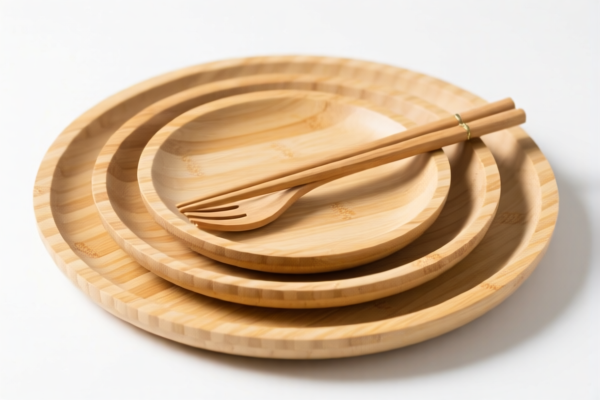
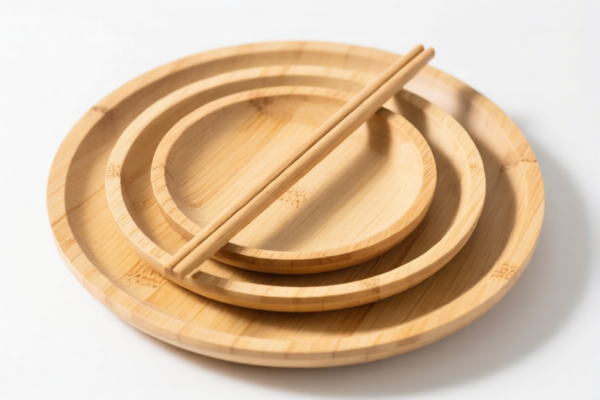
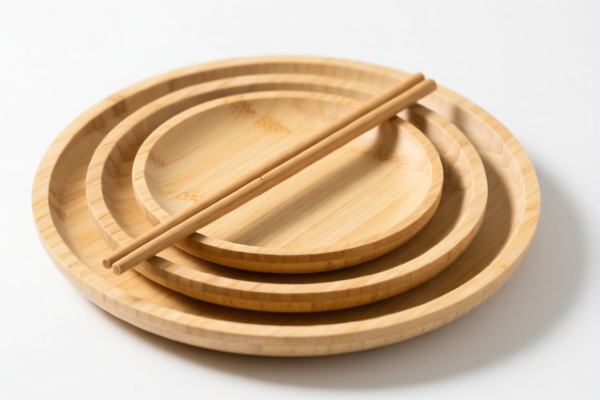
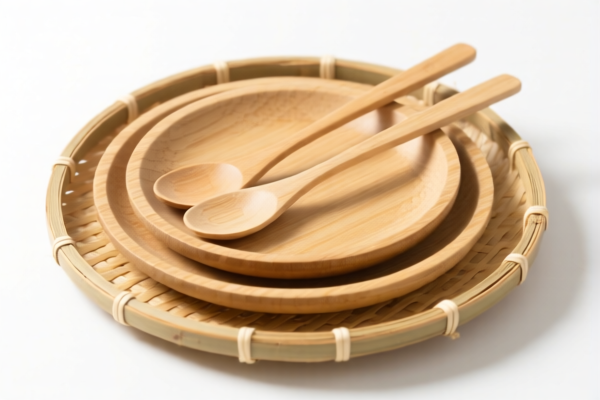
AI Analysis
🍽️ Plate Set (Cutlery & Dinnerware Sets)
🌐 HS Code Reference & Customs Clearance Guide | 2026 Latest Tariff Analysis | Professional Level Clearance Strategy
📌 1. Product Definition & Classification: Do You Really Understand "Plate Sets"?
A "Plate Set" (often referred to as Cutlery Sets, Dinnerware Sets, or Tableware Sets) is a broad category in international trade. The key to accurate classification lies in its Material and Composition. In customs terminology, it is rarely classified under a single code unless it is a specific "Set of Articles."
- Metal Cutlery Sets (Silverware): Includes forks, knives, spoons, and serving pieces made of base metal (stainless steel, aluminum, etc.).
- Ceramic Dinnerware Sets: Includes plates, bowls, cups, and saucers made of porcelain or ceramic.
- Wooden Tableware Sets: Includes chopping boards, spoons, and forks made of wood.
⚠️ Key Distinction Point:
- If the set is primarily metal (knives/forks) →归类 to Chapter 82 (Tools/Cutlery).
- If the set is primarily ceramic (plates/bowls) →归类 to Chapter 69 (Ceramic Products).
- If the set is primarily wooden →归类 to Chapter 44 (Wood and Articles of Wood).
📦 2. HS Code Classification Details (2026 Latest Tariff Authority Comparison)
Based on the provided data, here are the specific HS Codes for Plate Sets categorized by material:
| HS Code | Product Description | Application Scenario | Material |
|---|---|---|---|
8215.20.00.00 |
Cutlery sets (Metal) | Sets containing knives, forks, spoons | Metal / Base Metal |
6911.10.37.10 |
Ceramic Tableware Sets | Dinner plates, bowls, cups | Ceramic / Porcelain |
4419.90.11.00 |
Wooden Cutlery & Kitchenware | Wooden spoons, chopsticks, cutting boards | Wood |
4419.90.91.00 |
Other Wooden Tableware | Wooden plates, trays (non-specific kitchen use) | Wood |
8215.10.00.00 |
Cutlery Sets (Mixed/Specific) | Sets primarily defined by form (spoons/forks) | Metal / Base Metal |
🔍 Key Reminder:
- Mixed Material Sets: If a set contains both metal and ceramic items (e.g., a metal tray with ceramic plates), customs often classifies the set based on the principal material or the item that defines the set's essential character.
- Complete Sets: Ensure the items are packaged together as a single unit for export to justify "Set" classification. If shipped separately, each item may be classified individually, potentially changing the HS code and tariff.
💰 3. 2026 Latest Tariff Rate Details (Including Surtaxes, Policy Add-ons)
✅ Applicable Country: United States (US)
✅ Country of Origin: China (CN)
✅ Effective Date: From November 10, 2025 (and subsequent imports)
🎯 1. 8215.20.00.00 —— Metal Cutlery Sets
| Item | Content |
|---|---|
| Base Tariff | The rate of duty applicable to that article in the set subject to T (Note: Standard MFN rate applies, typically low, e.g., ~5-10%, but variable) |
| Section 301 Surcharge | +25.0% |
| Section 122 Surcharge | +10.0% |
| Total Effective Rate | T + 35.0% (Where T is the base MFN rate) |
| Tax Calculation | (CIF Value × T) + (CIF Value × 35%) |
| De Minimis Eligibility | ❌ No (Not eligible for de minimis exemption) |
| Legal Basis Path | USITC:8215.20.00.00 → FOOTNOTE:301 → FOOTNOTE:122 |
📌 Explanation:
- The base tariff "T" varies but is generally low for metal cutlery.
- The 35% total surcharge (25% Section 301 + 10% Section 122) makes this category significantly more expensive.
- Warning: If your metal set is classified under8215.10.00.00(see below), the surcharge structure may differ slightly (35% total as well, but base "T" might be different).
🎯 2. 6911.10.37.10 —— Ceramic Tableware Sets
| Item | Content |
|---|---|
| Base Tariff | 8.0% |
| Section 301 Surcharge | +7.5% |
| Section 122 Surcharge | +10.0% |
| Total Effective Rate | 25.5% |
| Tax Calculation | CIF Value × 25.5% |
| De Minimis Eligibility | ❌ No |
| Legal Basis Path | USITC:6911.10.37.10 → FOOTNOTE:301 → FOOTNOTE:122 |
📌 Explanation:
- Ceramic tableware from China faces a 25.5% total tariff.
- While lower than metal cutlery in some scenarios, the 10% Section 122 surcharge is a critical addition.
🎯 3. 4419.90.11.00 —— Wooden Cutlery & Kitchenware
| Item | Content |
|---|---|
| Base Tariff | 5.3% |
| Section 301 Surcharge | +0.0% (Exempt from 301 in this specific data line) |
| Section 122 Surcharge | +10.0% |
| Total Effective Rate | 15.3% |
| Tax Calculation | CIF Value × 15.3% |
| De Minimis Eligibility | ❌ No |
| Legal Basis Path | USITC:4419.90.11.00 → FOOTNOTE:122 |
📌 Explanation:
- Wooden tableware has the lowest total tariff (15.3%) among the listed options.
- Crucial Point: It is exempt from the 25% Section 301 surcharge (likely due to specific exclusion lists or classification nuances for wooden kitchenware). This makes wooden sets a cost-effective alternative.
🎯 4. 4419.90.91.00 —— Other Wooden Tableware
| Item | Content |
|---|---|
| Base Tariff | 3.2% |
| Section 301 Surcharge | +7.5% |
| Section 122 Surcharge | +10.0% |
| Total Effective Rate | 20.7% |
| Tax Calculation | CIF Value × 20.7% |
| De Minimis Eligibility | ❌ No |
| Legal Basis Path | USITC:4419.90.91.00 → FOOTNOTE:301 → FOOTNOTE:122 |
📌 Explanation:
- This code is for wooden items not specifically "cutlery/kitchenware" (e.g., decorative wooden plates).
- It is subject to both Section 301 (7.5%) and Section 122 (10%), totaling 17.5% surcharge on a low base of 3.2%.
🎯 5. 8215.10.00.00 —— Cutlery Sets (Specific Form)
| Item | Content |
|---|---|
| Base Tariff | The rate of duty applicable to that article in the set subject to T |
| Section 301 Surcharge | +7.5% |
| Section 122 Surcharge | +10.0% |
| Total Effective Rate | T + 17.5% |
| Tax Calculation | (CIF Value × T) + (CIF Value × 17.5%) |
| De Minimis Eligibility | ❌ No |
| Legal Basis Path | USITC:8215.10.00.00 → FOOTNOTE:301 → FOOTNOTE:122 |
📌 Explanation:
- This code is for cutlery sets where the primary characteristic is the form (e.g., specific spoons/forks) rather than general metalware.
- It faces a 17.5% surcharge (7.5% + 10%), which is lower than the 35% surcharge for8215.20.00.00.
- Strategy: If your metal set can be justified under8215.10.00.00instead of8215.20.00.00, you save 17.5% in surcharges.
🛠️ 4. Customs Clearance Practical Suggestions (Real-World Pitfall Guide)
✅ 1. Preparation Checklist (Non-negotiable)
| Material | Must Provide | Description |
|---|---|---|
| ✅ Product Specifications | ✔️ | List all items in the set (e.g., "4 forks, 4 knives, 4 spoons"). |
| ✅ Material Declaration | ✔️ | Explicitly state "Stainless Steel 304", "Porcelain", or "Bamboo Wood". |
| ✅ Photos of Packaging | ✔️ | Show the set as a single package. |
| ✅ Commercial Invoice | ✔️ | Clearly describe as "Cutlery Set" or "Dinnerware Set". |
| ✅ Country of Origin Cert | ✔️ | Required for determining surtax eligibility. |
✅ 2. Declaration Tips (Key Mantras)
🔥 "Material Defines Code, Surcharge Varies, Declare Precisely!"
| Scenario | Correct Declaration | Wrong Practice | Consequence |
|---|---|---|---|
| Metal Set (Knives/Forks) | 8215.20.00.00 or 8215.10.00.00 |
Declare as "Ceramic" | Misclassification, Penalties |
| Ceramic Plates | 6911.10.37.10 |
Declare as "Wooden" | Misclassification, Penalties |
| Wooden Spoons | 4419.90.11.00 |
Declare as "Plastic" | High Tariff Risk |
| Mixed Set (Metal+Ceramic) | Declare based on Principal Material | Declare as "Mixed" | Customs may split and tax separately at higher rates |
💡 Cost-Saving Tip:
- Wooden sets (4419.90.11.00) have the lowest tariff (15.3%) and are exempt from the 25% Section 301 tax.
- Metal sets (8215.10.00.00) can be taxed at T + 17.5%, which might be cheaper than Ceramic (25.5%) depending on the base rate T.
✅ 3. Special Case Handling
| Situation | Handling Advice |
|---|---|
| Set Includes Glass Items | Glass is not in the provided data. Glass tableware usually falls under Chapter 70. Check specific codes (e.g., 7013.37.00.00). |
| OEM/Custom Branding | Ensure the invoice states the brand and model. Customs may require proof of ownership for tariff determination. |
| Bamboo vs. Wood | Bamboo is often classified under Chapter 44 (Wood) or Chapter 14 (Vegetable Plaiting Materials). Check if it falls under 4419.90.11.00 or a different code. |
🌍 5. Global Market Comparison (2026 Latest)
| Country/Region | Recommended HS Code | Tariff Rate | Certification | Remarks |
|---|---|---|---|---|
| 🇺🇸 USA | Varies by Material (See Above) | 15.3% - 35% | None Specific | Highest Surtaxes. Wooden sets are most cost-effective. |
| 🇨🇳 China | Varies by Material | 5% - 15% | None Specific | No Section 301/122. Lower base rates. |
| 🇪🇺 EU | Varies by Material | 0% - 6% | CE (if applicable) | No Section 301/122. Favorable for wooden/ceramic. |
| 🇬🇧 UK | Varies by Material | 0% - 12% | UKCA | Post-Brexit rules apply. |
📌 Conclusion:
- USA is the most challenging market for tableware due to Section 301 and 122 surtaxes.
- Wooden tableware (4419.90.11.00) offers the lowest total duty (15.3%) for US imports.
- Metal cutlery is the most expensive category (up to T + 35%).
📌 6. Common Errors & Pitfalls (Blood & Tears Lessons)
❌ Error 1: Declaring a Metal Set as Ceramic
👉 Consequence: Misclassification, potential fraud charges, and seizure of goods.
❌ Error 2: Not specifying Material in the description
👉 Consequence: Customs will assign the highest possible duty based on ambiguity.
❌ Error 3: Shipping Set Components Separately
👉 Consequence: Each item is taxed individually, often at higher rates than the "set" rate, and may incur multiple brokerage fees.
❌ Error 4: Ignoring Section 122 Surcharge
👉 Consequence: Underestimating costs by 10%. This tax applies to almost all Chinese-origin tableware.
✅ Correct Practice:
"Dinnerware Set: 40-Piece, Ceramic, White, with Gold Trim, Country of Origin: China"
🎯 7. Conclusion: Professional Declaration, Save Time, Reduce Costs!
🎯 Remember the Mantra:
🔹 "Wood is Cheapest (15.3%), Metal is Most Expensive (Up to T+35%), Ceramic is Middle (25.5%)."
🔹 "Declare Material Clearly, Avoid Surprises, Save 10-20% in Duties."
📌 Pro Tip:
If you are importing metal cutlery, investigate if 8215.10.00.00 (T + 17.5%) is applicable instead of 8215.20.00.00 (T + 35%). This could save you 17.5% in surcharges.
For wooden items, 4419.90.11.00 is your best friend with only a 15.3% total rate.
📣 Immediate Action:
📞 Contact a professional customs broker + Provide Product Photos + Request HS Code Pre-Ruling
🚀 Ensure your Plate Set clears customs smoothly, efficiently, and profitably!
✨ Professional Clearance Starts with Precise Classification!
💼 Every cent in tariff is worth calculating!
Customer Reviews
About HS Code Classification
The Harmonized System (HS) is an internationally standardized nomenclature developed by the World Customs Organization (WCO) to classify traded products. Over 200 countries use the HS system as the basis for customs tariffs, trade statistics, and import/export regulations.
Each HS code follows a hierarchical structure:
- Chapter (2 digits) — Broad category of goods (e.g., Chapter 84: Machinery and Mechanical Appliances)
- Heading (4 digits) — More specific grouping within the chapter
- Subheading (6 digits) — Internationally standardized breakdown, used by all WCO member countries
- National subdivisions (8-10 digits) — Country-specific extensions for further classification, such as US HTSUS 10-digit codes
Correct HS code classification is essential for smooth customs clearance, accurate duty payment, and compliance with trade regulations. Misclassification can lead to customs delays, overpayment of duties, or penalties.
When importing from CN to US, the applicable tariff rates may include:
- Most-Favored-Nation (MFN) rate — The standard duty rate applied to WTO members
- General rate — Applied to countries without trade agreements
- Trade remedy duties — Additional tariffs such as Section 301 (anti-dumping), Section 232 (national security), or countervailing duties
The information provided on this page is for reference purposes only. For official classification, please consult with your local customs authority or a licensed customs broker.