plates
CN → US| HS Code | Tariff Rate | Origin | Destination | Doc |
|---|---|---|---|---|
| 6911103710 | 25.5% | CN | US | Official Doc |
| 6911103510 | 43.5% | CN | US | Official Doc |
| 3924102000 | 24.0% | CN | US | Official Doc |
| 3924101000 | 13.4% | CN | US | Official Doc |
| 7013411000 | 32.5% | CN | US | Official Doc |
| 7013492090 | 40.0% | CN | US | Official Doc |
Product Images
AI Analysis
🍽️ Plates (Tableware, Kitchenware & Household Articles)
🌐 HS Code Reference & Clearance Guide | 2026 Latest Tariff Analysis | Professional Clearance Strategy
📌 1. Product Definition & Classification: What Exactly Are "Plates"?
"Plates" is a broad term in international trade, covering everything from disposable picnic items to heirloom ceramic dinnerware. In customs classification, the material is the single most critical factor determining the HS Code and tariff rate. We categorize them into three main material groups based on your provided data:
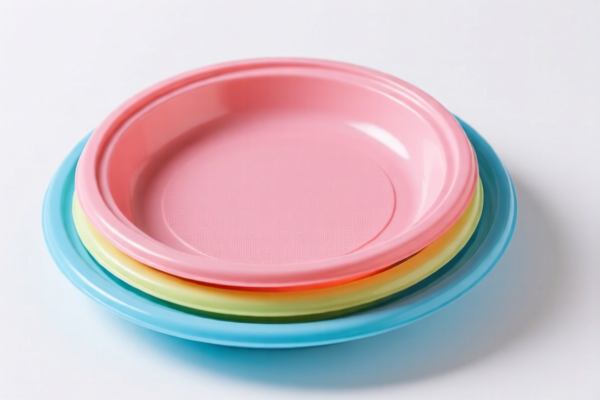
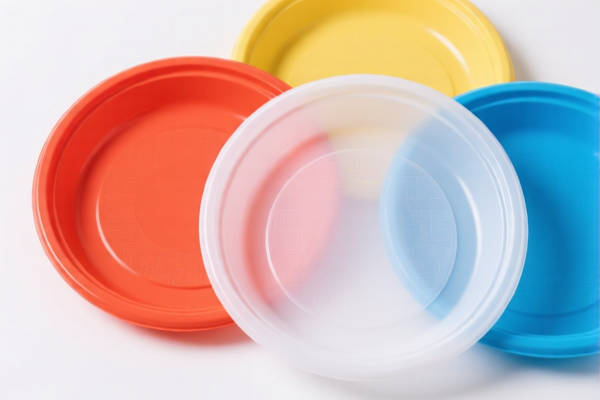
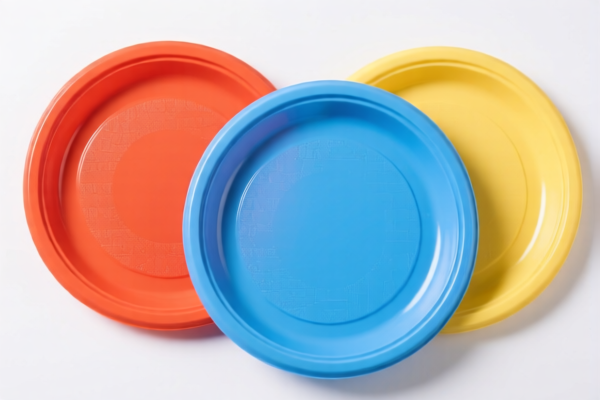
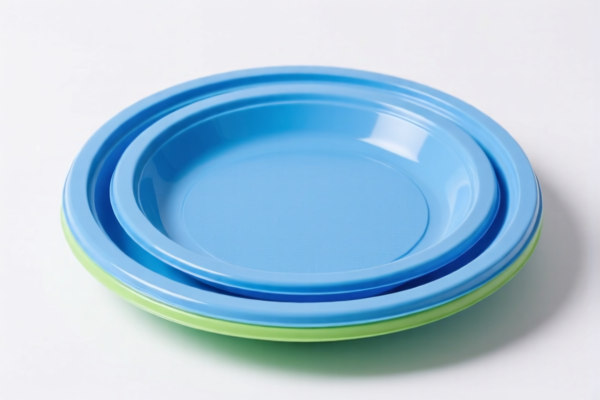
- Plastic Plates: Disposable, lightweight, or durable plastic dinnerware (e.g., melamine, polypropylene). Includes soup bowls, sugar bowls, and serving platters.
- Porcelain/China Plates: High-value, durable ceramic tableware. Classification here depends heavily on set value and dimensions (specifically if plates are ≤27.9 cm).
- Glass Plates: Less common for "plates" specifically, but falls under general glassware. Note: The data provided focuses more on glass dishes or crystal items, but we will address the specific glass codes provided.
⚠️ Critical Distinction:
- Material: Plastic vs. Porcelain vs. Glass?
- For Porcelain: Is it sold in a set? What is the aggregate value of the set? Are individual items ≤27.9 cm?
- For Plastic: Is it general tableware or a specific dispenser?
📦 2. HS Code Classification Details (2026 Latest Tariff Authority对照)
Based on the provided data, here are the specific HS Codes for "Plates" and related items, categorized by material:
| HS Code | Product Description | Material | Key Condition | Application Scenario |
|---|---|---|---|---|
3924.10.20.00 |
Tableware and kitchenware: Plates, cups, saucers, soup bowls, etc. | Plastics | General plastic tableware | Plastic dinner plates, melamine platters, disposable plastic plates |
3924.10.10.00 |
Salt, pepper, mustard, and ketchup dispensers | Plastics | Specific dispensers | Note: Not plates, but plastic table accessories |
6911.10.37.10 |
Porcelain/China: Available in specified sets; Aggregate value > $56 | Porcelain/China | Set value > $56; Items ≤27.9 cm max dimension | Premium porcelain sets (e.g., 24-piece set worth $100), with plates < 11 inches |
6911.10.35.10 |
Porcelain/China: Available in specified sets; Aggregate value ≤ $56 | Porcelain/China | Set value ≤ $56; Items ≤27.9 cm max dimension | Budget or mid-range porcelain sets (e.g., 16-piece set worth $40), with plates < 11 inches |
7013.41.10.00 |
Glassware: Of lead crystal, valued not over $X/each | Glass (Lead Crystal) | Valued not over specific limit/each | High-end crystal platters or glass plates (rare, but covered under glassware) |
7013.49.20.90 |
Glassware: Other, valued not over $3/each | Glass (Non-Crystal) | Valued ≤ $3/each; Other | Mass-produced glass dinner plates, budget glass serving dishes |
🔍 Key Insight:
- Plastic plates are straightforward:3924.10.20.00.
- Porcelain plates are highly sensitive to set value. A slight change in set composition can shift the code from...35.10to...37.10, changing the total tax from 33.5% to 15.5%.
- Glass plates are valued per item. If > $3, they may fall into higher tax brackets (not provided in data, but implied).
💰 3. 2026 Latest Tariff Rates Explained (Including Additional Taxes)
✅ Applicable Country: United States (US)
✅ Origin: China (CN)
✅ Effective Date: As per current trade policies (Check for 301/IEEPA updates)
🎯 1. 3924.10.20.00 – Plastic Tableware (Plates, Cups, etc.)
| Item | Detail |
|---|---|
| Base Tariff | 6.5% |
| Additional Tax (Section 301/IEEPA) | 7.5% |
| Total Tax Rate | 14.0% |
| Tax Calculation | CIF Value × 14.0% |
| De Minimis Exemption | ❌ Not Applicable for bulk commercial imports |
| Legal Reference | HTSUS 3924.10.20.00; Trade Policy Footnotes |
📌 Explanation:
- Plastic tableware from China faces a 14.0% total duty.
- This is a moderate tariff compared to other categories.
- Ensure products are genuinely plastic (not melamine resin misdeclared as plastic if it falls under different rules, but HTS 3924 is correct for plastic).
🎯 2. 3924.10.10.00 – Plastic Dispensers (Not Plates, but Related)
| Item | Detail |
|---|---|
| Base Tariff | 3.4% |
| Additional Tax | 0.0% |
| Total Tax Rate | 3.4% |
| Tax Calculation | CIF Value × 3.4% |
| Note | This code is for dispensers (salt/pepper shakers), not plates. |
📌 Explanation:
- If you import plastic salt/pepper dispensers, the tax is significantly lower (3.4%) than plates (14.0%).
- Do not misdeclare plates as dispensers to save tax – customs will inspect and reclassify.
🎯 3. 6911.10.37.10 – Porcelain/China Plates (High-Value Sets)
| Item | Detail |
|---|---|
| Base Tariff | 8.0% |
| Additional Tax (Section 301/IEEPA) | 7.5% |
| Total Tax Rate | 15.5% |
| Condition | Set value > $56; Plate size ≤ 27.9 cm (11 inches) |
| Tax Calculation | CIF Value × 15.5% |
| Legal Reference | HTSUS 6911.10.37.10; U.S. Note 6(b) Chapter 69 |
📌 Explanation:
- This code applies to premium porcelain sets.
- The tax is 15.5%, which is competitive compared to other ceramics.
- Critical: If your set value drops below $56, you move to6911.10.35.10.
🎯 4. 6911.10.35.10 – Porcelain/China Plates (Low-Value Sets)
| Item | Detail |
|---|---|
| Base Tariff | 26.0% |
| Additional Tax (Section 301/IEEPA) | 7.5% |
| Total Tax Rate | 33.5% |
| Condition | Set value ≤ $56; Plate size ≤ 27.9 cm (11 inches) |
| Tax Calculation | CIF Value × 33.5% |
| Legal Reference | HTSUS 6911.10.35.10; U.S. Note 6(b) Chapter 69 |
📌 Explanation:
- This is a penalty-like rate for budget porcelain sets.
- Strategy: If possible, increase the value of the set (e.g., add more expensive items, premium packaging) to push the aggregate value above $56, qualifying for6911.10.37.10(15.5% vs 33.5%).
- ⚠️ Do not artificially inflate value – it must reflect fair market value.
🎯 5. 7013.41.10.00 – Lead Crystal Glassware
| Item | Detail |
|---|---|
| Base Tariff | 0.0% |
| Additional Tax | 0.0% |
| Total Tax Rate | 0.0% |
| Condition | Lead crystal; Valued not over limit/each |
| Tax Calculation | CIF Value × 0.0% |
| Legal Reference | HTSUS 7013.41.10.00 |
📌 Explanation:
- If you import lead crystal glass plates/platters, the tax may be 0% (if valued under the threshold).
- Verify if your product is true "lead crystal" (high refractive index) and not just regular glass.
🎯 6. 7013.49.20.90 – Other Glassware (Non-Crystal, ≤$3/each)
| Item | Detail |
|---|---|
| Base Tariff | 22.5% |
| Additional Tax (Section 301/IEEPA) | 7.5% |
| Total Tax Rate | 30.0% |
| Condition | Non-crystal glass; Valued ≤ $3/each |
| Tax Calculation | CIF Value × 30.0% |
| Legal Reference | HTSUS 7013.49.20.90 |
📌 Explanation:
- Mass-produced, cheap glass plates (<$3 each) face a 30.0% tax.
- If priced above $3, the tax may be different (not in data, but likely higher or subject to different subheading).
🛠️ 4. Clearance Operational Advice (Practical Pitfall Avoidance Guide)
✅ 1. Documentation Checklist (Must-Haves)
| Document | Required? | Notes |
|---|---|---|
| ✅ Commercial Invoice | ✔️ | Must clearly state material (Plastic, Porcelain, Glass) and set value |
| ✅ Packing List | ✔️ | Detail each set's contents and total set value |
| ✅ Product Photos | ✔️ | Show material texture, markings, and dimensions |
| ✅ Set Value Breakdown | ✔️ | For porcelain: List individual item values to prove set total > $56 or ≤ $56 |
| ✅ Material Certificate | ✔️ | For plastics: Confirm no restricted substances (FDA compliance) |
| ✅ Origin Certificate | ✔️ | Proof of China origin to apply correct additional taxes |
✅ 2. Declaration Tips (Key Mnemonics)
🔥 "Material First, Set Value Key, Size Matters for China!"
| Scenario | Correct Declaration | Wrong Declaration |
|---|---|---|
| Plastic Plates | 3924.10.20.00 - Plastic Dinner Plates |
Misdeclare as porcelain → 33.5% |
| Porcelain Set (Value $60) | 6911.10.37.10 - High-Value Porcelain Set |
Declare as low-value set → 33.5% instead of 15.5% |
| Porcelain Set (Value $40) | 6911.10.35.10 - Low-Value Porcelain Set |
Declare as high-value → Audit risk, penalties |
| Glass Plates (>$3/each) | Not in data – Check HTSUS 7013.49.20.xx | Assume $3 rate → Underpayment |
| Dispensers | 3924.10.10.00 - Plastic Dispensers |
Declare as plates → 14% instead of 3.4% |
✅ 3. Special Cases & Strategies
| Scenario | Strategy |
|---|---|
| Porcelain Set Value Just Below $56 | Add a small, low-cost item (e.g., a spoon or napkin) to push set value > $56 → Save 18% tax (33.5% → 15.5%) |
| Plastic vs. Melamine | Melamine is plastic. Use 3924.10.20.00. Ensure FDA compliance for food contact. |
| Glass Plates >$3/each | Not in provided data. Likely higher tax. Consult customs broker for exact HTSUS 7013.49.80.xxxx |
| Lead Crystal | Get a certificate of content (≥24% PbO) to qualify for 7013.41.10.00 (0% tax) |
| Mixed Container | If container has both plastic and porcelain, declare separately. Mixed declarations lead to audits. |
🌍 5. Global Market Clearance Comparison (2026 Latest)
| Country/Region | Recommended HS Code | Tariff (China Origin) | Certification Required | Notes |
|---|---|---|---|---|
| 🇺🇸 USA | 3924.10.20.00 (Plastic) |
14.0% | FDA (Food Contact) | High scrutiny on plastic migration |
| 🇺🇸 USA | 6911.10.37.10 (Porcelain) |
15.5% | None | Set value critical |
| 🇪🇺 EU | 3924.10.90 (Plastic) | 6.5% | FDA/LFGB (Food Contact) | No Section 301 tax |
| 🇨🇳 China | 3924.10.90 (Plastic) | 6.5% | CCC (if applicable) | Lower additional taxes |
| 🇬🇧 UK | 3924.10.90 (Plastic) | 6.5% | UKCA/FDA | Post-Brexit rules apply |
📌 Conclusion:
- USA has the highest total tax due to additional 7.5% tariffs on most categories.
- Porcelain set value optimization is the most effective tax-saving strategy for ceramic tableware.
- Plastic plates have moderate tax (14%) but strict FDA requirements.
📌 6. Common Mistakes & Pitfall Guide (Lessons Learned)
❌ Mistake 1: Declaring a $40 porcelain set as a $60 set
👉 Consequence: Customs audit → Fine + Back taxes + Delay
❌ Mistake 2: Mixing plastic and porcelain in one line item
👉 Consequence: Customs reclassifies all as the highest tax rate → 100% risk
❌ Mistake 3: Ignoring set value for porcelain
👉 Consequence: Paying 33.5% instead of 15.5% → Double the tax!
❌ Mistake 4: Misdeclaring dispensers as plates
👉 Consequence: If caught, penalties. If not caught, lost opportunity to save tax (3.4% vs 14%)
✅ Correct Practice:
"Plastic Dinner Plates, Polypropylene, Disposable, 10-inch, FDA Compliant, Model XYZ"
"Porcelain Dinner Set, 24-Piece, 24cm Plates, Aggregate Value $65, Model ABC"
🎯 7. Conclusion: Precision Classification Saves Money!
🎯 Remember This Mnemonic:
🔹 "Plastic 14%, Porcelain Set Value King, Crystal Free, Glass High Risk!"
🔹 "Under $56, 33.5% Tax; Over $56, 15.5% Tax – Know the Difference!"
📌 Pro Tip:
- For porcelain sets, calculate the aggregate value of all items in the set. If it’s close to $56, consider adjusting the set composition to cross the threshold.
- For plastic items, ensure FDA compliance documentation is ready to avoid clearance delays.
- Consult a customs broker for pre-classification rulings on complex sets.
📣 Immediate Action:
📞 Provide product photos + set value breakdown to your customs broker
🚀 Optimize set value to qualify for lower tax brackets
📦 Ensure all documents match the declared HS Code
✨ Professional clearance starts with accurate classification!
💼 Every percentage point saved is pure profit!
Customer Reviews
About HS Code Classification
The Harmonized System (HS) is an internationally standardized nomenclature developed by the World Customs Organization (WCO) to classify traded products. Over 200 countries use the HS system as the basis for customs tariffs, trade statistics, and import/export regulations.
Each HS code follows a hierarchical structure:
- Chapter (2 digits) — Broad category of goods (e.g., Chapter 84: Machinery and Mechanical Appliances)
- Heading (4 digits) — More specific grouping within the chapter
- Subheading (6 digits) — Internationally standardized breakdown, used by all WCO member countries
- National subdivisions (8-10 digits) — Country-specific extensions for further classification, such as US HTSUS 10-digit codes
Correct HS code classification is essential for smooth customs clearance, accurate duty payment, and compliance with trade regulations. Misclassification can lead to customs delays, overpayment of duties, or penalties.
When importing from CN to US, the applicable tariff rates may include:
- Most-Favored-Nation (MFN) rate — The standard duty rate applied to WTO members
- General rate — Applied to countries without trade agreements
- Trade remedy duties — Additional tariffs such as Section 301 (anti-dumping), Section 232 (national security), or countervailing duties
The information provided on this page is for reference purposes only. For official classification, please consult with your local customs authority or a licensed customs broker.