play house toys
CN → US| HS Code | Tariff Rate | Origin | Destination | Doc |
|---|---|---|---|---|
| 9503000073 | 10.0% | CN | US | Official Doc |
| 9503000071 | 10.0% | CN | US | Official Doc |
| 3926400090 | 15.3% | CN | US | Official Doc |
| 3926909989 | 22.8% | CN | US | Official Doc |
| 9503000073 | 10.0% | CN | US | Official Doc |
Product Images
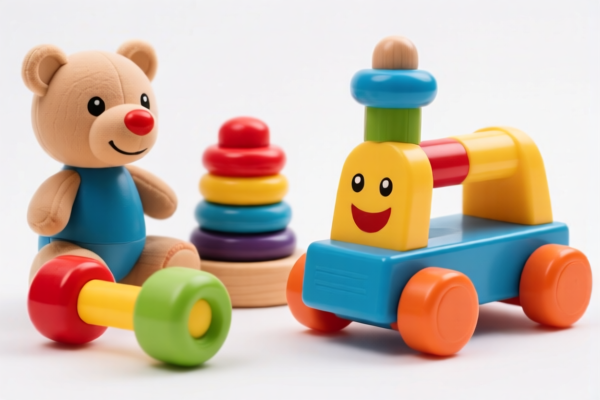
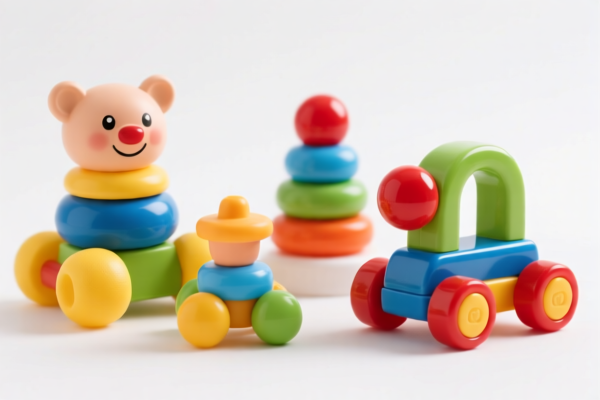

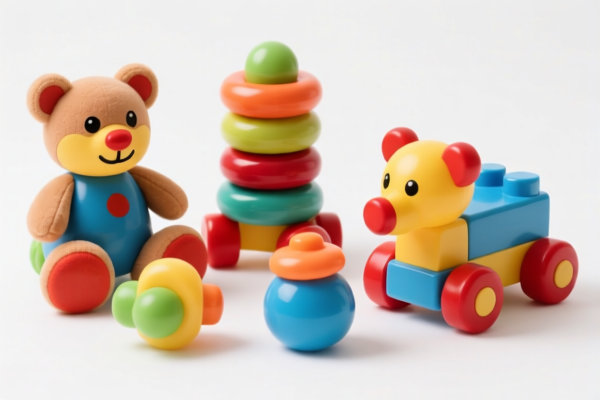
AI Analysis
🧸 Play House Toys (Busy Houses / Dollhouses)
🌐 HS Code Reference & Customs Clearance Guide | 2026 Latest Tariff Analysis | Professional Entry Strategy
📌 Part I: Product Definition & Classification – What is a "Play House"?
Play House Toys, often referred to as "Busy Houses" or "Dollhouses," are educational and recreational items designed for children. In international trade, the classification hinges on two critical factors: 1. Primary Purpose: Is it primarily for play/educational value (Toys) or decoration/display (Household Articles)? 2. Material Composition: Is it made of plastic (Chapter 39) or does it fall under the general toy category (Chapter 95)?
⚠️ Key Distinction Point:
- If the item is explicitly marketed as a toy, educational tool, or playset (even if made of plastic) → It generally falls under Chapter 95 (Toys).
- If the item is a static model, decorative replica, or lacks specific "toy" features (like moving parts for play) → It may fall under Chapter 39 (Plastic Articles) or 9503 (Other Toys) depending on specific sub-heading rules.
📦 Part II: Detailed HS Code Breakdown (2026 Latest Tariff Authority Match)
Based on the provided data for "Play House Toys", here are the four matched HS Codes with their logical derivation and tax implications:
| HS Code | Product Description | Matching Logic (Summary) | Total Tax Rate |
|---|---|---|---|
9503.00.00.73 |
Other Toys / Busy Houses | Primary Match. "Busy House" is an educational puzzle/toy model. Fits "Other Toys" description. No material conflict (usually plastic/wood). | 10.0% |
9503.00.00.71 |
Dolls & Other Toys | Strong Match. Matches "Dolls, Other Toys" and "Puzzles" (educational aspect). No material conflict. | 10.0% |
3926.40.00.90 |
Decorative Plastic Articles | Secondary Match. If viewed as a "Dollhouse" decor item. Inferred plastic material. Falls under "Other Decorations" fallback category. | 15.3% |
3926.90.99.89 |
Other Plastic Articles | Fallback Match. General plastic article not specifically listed elsewhere. Inferred plastic material. | 22.8% |
🔍 Critical Insight:
- Codes9503.00.00.71and9503.00.00.73are the most accurate for actual play items. They attract the lowest tax rate (10%). - Codes3926...are riskier and more expensive. They assume the item is a plastic household article/decoration rather than a toy, leading to higher duties (15.3% - 22.8%).
💰 Part III: 2026 Tariff Rate Detail (Including Surcharges)
✅ Applicable Country: United States (US)
✅ Origin: China (CN) (Inferred from "122 Tariff" reference)
✅ Effective Date: Post-2025/2026 regulations
🎯 1. 9503.00.00.71 & 9503.00.00.73 – The "Toy" Classification (Recommended)
| Item | Detail |
|---|---|
| Base Tariff | 0.0% (General Rate for Toys) |
| Section 301 Surcharge | 0.0% (Toys are often exempt or lower tier depending on current list status) |
| Section 122 Tariff | +10.0% (Specific surcharge for this category) |
| Total Effective Rate | 10.0% |
| Calculation | CIF Value × 10% |
| Legal Basis Path | HS:9503.00.00.71/73 → Section 122: 10% |
📌 Explanation:
- These codes benefit from a 0% base duty, making them highly competitive. - The only cost driver is the 10% Section 122 Tariff. - Crucial: You must prove the item is a "Toy" (marketing materials, packaging, intended use) to qualify for this lower rate.
🎯 2. 3926.40.00.90 – The "Decoration" Classification
| Item | Detail |
|---|---|
| Base Tariff | 5.3% |
| Section 301 Surcharge | 0.0% |
| Section 122 Tariff | +10.0% |
| Total Effective Rate | 15.3% |
| Calculation | CIF Value × 15.3% |
| Legal Basis Path | HS:3926.40.00.90 → Base 5.3% + Sec 122 10% |
📌 Explanation:
- Higher base duty (5.3%) makes this less favorable. - Still subject to the 10% Section 122 tariff.
🎯 3. 3926.90.99.89 – The "General Plastic Article" Classification
| Item | Detail |
|---|---|
| Base Tariff | 5.3% |
| Section 301 Surcharge | +7.5% |
| Section 122 Tariff | +10.0% |
| Total Effective Rate | 22.8% |
| Calculation | CIF Value × 22.8% |
| Legal Basis Path | HS:3926.90.99.89 → Base 5.3% + Sec 301 7.5% + Sec 122 10% |
📌 Explanation:
- This is the most expensive classification. - It incurs all three tax layers: Base + 301 + 122. - Avoid this unless the item is strictly a non-play plastic household good.
🛠️ Part IV: Customs Clearance Practical Advice (Battle-Tested Tips)
✅ 1. Documentation Checklist (Must-Haves)
| Document | Required? | Purpose |
|---|---|---|
| ✅ Product Photos | ✔️ | Show moving parts, "for ages 3+" labels, play scenes to prove it's a Toy. |
| ✅ Marketing Brochure | ✔️ | Use words like "Educational," "Learning," "Play," "Figure" to support HS 9503. |
| ✅ Material Declaration | ✔️ | Confirm if it's Plastic (for 3926) or mixed (for 9503). Plastic Toys still go to 9503 if primary purpose is play. |
| ✅ Packing List | ✔️ | Clearly state "Toy Busy House" or "Dollhouse Toy Set." Avoid vague terms like "Plastic Model." |
| ✅ Certificate of Compliance | ✔️ | CPSIA (US) or FCC (if electronic) proves safety, supporting toy classification. |
✅ 2. Declaration Strategy (The Golden Rules)
🔥 "Intent is King! If it's for playing, declare as Toy!"
| Scenario | Correct Declaration | Risk of Wrong Declaration |
|---|---|---|
| Active Playset (Kids build/living in it) | 9503.00.00.73 (Toy) |
If declared as Plastic Article → 15.3% - 22.8% instead of 10%. |
| Decorative Dollhouse (No play intent, static) | 3926.40.00.90 (Decoration) |
If declared as Toy → Potential Customs Audit/Rejection because it lacks "play" features. |
| Plastic Figure/Accessory Only | 9503.00.00.71 (Toy) |
N/A |
| Vague "Plastic Model" | ❌ Do Not Use | High risk of being assigned 3926.90.99.89 (22.8%) by Customs algorithm. |
📌 Pro Tip:
Always include "For Children," "Educational Toy," or "Playset" in the description. This triggers the HS 9503 classification and saves you 5.3% to 12.8% in duties.
✅ 3. Handling "Section 122" and "Section 301"
- Section 122 (10%): Applies to most consumer goods from China. You cannot avoid this for HS 9503. It is mandatory.
- Section 301:
- For HS 9503 (Toys): Often 0% (Check current exclusions).
- For HS 3926 (Plastics): May be 7.5% or higher.
- Strategy: Fighting for the 9503 code avoids the Section 301 surcharge entirely!
🌍 Part V: Global Market Comparison (Quick Reference)
| Market | Recommended HS | Est. Duty | Key Requirement |
|---|---|---|---|
| 🇺🇸 USA | 9503.00.00.73 |
10% (122 Tariff) | CPSIA Compliance, Toy Labeling |
| 🇪🇺 EU | 9503.00.00 |
4% | CE Marking, EN71 Safety |
| 🇨🇳 China | 9503.00.00 |
9% | CCC Certification (if applicable) |
📌 Conclusion:
The US market is the most complex due to Section 122 and potential Section 301 tariffs. However, by correctly classifying as Toys (9503), you save significantly compared to Plastic Articles.
📌 Part VI: Common Mistakes & Pitfalls (Learn from Others)
❌ Mistake 1: Calling it "Plastic Dollhouse" without mentioning "Toy."
👉 Result: Customs may classify it under 3926.90.99.89 → 22.8% Tax.
✅ Fix: Use "Plastic Toy Dollhouse" or "Educational Busy House."
❌ Mistake 2: Ignoring "Section 122" in cost calculations.
👉 Result: Profit margins wiped out by unexpected 10% surcharge.
✅ Fix: Always factor in the 10% Section 122 for China-origin toys.
❌ Mistake 3: Mixing "Decorative Models" with "Toys" in one shipment.
👉 Result: Customs splits the shipment, applying different rates, causing delays.
✅ Fix: Separate Toy items (9503) from Decor items (3926) in the packing list.
🎯 Part VII: Final Recommendation
🎯 Action Plan:
1. Classify as Toy: Use 9503.00.00.73 (or .71).
2. Tax Rate: Prepare for 10.0% (0% Base + 10% Sec 122).
3. Documentation: Highlight "Educational" and "Play" in all commercial invoices and packaging.
4. Avoid: Do NOT use "Plastic Household Item" or "Home Decoration" as the primary description.
🚀 Bottom Line:
Correct Classification = 10% Duty.
Incorrect Classification = Up to 22.8% Duty.
Difference: Over 100% cost increase!
📣 Immediate Next Step:
📝 Update your Product Description: "Educational Plastic Toy Busy House for Kids"
📄 Verify Packaging: Ensure "Toy" and "Age Grade" are clearly printed.
📞 Consult Broker: Confirm9503.00.00.73eligibility for your specific product design.
✨ Smart Customs, Higher Profits!
💼 Don't let a wrong HS Code cost you your margin!
Customer Reviews
About HS Code Classification
The Harmonized System (HS) is an internationally standardized nomenclature developed by the World Customs Organization (WCO) to classify traded products. Over 200 countries use the HS system as the basis for customs tariffs, trade statistics, and import/export regulations.
Each HS code follows a hierarchical structure:
- Chapter (2 digits) — Broad category of goods (e.g., Chapter 84: Machinery and Mechanical Appliances)
- Heading (4 digits) — More specific grouping within the chapter
- Subheading (6 digits) — Internationally standardized breakdown, used by all WCO member countries
- National subdivisions (8-10 digits) — Country-specific extensions for further classification, such as US HTSUS 10-digit codes
Correct HS code classification is essential for smooth customs clearance, accurate duty payment, and compliance with trade regulations. Misclassification can lead to customs delays, overpayment of duties, or penalties.
When importing from CN to US, the applicable tariff rates may include:
- Most-Favored-Nation (MFN) rate — The standard duty rate applied to WTO members
- General rate — Applied to countries without trade agreements
- Trade remedy duties — Additional tariffs such as Section 301 (anti-dumping), Section 232 (national security), or countervailing duties
The information provided on this page is for reference purposes only. For official classification, please consult with your local customs authority or a licensed customs broker.