pmma architectural decoration board
CN → USProduct Images
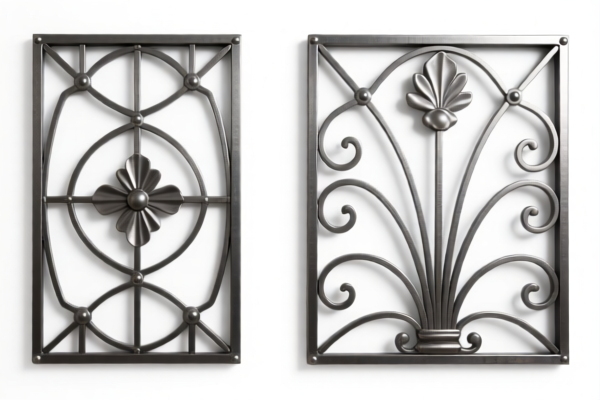
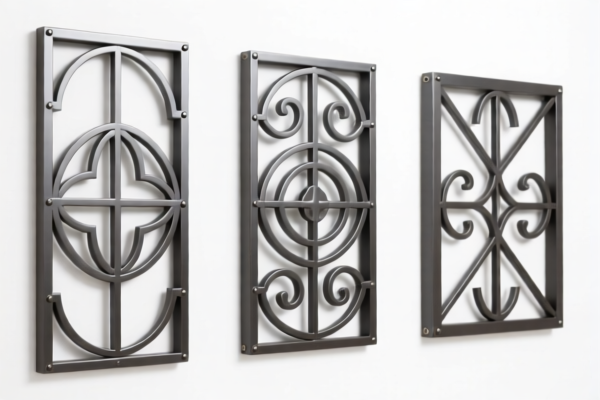
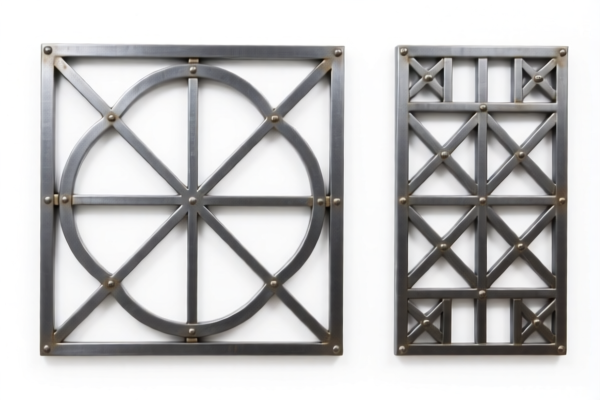
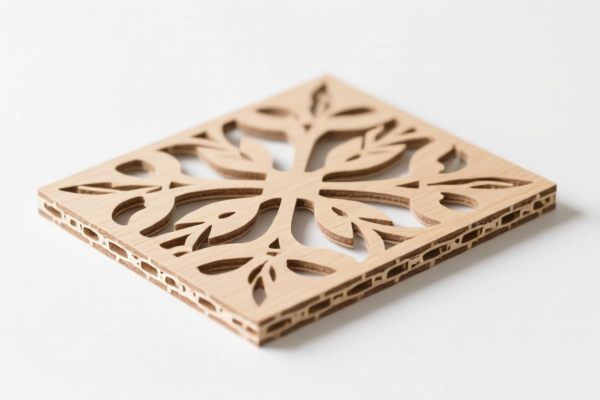
AI Analysis
🏛️ PMMA Architectural Decoration Board (Acrylic Panels)
🌐 HS Code Classification & Customs Clearance Guide | 2026 Latest Tariff Analysis | Strategic Optimization for US Imports
📌 I. Product Definition & Classification: Is it an Optical Lens or a Plastic Plate?
PMMA (Polymethyl Methacrylate), commonly known as Acrylic, is a transparent thermoplastic. In international trade, the classification of "Architectural Decoration Boards" made from PMMA depends strictly on its physical form and intended use:
1. Optical Grade (Class 90):
If the PMMA board/sheet is specifically designed for optical purposes (e.g., light guides, polarizing materials, lenses, or precision optical components) and meets the definition of "optical elements," it falls under Chapter 90.
2. General Plastic Article (Class 39):
If the PMMA board is used for general decoration, construction, signage, or structural purposes, it is classified as a general plastic product. The specific HS code depends on whether it is considered a "decoration" or "other plastic article."
⚠️ Key Distinction Point:
- If the product is optically polished and used in light transmission/optical systems → Classify under 9001.xx.xx (High Tax, High Regulation).
- If the product is for architectural decoration (walls, ceilings, partitions) → Classify under 3926.xx.xx (Lower Tax, Easier Clearance).
📦 II. HS Code Classification Matrix (2026 Latest Tariff Data)
Based on the provided data, here are the four potential classifications with their corresponding tax implications:
| HS Code | Summary & Rationale | Total Tax Rate | Tax Detail Breakdown |
|---|---|---|---|
| 9001.20.00.00 | Optical/Polymers: PMMA sheets/plates classified as polarizing materials (optical plastics). | 35.0% | Base: 0.0% + Section 301: 25.0% + Section 122: 10.0% |
| 3926.90.99.89 | Other Plastic Articles: PMMA is a plastic; the board is an "other" plastic article for architectural decoration not elsewhere specified. | 22.8% | Base: 5.3% + Section 301: 7.5% + Section 122: 10.0% |
| 3926.40.00.90 | Plastic Ornaments: PMMA falls under Chapter 39; the board is classified as a plastic ornament/decoration. | 15.3% | Base: 5.3% + Section 301: 0.0% + Section 122: 10.0% |
| 9001.90.90.00 | Optical Parts: PMMA is optical-grade plastic; the board/sheet is a part/accessory for optical instruments or polarizing material. | 35.0% | Base: 0.0% + Section 301: 25.0% + Section 122: 10.0% |
🔍 Critical Analysis:
- The highest tax rate (35%) applies if customs authorities deem the PMMA board to be "optical material" (Chapter 90). This is risky for general architectural boards.
- The lowest tax rate (15.3%) applies if classified as a "plastic ornament" (3926.40).
- The middle rate (22.8%) applies if classified as a general plastic article (3926.90).
- Section 122 Tariff (10%) appears in ALL categories, likely due to specific trade measures affecting plastic products or Chinese origins.
💰 III. Detailed Tariff Breakdown & Legal Basis
✅ Applicable Country: United States (US)
✅ Origin: China (CN)
✅ Effective Time: 2025-2026 Tariff Regime
🎯 1. 9001.20.00.00 & 9001.90.90.00 —— Optical Polymers & Parts
Total Tax: 35.0%
This is the high-risk, high-cost classification.
| Item | Value | Explanation |
|---|---|---|
| Base Tariff | 0.0% | Optical goods often have low base tariffs under GATT. |
| Section 301 Tariff | +25.0% | High penalty for Chinese origin optical/plastic goods. |
| Section 122 Tariff | +10.0% | Specific add-on tariff for this subheading. |
| Legal Basis | USITC Section 9001; IEEPA Footnotes; Section 301 List 4C/25% |
📌 Warning:
- Do NOT classify a standard acrylic wall panel as "optical material" unless it is strictly for light-guiding or lens applications. Misclassification here leads to 35% tax and potential customs audits.
🎯 2. 3926.90.99.89 —— Other Plastic Articles
Total Tax: 22.8%
This is the standard fallback for general PMMA boards.
| Item | Value | Explanation |
|---|---|---|
| Base Tariff | 5.3% | Standard tariff for other plastic articles. |
| Section 301 Tariff | +7.5% | Reduced penalty compared to optical goods. |
| Section 122 Tariff | +10.0% | Specific add-on tariff applies. |
| Legal Basis | USITC Section 3926; IEEPA Footnotes; Section 301 List 3/7.5% |
📌 Usage:
- Suitable for PMMA boards used for signage, interior decoration, furniture, or construction.
- Must NOT claim optical properties.
🎯 3. 3926.40.00.90 —— Plastic Ornaments/Decorations
Total Tax: 15.3%
This is the optimal cost-saving classification.
| Item | Value | Explanation |
|---|---|---|
| Base Tariff | 5.3% | Standard tariff for plastic ornaments. |
| Section 301 Tariff | 0.0% | CRITICAL: No Section 301 tariff for this subheading! |
| Section 122 Tariff | +10.0% | Specific add-on tariff applies. |
| Legal Basis | USITC Section 3926; IEEPA Footnotes; Exempt from 301 |
📌 Strategy:
- If the PMMA board can be reasonably described as a "decorative item" or "ornament" (e.g., wall panels, decorative slabs, artistic installations), this code offers the lowest total tax (15.3%).
- Note: Section 301 exemption makes this significantly cheaper than the general plastic article code.
🛠️ IV. Customs Clearance Practical Advice
✅ 1. Documentation Checklist (Mandatory)
| Document | Required? | Purpose |
|---|---|---|
| Product Specification Sheet | ✅ Yes | Define material (PMMA), thickness, dimensions, and primary use (decoration vs. optical). |
| Product Photos | ✅ Yes | Show surface finish, edges, and installed state. |
| Commercial Invoice | ✅ Yes | Clearly state: "PMMA Architectural Decoration Board" (Avoid "Optical Lens" if not true). |
| Packing List | ✅ Yes | Detail weight, dimensions, and packaging type. |
| Certificate of Origin | ✅ Yes | Required for Section 301 assessment. |
| Material Safety Data Sheet (MSDS) | ✅ Yes | For PMMA plastic compliance. |
✅ 2. Classification Strategy & Declaration Tips
🔥 “Golden Rule: Define Use, Not Just Material!”
| Scenario | Recommended HS Code | Tax Rate | Why? |
|---|---|---|---|
| Decorative Wall Panels | 3926.40.00.90 |
15.3% | Best rate. Classify as "plastic ornament/decoration." |
| Signage Boards | 3926.90.99.89 |
22.8% | General plastic article. Safe if "ornament" argument is weak. |
| Light Guides/Lenses | 9001.20.00.00 |
35.0% | Only if strictly optical. High tax risk. |
| Mixed/Unsure | 3926.90.99.89 |
22.8% | Conservative middle ground. |
📌 Declaration Wording Suggestion:
- ✅ Good: "PMMA Acrylic Decorative Wall Panel for Interior Design"
- ❌ Bad: "Optical PMMA Sheet" (unless truly optical)
- ❌ Bad: "Plastic Plate" (Too vague, may trigger audit)
✅ 3. Special Considerations
| Issue | Advice |
|---|---|
| Section 122 Tariff (10%) | Applies to ALL categories in the provided data. No avoidance strategy here; assume this cost is fixed. |
| Section 301 Tariff | Key differentiator. 3926.40 has 0% Section 301 tax. 3926.90 has 7.5%. 9001 has 25%. |
| Customs Audit Risk | If you declare as 3926.40 (15.3%) but customs finds the product is actually "optical," they may reclassify to 9001 (35%) and charge back taxes + penalties. Ensure product description matches "decoration" use. |
| Pre-Ruling | For large shipments, apply for an Advance Ruling (PBO) from US Customs to confirm HS code classification, especially if borderline between "ornament" and "other plastic." |
🌍 V. Global Market Comparison (2026)
| Market | Recommended HS Code | Est. Tax | Notes |
|---|---|---|---|
| 🇺🇸 USA | 3926.40.00.90 |
15.3% | Lowest tax if classified as ornament. Avoid 9001 due to 35% tax. |
| 🇪🇺 EU | 3926.90.97 |
~6-9% | No Section 301/122 tariffs. Standard EU VAT + Duty. |
| 🇨🇳 China | 3926.90.99 |
~5% | Low base tariff. No punitive tariffs for imports. |
| 🇮🇳 India | 3926.90.99 |
~10-15% | Additional Cess may apply. |
📌 Conclusion:
- The US market is the most critical for tax optimization due to Section 301 and Section 122 tariffs.
- Strategic Goal: Push for3926.40.00.90(15.3%) by emphasizing the decorative/ornamental nature of the PMMA board, avoiding optical terminology.
📌 VI. Common Mistakes & Pitfalls
❌ Mistake 1: Using "Optical Grade PMMA" in description for a decorative board.
👉 Result: Customs classifies as 9001.20.00.00 → 35% Tax instead of 15.3%.
❌ Mistake 2: Ignoring Section 122 Tariff.
👉 Result: Underestimating landed cost. The 10% Section 122 tariff is unavoidable for these codes.
❌ Mistake 3: Misclassifying as "Plastic Plate" (3920) instead of "Plastic Article" (3926).
👉 Result: Incorrect HS code, potential penalty and delay. PMMA sheets for decoration are often "articles" if cut/processed, not just raw sheets.
✅ Correct Approach:
"PMMA Architectural Decoration Board (Plastic Ornament), Interior Use, Non-Optical, Cut to Size"
🎯 VII. Final Recommendation
- Priority Classification: Aim for
3926.40.00.90(15.3% Total Tax). - Why? It excludes the 25% Section 301 tariff, saving 19.7% compared to optical codes.
-
How? Describe the product as "Decorative Plastic Ornament/Panel" with photos showing interior design application.
-
Secondary Classification: If
3926.40is rejected, use3926.90.99.89(22.8% Total Tax). -
Why? Lower tax than optical codes, standard for general plastic articles.
-
Avoid:
9001.xx.xx(35% Total Tax). - Why? Only use if the product is truly an optical component (e.g., for lasers, medical imaging). Using this for decorative boards is a costly mistake.
📣 Immediate Action:
📞 Consult a Customs Broker to review product photos and technical specs.
📄 Prepare Product Datasheet explicitly stating "Non-Optical, Decorative Use."
🚀 File Advance Ruling if shipping large volume to secure 15.3% tax rate.
✨ Smart Classification, Significant Savings!
💼 Every percentage point matters in cross-border trade!
Customer Reviews
About HS Code Classification
The Harmonized System (HS) is an internationally standardized nomenclature developed by the World Customs Organization (WCO) to classify traded products. Over 200 countries use the HS system as the basis for customs tariffs, trade statistics, and import/export regulations.
Each HS code follows a hierarchical structure:
- Chapter (2 digits) — Broad category of goods (e.g., Chapter 84: Machinery and Mechanical Appliances)
- Heading (4 digits) — More specific grouping within the chapter
- Subheading (6 digits) — Internationally standardized breakdown, used by all WCO member countries
- National subdivisions (8-10 digits) — Country-specific extensions for further classification, such as US HTSUS 10-digit codes
Correct HS code classification is essential for smooth customs clearance, accurate duty payment, and compliance with trade regulations. Misclassification can lead to customs delays, overpayment of duties, or penalties.
When importing from CN to US, the applicable tariff rates may include:
- Most-Favored-Nation (MFN) rate — The standard duty rate applied to WTO members
- General rate — Applied to countries without trade agreements
- Trade remedy duties — Additional tariffs such as Section 301 (anti-dumping), Section 232 (national security), or countervailing duties
The information provided on this page is for reference purposes only. For official classification, please consult with your local customs authority or a licensed customs broker.