pmma flame retardant board
CN → US| HS Code | Tariff Rate | Origin | Destination | Doc |
|---|---|---|---|---|
| 3906100000 | 41.3% | CN | US | Official Doc |
| 3921190090 | 41.5% | CN | US | Official Doc |
| 3906902000 | 41.3% | CN | US | Official Doc |
| 3921905050 | 39.8% | CN | US | Official Doc |
| 3920515050 | 41.5% | CN | US | Official Doc |
Product Images
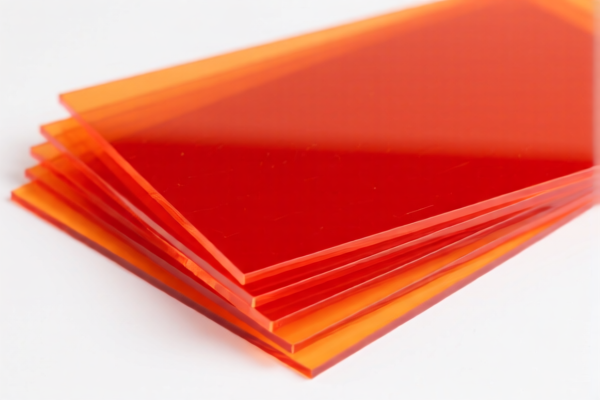
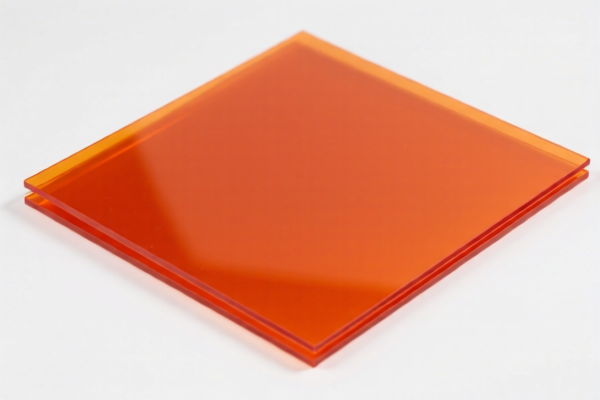
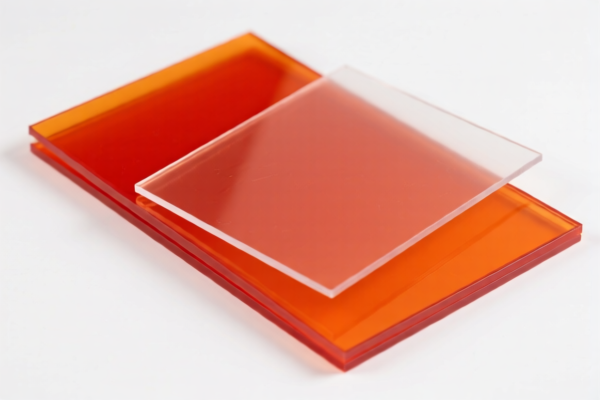
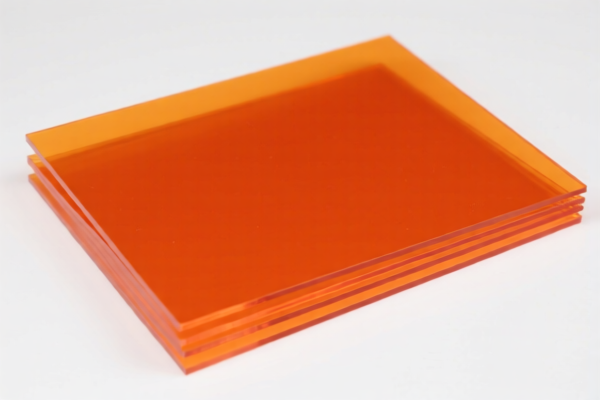
AI Analysis
🔥 PMMA Flame Retardant Board (Polymethyl Methacrylate Sheets)
🌐 HS Code Reference & Customs Clearance Guide | 2026 Latest Tariff Analysis | Professional Clearance Strategy
📌 I. Product Definition & Classification: What exactly is "PMMA Flame Retardant Board"?
PMMA (Polymethyl Methacrylate), commonly known as Acrylic or Plexiglas, is a transparent thermoplastic. When formulated with flame-retardant additives, it becomes a critical material for architectural glazing, signage, and industrial applications requiring fire safety compliance.
In international trade, the classification of PMMA depends strictly on its physical form and state of processing: * Primary Forms (Resins/Granules): Raw polymer particles before shaping. * Semi-Finished/Finished Products (Sheets/Plates): Extruded or cast sheets, whether solid, hollow, or corrugated.
⚠️ Key Distinction:
- If the material is in the form of resin/granules → Classified under Chapter 39, Heading 3906.
- If the material has been processed into plates, sheets, films, or foil → Classified under Chapter 39, Heading 3921 (Plastics in primary forms) or 3920 (Other plates/sheets).
📦 II. HS Code Classification Details (2026 Latest Tariff Authority Mapping)
Based on the specific product description "PMMA Flame Retardant Board" (板材 - Plates/Sheets), here is the authoritative mapping to the provided HS Codes:
| HS Code | Product Description | Application Scenario | Form Factor |
|---|---|---|---|
3906.10.00.00 |
Polymers of Methyl Methacrylate (PMMA), in primary forms. | Raw PMMA resin/granules intended for further processing. Note: Strictly speaking, "Board" implies a finished shape, but this code covers the primary polymer state if misdeclared or if referring to raw material batches. | Primary Polymer |
3921.19.00.90 |
Other plates, sheets, film, foil, and strip, of plastics. | PMMA sheets/boards that do not fit specific subheadings for acrylics under 3920. Fits the general description of "plastic plates/sheets." | Plates/Sheets |
3906.90.20.00 |
Other polymers of acrylic types, in primary forms. | PMMA in primary form (granules/powders) not specified elsewhere. Similar to 3906.10 but broader for acrylic types. | Primary Polymer |
3921.90.50.50 |
Other plates, sheets, film, foil, and strip, of plastics. | PMMA boards classified under "Other plastics" in Chapter 39, Heading 3921. Specifically matches "plates, sheets" description. | Plates/Sheets |
3920.51.50.50 |
Other plates, sheets, film, foil and strip, of polymers of methyl methacrylate. | Most Accurate for PMMA Sheets. Specifically targets PMMA (Methyl Methacrylate) in the form of plates/sheets. | Plates/Sheets |
🔍 Critical Note on "Board" (板材):
In customs terminology, "Board" usually equates to Plates/Sheets. Therefore, classifications under 3921 and 3920 are generally more accurate for finished PMMA sheets than 3906 (which is for raw resin). However, the data provided includes all potential misclassifications or alternative interpretations.
💰 III. 2026 Latest Tariff Rate Breakdown (Including Additional Duties & Policy Surcharges)
✅ Applicable Country: United States (US)
✅ Country of Origin: China (CN)
✅ Effective Date: November 10, 2025 (and subsequent imports)
🎯 1. 3906.10.00.00 & 3906.90.20.00 —— PMMA in Primary Forms
| Item | Content |
|---|---|
| Base Duty Rate | 6.3% (ad valorem) |
| Section 301 Surcharge | +25.0% (USITC Footnote regarding Chinese goods) |
| Section 122/IEEPA Surcharge | +10.0% (Targeted Chinese products) |
| Total Tariff Rate | 41.3% |
| Tax Calculation | CIF Value × 41.3% |
| De Minimis Eligibility | ❌ Not Eligible (Subject to high tariffs) |
| Legal Basis Path | USITC:3906.10.00.00 → FOOTNOTE:301_China → IEEPA:122_China |
📌 Explanation:
- These codes apply if the goods are declared as raw PMMA resin rather than sheets.
- The 41.3% rate is punitive. Importers must be aware that "primary form" declarations for sheet products may trigger audits for misclassification.
🎯 2. 3921.19.00.90 —— Other Plastic Plates/Sheets (Non-PMMA Specific)
| Item | Content |
|---|---|
| Base Duty Rate | 6.5% (ad valorem) |
| Section 301 Surcharge | +25.0% |
| Section 122/IEEPA Surcharge | +10.0% |
| Total Tariff Rate | 41.5% |
| Tax Calculation | CIF Value × 41.5% |
| De Minimis Eligibility | ❌ Not Eligible |
| Legal Basis Path | USITC:3921.19.00.90 → FOOTNOTE:301_China → IEEPA:122_China |
📌 Note:
- This is a "catch-all" for plastic sheets not specifically listed under 3920.
- Slightly higher base rate (6.5%) results in a total of 41.5%.
🎯 3. 3920.51.50.50 —— Plates/Sheets of Polymers of Methyl Methacrylate (PMMA)
| Item | Content |
|---|---|
| Base Duty Rate | 6.5% (ad valorem) |
| Section 301 Surcharge | +25.0% |
| Section 122/IEEPA Surcharge | +10.0% |
| Total Tariff Rate | 41.5% |
| Tax Calculation | CIF Value × 41.5% |
| De Minimis Eligibility | ❌ Not Eligible |
| Legal Basis Path | USITC:3920.51.50.50 → FOOTNOTE:301_China → IEEPA:122_China |
📌 Importance:
- This is likely the most technically correct code for "PMMA Flame Retardant Board" if imported as sheets.
- Despite being the most specific, the 301 and 122 surcharges drive the rate to 41.5%.
🎯 4. 3921.90.50.50 —— Other Plates/Sheets (Alternative Classification)
| Item | Content |
|---|---|
| Base Duty Rate | 4.8% (ad valorem) |
| Section 301 Surcharge | +25.0% |
| Section 122/IEEPA Surcharge | +10.0% |
| Total Tariff Rate | 39.8% |
| Tax Calculation | CIF Value × 39.8% |
| De Minimis Eligibility | ❌ Not Eligible |
| Legal Basis Path | USITC:3921.90.50.50 → FOOTNOTE:301_China → IEEPA:122_China |
📌 Optimization Note:
- This code offers the lowest total tariff (39.8%) among the listed options due to a lower base duty (4.8%).
- However, it requires strict justification that the product fits "Other" subheadings under 3921. Misclassification risks are higher if customs determines it belongs under 3920.51 (PMMA-specific).
🛠️ IV. Customs Clearance Practical Advice (Battle-Tested Pitfall Avoidance)
✅ 1. Documentation Checklist (Non-Negotiable)
| Document | Required? | Purpose |
|---|---|---|
| ✅ Product Specification Sheet | ✔️ | Must detail: Material (PMMA/Acrylic), Flame Retardant Rating (e.g., UL94 V-0), Density, Thickness. |
| ✅ Commercial Invoice | ✔️ | Must explicitly state "Polymethyl Methacrylate (PMMA) Sheet" and NOT just "Plastic Board" to avoid ambiguity. |
| ✅ Bill of Lading | ✔️ | Ensure packaging marks align with invoice. |
| ✅ Fumigation Certificate | ✔️ | If wooden pallets are used (ISPM 15 compliant). |
| ✅ Certified Test Report | ✔️ | Crucial: Proof of flame retardancy (UL94, VDE, or ISO 1210). Customs may verify if the product actually meets safety claims. |
| ✅ Country of Origin Certificate | ✔️ | Required for 301/122 surcharge determination. |
✅ 2. Declaration Strategy (Key Mantra)
🔥 "Be Specific, Be Accurate: PMMA is not just 'Plastic'!"
| Scenario | Correct Declaration | Incorrect Declaration | Consequence |
|---|---|---|---|
| PMMA Sheets | "PMMA Sheets, Flame Retardant, 6.5% Base Rate" | "Plastic Board" | Risk of misclassification → Penalties |
| Raw PMMA Granules | "PMMA Resin, Primary Form" | "PMMA Sheets" | Delayed clearance, re-evaluation |
| Mixed Materials | Separate line items for PMMA and other components | "Mixed Plastic Composite" | Complex valuation, potential rejection |
✅ 3. Special Handling Tips
| Situation | Recommendation |
|---|---|
| Flame Retardant Claims | Ensure the UL94 rating is clearly stated. If the product claims "Fire Retardant" but lacks certification, customs may suspect smuggling or safety violations. |
| Thickness Variations | Declare thickness explicitly. Thicker boards may fall under different subheadings depending on weight per square meter. |
| Value Declaration | Declare the true transaction value. High tariffs (41.3%-41.5%) mean under-invoicing will result in massive duties + penalties. |
| Supply Chain Transparency | If assembled in a third country (e.g., Vietnam) using Chinese PMMA, origin rules apply. Direct shipment from China triggers full surcharges. |
🌍 V. Global Market Clearance Comparison (2026 Latest)
| Country/Region | Recommended HS Code | Tariff Rate (CN Origin) | Key Certifications | Notes |
|---|---|---|---|---|
| 🇺🇸 USA | 3920.51.50.50 |
41.5% (incl. 301+122) | UL94, RoHS, REACH | High barrier due to Section 301 & 122. |
| 🇨🇳 China | 3920.51.50.50 |
4.8% - 6.5% | CCC (if applicable) | Low base duty; no 301/122 surcharges. |
| 🇪🇺 EU | 3920.51.00 |
6.5% | CE, REACH, RoHS | No 301/122 equivalent; standard duty applies. |
| 🇯🇵 Japan | 3920.51.000 |
6.0% | JIS K 6734 | Low duty; strict quality standards. |
| 🇦🇺 Australia | 3920.51.00 |
5.0% | SAA, AS/NZS | Competitive rate; robust testing required. |
📌 Conclusion:
- The US market is exceptionally costly for Chinese-made PMMA boards due to the layered surcharges (Base + 301 + 122).
- Total cost impact: Nearly 42% of CIF value goes to duty. Profit margin compression is significant.
📌 VI. Common Errors & Pitfall Guide (Lessons from Blood & Tears)
❌ Error 1: Declaring PMMA Sheets as "Plastic Boards" (Generic)
👉 Consequence: Customs may assign a less favorable code or demand extensive documentation to prove the specific polymer type.
❌ Error 2: Ignoring Flame Retardant Certification
👉 Consequence: If the product is marketed as "Flame Retardant" but cannot prove it, it may be detained for safety compliance violations.
❌ Error 3: Underestimating the 122 Clause Impact
👉 Consequence: Many importers focus only on the 301 (25%) tariff but forget the additional 10% (Section 122) or IEEPA surcharges. Total is not 25%, but ~41.5%.
❌ Error 4: Confusing "Primary Form" (3906) with "Sheets" (3920/3921)
👉 Consequence: Misclassification leads to audit trails. If you import sheets but declare resin, you risk penalties for inaccurate reporting.
✅ Correct Practice:
"PMMA (Polymethyl Methacrylate) Sheets, Flame Retardant (UL94 V-0), Transparent, 3mm Thickness, Model: PMMA-FR-300, HS Code: 3920.51.50.50"
🎯 VII. Conclusion: Professional Declaration, Cost Efficiency
🎯 Key Takeaways:
🔹 "HS Code Determines Fate: 3920.51 is Best for PMMA Sheets."
🔹 "Tariff Trap: 41.5% is the Real Cost in the US (6.5% Base + 25% 301 + 10% 122)."
🔹 "Documentation is King: UL94 Reports are Mandatory for Flame-Retardant Claims."
📌 Pro Tip:
If your PMMA boards are assembled or significantly transformed in a third country (e.g., Thailand, Vietnam) where US tariffs are lower or exempt, explore origin shift strategies.
However, simple repacking or minor processing will not change the country of origin.
📣 Immediate Action Required:
📞 Contact Customs Brokers + Provide UL94 Certificates + Verify HS Code Pre-Ruling
🚀 Secure Your Supply Chain, Minimize Duty Liability, and Ensure Smooth Customs Clearance!
✨ Professional Customs Clearance Starts with Precise Classification!
💼 Every Percent of Duty Counts!
Customer Reviews
About HS Code Classification
The Harmonized System (HS) is an internationally standardized nomenclature developed by the World Customs Organization (WCO) to classify traded products. Over 200 countries use the HS system as the basis for customs tariffs, trade statistics, and import/export regulations.
Each HS code follows a hierarchical structure:
- Chapter (2 digits) — Broad category of goods (e.g., Chapter 84: Machinery and Mechanical Appliances)
- Heading (4 digits) — More specific grouping within the chapter
- Subheading (6 digits) — Internationally standardized breakdown, used by all WCO member countries
- National subdivisions (8-10 digits) — Country-specific extensions for further classification, such as US HTSUS 10-digit codes
Correct HS code classification is essential for smooth customs clearance, accurate duty payment, and compliance with trade regulations. Misclassification can lead to customs delays, overpayment of duties, or penalties.
When importing from CN to US, the applicable tariff rates may include:
- Most-Favored-Nation (MFN) rate — The standard duty rate applied to WTO members
- General rate — Applied to countries without trade agreements
- Trade remedy duties — Additional tariffs such as Section 301 (anti-dumping), Section 232 (national security), or countervailing duties
The information provided on this page is for reference purposes only. For official classification, please consult with your local customs authority or a licensed customs broker.