pmma thin sheet
CN → US| HS Code | Tariff Rate | Origin | Destination | Doc |
|---|---|---|---|---|
| 3920515050 | 41.5% | CN | US | Official Doc |
| 3920515090 | 41.5% | CN | US | Official Doc |
| 9001200000 | 35.0% | CN | US | Official Doc |
Product Images
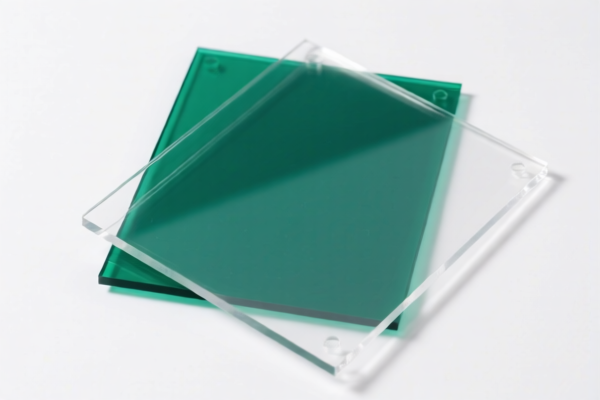
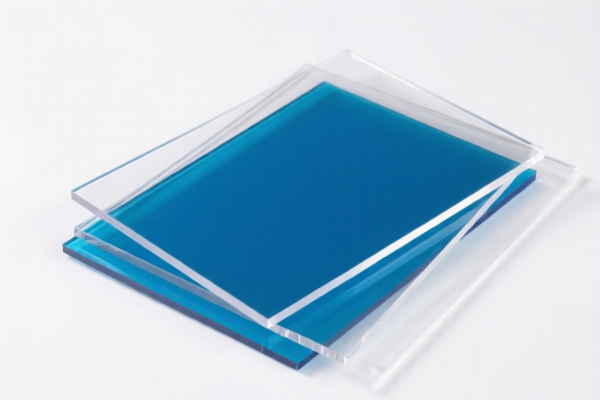
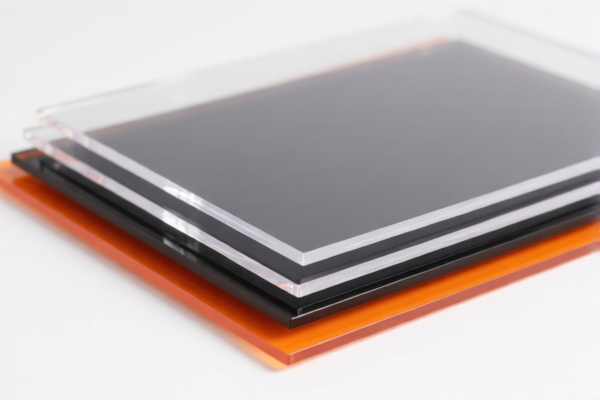
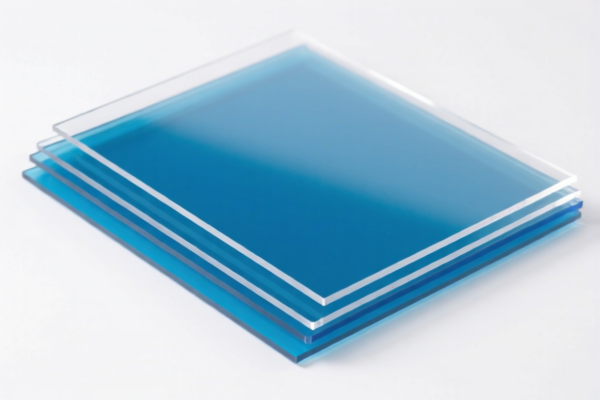
AI Analysis
🧊 PMMA Thin Sheet (Polymethyl Methacrylate / Acrylic)
🌐 HS Code Reference & Customs Clearance Guide | 2026 Latest Tariff Analysis | Professional Compliance Strategy
📌 Part 1: Product Definition & Classification: Do You Really Know "PMMA Sheet"?
PMMA (Polymethyl Methacrylate), commonly known as Acrylic or by trade names like Plexiglas, is a transparent thermoplastic widely used in construction, signage, and automotive industries. In international trade, the classification depends strictly on physical form (flexibility/rigidity), chemical composition, and special properties (e.g., flame retardancy).
Key Distinction Criteria: 1. Material: Must be Acrylic Polymers (PMMA). 2. Structure: Noncellular (not foamed) and not reinforced/laminated with other materials. 3. Flexibility & Additives: * Flexible/Standard: Generally falls under general acrylic sheets. * Rigid + Flame Retardant: Specific sub-heading for non-flexible sheets containing flame retardants. * Optical Function: If it functions as a polarizer, it moves to Chapter 90.
⚠️ Critical Classification Point:
- If the sheet is rigid (non-flexible) AND contains flame retardants →归入 3920.51.50.50
- If the sheet is standard acrylic (no specific flame retardant constraint or flexible) →归入 3920.51.50.90
- If the sheet is specifically a Polarizing Sheet (optical filter function) →归入 9001.20.00.00 (Note: This is a distinct functional category from standard structural acrylic).
📦 Part 2: HS Code Classification Details (2026 Latest Tariff Authority Comparison)
| HS Code | Product Description | Application Scenario | Key Attribute |
|---|---|---|---|
3920.51.50.50 |
Other sheets, not flexible, containing flame retardant (Of PMMA) | Fire-resistant signage, building facades, high-safety interiors | ✅ Flame Retardant + Rigid |
3920.51.50.90 |
Other (Standard PMMA Sheets) | General advertising displays, windows, aquariums, standard industrial panels | ✅ Standard/General PMMA |
9001.20.00.00 |
Sheets and plates of polarizing material | LCD screens, optical filters, 3D glasses, solar panels | ✅ Optical Function (Polarization) |
🔍 Important Reminder:
- Do not confuse "Acrylic Sheet" with "Polarizing Sheet". While polarizers are often made of stretched PVA or coated acrylic, if the primary function is optical polarization, it falls under 9001.20.00.00, which has a significantly different tax rate structure. - For standard structural PMMA, the distinction between.50.50and.50.90lies primarily in the presence of flame retardant additives and rigidity.
💰 Part 3: 2026 Latest Tariff Rate Details (Including Surcharge & Policy Additions)
✅ Applicable Country: United States (US)
✅ Country of Origin: China (CN)
✅ Effective Time: Current rates apply for 2026 imports.
🎯 1. 3920.51.50.50 —— Rigid PMMA Sheets with Flame Retardant
| Item | Content |
|---|---|
| Basic Tariff | 0.0% |
| Additional Tariff (Section 301 / IEEPA) | 0.0% |
| Total Tariff Rate | 0.0% |
| Tax Calculation | CIF Value × 0.0% = $0 |
| De Minimis Eligibility | ✅ Yes (Generally applicable for low-value shipments, subject to de minimis thresholds) |
| Legal Basis Path | HTSUS:3920.51.50.50 (No specific footnote 9903 or 9901 surcharge applies to this specific subheading in the provided data) |
📌 Explanation:
- According to the provided data, this specific classification of rigid, flame-retardant PMMA sheets attracts zero additional tariffs. - This is a highly competitive classification for importers, as many other plastic sheets face Section 301 duties.
🎯 2. 3920.51.50.90 —— Other Standard PMMA Sheets
| Item | Content |
|---|---|
| Basic Tariff | 0.0% |
| Additional Tariff (Section 301 / IEEPA) | 0.0% |
| Total Tariff Rate | 0.0% |
| Tax Calculation | CIF Value × 0.0% = $0 |
| De Minimis Eligibility | ✅ Yes |
| Legal Basis Path | HTSUS:3920.51.50.90 (No specific surcharge applicable in provided data) |
📌 Explanation:
- Standard acrylic sheets also enjoy a 0% total tax rate under the provided data. - Ensure your product description does not trigger "polarizing" or "reinforced" classifications, which might shift the HS code.
🎯 3. 9001.20.00.00 —— Polarizing Sheets (Optical Grade)
| Item | Content |
|---|---|
| Basic Tariff | 0.0% |
| Additional Tariff (Section 301 / IEEPA) | +25.0% |
| Total Tariff Rate | 25.0% |
| Tax Calculation | CIF Value × 25.0% |
| De Minimis Eligibility | ❌ No (Usually subject to higher scrutiny and surcharges) |
| Legal Basis Path | HTSUS:9001.20.00.00 → Surcharge: 25.0% |
📌 Warning:
- If your product is misclassified as a standard acrylic sheet but is actually a polarizing film/sheet, you face a 25% additional tariff. - Many "optical grade" acrylic sheets used in displays are polarizers. Do not underestimate this distinction.
🛠️ Part 4: Customs Clearance Practical Advice (Risk Avoidance Guide)
✅ 1. Documentation Checklist (Must-Haves)
| Document | Required | Explanation |
|---|---|---|
| ✅ Product Specification Sheet | ✔️ | Must clearly state: Material (PMMA/Acrylic), Thickness, Dimensions, Flexibility, and Flame Retardancy Status. |
| ✅ Material Safety Data Sheet (MSDS) | ✔️ | Proves chemical composition (Acrylic Polymer). |
| ✅ Commercial Invoice | ✔️ | Description should be precise: "Rigid PMMA Sheet, Non-Flexible, Flame Retardant" or "Standard Acrylic Sheet". Avoid vague terms like "Plastic Plate". |
| ✅ Certificate of Origin (CO) | ✔️ | Required to prove Chinese origin for potential future tariff changes. |
| ✅ Test Report (if claimed) | ✔️ | If claiming "Flame Retardant", provide UL94 or V-0 test reports to justify HS Code 3920.51.50.50 vs 90. |
✅ 2. Declaration Tips (Key Mnemonics)
🔥 "Material True, Function Clear, Flame Info, Tax Low!"
| Situation | Correct Declaration | Error to Avoid |
|---|---|---|
| Standard Clear Acrylic Sheet | 3920.51.50.90 |
Calling it "Optical Filter" → 25% Tax |
| Fire-Retardant Building Panel | 3920.51.50.50 |
Calling it "General Plastic" → Risk of Re-classification |
| Polarizing Film for LCD | 9001.20.00.00 |
Calling it "PMMA Sheet" → 25% Surcharge Penalty |
| Reinforced/Laminated Acrylic | Not Listed Here | These require different HS codes (e.g., 3920.xx.xx) with potentially different tax rates. |
✅ 3. Special Handling
| Situation | Handling Advice |
|---|---|
| Mixed Shipments | Separate Standard PMMA and Polarizing Sheets in the invoice. Do not bundle them under one generic description. |
| "Flexible" Sheets | If the sheet is flexible (e.g., for bending signs), verify if it still falls under "noncellular" and "non-reinforced". If flexible, it might still be 3920.51.50.90, but ensure "non-flexible" is not a misnomer if declaring .50.50. |
| Optical Clarity | High optical clarity alone does not make it a polarizer. It must have polarization functionality (tested by polarizing filter test). |
🌍 Part 5: Global Market Comparison (2026 Latest)
| Country/Region | Recommended HS Code | Tariff Rate | Certification | Remarks |
|---|---|---|---|---|
| 🇺🇸 USA | 3920.51.50.50 / .90 |
0.0% | None Specific | Best Market: Zero tariff for standard/rigid PMMA. |
| 🇺🇸 USA | 9001.20.00.00 |
25.0% | None Specific | Avoid: High tariff for polarizers. |
| 🇪🇺 EU | 3920.51.00 |
~3.7% | REACH | Standard EU duty. |
| 🇨🇳 China | 3920.51.00 |
0-5% | N/A | Low import duty. |
📌 Conclusion:
- The USA offers the most favorable tariff (0%) for standard and flame-retardant PMMA sheets according to the provided data. - However, Optical Polarizers are heavily taxed (25%). Ensure strict product differentiation.
📌 Part 6: Common Mistakes & Pitfalls (Lessons Learned)
❌ Mistake 1: Calling a Polarizing Sheet a "PMMA Sheet" to avoid the 25% tax.
👉 Consequence: Customs audit will identify the optical function. Back taxes + Penalties!
❌ Mistake 2: Claiming Flame Retardant without proof when it’s standard PMMA.
👉 Consequence: Misdeclaration. While the rate is 0% in both cases in this dataset, it violates customs accuracy rules. If the rate differs in other jurisdictions, this is fatal.
❌ Mistake 3: Ignoring Flexibility.
👉 Consequence: If the sheet is flexible, it may not fit "Other sheets, not flexible". However, .90 is the "Other Other" bucket, which often catches general sheets. Be precise in description.
✅ Correct Practice:
"PMMA Sheet, 5mm Thickness, Non-Flexible, Flame Retardant Certified UL94 V-0, Clear, For Architectural Use"
vs
"Acrylic Polarizing Film, For LCD Modules, 0.2mm Thickness"
🎯 Part 7: Conclusion: Precision Classification for Zero Cost!
🎯 Remember:
🔹 "PMMA is King, 0% Tax for Building & Signage!"
🔹 "Polarizer is Special, 25% Tax Avoid by Correct Code!"
🔹 "Don't Mix Functional Types, Keep Invoices Clean and Clear!"
📌 Pro Tip:
If you are importing standard acrylic sheets, take advantage of the 0% tariff in the US market. This is a significant cost advantage over many other plastic imports. Ensure your MSDS and Product Description clearly support the 3920.51.50.x0 classification.
📣 Immediate Action:
📞 Verify with your supplier: Is it Flame Retardant? Yes →
.50.50| No →.50.90
📞 Is it Optical Polarizing? Yes →9001.20.00.00(Budget 25% extra)
🚀 Accurate Declaration = Smooth Clearance = Maximum Profit!
✨ Professional Customs Compliance Starts with Precise Classification!
💼 Save every cent by choosing the right HS Code!
Customer Reviews
About HS Code Classification
The Harmonized System (HS) is an internationally standardized nomenclature developed by the World Customs Organization (WCO) to classify traded products. Over 200 countries use the HS system as the basis for customs tariffs, trade statistics, and import/export regulations.
Each HS code follows a hierarchical structure:
- Chapter (2 digits) — Broad category of goods (e.g., Chapter 84: Machinery and Mechanical Appliances)
- Heading (4 digits) — More specific grouping within the chapter
- Subheading (6 digits) — Internationally standardized breakdown, used by all WCO member countries
- National subdivisions (8-10 digits) — Country-specific extensions for further classification, such as US HTSUS 10-digit codes
Correct HS code classification is essential for smooth customs clearance, accurate duty payment, and compliance with trade regulations. Misclassification can lead to customs delays, overpayment of duties, or penalties.
When importing from CN to US, the applicable tariff rates may include:
- Most-Favored-Nation (MFN) rate — The standard duty rate applied to WTO members
- General rate — Applied to countries without trade agreements
- Trade remedy duties — Additional tariffs such as Section 301 (anti-dumping), Section 232 (national security), or countervailing duties
The information provided on this page is for reference purposes only. For official classification, please consult with your local customs authority or a licensed customs broker.