pneumatic punching machine
CN → US| HS Code | Tariff Rate | Origin | Destination | Doc |
|---|---|---|---|---|
| 8462420040 | 39.4% | CN | US | Official Doc |
| 8462490010 | 39.4% | CN | US | Official Doc |
Product Images
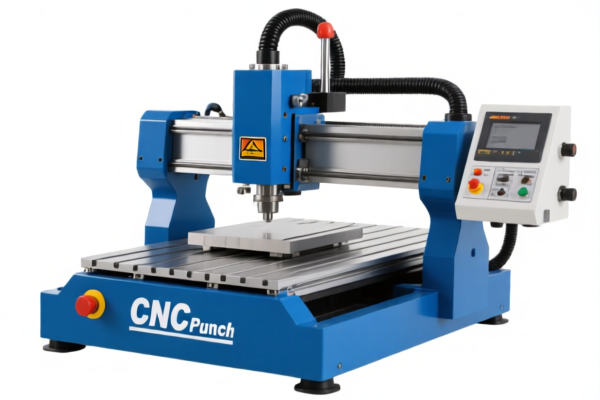
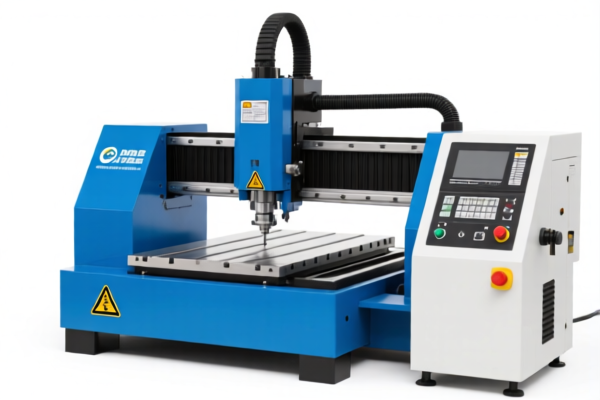
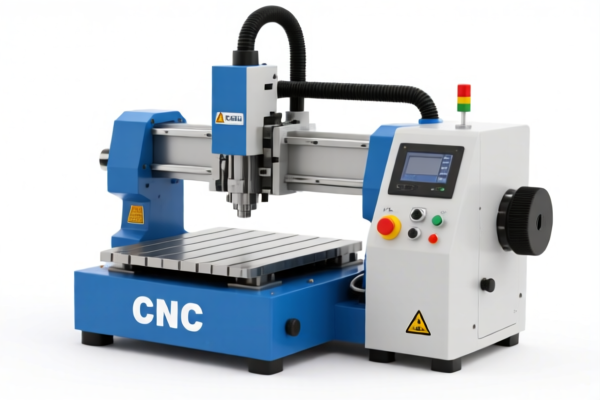
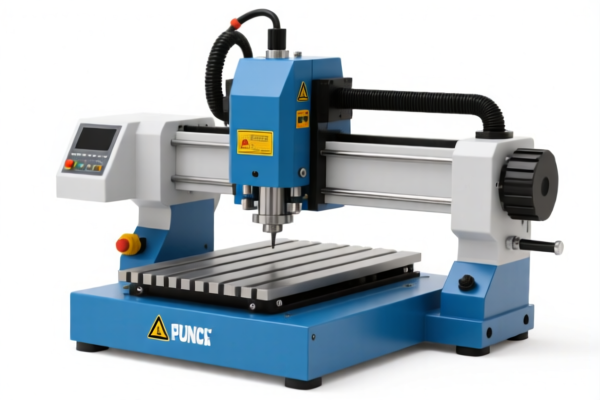
AI Analysis
🔨 Pneumatic Punching Machine (Metalworking Presses)
🌐 HS Code Reference & Customs Clearance Guide | 2026 Latest Tariff Analysis | Professional Clearance Strategy
📌 1. Product Definition and Classification: Are You Clear on "Pneumatic Punching"?
A Pneumatic Punching Machine falls under the broad category of Machine Tools for Working Metal by Bending, Folding, Straightening, Flattening, Shearing, Punching, Notching, or Nibbling. Specifically, it is classified as a Press designed for punching operations.
The critical distinction in this category lies in: 1. The Material Being Processed: Is it for flat products (sheets/plates) or other shapes? 2. The Condition of the Goods: Is it New/Used/Rebuilt? 3. Control System: Is it Numerically Controlled (NC/CNC) or manually operated?
⚠️ Key Distinction:
- If the machine is Used or Rebuilt, and punches flat products (like sheet metal), it falls under specific subheadings depending on whether it is Numerically Controlled (NC) or Not. - Used/Rebuilt machines often attract significantly different tax rates compared to new ones.
📦 2. HS Code Classification Details (2026 Latest Authorized对照)
Based on the provided data, here are the two applicable HS Codes for Used or Rebuilt Pneumatic Punching Machines working on Flat Products:
| HS Code | Product Description | Condition | Control Type | Applicable Scenario |
|---|---|---|---|---|
8462.42.00.40 |
Punching, notching or nibbling machines for flat products (including combined punching and shearing) | Used or Rebuilt | Numerically Controlled (NC/CNC) | Automatic punching machines for sheet metal, controlled by computer/CNC systems. |
8462.49.00.10 |
Punching, notching or nibbling machines for flat products (including combined punching and shearing) | Used or Rebuilt | Other (Non-NC) | Manual or semi-automatic pneumatic punches, standard presses without CNC control. |
🔍 Critical Reminder:
- Both codes explicitly state "Used or Rebuilt".
- If the machine is New, these codes do not apply (different HS codes would apply for new machinery, likely8462.41or8462.49without the "Used/Rebuilt" suffix or with different 8-digit extensions depending on the country's tariff schedule).
- "Flat Products" refers to sheets, plates, strips, etc. If punching tubes or structural steel, different codes apply.
💰 3. 2026 Latest Tariff Rate Breakdown (Detailed Tax Clauses)
✅ Applicable Country: USA (Based on the "Additional Duty" structure provided)
✅ Origin: China (CN) (Implied by the 25% Section 301 tariff)
✅ Status: Used or Rebuilt
🎯 1. 8462.42.00.40 — NC Punching Machine (Used/Rebuilt)
| Item | Details |
|---|---|
| Base Duty (MFN) | 4.4% |
| Section 301 Additional Duty | 25.0% |
| Total Duty Rate | 29.4% |
| Tax Calculation | CIF Value × 29.4% |
| De Minimis Exemption | ❌ Not Applicable (Commercial machinery > $800) |
| Legal Basis | HTSUS 8462.42.00.40 + USITC Footnote (Section 301) |
📌 Explanation:
- Base 4.4%: Standard Most Favored Nation (MFN) rate for metalworking machines.
- 25% Additional Duty: Applied due to Section 301 of the Trade Act of 1974 targeting Chinese-origin goods. This is a high-risk tariff that must be accounted for in pricing.
- Total 29.4%: This is a significant cost driver. For a $10,000 machine, you pay $2,940 in duties alone.
🎯 2. 8462.49.00.10 — Non-NC Punching Machine (Used/Rebuilt)
| Item | Details |
|---|---|
| Base Duty (MFN) | 0.0% |
| Section 301 Additional Duty | 0.0% |
| Total Duty Rate | 0.0% |
| Tax Calculation | $0 |
| De Minimis Exemption | ❌ Not Applicable (But duty is zero anyway) |
| Legal Basis | HTSUS 8462.49.00.10 |
📌 Explanation:
- 0% Total Duty: This is a massive cost advantage.
- Why? The base duty for "Other" (non-NC) used/rebuilt punching machines is 0%, and currently, no Section 301 additional duty is listed for this specific subheading in the provided data.
- ⚠️ Caution: Verify if this 0% rate is subject to change. Some "Other" categories may still have Section 301 duties depending on the specific product exclusion list. However, based on the provided data, it is 0%.
🛠️ 4. Customs Clearance Practical Advice (Avoiding Pitfalls)
✅ 1. Documentation Checklist (Non-Negotiable)
| Document | Required? | Notes |
|---|---|---|
| Commercial Invoice | ✅ Yes | Must clearly state "Used" or "Rebuilt". Mislabeling as "New" can lead to penalties for misdeclaration. |
| Product Photos | ✅ Yes | Must show the machine's condition, serial number, and control panel (to prove NC vs. Non-NC). |
| Power of Attorney (POA) | ✅ Yes | Standard for customs brokerage. |
| Prior Bond | ✅ Yes | Continuous bond required for commercial imports. |
| Certification of Origin | ✅ Yes | To determine if Section 301 applies (if from China). |
| NC Certification | ✅ Yes | If claiming 8462.49.00.10 (0% duty), you must prove it is NOT numerically controlled. If claimed as NC, prove it IS controlled. |
✅ 2. Classification Strategy (The "Used" Trap)
🔥 Golden Rule:
"Condition is King, Control is Queen!"
| Scenario | Recommended HS Code | Duty Risk | Why? |
|---|---|---|---|
| Used CNC Punch | 8462.42.00.40 |
29.4% | High base duty + Section 301. |
| Used Manual/Semi-Auto Punch | 8462.49.00.10 |
0.0% | Zero duty advantage! |
| New CNC Punch | ❌ Not in Data | ? | Do NOT use these codes. New machines have different 8-digit codes (e.g., 8462.41 or 8462.42 without "Used/Rebuilt" suffix). |
| Rebuilt Machine | Check Condition | See above | "Rebuilt" is treated similarly to "Used" in these specific subheadings. |
✅ 3. Critical Clearance Tips
-
Prove "Used" Status:
- Customs officers may suspect you are trying to avoid new goods tariffs. Provide photos showing wear, tear, serial numbers, or prior ownership.
- If the machine is Rebuilt, provide a restoration report detailing what parts were replaced.
-
NC vs. Non-NC Verification:
- For
8462.49.00.10(0% duty), ensure the machine lacks CNC controllers. If it has a computer interface for tool path control, it may be reclassified as NC, triggering the 29.4% duty. - For
8462.42.00.40(29.4% duty), you must prove it is NC. If it’s not, you might be misclassified, but in this case, you might want to be classified as Non-NC to pay 0%. However, if it IS NC, you must pay 29.4%.
- For
-
Section 301 Exclusions:
- Check if your specific machine model has a Section 301 Exclusion. Some machinery models were excluded from the 25% tariff. If excluded, your duty for
8462.42.00.40could drop from 29.4% to 4.4%.
- Check if your specific machine model has a Section 301 Exclusion. Some machinery models were excluded from the 25% tariff. If excluded, your duty for
🌍 5. Global Market Comparison (2026 Context)
| Country/Region | HS Code Alignment | Duty Estimate | Notes |
|---|---|---|---|
| 🇺🇸 USA | 8462.42.00.40 / 8462.49.00.10 |
29.4% or 0.0% | Heavily depends on "Used" status and NC control. |
| 🇨🇳 China | 8462.42.00.90 / 8462.49.00.90 |
~10-14% | China’s MFN rates for metalworking machines are moderate. No Section 301 here. |
| 🇪🇺 EU | 8462.42.10 / 8462.49.10 |
~3.7% | EU uses similar HS structure. No significant additional duties for machinery unless subject to anti-subsidy probes. |
| 🇬🇧 UK | 8462.42.00.00 / 8462.49.00.00 |
~3.7% | Post-Brexit, UK tariffs mirror EU MFN rates for most machinery. |
📌 6. Common Mistakes & Pitfalls (Lessons Learned)
❌ Mistake 1: Declaring a New machine as "Used" to access lower tariffs.
👉 Consequence: Customs may seize goods, impose fines, and blacklist the importer. Always declare true condition.
❌ Mistake 2: Misidentifying NC (CNC) vs. Non-NC.
👉 Consequence: If you declare a CNC machine as Non-NC to pay 0% duty, and customs inspects and finds a CNC controller, you will pay back-taxes, interest, and penalties.
❌ Mistake 3: Ignoring Section 301 on Used Goods.
👉 Consequence: Assuming all used goods are tariff-free. While 8462.49.00.10 is 0%, 8462.42.00.40 is 29.4%. Know your code!
❌ Mistake 4: Using "Punching Machine" without specifying "For Flat Products".
👉 Consequence: Customs may classify it under a different subheading (e.g., for tubes), leading to delays.
✅ Best Practice:
"Declare Condition, Specify Control, Confirm Origin."
Use precise descriptions:
"Used Pneumatic Punching Machine, Model XYZ, for Sheet Metal, Manual Operation (Non-NC), Serial Number 12345, Imported from China."
🎯 7. Conclusion: Strategic Clearance for Pneumatic Punchers
🎯 Key Takeaways:
1. Used/Rebuilt Status is Critical: These HS codes are only for used/rebuilt goods.
2. NC vs. Non-NC is the Tariff Divider:
- NC (CNC): 29.4% Duty (High Cost).
- Non-NC (Manual): 0.0% Duty (Zero Cost).
3. Verify Control System: If you have a machine with both manual and digital capabilities, consult a customs broker. The primary function or standard configuration determines the code.
4. Document Everything: Keep records of the machine’s prior use, condition, and technical specs.
📌 Pro Tip:
If you are importing a Used CNC Punching Machine from China, the 29.4% duty is substantial.
- Strategy: Check if the specific model is on the Section 301 Exclusion List.
- Alternative: If possible, import Non-NC versions to leverage the 0% duty rate.
- Pre-Import: Apply for an Advance Ruling from CBP to confirm the correct HS Code and duty rate before shipping.
📣 Take Action:
📞 Contact a licensed customs broker.
📸 Send photos of the machine’s control panel.
📄 Confirm "Used" status with the seller.
🚀 Save thousands in duties with correct classification!
✨ Professional clearance starts with precise classification!
💼 Don’t let the 29.4% tariff catch you off guard!
Customer Reviews
About HS Code Classification
The Harmonized System (HS) is an internationally standardized nomenclature developed by the World Customs Organization (WCO) to classify traded products. Over 200 countries use the HS system as the basis for customs tariffs, trade statistics, and import/export regulations.
Each HS code follows a hierarchical structure:
- Chapter (2 digits) — Broad category of goods (e.g., Chapter 84: Machinery and Mechanical Appliances)
- Heading (4 digits) — More specific grouping within the chapter
- Subheading (6 digits) — Internationally standardized breakdown, used by all WCO member countries
- National subdivisions (8-10 digits) — Country-specific extensions for further classification, such as US HTSUS 10-digit codes
Correct HS code classification is essential for smooth customs clearance, accurate duty payment, and compliance with trade regulations. Misclassification can lead to customs delays, overpayment of duties, or penalties.
When importing from CN to US, the applicable tariff rates may include:
- Most-Favored-Nation (MFN) rate — The standard duty rate applied to WTO members
- General rate — Applied to countries without trade agreements
- Trade remedy duties — Additional tariffs such as Section 301 (anti-dumping), Section 232 (national security), or countervailing duties
The information provided on this page is for reference purposes only. For official classification, please consult with your local customs authority or a licensed customs broker.