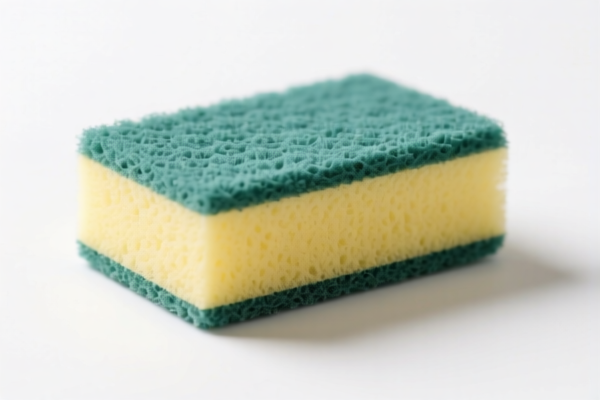
polishing block
CN → US| HS Code | Tariff Rate | Origin | Destination | Doc |
|---|---|---|---|---|
| 8460120080 | 39.4% | CN | US | Official Doc |
| 8460190150 | 39.4% | CN | US | Official Doc |
| 6805301000 | 35.0% | CN | US | Official Doc |
Product Images


AI Analysis
✨ Polishing Block: The Ultimate HS Code & Duty Guide (2026 Edition)
🛠️ HS Code Classification & Duty Strategy | Precision Polishing Machinery & Abrasives
📌 Decoding the "Polishing Block" – Is it a Machine or an Abrasive?
The term "Polishing Block" is a classic classification trap in international trade. It can refer to: 1. A Machine: A standalone industrial unit designed to perform the act of polishing (e.g., a benchtop or floor polisher). 2. An Abrasive Product: A consumable block made of abrasive material (stone, diamond, or composite) used by a machine or by hand to polish surfaces.
The classification depends entirely on Form, Function, and Material. Below is the breakdown based on your specific input data.
📦 II. HS Code Classification Breakdown (2026 Latest Tariff Data)
Based on the input analysis, three primary HS Codes compete for the "Polishing Block" description. Here is the logic for each:
| HS Code | Product Type | Classification Logic & Summary | Total Tax Rate |
|---|---|---|---|
8460.12.00.80 |
Machine (Bench/Hand) | 🛠️ Machine Classification: • Logic: Matches the "Polishing" (精加工) purpose defined in the chapter notes. • Fit: The machine performs the function of polishing directly. • Conflict: No material conflict; it falls squarely under the functional category of polishing machinery. |
39.4% |
8460.19.01.50 |
Machine (Other) | 🛠️ Machine (Catch-all): • Logic: Matches the function "Polishing" (精加工工艺). • Fit: Used as a "Catch-all" (兜底) category when specific mechanical forms are missing. • Condition: No obvious material/form conflict; deemed a likely match for polishing machines without specific form details. |
39.4% |
6805.30.10.00 |
Abrasive Block | 🪨 Consumable Classification: • Logic: Inferred as an Abrasive Product (研磨性制品) based on the "Polishing" use. • Fit: Matches the attribute of "Grinding Powder/Granules" (研磨粉/粒) in form/function. • Condition: No material conflict; fits the "Catch-all" logic for abrasive articles. |
35.0% |
🔍 Critical Distinction:
- If it is a Machine (motorized, powered, or manual tool doing the work), use 8460.xxxxx (Tax: 39.4%).
- If it is a Consumable Stone/Block (passive material used to polish), use 6805.30.10.00 (Tax: 35.0%).
⚠️ Misclassification can lead to 4.4% duty difference + severe penalties!
💰 III. 2026 Tariff Rate Deep Dive (Detailed Breakdown)
✅ Applicable Market: United States (US)
✅ Origin: China (CN)
✅ Status: Active (2025-2026 Import Regulations)
🎯 Case A: Machinery (8460.12.00.80 & 8460.19.01.50)
Total Duty: 39.4%
| Tax Component | Rate | Legal Basis & Explanation |
|---|---|---|
| Base Duty (MFN) | 4.4% | Standard Most Favored Nation rate for "Machines for polishing, lapping, or honing". |
| Section 301 Duty | +25.0% | "Add-on Tariff": Imposed under US Trade Act Section 301 on Chinese industrial machinery. |
| Section 122 Duty | +10.0% | "Section 122 Tariff": Additional surcharge targeting specific Chinese industrial goods (effective Nov 2025). |
| Grand Total | 39.4% | Calculation: 4.4% + 25% + 10% = 39.4% (on CIF value). |
📌 Strategic Note:
- High Cost Alert: This is a 39.4% burden. Machinery imports from China to the US face the heaviest combined taxation.
- No De Minimis: Under $800 shipments likely do NOT qualify for exemption if classified as machinery (Section 321 exclusions apply).
🎯 Case B: Abrasive Block (6805.30.10.00)
Total Duty: 35.0%
| Tax Component | Rate | Legal Basis & Explanation |
|---|---|---|
| Base Duty (MFN) | 0.0% | Natural stone or abrasive articles often enjoy 0% base duty. |
| Section 301 Duty | +25.0% | "Add-on Tariff": Still applies to Chinese abrasives/stone products. |
| Section 122 Duty | +10.0% | "Section 122 Tariff": Applies to this specific category of abrasive articles. |
| Grand Total | 35.0% | Calculation: 0% + 25% + 10% = 35.0% (on CIF value). |
📌 Strategic Note:
- Savings: You save 4.4% compared to machinery, but the 35% total is still very high due to Section 301 & 122.
- Classification Risk: You must prove it is a consumable block (stone/diamond), not a machine part, to claim the 0% base rate.
🛠️ IV. Customs Clearance Practical Advice (Avoid Pitfalls)
✅ 1. Documentation Checklist (Non-Negotiable)
| Document | Requirement | Why It Matters |
|---|---|---|
| Product Photo | ⚠️ CRITICAL | Must clearly show: Is it a machine? (Look for motor, cable, handle) OR Is it a block? (Look for stone texture, no moving parts). |
| Technical Specification | ✔️ Required | Explicitly state: "Hand-held abrasive block" vs. "Electric Polishing Machine". |
| Bill of Materials | ✔️ Required | If it's a block, list material composition (e.g., "Silicon Carbide Stone"). If machine, list motor/housing. |
| Commercial Invoice | ✔️ Required | Description must match HS Code logic. Do NOT write "Polishing Tool" vague terms. Use "Polishing Block (Abrasive)" or "Polishing Machine". |
| USITC Footnote Proof | ✔️ Optional | If claiming 0% base rate, be prepared to prove it's not a machine part under Section 301 exclusions. |
✅ 2. Declaration Strategy (The "Golden Rules")
| Scenario | CORRECT Declaration | WRONG Declaration | Risk |
|---|---|---|---|
| It is a stone block | 6805.30.10.00 "Abrasive Polishing Block, Natural Stone" |
8460.12.00.80 "Polishing Machine Block" |
Penalty: Underpaying duty (35% vs 39.4%) + Audit risk. |
| It is a machine | 8460.12.00.80 "Bench Polishing Machine" |
6805.30.10.00 "Polishing Stone" |
Penalty: Overpaying duty, customs seizure for misclassification. |
| Ambiguous "Block" | Clarify in Specs | Write "Polishing Block" only | Delay: Customs will issue "Additional Info" request, delaying clearance by 3-7 days. |
✅ 3. Cost Optimization Tips
- Split Shipments: If you have some machines and some blocks, declare them separately on the same invoice but clearly distinguished. Mixing them confuses the broker and triggers audits.
- Material Substitution: If importing abrasives, ensure the block is not a "machine accessory" (e.g., a wheel attached to a motor). If it's a standalone consumable, it fits
6805. - Pre-Arrangement: For machinery (
8460), consider Ruling Requests to the CBP to confirm the "Polishing" function before shipping.
🌍 V. Global Market Context (2026)
| Region | Recommended HS Code | Est. Total Duty (China Origin) | Key Regulation |
|---|---|---|---|
| 🇺🇸 USA | 8460.xxxx (Machine) or 6805.30.10.00 |
39.4% or 35.0% | High Section 301 + 122 surcharges. |
| 🇪🇺 EU | 8460.12 or 6805.30 |
~4% - 10% | No Section 301/122. Standard EU Tariff. |
| 🇯🇵 Japan | 8460.12 or 6805.30 |
~0% - 5% | Free Trade Agreement (JREPA) benefits possible. |
| 🇨🇳 China | N/A (Export) | N/A | No export duty on most industrial tools. |
📌 Conclusion:
USA is the hardest market. If you are shipping "Polishing Blocks" to the US, you are paying 35-39.4% total tax. - If it is a Machine, expect 39.4%. - If it is an Abrasive Block, expect 35.0%. There is no "De Minimis" loophole for these goods if they are classified under Section 301/122.
📌 VI. Final Verdict & Action Plan
- Identify the Nature: Is it a Machine (powered) or Consumable (passive stone)?
- Machine → Go for
8460.12.00.80or8460.19.01.50(39.4% Tax). - Consumable → Go for
6805.30.10.00(35.0% Tax).
- Machine → Go for
- Verify Material: For
6805, ensure the product is clearly an abrasive stone/granule block, not a machine part. - Prepare Docs: Have clear photos and specs ready to prove Function (Machine) vs. Material (Abrasive).
- Budget Carefully: Factor in the 39.4% or 35.0% total landed cost immediately. Do not rely on "low duty" estimates.
🚀 Ready to Ship?
Pro Tip: If your "Polishing Block" can be classified as a non-machine abrasive, choose
6805.30.10.00to save the 4.4% base duty difference. But always have the proof ready for CBP!
📞 Need Help? Contact your customs broker immediately with product photos to lock in the correct HS Code before booking freight!
✨ Precision in Classification = Savings in Cost!
💼 Don't let the "Block" ambiguity cost you thousands!
Customer Reviews
About HS Code Classification
The Harmonized System (HS) is an internationally standardized nomenclature developed by the World Customs Organization (WCO) to classify traded products. Over 200 countries use the HS system as the basis for customs tariffs, trade statistics, and import/export regulations.
Each HS code follows a hierarchical structure:
- Chapter (2 digits) — Broad category of goods (e.g., Chapter 84: Machinery and Mechanical Appliances)
- Heading (4 digits) — More specific grouping within the chapter
- Subheading (6 digits) — Internationally standardized breakdown, used by all WCO member countries
- National subdivisions (8-10 digits) — Country-specific extensions for further classification, such as US HTSUS 10-digit codes
Correct HS code classification is essential for smooth customs clearance, accurate duty payment, and compliance with trade regulations. Misclassification can lead to customs delays, overpayment of duties, or penalties.
When importing from CN to US, the applicable tariff rates may include:
- Most-Favored-Nation (MFN) rate — The standard duty rate applied to WTO members
- General rate — Applied to countries without trade agreements
- Trade remedy duties — Additional tariffs such as Section 301 (anti-dumping), Section 232 (national security), or countervailing duties
The information provided on this page is for reference purposes only. For official classification, please consult with your local customs authority or a licensed customs broker.