poly gel+crystal liquid
CN → US| HS Code | Tariff Rate | Origin | Destination | Doc |
|---|---|---|---|---|
| 3506105000 | 37.1% | CN | US | Official Doc |
| 3506915000 | 37.1% | CN | US | Official Doc |
| 3304995000 | 35.0% | CN | US | Official Doc |
| 3304300000 | 35.0% | CN | US | Official Doc |
Product Images
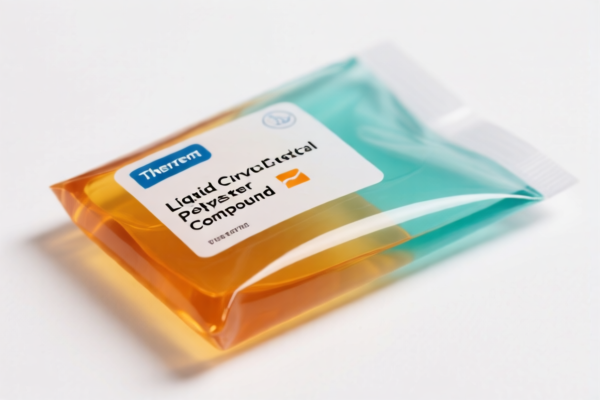
AI Analysis
💅 Poly Gel & Crystal Liquid (Nail Artistry Essentials)
🌐 HS Code Reference & Customs Clearance Guide | 2026 Latest Tariff Analysis | Professional Strategy for Nail Products
📌 I. Product Definition & Classification: Are You Confusing "Gel" with "Liquid"?
In the international trade of beauty products, Poly Gel and Crystal Liquid (Monomer) are often grouped together by consumers but are treated distinctly by customs authorities due to their chemical composition and physical state.
Poly Gel (The Hybrid): A semi-solid, moldable substance combining the properties of gel polish and acrylic nails. It is typically sold in tubes or pots. Crystal Liquid (The Monomer): A volatile liquid (usually Ethyl Methacrylate or similar) used with polymer powder to create hard acrylic nails.
⚠️ Critical Distinction for HS Classification:
- Poly Gel: Being a preparation for the care of the skin/nails in a gel/cream form → Classified under 3304.30 (Manicure/Pedicure) or 3304.99 (Other Beauty Preparations).
- Crystal Liquid: Being a specific liquid monomer, often classified under 3304.99 (Other) if not specifically listed as manicure preparations, or potentially under chemical headings if pure, but typically sold as a cosmetic component → Classified under 3304.99.🔍 Key Clarification:
- If the "Crystal Liquid" is sold as a standalone solvent or industrial chemical, it might fall elsewhere (e.g., Chapter 38), but as a nail product component, it is grouped with beauty preparations under Chapter 33.
- Poly Gel is explicitly a "preparation for the care of the skin (nails)" → 3304.30.00.00 is the most accurate fit for manicure-specific gels.
- Crystal Liquid often falls under 3304.99.50.00 as "Other" beauty preparation if not explicitly defined as manicure gel.
📦 II. HS Code Classification Details (2026 Latest Tariff Authority Comparison)
Based on the provided <DATA> and standard US Harmonized Tariff Schedule (HTSUS) interpretations for beauty/nail products:
| HS Code | Product Description | Applicable Scenario | Physical State | Key Component |
|---|---|---|---|---|
3304.30.00.00 |
Manicure or Pedicure Preparations | Poly Gel, Nail Polish, Nail Glue, Cuticle Cream | Semi-solid/Gel | Methacrylate polymers, UV inhibitors |
3304.99.50.00 |
Other: Other: Other | Crystal Liquid (Monomer), Nail Dehydrator, Primer | Liquid | Ethyl Methacrylate (EMA) or similar monomers |
🔍 Detailed Reasoning:
- Poly Gel (3304.30.00.00): The HTSUS specifically lists "Manicure or pedicure preparations" under 3304.30. Poly gel is a direct manicure preparation.
- Crystal Liquid (3304.99.50.00): While part of the nail process, "Crystal Liquid" (liquid monomer) is not always explicitly listed as a "manicure preparation" in the same category as polish or gel. It is often categorized as "Other beauty preparations" under 3304.99. Note: Some customs brokers may argue for 3304.30, but 3304.99.50 is the safer, broader classification for liquid monomers not explicitly defined as gel/polish.
💰 III. 2026 Latest Tariff Rate Breakdown (Including Additional Duties & Policy Surcharges)
✅ Applicable Country: United States (US)
✅ Origin: China (CN)
✅ Effective Date: November 10, 2025, onwards (including subsequent imports)
🎯 1. 3304.30.00.00 — Poly Gel (Manicure/Pedicure Preparations)
| Item | Content |
|---|---|
| Base Tariff Rate | 0.0% (ad valorem) |
| USITC Additional Duty (Section 301) | +25.0% |
| IEEPA Additional Duty | 0.0% (No additional 10% IEEPA duty listed for this specific code in the provided data) |
| Total Tariff Rate | 25.0% |
| Tax Calculation | CIF Value × 25% |
| De Minimis Exemption | ❌ Not Eligible (Section 301 duties generally apply to de minimis shipments if declared under these codes) |
| Legal Authority Path | HTSUS:3304.30.00.00 → USITC:3304.30.00.00 → Section 301: 25% |
📌 Explanation:
- Poly Gel is classified as a "Manicure or pedicure preparation."
- The 0% base tariff is offset by a 25% Section 301 additional duty due to its origin from China.
- Total Cost Impact: You pay 25% on the declared value. This is a significant cost for low-value items.
🎯 2. 3304.99.50.00 — Crystal Liquid (Other Beauty Preparations)
| Item | Content |
|---|---|
| Base Tariff Rate | 0.0% (ad valorem) |
| USITC Additional Duty (Section 301) | +25.0% |
| IEEPA Additional Duty | 0.0% (No additional 10% IEEPA duty listed for this specific code in the provided data) |
| Total Tariff Rate | 25.0% |
| Tax Calculation | CIF Value × 25% |
| De Minimis Exemption | ❌ Not Eligible |
| Legal Authority Path | HTSUS:3304.99.50.00 → USITC:3304.99.50.00 → Section 301: 25% |
📌 Explanation:
- Crystal Liquid is classified as "Other" beauty preparation.
- Like Poly Gel, it incurs the 25% Section 301 additional duty.
- Total Cost Impact: You pay 25% on the declared value.
🚫 Note on Adhesives (3506)
The provided
<DATA>also includes HS Codes 3506.91.50.00 and 3506.10.50.00 (Prepared Glues/Adhesives) with 0.0% total tax.
⚠️ Important Warning: Do NOT classify Poly Gel or Crystal Liquid under 3506. While they are "sticky," they are chemical preparations for cosmetic use, not industrial adhesives. Misclassification could lead to customs audits, penalties, or retroactive duties. The 0% rate for 3506 is not applicable to beauty gels/liquids.
🛠️ IV. Customs Clearance Operational Suggestions (Practical Pitfall Avoidance Guide)
✅ 1. Documentation Checklist (Must-Have)
| Document | Required? | Description |
|---|---|---|
| ✅ Product Specification Sheet | ✔️ | Must state ingredients (e.g., "Hydroxyethyl methacrylate") and usage (cosmetic/nail). |
| ✅ Ingredient List (INCI) | ✔️ | Critical for proving it is a cosmetic/beauty product (Chapter 33) rather than an industrial chemical. |
| ✅ Product Photos | ✔️ | Show packaging, labeling, and physical form (tube for Poly Gel, bottle for Crystal Liquid). |
| ✅ Commercial Invoice | ✔️ | Clearly describe items as "Poly Gel for Nails" and "Crystal Liquid Monomer for Nails." Avoid generic terms like "Glue" or "Chemical." |
| ✅ Safety Data Sheet (SDS) | ✔️ | Required for liquids due to flammability/hazmat regulations. |
✅ 2. Declaration Tips (Key Mnemonic)
🔥 "Nail Products are Cosmetics, Not Glues! Declare as Beauty, Not Adhesives!"
| Scenario | Correct Declaration | Wrong Declaration |
|---|---|---|
| Poly Gel in Tube | 3304.30.00.00 - "Poly Gel for Manicure" |
3506.10.50.00 - "Nail Glue" → Risk of audit |
| Crystal Liquid | 3304.99.50.00 - "Crystal Liquid Monomer" |
2922.49 - Chemical |
| Both in One Shipment | Split line items clearly | Combine into "Beauty Kit" → Ambiguity |
✅ 3. Special Case Handling
| Scenario | Handling Advice |
|---|---|
| Poly Gel + Crystal Liquid Kit | Declare each component separately with its own HS Code. Do not bundle under a single "Kit" code unless a specific kit heading applies (which is rare for cosmetics). |
| Hazmat/Shipping | Crystal Liquid is often flammable. Ensure proper IATA/IMDG labeling for air/freight. Customs may require additional safety docs. |
| Low-Value Shipments | Even if under $800 (de minimis), Section 301 duties still apply if the goods are from China. Do not rely on de minimis exemption for tax savings. |
🌍 V. Global Market Comparison (2026 Latest)
| Country/Region | Recommended HS Code | Tariff (China Origin) | Certification | Notes |
|---|---|---|---|---|
| 🇺🇸 USA | 3304.30.00.00 / 3304.99.50.00 |
25% (Section 301) | FDA (Cosmetic), Labeling | High tariff cost. |
| 🇨🇳 China | 3304.30.00.00 / 3304.99.50.00 |
5%~10% | Cosmetic Notification | No Section 301. |
| 🇪🇺 EU | 3304.30 / 3304.99 |
6.5% | CPNP Notification, EPR | No Section 301. |
| 🇬🇧 UK | 3304.30 / 3304.99 |
6.5% | UK CPNP | No Section 301. |
| 🇯🇵 Japan | 3304.30 / 3304.99 |
10.5% | FSCQ Notification | No Section 301. |
📌 Conclusion:
- USA is the most expensive market for these products due to the 25% Section 301 duty.
- For other markets, the base tariff is moderate (5%–10.5%), making them more competitive.
- Consider supply chain diversification (e.g., producing in Vietnam or Thailand) to avoid US Section 301 duties if targeting the US market.
📌 VI. Common Errors & Pitfall Guide (Lessons Learned)
❌ Error 1: Classifying Poly Gel as "Glue" under 3506.10.50.00
👉 Consequence: Customs may reject the classification, leading to delays, audits, or forced reclassification with penalties. The 0% rate for 3506 is not available for cosmetic gels.
❌ Error 2: Ignoring Section 301 Duties
👉 Consequence: Assuming "beauty products" are exempt from trade wars. They are not. 25% is added.
❌ Error 3: Incorrect Hazardous Material Declaration
👉 Consequence: Crystal Liquid may be flagged as flammable. If not declared properly, the shipment may be held or returned by carriers.
❌ Error 4: Vague Product Descriptions
👉 Consequence: "Beauty Items" is too vague. Use specific terms: "Poly Gel Nail Polish" and "Acrylic Liquid Monomer."
✅ Correct Declaration Example:
"Item 1: Poly Gel for Manicure, 10g, Colorless, HS 3304.30.00.00
Item 2: Crystal Liquid Monomer for Nails, 30ml, Flammable, HS 3304.99.50.00"
🎯 VII. Conclusion: Professional Declaration, Cost Optimization!
🎯 Remember the Mantra:
🔹 "Gel is Manicure, Liquid is Other Beauty, Both pay 25% in US!"
🔹 "Don't call it Glue, call it Cosmetic, Avoid the Audit Blues!"
🔹 "Check the Origin, If China, Pay the Duty, Or Move the Line!"
📌 Pro Tip:
If you are shipping to the USA, consider:
1. Pre-classification Ruling: Request a binding ruling from CBP for large shipments.
2. Supply Chain Shift: Explore manufacturing in Vietnam or Thailand to bypass Section 301 duties (0% additional duty).
3. Cost Calculation: Factor in the 25% tariff when pricing. A $10 Poly Gel tube effectively costs $12.50 in tariffs.
📣 Action Required:
📞 Consult a Customs Broker for HS Code validation.
🚀 Ensure your product labels comply with FDA cosmetic regulations.
💼 Optimize your supply chain to mitigate tariff risks!
✨ Professional Clearance Starts with Precise Classification!
💼 Your Profit Margin Depends on Accurate Tariff Coding!
Customer Reviews
About HS Code Classification
The Harmonized System (HS) is an internationally standardized nomenclature developed by the World Customs Organization (WCO) to classify traded products. Over 200 countries use the HS system as the basis for customs tariffs, trade statistics, and import/export regulations.
Each HS code follows a hierarchical structure:
- Chapter (2 digits) — Broad category of goods (e.g., Chapter 84: Machinery and Mechanical Appliances)
- Heading (4 digits) — More specific grouping within the chapter
- Subheading (6 digits) — Internationally standardized breakdown, used by all WCO member countries
- National subdivisions (8-10 digits) — Country-specific extensions for further classification, such as US HTSUS 10-digit codes
Correct HS code classification is essential for smooth customs clearance, accurate duty payment, and compliance with trade regulations. Misclassification can lead to customs delays, overpayment of duties, or penalties.
When importing from CN to US, the applicable tariff rates may include:
- Most-Favored-Nation (MFN) rate — The standard duty rate applied to WTO members
- General rate — Applied to countries without trade agreements
- Trade remedy duties — Additional tariffs such as Section 301 (anti-dumping), Section 232 (national security), or countervailing duties
The information provided on this page is for reference purposes only. For official classification, please consult with your local customs authority or a licensed customs broker.