polyamide industrial sheets
CN → US| HS Code | Tariff Rate | Origin | Destination | Doc |
|---|---|---|---|---|
| 3921905050 | 39.8% | CN | US | Official Doc |
| 9021100090 | 10.0% | CN | US | Official Doc |
| 3908907000 | 41.5% | CN | US | Official Doc |
| 3921190090 | 41.5% | CN | US | Official Doc |
| 9021908100 | 10.0% | CN | US | Official Doc |
Product Images


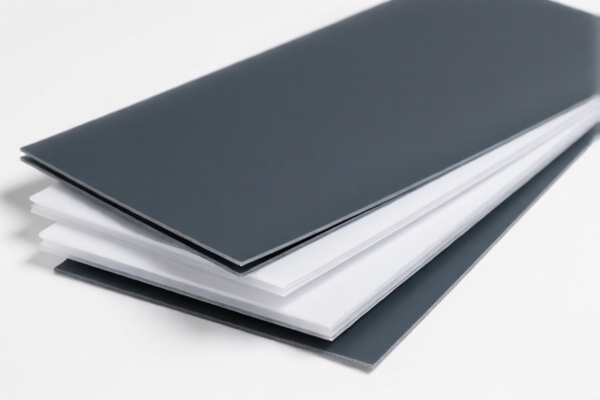
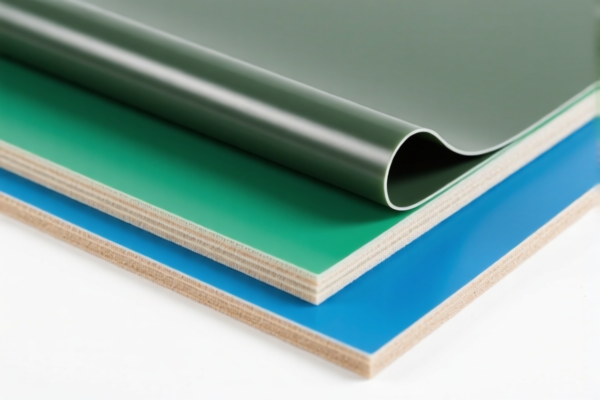
AI Analysis
🧊 Polyamide Industrial Sheets (PA / Nylon Plates)
🌐 HS Code Reference & Clearance Guide | 2026 Latest Tariff Analysis | Professional Customs Strategy
📌 Part I: Product Definition & Classification: Do You Really Understand "Polyamide Sheets"?
Polyamide (commonly known as Nylon) industrial sheets are high-performance engineering plastics widely used in automotive, aerospace, medical devices, and mechanical manufacturing. In international trade, their classification depends heavily on their physical state, specific application, and degree of processing.
1. Raw/Primary Form Resins: Granules or powders before extrusion or molding. 2. Semi-Finished/Finished Sheets (The Core Subject): Flat, rigid plates or sheets ready for machining (cutting, drilling) or direct use. 3. Medical Specific Forms: Sheets specifically shaped or certified for use in orthopedic or plastic surgery instruments.
⚠️ Key Classification Points:
- If the product is a generic rigid plate for mechanical/industrial use → It falls under Chapter 39 (Plastics).
- If the product is an intermediate shape specifically designed for medical orthopedic devices (e.g., custom-fit surgical guides or implants) → It may fall under Chapter 90 (Medical Instruments).
- Crucial Distinction: Does the sheet serve a general industrial purpose, or is it an integral part/component of a medical device?
📦 Part II: HS Code Classification Details (2026 Latest Tariff Authority Comparison)
Based on the provided data, here are the precise classifications for Polyamide Industrial Sheets:
| HS Code | Product Description | Application Scenario | Tax Rate (Total) |
|---|---|---|---|
3921.90.50.50 |
Other plates, sheets, film, foil, and strips of plastics | General industrial use; rigid polyamide plates not specified elsewhere | 39.8% |
9021.10.00.90 |
Intermediate forms for orthopedic or fracture appliances | Semi-finished shapes specifically for making surgical tools or braces | 10.0% |
3908.90.70.00 |
Other polyamides in primary forms | Misclassification Alert: If the sheet is not in "primary form" (granules/powder), this code is invalid. If applied, it implies a specific resin category. | 41.5% |
3921.19.00.90 |
Other plates, sheets, film, foil, and strips of plastics | Similar to 3921.90 but under different sub-heading for "plastic plates/sheets" | 41.5% |
9021.90.81.00 |
Semi-finished materials or raw materials for plastic/corrective appliances | Intermediate forms for plastic surgery or corrective devices (not strictly orthopedic braces) | 10.0% |
🔍 Critical Analysis:
- The Lowest Tax (10%) is available ONLY if the polyamide sheet is classified under Chapter 90 (Medical Instruments). This requires proof that the sheet is an "intermediate form" or "semi-finished material" specifically for orthopedic or plastic surgery appliances.
- The Highest Tax (41.5%) applies if classified under Chapter 39 (Plastics), specifically under3908(Primary forms) or3921(Other plates/sheets).
-3921.90.50.50is the most common classification for standard industrial nylon plates, with a total tax of 39.8%.
💰 Part III: 2026 Latest Tariff Rate Breakdown (Including Surcharges & Policy Add-ons)
✅ Applicable Country: United States (US)
✅ Origin: China (CN)
✅ Effective Date: From November 10, 2025 (including subsequent imports)
🎯 1. 3921.90.50.50 — Other Plastic Plates, Sheets, Film, Foil, and Strips (General Industrial Use)
| Item | Details |
|---|---|
| Base Tariff | 4.8% (ad valorem) |
| Section 301 Surcharge | +25.0% |
| IEEPA Surcharge (122 Clause) | +10.0% |
| Total Tax Rate | 39.8% |
| Tax Calculation | CIF Value × 39.8% |
| De Minimis Exemption | ❌ Not Eligible (deny_de_minimis) |
| Legal Basis Path | Section 301: 9903.88.01 → IEEPA: 9903.01.24 → USITC: 3921.90.50.50 |
📌 Explanation:
- This is the standard classification for generic polyamide industrial sheets.
- The 4.8% base rate is standard for plastics.
- The 25% Section 301 tariff and 10% IEEPA tariff are heavily applied to Chinese plastic products.
- Total Cost Impact: Nearly 40% of the CIF value is taxed. This significantly erodes profit margins for general industrial suppliers.
🎯 2. 9021.10.00.90 — Orthopedic/Fracture Appliance Intermediate Forms (Medical Use)
| Item | Details |
|---|---|
| Base Tariff | 0.0% |
| Section 301 Surcharge | 0.0% |
| IEEPA Surcharge (122 Clause) | +10.0% |
| Total Tax Rate | 10.0% |
| Tax Calculation | CIF Value × 10.0% |
| De Minimis Exemption | ❌ Not Eligible |
| Legal Basis Path | IEEPA: 9903.01.24 → USITC: 9021.10.00.90 |
📌 Explanation:
- This classification offers a significant tax advantage (10% vs 39.8%).
- Condition: The product must be demonstrably an "intermediate form" for orthopedic or fracture appliances (e.g., custom-made surgical guides, braces, or implants made from polyamide).
- Risk: Misclassifying a general industrial sheet as medical can lead to severe penalties, back taxes, and shipment delays.
🎯 3. 3908.90.70.00 — Other Polyamides in Primary Forms (High Risk Misclassification)
| Item | Details |
|---|---|
| Base Tariff | 6.5% |
| Section 301 Surcharge | +25.0% |
| IEEPA Surcharge (122 Clause) | +10.0% |
| Total Tax Rate | 41.5% |
| Tax Calculation | CIF Value × 41.5% |
| De Minimis Exemption | ❌ Not Eligible |
| Legal Basis Path | Section 301: 9903.88.01 → IEEPA: 9903.01.24 → USITC: 3908.90.70.00 |
📌 Warning:
- Polyamide Sheets are NOT in "primary form" (which refers to granules, powders, or liquids).
- Using this code for sheets is likely a classification error by customs or a risky attempt to claim a different category.
- If audited, customs will reclassify to3921or3926, potentially leading to back taxes and fines. Avoid this code for sheets.
🎯 4. 3921.19.00.90 — Other Plastic Plates, Sheets, Film, Foil, and Strips
| Item | Details |
|---|---|
| Base Tariff | 6.5% |
| Section 301 Surcharge | +25.0% |
| IEEPA Surcharge (122 Clause) | +10.0% |
| Total Tax Rate | 41.5% |
| Tax Calculation | CIF Value × 41.5% |
| De Minimis Exemption | ❌ Not Eligible |
| Legal Basis Path | Section 301: 9903.88.01 → IEEPA: 9903.01.24 → USITC: 3921.19.00.90 |
📌 Note:
- This code is very similar to3921.90.50.50but falls under a different sub-heading.
- The tax burden is identical (41.5%).
- Choose3921.90.50.50for general "other" plastic sheets unless specific technical specifications align with3921.19.
🎯 5. 9021.90.81.00 — Plastic/Corrective Appliance Semi-Finished Materials
| Item | Details |
|---|---|
| Base Tariff | 0.0% |
| Section 301 Surcharge | 0.0% |
| IEEPA Surcharge (122 Clause) | +10.0% |
| Total Tax Rate | 10.0% |
| Tax Calculation | CIF Value × 10.0% |
| De Minimis Exemption | ❌ Not Eligible |
| Legal Basis Path | IEEPA: 9903.01.24 → USITC: 9021.90.81.00 |
📌 Explanation:
- Similar to9021.10.00.90, this code applies to semi-finished materials for plastic or corrective appliances.
- If your polyamide sheets are used as raw stock for custom plastic surgery implants or corrective devices, this 10% rate may apply.
- Documentation Requirement: Must prove the end-use is medical/corrective.
🛠️ Part IV: Customs Clearance Practical Advice (Real-World Pitfall Guide)
✅ 1. Required Documentation Checklist (Non-negotiable)
| Document | Mandatory? | Description |
|---|---|---|
| ✅ Product Specification Sheet | ✔️ | Must detail: Material (Polyamide 6, 66, etc.), Density, Tensile Strength, Thickness, Dimensions. |
| ✅ Certificate of Origin (CO) | ✔️ | Proof of Chinese origin triggers Section 301/IEEPA taxes. |
| ✅ Commercial Invoice | ✔️ | Must clearly state: "Polyamide Industrial Sheet, HS Code XXXX, Country of Origin: China". |
| ✅ Packing List | ✔️ | Detailed packaging info. |
| ✅ End-Use Declaration | ✔️ | Critical for Medical Classification. If claiming 10% tax, provide a letter stating the sheets are for "Orthopedic Appliance Manufacturing" or "Plastic Surgery Device Production." |
| ✅ FDA Registration (if applicable) | ✔️ | If claiming medical classification, the facility and product may need FDA registration. |
| ✅ Third-Party Test Report | ✔️ | ISO 9001, SGS, or equivalent quality reports. |
✅ 2. Declaration Strategy (Key Mnemonics)
🔥 "Medical Use for 10%, Industrial for 40%; Proof is King!"
| Scenario | Correct Declaration | Wrong Approach |
|---|---|---|
| Standard Nylon Plate (General Machinery) | 3921.90.50.50 (39.8%) |
Misclassifying as medical → Penalty & Back Tax |
| Custom Orthopedic Guide | 9021.10.00.90 (10.0%) |
Calling it "Nylon Plate" without medical proof → Reclassification to 3921 |
| Raw Nylon Granules | 3908.90.70.00 (41.5%) |
Calling granules "Sheets" → Misclassification |
| Sheets for Medical Implants | 9021.90.81.00 (10.0%) |
Generic "Plastic Sheet" label → Higher Tax |
✅ 3. Special Case Handling
| Case | Handling Advice |
|---|---|
| OEM Medical Devices | Provide customer purchase orders and design drawings showing the sheet is part of a medical device. |
| Mixed Shipments | Separate industrial and medical shipments. Do not mix HS Codes in one invoice if possible to avoid confusion. |
| "Primary Form" Confusion | Do NOT use 3908.90.70.00 for sheets. It is for granules/powders. Using it for sheets will be flagged by customs. |
| Pre-Ruling Application | For high-volume medical polyamide sheets, apply for an Advance Ruling with CBP to confirm eligibility for 10% tax. |
🌍 Part V: Global Market Comparison (2026 Latest)
| Country/Region | Recommended HS Code | Tariff (China Origin) | Certification | Notes |
|---|---|---|---|---|
| 🇺🇸 USA | 3921.90.50.50 |
39.8% (Industrial) | None | High tax due to Section 301 & IEEPA |
| 🇺🇸 USA | 9021.10.00.90 |
10.0% (Medical) | FDA | Requires strict end-use proof |
| 🇨🇳 China | 3921.90.50.50 |
6.5% | CCC (if applicable) | No Section 301 taxes |
| 🇪🇺 EU | 3921.90.50 |
0% - 4.5% | CE + REACH | No major surcharges |
| 🇬🇧 UK | 3921.90.50 |
0% - 4.5% | UKCA + REACH | Post-Brexit rules apply |
| 🇯🇵 Japan | 3921.90.50 |
0% - 6.0% | PSE (if electrical) | Generally low tariffs |
📌 Conclusion:
- USA has the highest barrier due to trade wars (Section 301 + IEEPA).
- Medical Classification is the only legal way to reduce US tariffs from ~40% to 10%.
- EU, UK, Japan offer much more favorable tariff environments for Chinese polyamide sheets.
📌 Part VI: Common Errors & Pitfall Guide (Lessons Learned)
❌ Error 1: Classifying Industrial Nylon Sheets as 3908.90.70.00 (Primary Forms)
👉 Consequence: Customs will reject it because sheets are not "primary forms." Delay and reclassification to 3921 (39.8% tax).
❌ Error 2: Claiming 10% Medical Tax for General Industrial Plates
👉 Consequence: Audits, back taxes of ~30%, and potential fraud penalties. Proof is mandatory.
❌ Error 3: Not specifying Material Type (e.g., just "Nylon")
👉 Consequence: Customs may classify under higher duty categories or require additional testing. Always specify Polyamide 6 (PA6) or Polyamide 66 (PA66).
✅ Correct Practice:
"Polyamide 6 (PA6) Industrial Sheet, Black, 10mm Thickness, CNC Machinable, For General Mechanical Use, HS Code: 3921.90.50.50"
OR
"Polyamide Intermediate Form, For Custom Orthopedic Brace Manufacturing, FDA Registered Facility, HS Code: 9021.10.00.90"
🎯 Part VII: Conclusion: Precise Classification Saves Money!
🎯 Remember the Key Points:
🔹 Industrial Sheets = ~40% Tax (USA) → Use
3921.90.50.50
🔹 Medical Intermediates = 10% Tax (USA) → Use9021.10.00.90or9021.90.81.00
🔹 Primary Forms (Granules) = ~41.5% Tax → Use3908.90.70.00
🔹 Proof is Everything for Medical Classification!
📌 Pro Tip:
If you are exporting general industrial polyamide sheets to the US, consider supply chain diversification (e.g., Vietnam, Malaysia) to avoid Section 301 tariffs, or optimize pricing to absorb the 39.8% tax.
For medical users, ensure your FDA registration and end-use documentation are flawless to claim the 10% rate.
📣 Immediate Action:
📞 Consult a Customs Broker for Advance Ruling if your product is on the border between Industrial and Medical.
📝 Label Clearly: "For Industrial Use" or "For Medical Appliance Manufacturing" to avoid ambiguity.
🚀 Smart Classification = Higher Profit Margins!
✨ Professional Customs Clearance Starts with Accurate Classification!
💼 Every Percent of Tax Saved is Pure Profit!
Customer Reviews
About HS Code Classification
The Harmonized System (HS) is an internationally standardized nomenclature developed by the World Customs Organization (WCO) to classify traded products. Over 200 countries use the HS system as the basis for customs tariffs, trade statistics, and import/export regulations.
Each HS code follows a hierarchical structure:
- Chapter (2 digits) — Broad category of goods (e.g., Chapter 84: Machinery and Mechanical Appliances)
- Heading (4 digits) — More specific grouping within the chapter
- Subheading (6 digits) — Internationally standardized breakdown, used by all WCO member countries
- National subdivisions (8-10 digits) — Country-specific extensions for further classification, such as US HTSUS 10-digit codes
Correct HS code classification is essential for smooth customs clearance, accurate duty payment, and compliance with trade regulations. Misclassification can lead to customs delays, overpayment of duties, or penalties.
When importing from CN to US, the applicable tariff rates may include:
- Most-Favored-Nation (MFN) rate — The standard duty rate applied to WTO members
- General rate — Applied to countries without trade agreements
- Trade remedy duties — Additional tariffs such as Section 301 (anti-dumping), Section 232 (national security), or countervailing duties
The information provided on this page is for reference purposes only. For official classification, please consult with your local customs authority or a licensed customs broker.