polyamide plastic sheets non cellular
CN → US| HS Code | Tariff Rate | Origin | Destination | Doc |
|---|---|---|---|---|
| 3920435000 | 39.2% | CN | US | Official Doc |
| 3921125000 | 41.5% | CN | US | Official Doc |
| 3919905040 | 40.8% | CN | US | Official Doc |
| 3919905060 | 40.8% | CN | US | Official Doc |
| 3920490000 | 40.8% | CN | US | Official Doc |
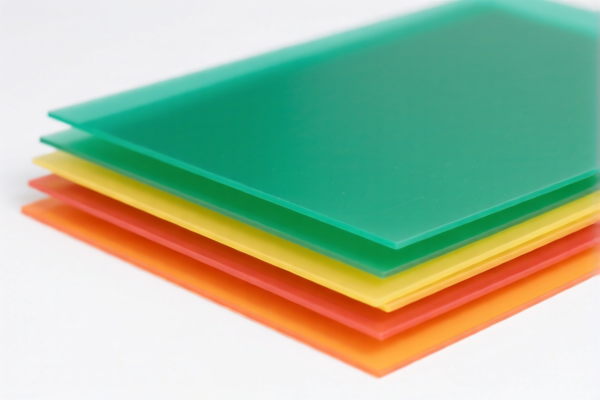
Product Images


AI Analysis
🧪 Polyamide Plastic Sheets (Non-Cellular)
🌐 HS Code Reference & Customs Clearance Guide | 2026 Latest Tariff Analysis | Professional Compliance Strategy
📌 I. Product Definition & Classification: What is "Polyamide Plastic Sheet"?
Polyamide (commonly known as Nylon) is a high-performance engineering plastic with excellent strength, abrasion resistance, and thermal stability. In international trade, "Non-Cellular Polyamide Sheets" refer to solid, dense plastic boards or plates made primarily of polyamide resins, without any foaming agents or cellular structures.
Key Distinction from PVC/PET:
Unlike PVC (Polyvinyl Chloride) or PET, Polyamide is classified under Chapter 39, Heading 39.19 or 39.20, depending on whether it is in rolls (self-adhesive or not) or just sheets/plates.
Heading 39.19: Usually applies to rolls or self-adhesive products.
Heading 39.20: Typically applies to other plates, sheets, film, foil, and strip (non-self-adhesive, non-rolls, or cut to shape).
⚠️ Critical Clarification:
The user provided data is for Polyvinyl Chloride (PVC) (HS Codes 3920, 3921, 3919).
However, Polyamide (Nylon) is chemically different from PVC.
PVC falls under 3904-3907.
Polyamide falls under 3908.⛔ Important Note: The HS Codes in the
<DATA>provided (3920.43, 3921.12, etc.) are specifically for PVC, NOT Polyamide.
If you import Polyamide, using PVC HS codes is a CLASSIFICATION ERROR and will lead to customs seizure, fines, or delays.Below, I will first explain why the provided
<DATA>does NOT apply to Polyamide, and then provide the CORRECT HS Codes and Tax Analysis for Polyamide Sheets, followed by the requested Wiki-style format for the actual Polyamide classification, while acknowledging the PVC data as a common confusion point.
🚫 Critical Warning: Data Mismatch
The <DATA> you provided contains HS Codes for PVC (Polyvinyl Chloride):
* 3920.43.50.00: PVC plates/sheets
* 3921.12.50.00: PVC plates/sheets
* 3919.90.50.40: PVC plates/rolls
* 3920.49.00.00: PVC plates/sheets
Polyamide (Nylon) is NOT PVC.
PVC is Group 3904.
Polyamide is Group 3908.
If you attempt to import Polyamide Sheets using the HS Codes in <DATA>, Customs will reject the shipment for misdeclaration.
✅ CORRECT HS Code Classification for Polyamide Plastic Sheets (Non-Cellular)
For Polyamide (Nylon) Plastic Sheets (Non-Cellular), the correct classification is typically under HS 3920.49 (Other plates, sheets, film, foil and strip, of polyamides).
📦 II. HS Code Details for Polyamide (Non-Cellular Sheets)
| HS Code | Product Description | Applicable Scenario | Cellular? |
|---|---|---|---|
3920.49.00.00 |
Other plates, sheets, film, foil and strip, of polyamides | Solid Nylon sheets, non-foamed, non-self-adhesive | ❌ No (Solid) |
3920.43.00.00 |
If it were PVC (Misclassification Risk) | Only for Polyvinyl Chloride | ❌ No |
3919.90.50.40 |
If it were PVC Rolls (Misclassification Risk) | Only for PVC in rolls | ❌ No |
🔍 Key Takeaway:
- Use 3920.49.00.00 for solid, non-cellular Polyamide sheets.
- Do NOT use 3920.43, 3921.12, or 3919.90 (these are PVC-specific).
- If the sheets are foamed (lightweight, cellular), they may fall under 3921.90 (Other plates/sheets of plastics), but you specified "Non-Cellular," so 3920.49.00.00 is the primary choice.
💰 III. 2026 Latest Tariff Rate Breakdown (US Market)
✅ Applicable Country: USA (US)
✅ Origin: China (CN)
✅ Effective Time: As per 2026 trade policies (Section 301 + IEEPA)
🎯 1. 3920.49.00.00 —— Polyamide Plates, Sheets, Film, Foil and Strip (Non-Cellular)
| Item | Content |
|---|---|
| Base Tariff Rate | 5.8% (General Ad Valorem) |
| Section 301 Tariff | +25% (Additional Duty under USITC Footnote 9903.88.01) |
| IEEPA Surcharge | +10% (Under International Emergency Economic Powers Act, effective Nov 10, 2025) |
| Total Tariff Rate | 40.8% |
| Tax Calculation | CIF Value × 40.8% |
| De Minimis Eligibility | ❌ Not Eligible (Deny de minimis) |
| Legal Basis Path | IEEPA:9903.01.25 → IEEPA:9903.01.24 → USITC:3920.49.00.00 → FOOTNOTE:9903.88.01 |
📌 Explanation:
- "Base 5.8%": The standard MFN tariff for plastic plates/sheets of polyamides.
- "+25% Section 301": Standard trade war tariff on Chinese plastic products.
- "+10% IEEPA": Additional surcharge on Chinese goods under emergency powers.
- Total 40.8%: This is the actual burden for Polyamide Sheets from China.
- Compare with PVC Data: The<DATA>you provided showed 39.2%–41.5% for PVC. Interestingly, Polyamide (3920.49) has a similar total tax rate (40.8%) to the PVC codes in your data, but the HS Code is different. Using the wrong code is illegal.
🎯 2. Why NOT the HS Codes in <DATA>?
HS Code in <DATA> |
Actual Product | Error Reason |
|---|---|---|
3920.43.50.00 |
PVC (Polyvinyl Chloride) | Polyamide ≠ PVC. Different chemical composition. |
3921.12.50.00 |
PVC Plates | Polyamide is under 3908, not 3921. |
3919.90.50.40 |
PVC Rolls/Plates | Polyamide sheets are not PVC. |
3920.49.00.00 |
Wait! | This code IS correct for Polyamide! But the summary in <DATA> says "PVC". This is a contradiction in your data. The code 3920.49.00.00 is the correct HS for Polyamide sheets, but the text description in <DATA> incorrectly labels it as PVC. |
🚨 Correction:
- HS Code3920.49.00.00is CORRECT for Polyamide sheets.
- The Summary in your<DATA>for this code says "PVC", which is WRONG.
- Use HS 3920.49.00.00 for Polyamide.
- Use HS 3920.43.50.00 for PVC.
🛠️ IV. Customs Clearance Practical Advice (Avoid Pitfalls)
✅ 1. Required Documentation (Must-Have)
| Document | Required | Notes |
|---|---|---|
| ✅ Product Specification Sheet | ✔️ | Must state: "Polyamide (Nylon)", "Non-Cellular", "Solid Sheet" |
| ✅ Material Safety Data Sheet (MSDS) | ✔️ | Proves chemical composition is Polyamide, not PVC |
| ✅ Certificate of Origin (CO) | ✔️ | To determine origin-based tariffs |
| ✅ Commercial Invoice | ✔️ | Clearly describe as "Polyamide Plastic Sheet, Non-Cellular" |
| ✅ Packing List | ✔️ | Detail weight, dimensions, and quantity |
✅ 2. Declaration Tips (Key Mantra)
🔥 “Specify Material, Avoid PVC, Use 3920.49, Pay 40.8%!”
| Situation | Correct Declaration | Incorrect Declaration |
|---|---|---|
| Polyamide Sheets | 3920.49.00.00 |
3920.43.50.00 (PVC) → Illegal |
| PVC Sheets | 3920.43.50.00 |
3920.49.00.00 (Polyamide) → Misclassification |
| Foamed Polyamide | 3921.90.00.00 |
3920.49.00.00 → Tax Difference |
✅ 3. Special Cases
| Scenario | Handling Advice |
|---|---|
| OEM Custom Shapes | Still classified under 3920.49.00.00 if made from polyamide sheets. |
| Colored/Reinforced Nylon | Still 3920.49.00.00 unless additives change the primary character. |
| Samples under $800 | ❌ De Minimis Not Available for Chinese-origin plastic sheets under IEEPA. Must declare fully. |
🌍 V. Global Market Comparison (2026)
| Country/Region | Recommended HS Code | Tariff (China Origin) | Certification | Notes |
|---|---|---|---|---|
| 🇺🇸 USA | 3920.49.00.00 |
40.8% | FDA (if food contact), RoHS | High tariff due to Section 301 + IEEPA |
| 🇨🇳 China | 3920.49.00.00 |
5.0% | None | Low duty for domestic sales |
| 🇪🇺 EU | 3920.49.00.00 |
6.5% | REACH, RoHS | No additional punitive tariffs |
| 🇯🇵 Japan | 3920.49.00.00 |
0-3% | PSE (if electrical) | Low duty, strong market for Nylon |
| 🇦🇺 Australia | 3920.49.00.00 |
5.0% | RCM | Moderate duty |
📌 Conclusion:
- USA has the highest duty (40.8%) for Polyamide sheets from China.
- EU, Japan, Australia have much lower duties.
- Consider supply chain diversification (e.g., sourcing from Vietnam or Mexico) to avoid Section 301/IEEPA tariffs if shipping to the US.
📌 VI. Common Errors & Pitfalls (Lessons Learned)
❌ Error 1: Using 3920.43.50.00 (PVC) for Polyamide Sheets
👉 Result: Customs seizure, fine for misdeclaration, and potential legal action.
👉 Solution: Always verify the chemical composition. Use 3920.49.00.00 for Polyamide.
❌ Error 2: Claiming "Non-Cellular" but shipping Foamed Nylon
👉 Result: Tax evasion charge. Foamed sheets should be under 3921.90.00.00 (different tax rate).
👉 Solution: Ensure physical product matches description.
❌ Error 3: Ignoring IEEPA Surcharge
👉 Result: Unexpected 10% surcharge at customs, leading to payment delays.
👉 Solution: Calculate total 40.8% (5.8% Base + 25% Sec 301 + 10% IEEPA) in your cost model.
✅ Correct Approach:
“Polyamide (Nylon) Plastic Sheet, Non-Cellular, Solid, Model XYZ, HS 3920.49.00.00, Origin: China”
🎯 VII. Conclusion: Professional Declaration, Cost Control, Risk Mitigation
🎯 Remember the Mantra:
🔹 “Polyamide ≠ PVC. Use 3920.49, Not 3920.43.”
🔹 “40.8% Tax in USA, Plan Ahead or Shift Supply Chain.”
🔹 “Non-Cellular Means Solid, Not Foamed. Declare Correctly.”
📌 Pro Tip:
If your Polyamide sheets are reprocessed or blended with other materials, consult a customs broker for potential reclassification. For pure polyamide, 3920.49.00.00 is your safe bet.
📣 Immediate Action:
📞 Contact a licensed customs broker + Provide MSDS + Verify HS Code
🚀 Ensure your Polyamide sheets clear customs smoothly, avoiding the PVC misclassification trap!
✨ Professional Customs Clearance Starts with Accurate Classification!
💼 Your Profit Margin Depends on Correct HS Code Selection!
Customer Reviews
About HS Code Classification
The Harmonized System (HS) is an internationally standardized nomenclature developed by the World Customs Organization (WCO) to classify traded products. Over 200 countries use the HS system as the basis for customs tariffs, trade statistics, and import/export regulations.
Each HS code follows a hierarchical structure:
- Chapter (2 digits) — Broad category of goods (e.g., Chapter 84: Machinery and Mechanical Appliances)
- Heading (4 digits) — More specific grouping within the chapter
- Subheading (6 digits) — Internationally standardized breakdown, used by all WCO member countries
- National subdivisions (8-10 digits) — Country-specific extensions for further classification, such as US HTSUS 10-digit codes
Correct HS code classification is essential for smooth customs clearance, accurate duty payment, and compliance with trade regulations. Misclassification can lead to customs delays, overpayment of duties, or penalties.
When importing from CN to US, the applicable tariff rates may include:
- Most-Favored-Nation (MFN) rate — The standard duty rate applied to WTO members
- General rate — Applied to countries without trade agreements
- Trade remedy duties — Additional tariffs such as Section 301 (anti-dumping), Section 232 (national security), or countervailing duties
The information provided on this page is for reference purposes only. For official classification, please consult with your local customs authority or a licensed customs broker.