polycarbonate multi layer board
CN → US| HS Code | Tariff Rate | Origin | Destination | Doc |
|---|---|---|---|---|
| 3921190090 | 41.5% | CN | US | Official Doc |
| 3921905050 | 39.8% | CN | US | Official Doc |
| 3907995050 | 41.5% | CN | US | Official Doc |
| 3920991000 | 41.0% | CN | US | Official Doc |
| 3907400000 | 40.8% | CN | US | Official Doc |
Product Images
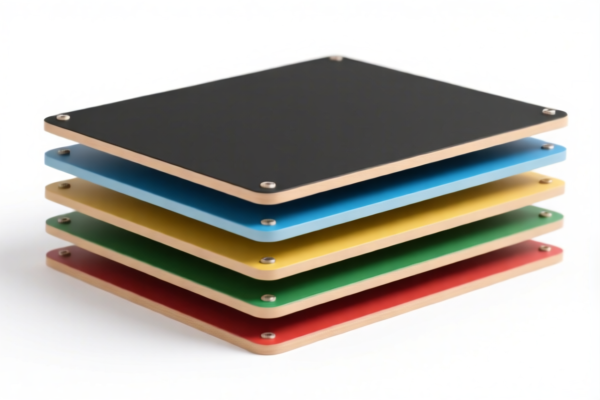
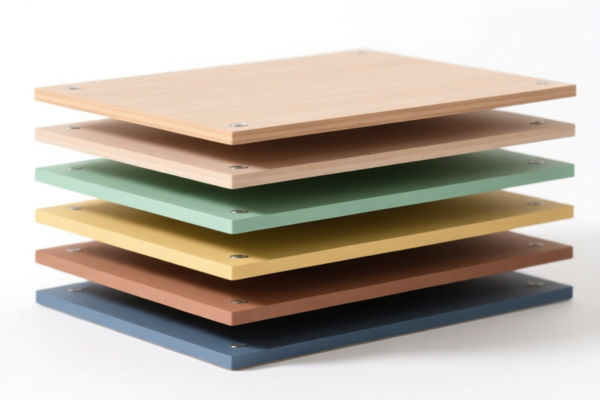
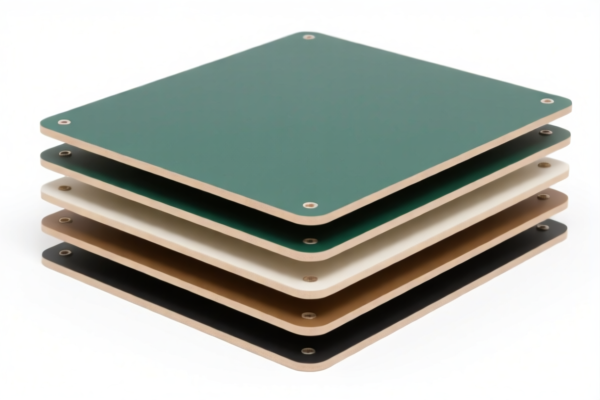
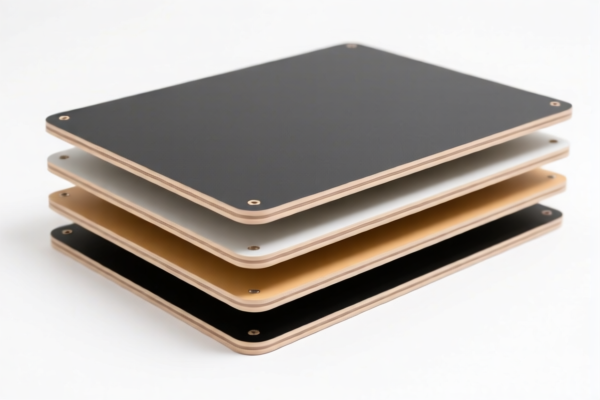
AI Analysis
🧱 Polycarbonate Multi-layer Board (聚碳酸酯多层板)
🌐 HS Code Reference & Customs Clearance Guide | 2026 Latest Tariff Analysis | Professional Clearance Strategy
📌 I. Product Definition & Classification: Do You Really Understand "Polycarbonate Boards"?
Polycarbonate (PC) Multi-layer Boards are high-performance engineering plastic materials characterized by high impact resistance, transparency, and thermal stability. In international trade, their classification depends heavily on material composition, physical form, and processing state.
Key Distinction Points: * Raw Material vs. Finished Product: Is it a semi-finished resin sheet (Chapter 39.07) or a processed plastic board (Chapter 39.20/39.21)? * Layering & Lamination: Is it a simple single-layer extrusion or a complex multi-layer lamination? * Application: Is it used for construction, electrical insulation, or general packaging?
⚠️ Critical Warning:
- If the board is primarily polycarbonate resin processed into sheets/plates without specific functional coatings or composite layers beyond simple lamination, it often falls under Chapter 39 (Plastics and Articles Thereof).
- Misclassification can lead to significant tariff differences due to Section 301 and Section 232/122附加关税 on Chinese goods.
📦 II. HS Code Classification Details (2026 Latest Tariff Authority Comparison)
Based on the provided data, here are the potential HS Codes and their corresponding tax implications. Note that slight variations in summary (e.g., "construction board" vs. "general plastic board") lead to different sub-headings.
| HS Code | Product Description & Reasoning | Application Scenario | Total Tax Rate | Tax Breakdown |
|---|---|---|---|---|
| 3921.19.00.90 | Polycarbonate, Plate Form. Summary: "Polycarbonate belongs to plastic material, plate form fits plate/film category, classified under other plastic plates." | General purpose PC plates, non-specific applications. | 41.5% | Base: 6.5% +25% (Section 301) +10% (Section 122) |
| 3921.90.50.50 | Other Plastic Plates. Summary: "Material is polycarbonate, form is plate, no conflict, classified under other plastic plates." | PC boards not specifically listed elsewhere in 3921.1. | 39.8% | Base: 4.8% +25% (Section 301) +10% (Section 122) |
| 3907.99.50.50 | Polycarbonate Resin/Preparations. Summary: "Material polycarbonate matches code category, construction board falls within this scope." | Semi-finished PC resin sheets or specific resin forms used for construction. | 41.5% | Base: 6.5% +25% (Section 301) +10% (Section 122) |
| 3920.99.10.00 | Other Non-Laminated Plastic Plates. Summary: "PC is plastic, construction board is plate type, no lamination or thickness restriction, classified under other plastic plates." | PC plates that are not laminated/compounded with other materials. | 41.0% | Base: 6.0% +25% (Section 301) +10% (Section 122) |
| 3907.40.00.00 | Polycarbonate Resins (Primary Forms). Summary: "PC material consistent, construction board is plate form, fits primary or semi-finished resin processing attribute." | Raw PC resin plates or blocks, often for further machining. | 40.8% | Base: 5.8% +25% (Section 301) +10% (Section 122) |
🔍 Key Insight:
- The total tax rates range from 39.8% to 41.5% due to the addition of 25% (Section 301) and 10% (Section 122) tariffs on Chinese-origin goods.
- The Base Tariff varies from 4.8% to 6.5% depending on the specific subheading (3921 vs 3920 vs 3907).
- 3907.40.00.00 has the lowest base rate (5.8%) and thus the lowest total tax (40.8%), but it requires the product to be classified as a resin/form rather than a finished board.
💰 III. 2026 Latest Tariff Rate Details (Including Surtaxes & Policy Add-ons)
✅ Applicable Country: United States (US)
✅ Origin: China (CN)
✅ Effective Date: 2025/2026 (Based on current Section 301 & 122 regulations)
🎯 1. 3921.19.00.90 —— Polycarbonate Plates (General)
| Item | Content |
|---|---|
| Base Duty Rate | 6.5% |
| Section 301 Surcharge | +25% (USITC Footnote for PC plates) |
| Section 122 Surcharge | +10% (Targeted China surcharge) |
| Total Duty Rate | 41.5% |
| Calculation | CIF Value × 41.5% |
| De Minimis Exemption | ❌ Not Eligible (Deny de minimis) |
| Legal Basis Path | Section 301: 3921.19.00.90 → Section 122: Additional 10% |
📌 Explanation:
- This code is for polycarbonate plates not specified elsewhere.
- The 25% Section 301 tariff is standard for PC articles from China.
- The 10% Section 122 is a newer surcharge targeting specific Chinese plastic goods.
- Total cost impact is significant; accurate classification is crucial to avoid overpayment.
🎯 2. 3921.90.50.50 —— Other Plastic Plates (PC)
| Item | Content |
|---|---|
| Base Duty Rate | 4.8% |
| Section 301 Surcharge | +25% |
| Section 122 Surcharge | +10% |
| Total Duty Rate | 39.8% |
| Calculation | CIF Value × 39.8% |
| De Minimis Exemption | ❌ Not Eligible |
| Legal Basis Path | Section 301: 3921.90.50.50 → Section 122: Additional 10% |
📌 Note:
- This is a "catch-all" for plastic plates not in 3921.1.
- Slightly lower total tax (39.8%) compared to 3921.19.00.90 due to a lower base rate (4.8% vs 6.5%).
- Ensure the product does not fit more specific codes (like 3920.99 or 3907).
🎯 3. 3920.99.10.00 —— Non-Laminated Plastic Plates
| Item | Content |
|---|---|
| Base Duty Rate | 6.0% |
| Section 301 Surcharge | +25% |
| Section 122 Surcharge | +10% |
| Total Duty Rate | 41.0% |
| Calculation | CIF Value × 41.0% |
| De Minimis Exemption | ❌ Not Eligible |
📌 Important:
- Requires proof that the board is not laminated with other materials.
- If your "multi-layer" board is truly laminated (e.g., PC + adhesive + another polymer), this code may be incorrect.
🎯 4. 3907.99.50.50 & 3907.40.00.00 —— Resin/Pre-Form Stage
| HS Code | Base Rate | Total Rate | Key Consideration |
|---|---|---|---|
3907.99.50.50 |
6.5% | 41.5% | For PC resin preparations. May apply if the "board" is a semi-finished resin slab. |
3907.40.00.00 |
5.8% | 40.8% | Lowest Tax! For Polycarbonate Resins in primary forms. If your product is a raw PC plate before final finishing, this is the optimal code. |
📌 Strategy:
- If your "Multi-layer Board" can be argued as a semi-finished resin product (not a final use-item), 3907.40.00.00 offers the best tax rate (40.8%).
- However, if it is a finished construction or industrial board, 3921 codes are more appropriate.
🛠️ IV. Customs Clearance Practical Advice (Combat Pitfall Guide)
✅ 1. Document Checklist (Non-negotiable)
| Document | Must Provide | Explanation |
|---|---|---|
| ✅ Product Specifications | ✔️ | Must clearly state: Material: 100% Polycarbonate, Form: Plate/Board, Dimensions, Thickness. |
| ✅ Structure Diagram | ✔️ | Clarify if it is single-layer or multi-layer lamination. If multi-layer, describe the layers (e.g., PC + adhesive). |
| ✅ Photos (Including Labels) | ✔️ | Show the cross-section to prove layer structure. Label must include "Polycarbonate" or "PC". |
| ✅ Commercial Invoice | ✔️ | Accurately describe as "Polycarbonate Plastic Plate" or "PC Resin Board". Avoid vague terms like "Building Material" without material specification. |
| ✅ Bill of Lading | ✔️ | Ensure weight and volume match invoice. |
| ✅ Country of Origin Cert | ✔️ | To confirm Chinese origin for surcharge calculation. |
✅ 2. Declaration Tips (Key Mantra)
🔥 "Material First, Form Second, Layer Clarified, Tax Optimized!"
| Situation | Correct Declaration | Common Mistake |
|---|---|---|
| Finished PC Board (Construction) | 3921.19.00.90 or 3921.90.50.50 |
Mislabeling as "Metal Plate" or "Glass" → High penalty. |
| Raw PC Resin Plate | 3907.40.00.00 |
Over-declaring as finished product → Paying 41.5% instead of 40.8%. |
| Laminated PC Board | 3921.19.00.90 |
Declaring as single-layer 3920.99.10.00 → Risk of misclassification audit. |
| PC Sheet for Injection Molding | 3907.40.00.00 |
Declaring as finished board → Unnecessary high tax. |
✅ 3. Special Cases Handling
| Situation | Handling Advice |
|---|---|
| "Multi-layer" means Laminated with Other Plastic | Must use 3921 (Laminated plastic plates). Cannot use 3920 (Non-laminated). |
| "Multi-layer" means Co-extruded PC | Still generally 3921 or 3920 depending on structure. Provide co-extrusion specs. |
| Used in Construction | If declared as "Building Material," ensure material is PC. Some "building materials" may fall under other chapters if they contain wood/metal. Stick to PC-specific codes. |
| High-Value Engineering PC | Ensure no "functional coatings" (e.g., conductive layers) push it into Chapter 85 or 90. |
🌍 V. Global Market Customs Comparison (2026 Latest)
| Country/Region | Recommended HS Code | Duty Rate (China Origin) | Certification | Notes |
|---|---|---|---|---|
| 🇺🇸 USA | 3921.19.00.90 / 3907.40.00.00 |
39.8% - 41.5% | None specific, but accurate HS is critical. | High Surtaxes Apply (301 + 122). |
| 🇨🇳 China | 3921.19.00.90 |
6.5% (Import) | CCC (if applicable) | Low import duty, no surcharges. |
| 🇪🇺 EU | 3920.99.90 / 3921.19.00 |
6.5% - 7.2% | REACH, RoHS | No Section 301 equivalent, but anti-dumping may apply. |
| 🇬🇧 UK | 3921.19.00 |
6.5% | UKCA, REACH | Post-Brexit rules apply. |
| 🇯🇵 Japan | 3920.99.00 |
8.0% | PSE (if electrical) | Stable rates. |
📌 Conclusion:
- USA is the most challenging market due to 35%-41.5% total duties.
- EU/UK/Japan offer much lower tariffs (~6-8%), making them more cost-effective for PC imports from China.
📌 VI. Common Errors & Pitfall Guide (Lessons Learned)
❌ Error 1: Classifying "Polycarbonate Multi-layer Board" as "Building Material" (Chapter 68/73)
👉 Consequence: Misclassification penalty + Back taxes. PC is plastic, not glass or metal.
❌ Error 2: Ignoring the "Multi-layer" aspect and declaring as Single-layer (3920)
👉 Consequence: If laminated, 3920 is incorrect. Use 3921 to avoid audit issues.
❌ Error 3: Not specifying Material Composition
👉 Consequence: Customs may downgrade to a higher-tax general plastic code or require re-inspection.
❌ Error 4: Assuming De Minimis Exemption
👉 Consequence: Section 301 and 122 surcharges apply to ALL shipments from China, regardless of value. No $800 exemption for these codes.
✅ Correct Practice:
"Polycarbonate (PC) Plastic Plate, Multi-layer Laminated, For Industrial Use, 100% PC Material, Model XYZ"
🎯 VII. Conclusion: Professional Declaration, Save Money, Ensure Smooth Clearance!
🎯 Remember the Mantra:
🔹 "PC is Plastic, Chapter 39 is Key."
🔹 "Base Rate + 25% + 10% = Total Cost."
🔹 "Raw Resin (3907) < Finished Board (3921) for Tax Savings."
📌 Pro Tip:
If your product is semi-finished (e.g., raw PC slabs for further machining), insist on 3907.40.00.00 to save 0.7% - 1.7% in total duty.
If it is a finished board, use 3921.19.00.90 for compliance safety.
Always provide cross-section photos to prove layer structure.
📣 Immediate Action:
📞 Consult a licensed customs broker to confirm if your "multi-layer" structure fits 3921 (Laminated) or 3920 (Non-laminated).
🚀 Accurate HS Code = Lower Duty = Higher Profit!
✨ Professional Clearance Starts with Precise Classification!
💼 Your Every Dollar is Worth Calculating!
Customer Reviews
About HS Code Classification
The Harmonized System (HS) is an internationally standardized nomenclature developed by the World Customs Organization (WCO) to classify traded products. Over 200 countries use the HS system as the basis for customs tariffs, trade statistics, and import/export regulations.
Each HS code follows a hierarchical structure:
- Chapter (2 digits) — Broad category of goods (e.g., Chapter 84: Machinery and Mechanical Appliances)
- Heading (4 digits) — More specific grouping within the chapter
- Subheading (6 digits) — Internationally standardized breakdown, used by all WCO member countries
- National subdivisions (8-10 digits) — Country-specific extensions for further classification, such as US HTSUS 10-digit codes
Correct HS code classification is essential for smooth customs clearance, accurate duty payment, and compliance with trade regulations. Misclassification can lead to customs delays, overpayment of duties, or penalties.
When importing from CN to US, the applicable tariff rates may include:
- Most-Favored-Nation (MFN) rate — The standard duty rate applied to WTO members
- General rate — Applied to countries without trade agreements
- Trade remedy duties — Additional tariffs such as Section 301 (anti-dumping), Section 232 (national security), or countervailing duties
The information provided on this page is for reference purposes only. For official classification, please consult with your local customs authority or a licensed customs broker.