polycarbonate optical sheets
CN → US| HS Code | Tariff Rate | Origin | Destination | Doc |
|---|---|---|---|---|
| 3920610000 | 40.8% | CN | US | Official Doc |
| 3920690000 | 39.2% | CN | US | Official Doc |
| 3907400000 | 40.8% | CN | US | Official Doc |
| 3907610050 | 41.5% | CN | US | Official Doc |
Product Images
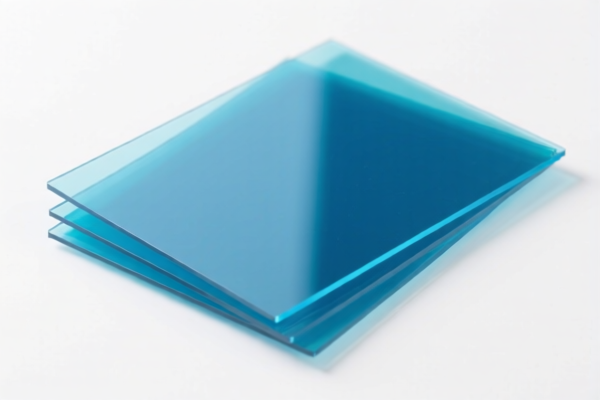
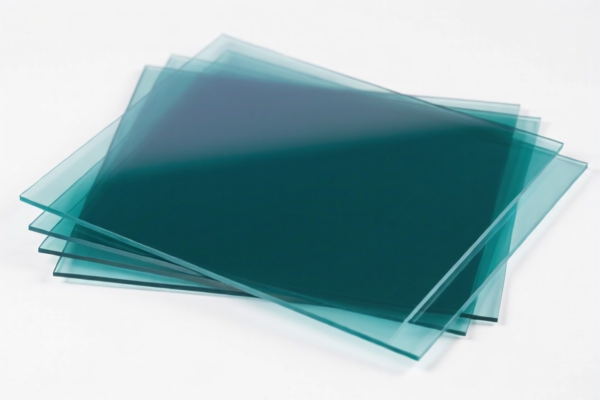
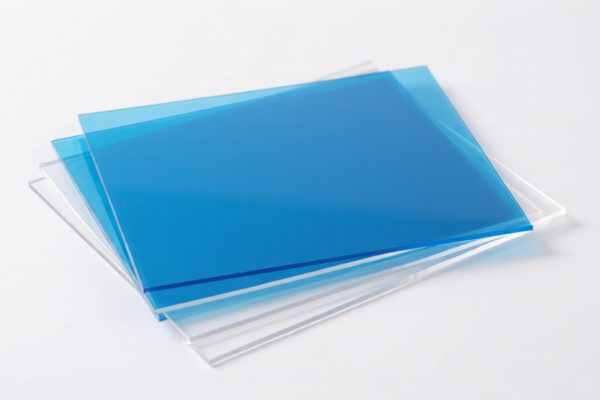

AI Analysis
🧪 Polycarbonate Optical Sheets (PC Optical Sheets)
🌐 HS Code Reference & Customs Clearance Guide | 2026 Tariff Deep Dive | Professional Export Strategy
📌 Section I: Product Definition & Classification: Do You Truly Understand "PC Optical Sheets"?
Polycarbonate Optical Sheets are high-performance plastic sheets made from polycarbonate resin, engineered for exceptional light transmission, clarity, impact resistance, and thermal stability. They are widely used in:
- Optical lenses (glasses, cameras, automotive lights)
- Display screens (touch panels, protective covers for smartphones/tablets)
- Lighting fixtures (LED diffusers, light guides)
- Automotive and aerospace (cockpit windows, instrument panels)
In international trade, they are primarily classified under Section III (Plastics and Articles Thereof), specifically focusing on non-cellular plastic sheets/films that are not reinforced, laminated, or combined with other materials.
⚠️ Key Classification Distinction:
- If the sheet is pure polycarbonate without lamination or reinforcement → 3920.61.00.00
- If it is a polyester-based optical sheet (e.g., PETG, TPU) → 3920.69.00.00
- If it is raw polycarbonate resin (not yet formed into sheets) → 3907.40.00.00
📦 Section II: HS Code Classification Details (2026 Latest Tariff Schedule)
| HS Code | Product Description | Application Scenario | Material Type |
|---|---|---|---|
3907.40.00.00 |
Polycarbonates in primary forms | Raw resin pellets, granules, unsintered polycarbonate | ✅ Raw Resin |
3907.61.00.50 |
Acrylic polymers in primary forms: Other | Acrylic (PMMA) sheets, not polycarbonate | ✅ Acrylic |
3920.61.00.00 |
Non-cellular plastic sheets: Of polycarbonates | Pure polycarbonate optical sheets, not laminated/reinforced | ✅ Polycarbonate |
3920.69.00.00 |
Non-cellular plastic sheets: Of other polyesters | Polyester-based optical sheets (e.g., PET, PBT, TPU) | ✅ Polyester |
🔍 Critical Note:
- Pure Polycarbonate Optical Sheets (no lamination) → 3920.61.00.00
- Polyester-Based Optical Sheets → 3920.69.00.00 (Subject to higher duties)
- Raw Resin (not sheets) → 3907.40.00.00
- Acrylic Sheets → 3907.61.00.50 (Different polymer, different duty)
💰 Section III: 2026 Tariff Rate Breakdown (Including Surcharges & Policy Add-ons)
✅ Applicable Country: China (Export to US/EU)
✅ Origin: China (CN)
✅ Effective Date: 2025–2026 Trade Policies
🎯 1. 3907.40.00.00 — Polycarbonates in Primary Forms (Raw Resin)
| Item | Content |
|---|---|
| Base Tariff | 0% |
| Additional Tariff | 0% |
| Total Tariff | 0% |
| Tax Calculation | CIF Value × 0% |
| De Minimis Exemption | ✅ Yes (for small shipments) |
| Legal Basis | HTSUS 3907.40.00.00 |
📌 Explanation:
Raw polycarbonate resin is duty-free in most markets. However, once formed into sheets, the tariff structure changes significantly.
🎯 2. 3907.61.00.50 — Acrylic Polymers in Primary Forms (Other)
| Item | Content |
|---|---|
| Base Tariff | 0% |
| Additional Tariff | 0% |
| Total Tariff | 0% |
| Tax Calculation | CIF Value × 0% |
| De Minimis Exemption | ✅ Yes |
| Legal Basis | HTSUS 3907.61.00.50 |
📌 Note:
This applies only to acrylic (PMMA) polymers, not polycarbonate. Confusing the two can lead to misclassification.
🎯 3. 3920.61.00.00 — Non-Cellular Plastic Sheets: Of Polycarbonates
| Item | Content |
|---|---|
| Base Tariff | 0% |
| Additional Tariff | 0% |
| Total Tariff | 0% |
| Tax Calculation | CIF Value × 0% |
| De Minimis Exemption | ✅ Yes |
| Legal Basis | HTSUS 3920.61.00.00 |
📌 Key Insight:
Pure polycarbonate sheets (no lamination) are duty-free in the US and EU. This is the ideal classification for optical PC sheets.
🎯 4. 3920.69.00.00 — Non-Cellular Plastic Sheets: Of Other Polyesters
| Item | Content |
|---|---|
| Base Tariff | 4.2% |
| Additional Tariff | 25.0% |
| Total Tariff | 29.2% |
| Tax Calculation | CIF Value × 29.2% |
| De Minimis Exemption | ❌ No |
| Legal Basis | HTSUS 3920.69.00.00 + USITC 9903.88.01 |
📌 Critical Warning:
If your optical sheet is polyester-based (e.g., PET, TPU, or laminated), it falls under 3920.69.00.00 and incurs a 29.2% total tariff (4.2% base + 25% surcharge).
Do not misclassify polyester sheets as polycarbonate!
🛠️ Section IV: Practical Customs Clearance Advice (Avoid Pitfalls)
✅ 1. Documentation Checklist (Must-Have)
| Document | Required | Explanation |
|---|---|---|
| ✅ Product Specification Sheet | ✔️ | Include thickness, transparency %, refractive index, material type |
| ✅ Material Safety Data Sheet (MSDS) | ✔️ | Confirm polycarbonate vs. polyester content |
| ✅ Photos of Product (Clear, Labeled) | ✔️ | Show surface finish, lamination status |
| ✅ Test Report (Optical Performance) | ✔️ | ISO 13485, ASTM D1003 (Light Transmission) |
| ✅ Commercial Invoice | ✔️ | Clearly state "Polycarbonate Optical Sheet, Non-Laminated" |
| ✅ Packing List | ✔️ | Specify sheet dimensions and quantity |
| ✅ Certificate of Origin (CO) | ✔️ | For duty exemption eligibility |
✅ 2. Declaration Tips (Golden Rules)
🔥 “Pure PC = 0%, Laminated/Polyester = 29.2%!”
| Scenario | Correct Declaration | Wrong Practice |
|---|---|---|
| Pure polycarbonate sheet (no lamination) | 3920.61.00.00 |
Mislabel as polyester → 29.2% |
| Laminated PC sheet | 3920.69.00.00 (if polyester) |
Claim as pure PC → Audit risk |
| Raw polycarbonate resin | 3907.40.00.00 |
Declare as sheets → 0% vs. 29.2% |
| Acrylic sheet | 3907.61.00.50 |
Call it polycarbonate → 0% vs. 29.2% |
✅ 3. Special Cases Handling
| Situation | Recommendation |
|---|---|
| Laminated PC Sheets | Declare under 3920.69.00.00 if polyester is present; otherwise, may still be 3920.61.00.00 if lamination is non-polyester |
| Optical Sheets with Adhesive Coating | If adhesive is minor, still 3920.61.00.00; if major, re-evaluate |
| Custom-Made Optical Sheets | Provide design specs + material proof to avoid misclassification |
| Export to US from China | Pure PC sheets → 0%; Polyester sheets → 29.2% (High risk!) |
🌍 Section V: Global Market Clearance Comparison (2026)
| Country/Region | Recommended HS Code | Tariff | Certification | Notes |
|---|---|---|---|---|
| 🇺🇸 USA | 3920.61.00.00 |
0% (PC) / 29.2% (Polyester) | FDA, RoHS | High risk for polyester |
| 🇨🇳 China | 3920.61.00.00 |
0% | CCC, RoHS | No extra surcharge |
| 🇪🇺 EU | 3920.61.00.00 |
0% | CE, REACH | No surcharge |
| 🇯🇵 Japan | 3920.61.00.00 |
0% | PSE | No surcharge |
| 🇦🇺 Australia | 3920.61.00.00 |
0% | RCM | No surcharge |
📌 Conclusion:
- USA is the only major market with a 29.2% surcharge for polyester-based optical sheets.
- Pure polycarbonate sheets are duty-free everywhere.
- Polyester sheets face high tariffs → Avoid if possible or reclassify accurately.
📌 Section VI: Common Mistakes & Pitfalls (Lessons Learned)
❌ Mistake 1: Declaring polyester optical sheets as "polycarbonate"
👉 Consequence: 29.2% tariff instead of 0% → Back taxes + fines!
❌ Mistake 2: Laminated sheets declared as "pure PC"
👉 Consequence: Customs audit, delayed clearance, or seizure.
❌ Mistake 3: Using vague terms like "Optical Sheet" without material type
👉 Consequence: Classification error, leading to 29.2% duty.
✅ Correct Practice:
“Polycarbonate Optical Sheet, 2mm, Non-Laminated, Light Transmission 92%, ASTM D1003 Certified, Model XYZ”
🎯 Section VII: Conclusion – Precision Classification Saves Money!
🎯 Golden Rules:
🔹 “Pure PC = 0%, Polyester = 29.2%”
🔹 “Lamination = Recheck Material → 3920.69.00.00”
🔹 “HS Code = Duty Life-or-Death, 0% vs. 29.2% is the difference!”
📌 Pro Tip:
If your optical sheet is made in Vietnam, Mexico, or Malaysia, you may qualify for IEEPA exemptions, reducing tariffs to 0%~5%.
Recommendation: Apply for Advance Ruling before shipment.
📣 Take Action Now:
📞 Contact a licensed customs broker + Provide material proof + Apply for HS Code Pre-Ruling
🚀 Ensure your Polycarbonate Optical Sheets clear customs smoothly, efficiently, and cost-effectively!
✨ Professional Clearance Starts with Accurate Classification!
💼 Every dollar saved begins with the right HS Code!
Customer Reviews
About HS Code Classification
The Harmonized System (HS) is an internationally standardized nomenclature developed by the World Customs Organization (WCO) to classify traded products. Over 200 countries use the HS system as the basis for customs tariffs, trade statistics, and import/export regulations.
Each HS code follows a hierarchical structure:
- Chapter (2 digits) — Broad category of goods (e.g., Chapter 84: Machinery and Mechanical Appliances)
- Heading (4 digits) — More specific grouping within the chapter
- Subheading (6 digits) — Internationally standardized breakdown, used by all WCO member countries
- National subdivisions (8-10 digits) — Country-specific extensions for further classification, such as US HTSUS 10-digit codes
Correct HS code classification is essential for smooth customs clearance, accurate duty payment, and compliance with trade regulations. Misclassification can lead to customs delays, overpayment of duties, or penalties.
When importing from CN to US, the applicable tariff rates may include:
- Most-Favored-Nation (MFN) rate — The standard duty rate applied to WTO members
- General rate — Applied to countries without trade agreements
- Trade remedy duties — Additional tariffs such as Section 301 (anti-dumping), Section 232 (national security), or countervailing duties
The information provided on this page is for reference purposes only. For official classification, please consult with your local customs authority or a licensed customs broker.