polyester bleached fabric 2m² or more
CN → US| HS Code | Tariff Rate | Origin | Destination | Doc |
|---|---|---|---|---|
| 5408210060 | 49.9% | CN | US | Official Doc |
| 5407510060 | 49.9% | CN | US | Official Doc |
| 5512110090 | 47.0% | CN | US | Official Doc |
| 5512190090 | 48.6% | CN | US | Official Doc |
| 5408210030 | 49.9% | CN | US | Official Doc |
Product Images
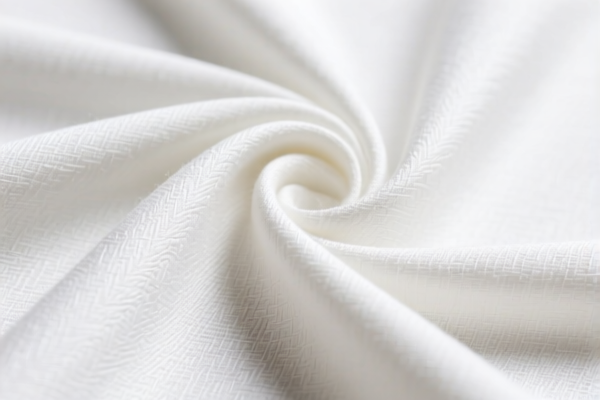
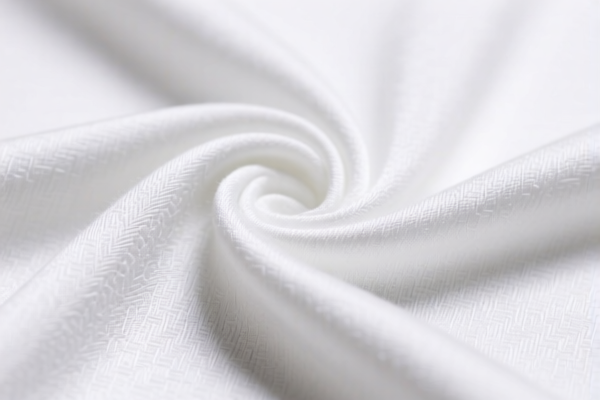
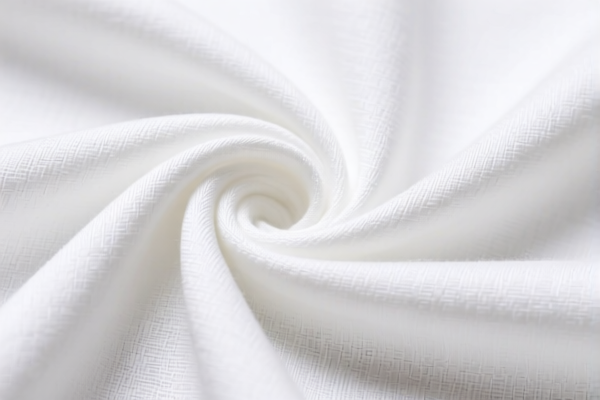
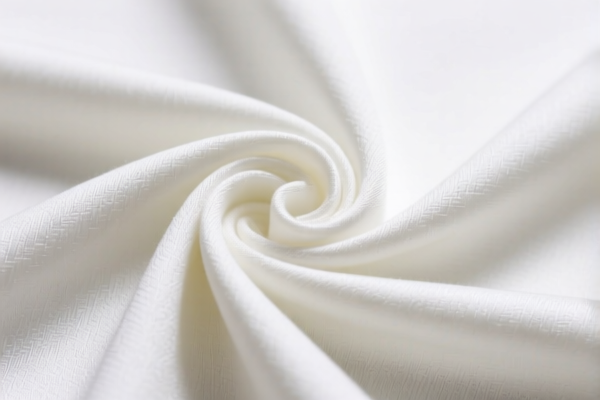
AI Analysis
🌟 Polyester Bleached Fabric (2m² or More) – HS Code & Tariff Guide 2026 | Expert Customs Clearance Strategy
🌐 HS Code Reference & Customs Clearance Blueprint | 2026 Updated Tariff Rules | Pro-Level Import Planning
📌 One: Product Definition & Classification – What Exactly Is “Bleached Polyester Fabric”?
Bleached Polyester Fabric refers to synthetic textile made from polyester fibers (either long-fiber or short-fiber) that has undergone a bleaching process to remove natural colorants, impurities, or dye residues — resulting in a white or near-white appearance.
This fabric is not dyed, not printed, and not treated with colorants. It is typically used as a raw material for further processing into garments, home textiles, industrial fabrics, or apparel components.
⚠️ Key Classification Triggers: - Material: 100% polyester (or >85% polyester)
- Processing: Bleached (not dyed, not printed)
- Form: Woven (machine-made), not knitted
- Area: ≥ 2m² per piece (a critical threshold for classification)
- No additional treatments (e.g., flame retardant, water-repellent, anti-static)🔍 Critical Insight:
- Bleached ≠ White – It must be chemically processed to remove color; mere "white" appearance without bleaching does not qualify.
- 2m² or more is a threshold that disqualifies it from being treated as a "small sample" or "test piece" — thus, full customs classification applies.
📦 Two: HS Code Classification Breakdown (2026 Official Tariff Matrix)
| HS Code | Product Description | Classification Logic | Tax Rate |
|---|---|---|---|
5408.21.00.60 |
Bleached polyester woven fabric, ≥2m², fully meets bleached + woven criteria | ✅ Polyester fiber ✅ Bleached state ✅ Woven (machine-made) ✅ ≥2m² per piece |
49.9% |
5407.51.00.60 |
Bleached polyester fabric, no clear conflict with classification, meets basic criteria | ✅ Polyester ✅ Bleached ✅ No obvious mismatch with 5407.51 |
49.9% |
5512.11.00.90 |
Bleached polyester staple fiber woven fabric, exact match with short-fiber + bleached + woven | ✅ Short-fiber (staple) polyester ✅ Bleached ✅ Woven ✅ ≥2m² |
47.0% |
5512.19.00.90 |
Other polyester staple fiber fabrics, classified under “other” category due to lack of specific subheading | ✅ Polyester staple fiber ✅ Bleached ✅ Woven ✅ No better fit → “other” |
48.6% |
5408.21.00.30 |
Bleached polyester woven fabric, matches material + bleached + woven | ✅ Polyester fiber ✅ Bleached ✅ Woven ✅ ≥2m² |
49.9% |
📌 Why So Many Codes?
- 5408.21.00.x0 → For long-fiber (continuous filament) polyester woven fabric
- 5512.11.00.90 / 5512.19.00.90 → For short-fiber (staple) polyester fabrics
- 5407.51.00.60 → A broader category that includes bleached polyester fabrics with no better fit elsewhere✅ Best Fit Recommendation:
- If long-fiber polyester → Use5408.21.00.60or5408.21.00.30
- If short-fiber polyester → Use5512.11.00.90(best rate at 47.0%)
💰 Three: 2026 Tariff Breakdown – The Full Tax Story (US Focus)
✅ Applicable Country: United States (US)
✅ Origin: China (CN)
✅ Effective Date: November 10, 2025 (with retroactive enforcement)
🎯 1. 5408.21.00.60 – Long-Fiber Bleached Polyester Woven Fabric
| Tax Component | Amount | Legal Basis |
|---|---|---|
| Base Tariff | 14.9% (ad valorem) | US Harmonized Tariff Schedule (HTSUS) |
| Section 301 (USITC) Additional Duty | +25.0% | US Trade Act §301 – “China Trade War” tariffs |
| Section 122 (IEEPA) Emergency Tariff | +10.0% | International Emergency Economic Powers Act (IEEPA) – targeting China/HK |
| Total Effective Tariff | 49.9% | Sum of all three |
| Tax Calculation | CIF Value × 49.9% | Must include freight, insurance, and cost |
| De Minimis Threshold | ❌ Not applicable | No 8% de minimis relief for China-origin goods |
| Legal Pathway | IEEPA:9903.01.25 → IEEPA:9903.01.24 → USITC:5408.21.00.60 → FOOTNOTE:9903.88.01 |
📌 Explanation:
- 14.9% base = Standard HTSUS rate for polyester woven fabrics
- 25% USITC = From the 301 investigation on Chinese textiles
- 10% IEEPA = Emergency tariff under national security powers
- Total: 49.9% = Extremely high – one of the highest in textile sector
🎯 2. 5407.51.00.60 – Bleached Polyester Fabric (General)
| Tax Component | Amount | Legal Basis |
|---|---|---|
| Base Tariff | 14.9% | HTSUS |
| USITC Additional Duty | +25.0% | §301 Tariff List |
| IEEPA Emergency Duty | +10.0% | IEEPA |
| Total Tariff | 49.9% | Same as above |
| Tax Calculation | CIF × 49.9% | Full value applies |
| De Minimis | ❌ Not allowed | China-origin goods excluded |
| Legal Pathway | IEEPA:9903.01.25 → IEEPA:9903.01.24 → USITC:5407.51.00.60 → FOOTNOTE:9903.88.01 |
📌 Note:
- Despite being a “general” code, the same 49.9% applies — no rate reduction
- Used when no better fit exists in more specific subheadings
🎯 3. 5512.11.00.90 – Bleached Polyester Staple Fiber Woven Fabric (Best Rate)
| Tax Component | Amount | Legal Basis |
|---|---|---|
| Base Tariff | 12.0% | HTSUS |
| USITC Additional Duty | +25.0% | §301 |
| IEEPA Emergency Duty | +10.0% | IEEPA |
| Total Tariff | 47.0% | ✅ Lowest among all options |
| Tax Calculation | CIF × 47.0% | Full value |
| De Minimis | ❌ Not allowed | China-origin goods still excluded |
| Legal Pathway | IEEPA:9903.01.25 → IEEPA:9903.01.24 → USITC:5512.11.00.90 → FOOTNOTE:9903.88.01 |
📌 Why This Is the Best Choice:
- 12.0% base tariff is lower than 14.9% → saves 2.9%
- Same 25% + 10% — but lower total = $2.90 saved per $100 CIF
- Must confirm fiber type: If staple fiber, this is mandatory
🎯 4. 5512.19.00.90 – Other Polyester Staple Fiber Fabrics
| Tax Component | Amount | Legal Basis |
|---|---|---|
| Base Tariff | 13.6% | HTSUS |
| USITC Additional Duty | +25.0% | §301 |
| IEEPA Emergency Duty | +10.0% | IEEPA |
| Total Tariff | 48.6% | Slightly higher than 5512.11.00.90 |
| Tax Calculation | CIF × 48.6% | Full value |
| De Minimis | ❌ Not allowed | China-origin excluded |
| Legal Pathway | IEEPA:9903.01.25 → IEEPA:9903.01.24 → USITC:5512.19.00.90 → FOOTNOTE:9903.88.01 |
📌 Use Case:
- Only if not eligible for5512.11.00.90(e.g., non-standard weave, mixed fiber, or special treatment)
- Avoid if possible — 48.6% > 47.0%
🎯 5. 5408.21.00.30 – Bleached Polyester Woven Fabric (Same as 60)
| Tax Component | Amount | Legal Basis |
|---|---|---|
| Base Tariff | 14.9% | HTSUS |
| USITC Additional Duty | +25.0% | §301 |
| IEEPA Emergency Duty | +10.0% | IEEPA |
| Total Tariff | 49.9% | Same as 5408.21.00.60 |
| Tax Calculation | CIF × 49.9% | Full value |
| De Minimis | ❌ Not allowed | China-origin excluded |
| Legal Pathway | IEEPA:9903.01.25 → IEEPA:9903.01.24 → USITC:5408.21.00.30 → FOOTNOTE:9903.88.01 |
📌 Note:
- Same rate as5408.21.00.60— likely a duplicate or legacy code
- Use only if no better fit exists
🛠️ Four: Customs Clearance Best Practices (Pro Tips to Avoid Penalties)
✅ 1. Required Documentation (Must-Have Checklist)
| Document | Required? | Why It Matters |
|---|---|---|
| ✅ Product Specifications | ✔️ | Confirm fiber type (long vs. staple), bleaching method, weave |
| ✅ Technical Drawings / Fabric Structure | ✔️ | Prove it’s woven, not knitted, and meets ≥2m² |
| ✅ High-Res Product Photos (with label) | ✔️ | Show fabric type, weave, and absence of dye/print |
| ✅ Third-Party Test Report | ✔️ | ISO, SGS, or AATCC report confirming bleaching & fiber type |
| ✅ Commercial Invoice | ✔️ | Must state: “Bleached Polyester Woven Fabric, 2m² or more” |
| ✅ Certificate of Origin (CO) | ✔️ | Required for tariff eligibility |
| ✅ Packing List | ✔️ | Show total area per shipment, confirm ≥2m² per piece |
✅ 2.申报技巧(Key Rules to Remember)
🔥 “Fiber First, Bleach Second, Area Last – Tax Drops 2.9%!”
| Scenario | Correct HS Code | Wrong Code | Result |
|---|---|---|---|
| Long-fiber polyester, bleached, woven, ≥2m² | 5408.21.00.60 or 5408.21.00.30 |
5512.11.00.90 |
Higher tax |
| Short-fiber polyester, bleached, woven, ≥2m² | 5512.11.00.90 |
5408.21.00.60 |
Higher tax |
| Bleached but no fiber proof | 5407.51.00.60 |
5512.19.00.90 |
Higher tax |
| Fabric <2m² | Not subject to these codes | Misclassified | Risk of penalty |
✅ 3. Special Cases & Solutions
| Situation | Solution |
|---|---|
| OEM fabric for garment maker | Provide customer PO + fabric spec – avoid “custom” label |
| Fabric with minor imperfections | Must still be bleached – imperfections don’t change classification |
| Mixed fiber (e.g., 70% polyester) | If <85% polyester → not eligible for these codes |
| Fabric used in medical textiles | Can apply for non-commercial use exemption (requires documentation) |
| Re-exported fabric | Can apply for FTA exemption if re-exported within 90 days |
🌍 Five: Global Customs Comparison (2026)
| Country | Recommended HS Code | Tariff | Certification | Notes |
|---|---|---|---|---|
| 🇺🇸 USA | 5512.11.00.90 |
47.0% | None (but documentation required) | No de minimis |
| 🇨🇳 China | 5512.11.00.90 |
5% | CCC | No extra tariffs |
| 🇪🇺 EU | 5512.11.00.90 |
0% | CE | No additional duties |
| 🇦🇺 Australia | 5512.11.00.90 |
5% | RCM | No extra tariffs |
| 🇯🇵 Japan | 5512.11.00.90 |
0% | PSE | No extra tariffs |
📌 Insight:
- Only the US imposes 47–49.9% tariffs on China-origin bleached polyester fabric
- China, EU, AU, JP have low or zero tariffs – ideal for export hubs
📌 Six: Common Mistakes & How to Avoid Them (Real Cases)
❌ Mistake 1: Using 5408.21.00.60 for staple fiber fabric
👉 Result: Higher tax (49.9%) vs. 47.0% — loss of $2.90 per $100 CIF
❌ Mistake 2: Claiming “bleached” without proof of chemical process
👉 Result: Customs rejects classification → reclassification + penalties
❌ Mistake 3: Failing to confirm ≥2m² per piece
👉 Result: May be treated as “sample” or “test fabric” → no tariff but risk of audit
❌ Mistake 4: Not providing fiber type proof
👉 Result: Customs may default to higher-rate code → extra tax + delay
✅ Correct Declaration Phrase:
“Bleached Polyester Woven Fabric, 100% Staple Fiber, 2m² or More, No Dye or Print, For Industrial Use, Origin: China, Test Report: SGS-2025-0887”
🎯 Seven: Final Verdict – Win the Tariff Game
🔹 Best HS Code:
5512.11.00.90→ 47.0% (if staple fiber)
🔹 Worst HS Code:5408.21.00.60→ 49.9% (if long fiber)
🔹 Tax Difference: 2.9% per $100 CIF → $290 savings per $10,000 shipment
🔹 Critical Rule: Fiber type determines code – don’t guess!
📌 Pro Tip:
If your fabric is originated in Vietnam, Mexico, Thailand, or Malaysia, you may qualify for IEEPA exemption → tariff drops to 0–5%
✅ Apply for Advance Ruling (Pre-Approval) before shipment → avoid surprises
📣 Take Action Now!
📞 Contact a customs broker with textile expertise
📂 Provide fabric specs, photos, test reports
🚀 Get HS Code pre-ruling – lock in 47.0% instead of 49.9%
✨ Your Profit Depends on One Decision: The Right HS Code.
💼 Precision in Classification = Protection from 50% Tariff Traps.
🎯 Remember:
“Fiber First, Bleach Second, Area Last – Save 2.9% Every Time!”
Customer Reviews
About HS Code Classification
The Harmonized System (HS) is an internationally standardized nomenclature developed by the World Customs Organization (WCO) to classify traded products. Over 200 countries use the HS system as the basis for customs tariffs, trade statistics, and import/export regulations.
Each HS code follows a hierarchical structure:
- Chapter (2 digits) — Broad category of goods (e.g., Chapter 84: Machinery and Mechanical Appliances)
- Heading (4 digits) — More specific grouping within the chapter
- Subheading (6 digits) — Internationally standardized breakdown, used by all WCO member countries
- National subdivisions (8-10 digits) — Country-specific extensions for further classification, such as US HTSUS 10-digit codes
Correct HS code classification is essential for smooth customs clearance, accurate duty payment, and compliance with trade regulations. Misclassification can lead to customs delays, overpayment of duties, or penalties.
When importing from CN to US, the applicable tariff rates may include:
- Most-Favored-Nation (MFN) rate — The standard duty rate applied to WTO members
- General rate — Applied to countries without trade agreements
- Trade remedy duties — Additional tariffs such as Section 301 (anti-dumping), Section 232 (national security), or countervailing duties
The information provided on this page is for reference purposes only. For official classification, please consult with your local customs authority or a licensed customs broker.