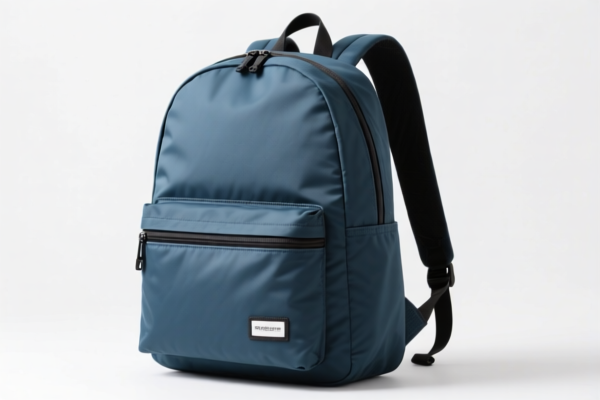
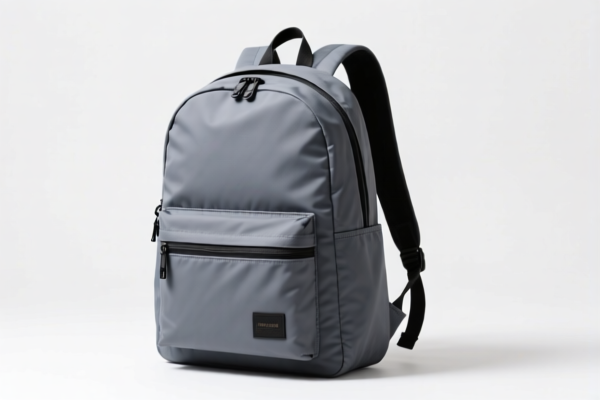
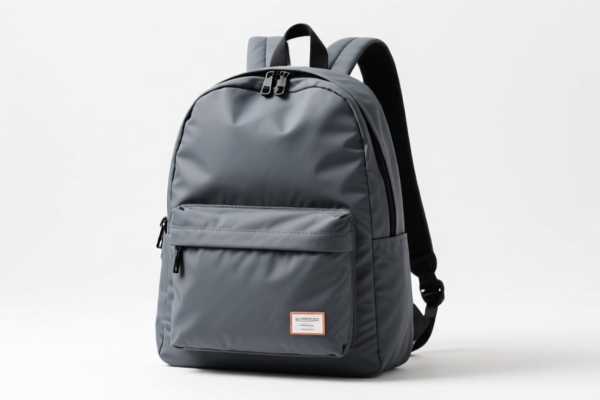
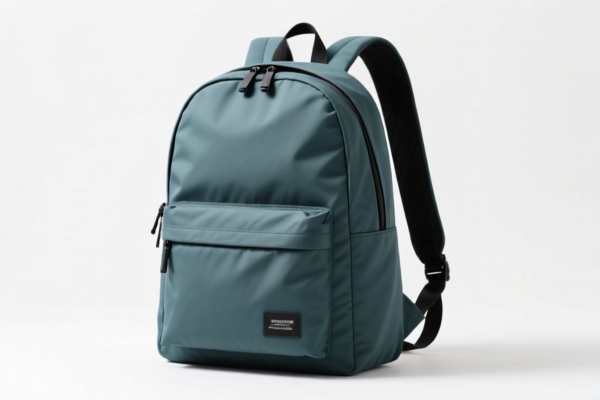
polyester casual backpack
CN → US| HS Code | Tariff Rate | Origin | Destination | Doc |
|---|---|---|---|---|
| 4202923120 | 52.6% | CN | US | Official Doc |
| 4202923131 | 52.6% | CN | US | Official Doc |
| 3923290000 | 38.0% | CN | US | Official Doc |
| 6305330080 | 25.9% | CN | US | Official Doc |
| 4202923131 | 52.6% | CN | US | Official Doc |
Product Images
AI Analysis
🎒 Polyester Casual Backpack: Strategic HS Code Classification & Customs Clearance Guide
🌐 HS Code Reference & Customs Clearance Strategy | 2026 Latest Tariff Analysis | Professional Entry Strategies
📌 I. Product Definition & Classification: Do You Truly Understand "Polyester Backpacks"?
The Polyester Casual Backpack is a ubiquitous item in daily commuting, travel, and leisure. In international trade, its classification hinges on material composition and specific use, leading to significant differences in tariff rates. Based on the provided data, these products fall into two main categories:
1. Backpacks (Article 42): Defined as bags designed to be carried on the back, made of textile materials (synthetic or man-made fibers).
2. Bags/Pouches for Packaging (Article 39 or 63): Items where the primary function is perceived as a container or packaging rather than a wearable accessory, often classified under plastics or textile sacks depending on specific structural definitions.
⚠️ Key Distinction Point:
- If the item is explicitly designed and marketed as a backpack (with shoulder straps, back padding, etc.) made of textile material →归入 4202 (Article 42).
- If the item is a simple drawstring bag, pouch, or lacks structural "backpack" features, it may be misclassified or classified under 3923 (Plastics/Packaging) or 6305 (Textile Sacks/Pouches).
📦 II. HS Code Classification Details (Latest Tariff Authority Cross-Reference)
| HS Code | Product Description | Application Scenario | Tariff Rate (Total) |
|---|---|---|---|
4202.92.31.20 |
Polyester Anti-Tear Backpack, Material: Synthetic Fiber | Matches definition of textile-made synthetic fiber backpacks | 52.6% |
4202.92.31.31 |
Polyester Sports/Travel Backpack, Material: Man-Made Fiber | Bags for travel, sports, and similar uses | 52.6% |
3923.29.00.00 |
Polyester Sports Bag, Material: Plastic/Synthetic Fiber Scope | Packaging/carrier items, perceived as plastic/packaging category | 38.0% |
6305.33.00.80 |
Polyester Bag, Material: Man-Made Textile | Packaging/carrying sacks, textile-based | 25.9% |
4202.92.31.31 |
Polyester Anti-Tear Backpack, Material: Man-Made Fiber | Explicitly classified as backpacks, meets classification requirements | 52.6% |
🔍 Key Reminder:
- Anti-Tear/Sports Backpacks are primarily classified under 4202 if they meet the structural definition of a backpack, regardless of whether the fiber is "synthetic" or "man-made."
- Misclassification Risk: Classifying a clear backpack under3923or6305may lead to customs disputes if the product’s primary function is clearly "backpack" rather than "packaging."
💰 III. 2026 Latest Tariff Rate Breakdown (Including Additional Taxes & Policy Surcharges)
✅ Applicable Country: United States (US)
✅ Origin: China (CN)
✅ Effective Date: From 2025-11-10 onwards (for subsequent imports)
🎯 1. 4202.92.31.20 & 4202.92.31.31 —— Polyester Backpacks (Backpack Category)
| Item | Content |
|---|---|
| Base Duty Rate | 17.6% (Ad Valorem) |
| Section 301 Surcharge | +25.0% (From USITC Footnote 9903.88.01, Chapter 42) |
| 122 Clause Tariff | +10.0% (Specific trade policy surcharge) |
| Total Tax Rate | 52.6% |
| Tax Calculation | CIF Value × 52.6% |
| De Minimis Eligibility | ❌ Not Eligible (deny_de_minimis) |
| Legal Basis Path | Base:4202 → Section301:25% → 122Clause:10% |
📌 Explanation:
- "Base Duty 17.6%": Standard MFN duty for bags of other materials.
- "Section 301 Surcharge 25%": Trump-era tariffs still in effect for many textile/bag categories from China.
- "122 Clause Tariff 10%": Additional punitive tariff under specific trade actions.
- Total 52.6%: This is a very high tariff burden. Importers must budget accordingly.
🎯 2. 3923.29.00.00 —— Polyester Sports Bag (Packaging/Plastic Category)
| Item | Content |
|---|---|
| Base Duty Rate | 3.0% |
| Section 301 Surcharge | +25.0% |
| 122 Clause Tariff | +10.0% |
| Total Tax Rate | 38.0% |
| Tax Calculation | CIF Value × 38.0% |
| De Minimis Eligibility | ❌ Not Eligible |
| Legal Basis Path | Base:3923 → Section301:25% → 122Clause:10% |
📌 Note:
- Although the material is polyester, if classified under 3923 (Plastics articles for conveyance or packaging), the base duty is lower.
- Risk: Customs may reclassify this as4202if the item is clearly a backpack, leading to back taxes and penalties.
🎯 3. 6305.33.00.80 —— Polyester Bag (Textile Sack/Pouch Category)
| Item | Content |
|---|---|
| Base Duty Rate | 8.4% |
| Section 301 Surcharge | +7.5% (Note: Different from 25% in data) |
| 122 Clause Tariff | +10.0% |
| Total Tax Rate | 25.9% |
| Tax Calculation | CIF Value × 25.9% |
| De Minimis Eligibility | ❌ Not Eligible |
| Legal Basis Path | Base:6305 → Section301:7.5% → 122Clause:10% |
📌 Note:
- This classification applies to textile sacks and bags for packaging.
- Lowest Total Rate (25.9%) among the options, but highly sensitive to product description. If the item is a "backpack," this classification is likely incorrect.
🛠️ IV. Customs Clearance Practical Advice (Pitfall Avoidance Guide)
✅ 1. Required Documentation Checklist (Mandatory)
| Document | Required | Description |
|---|---|---|
| ✅ Product Specification Sheet | ✔️ | Dimensions, capacity, zipper type, strap design, material composition (e.g., "100% Polyester") |
| ✅ Product Photos (Clear) | ✔️ | Front, back, side, and interior views showing straps and pockets |
| ✅ Material Test Report | ✔️ | Proof of polyester content (e.g., from SGS, BV) |
| ✅ Commercial Invoice | ✔️ | Accurate description: "Polyester Casual Backpack" vs. "Polyester Carry Bag" |
| ✅ Packing List | ✔️ | Quantity, weight, package dimensions |
| ✅ Certificates of Compliance | ✔️ | CPSIA (if for kids), Prop 65 (CA), etc., as applicable |
✅ 2. Declaration Tips (Key Mantras)
🔥 “Strap Presence = Backpack (4202), No Straps = Bag (3923/6305)”
| Scenario | Correct Declaration | Wrong Practice |
|---|---|---|
| Standard Backpack (with shoulder straps) | 4202.92.31.31 or 4202.92.31.20 |
Mislabel as "Tote Bag" → 25.9% or 38.0% |
| Drawstring Bag / Gym Sack | 6305.33.00.80 or 3923.29.00.00 |
Label as "Backpack" → 52.6% |
| Anti-Tear/Rugged Backpack | 4202.92.31.20 |
Mislabel as general "Bag" |
| Mix of Items | Declare separately by type | Combine into one HS Code → High audit risk |
⚠️ Critical Warning:
- If you declare a backpack under6305to save taxes, customs will likely inspect and reclassify it, resulting in back taxes, fines, and potential delays.
- Ensure the product name on the invoice matches the HS code description. "Backpack" should only be used for4202items.
✅ 3. Special Circumstances Handling
| Scenario | Handling Advice |
|---|---|
| OEM Custom Backpacks | Provide design sketches showing strap attachments to justify 4202 classification. |
| Polyester with Plastic Trim | If straps/trim are plastic but main body is textile, still 4202 (principal material is textile). |
| Samples vs. Bulk | Samples may benefit from de minimis if under $800, but bulk imports are subject to full tariffs. |
| Origin Marking | Ensure products are marked "Made in China" to avoid origin fraud issues. |
🌍 V. Global Market Comparison (2026 Latest)
| Country/Region | Recommended HS Code | Tariff (CN Origin) | Certification | Remarks |
|---|---|---|---|---|
| 🇺🇸 USA | 4202.92.31.31 |
52.6% | FCC/RoHS (if electronic) | High tariffs due to Section 301 & 122 Clause |
| 🇨🇳 China | 4202.92.31.31 |
5-10% | CCC (if applicable) | No additional surcharges |
| 🇪🇺 EU | 4202.92.31.31 |
4% | CE (if applicable) | No Section 301 equivalent |
| 🇬🇧 UK | 4202.92.31.31 |
4% | UKCA | Post-Brexit rules apply |
| 🇯🇵 Japan | 4202.92.31.31 |
3-4% | PSE (if applicable) | No major surcharges |
📌 Conclusion:
- USA is the most expensive market for polyester backpacks due to Section 301 (25%) and 122 Clause (10%).
- Total tax of 52.6% significantly impacts profit margins. Consider supply chain diversification (e.g., manufacturing in Vietnam or Thailand) if eligible for tariff exemptions.
📌 VI. Common Mistakes & Pitfall Guide (Blood Lessons)
❌ Mistake 1: Declaring a backpack as a "Polyester Bag" under 6305 to save taxes
👉 Consequence: Customs audit, reclassification to 4202, back taxes + 52.6% on full value + penalties.
❌ Mistake 2: Ignoring the 122 Clause Tariff (10%) in cost calculations
👉 Consequence: Underestimating landed cost by 10%, leading to negative margins.
❌ Mistake 3: Using vague descriptions like "Bag" or "Container" for a clear backpack
👉 Consequence: Customs may request detailed explanations, causing 10-15 day delays.
❌ Mistake 4: Failing to provide material composition proof
👉 Consequence: Customs may assign a higher default duty rate or reject the entry.
✅ Correct Practice:
Product Name: "Polyester Anti-Tear Casual Backpack"
Description: "Backpack with shoulder straps, front pocket, water-resistant polyester fabric, model XYZ, origin China."
HS Code:4202.92.31.31
🎯 VII. Conclusion: Professional Declaration, Cost Optimization!
🎯 Remember the Mantra:
🔹 "Backpack with Straps = 4202 (52.6%), Drawstring Bag = 6305 (25.9%)"
🔹 "Declare Accurately, Avoid Re-classification, Save Time & Money!"
📌 Pro Tip:
If your backpacks are originally from Vietnam, Mexico, or Thailand, you may qualify for IEEPA Exemptions or FTZ Benefits, reducing tariffs to 0-5%.
Recommendation: Apply for Advance Rulings from CBP before shipment to lock in classification and avoid disputes.
📣 Immediate Action:
📞 Contact a licensed customs broker + Provide product images + Apply for HS Code Advance Ruling
🚀 Ensure your polyester backpacks clear customs smoothly, efficiently, and profitably!
✨ Professional Customs Clearance Starts with Accurate Classification!
💼 Every Cent of Your Cost Deserves Precise Calculation!
Customer Reviews
About HS Code Classification
The Harmonized System (HS) is an internationally standardized nomenclature developed by the World Customs Organization (WCO) to classify traded products. Over 200 countries use the HS system as the basis for customs tariffs, trade statistics, and import/export regulations.
Each HS code follows a hierarchical structure:
- Chapter (2 digits) — Broad category of goods (e.g., Chapter 84: Machinery and Mechanical Appliances)
- Heading (4 digits) — More specific grouping within the chapter
- Subheading (6 digits) — Internationally standardized breakdown, used by all WCO member countries
- National subdivisions (8-10 digits) — Country-specific extensions for further classification, such as US HTSUS 10-digit codes
Correct HS code classification is essential for smooth customs clearance, accurate duty payment, and compliance with trade regulations. Misclassification can lead to customs delays, overpayment of duties, or penalties.
When importing from CN to US, the applicable tariff rates may include:
- Most-Favored-Nation (MFN) rate — The standard duty rate applied to WTO members
- General rate — Applied to countries without trade agreements
- Trade remedy duties — Additional tariffs such as Section 301 (anti-dumping), Section 232 (national security), or countervailing duties
The information provided on this page is for reference purposes only. For official classification, please consult with your local customs authority or a licensed customs broker.