polyester outdoor backpack
CN → US| HS Code | Tariff Rate | Origin | Destination | Doc |
|---|---|---|---|---|
| 6307909891 | 24.5% | CN | US | Official Doc |
| 6307908995 | 17.0% | CN | US | Official Doc |
| 4202923120 | 52.6% | CN | US | Official Doc |
| 4202923131 | 52.6% | CN | US | Official Doc |
| 3923290000 | 38.0% | CN | US | Official Doc |
Product Images
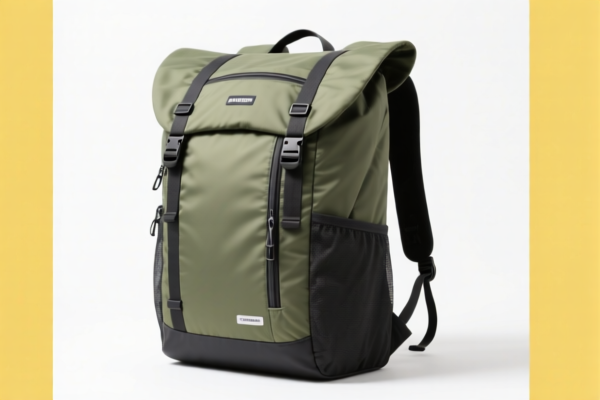
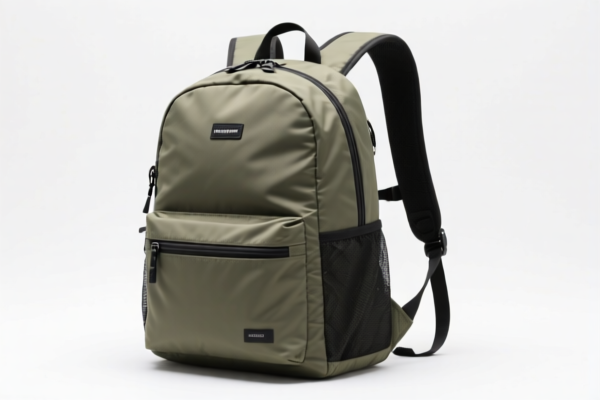
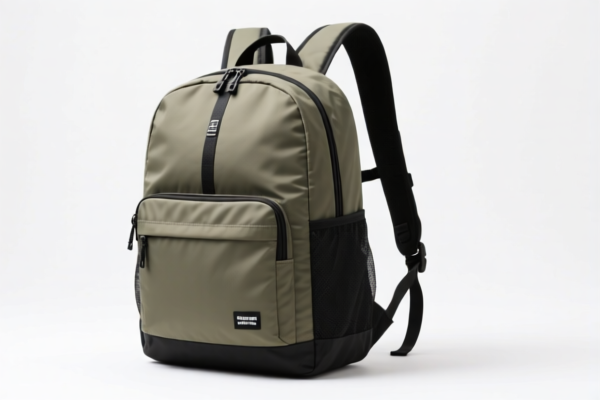
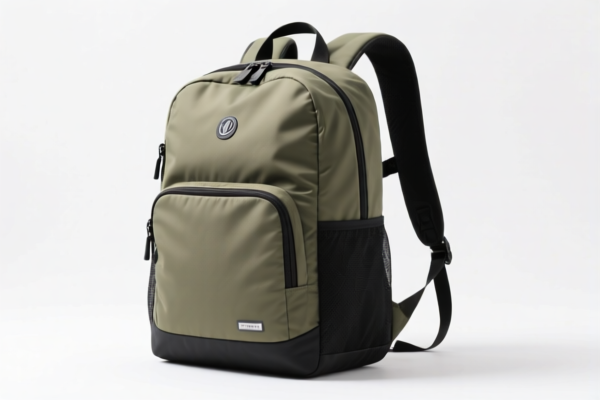
AI Analysis
🎒 Polyester Outdoor Backpack (涤纶户外背包)
🌐 HS Code Reference & Customs Clearance Guide | 2026 Latest Tariff Analysis | Professional Level Strategy
📌 I. Product Definition & Classification: Do You Really Understand "Polyester Backpacks"?
Polyester Outdoor Backpacks are essential gear for travel, hiking, and daily commuting. In international trade, they are categorized based on material composition, structure, and specific features (such as tear-resistance). Misclassification can lead to significant tariff differences and customs delays.
⚠️ Key Distinction Points:
- If the backpack is made of textile fabric (polyester woven/non-woven) without specialized plastic components dominating the structure → It generally falls under Chapter 63 (Other Made-up Articles) or Chapter 42 (Articles of Leather/Travel Goods).
- If it is described primarily as a "packaging/transport container" rather than a personal accessory → It might fall under Chapter 39 (Plastics).
- Crucial Note: The description "Polyester" usually implies synthetic fibers. However, customs authorities look at the primary function and material makeup.
📦 II. HS Code Classification Details (Based on Provided Data)
According to the provided data, here are the specific HS Codes applicable to Polyester Outdoor Backpacks, along with their rationale and tax implications.
| HS Code | Product Description Summary | Rationale for Classification | Total Tax Rate |
|---|---|---|---|
| 6307.90.98.91 | Polyester Drawstring Backpack | Material: Synthetic fiber fabric; Form: Backpack; Category: Other made-up articles. | 24.5% |
| 6307.90.89.95 | Polyester Drawstring Backpack | Form: Backpack; Material: Polyester; Used as a "fall-back" category for other made-up articles. | 17.0% |
| 4202.92.31.20 | Polyester Tear-Resistant Backpack | Material: Synthetic fiber; Form: Backpack; Fits the definition of synthetic fiber backpacks made of textile materials. | 52.6% |
| 4202.92.31.31 | Polyester Tear-Resistant Backpack | Material: Artificial fiber; Use: Backpack; Material and form align with classification requirements. | 52.6% |
| 3923.29.00.00 | Polyester Sports Bag | Use: Packaging/carrying supplies; Material: Polyester (Plastic/Synthetic fiber category); Fits plastic packaging attributes. | 38.0% |
🔍 Critical Analysis:
- Codes 6307.xxxxxx: Treat the backpack as a general "made-up article" of textile. Generally lower tax burden.
- Codes 4202.xxxxxx: Treat the backpack as a "Travel Good" or "Backpack" under Chapter 42. This is the standard for high-quality, durable backpacks. However, note the high tariff (52.6%) due to USITC 301 duties.
- Code 3923.29.00: Classifies the bag as a "Plastic Article" or "Packaging." This is risky unless the bag is primarily plastic-coated or non-woven plastic, as it misrepresents a textile product.
💰 III. 2026 Latest Tariff Rate Breakdown (Including Additional Taxes & Policy Surcharges)
✅ Applicable Country: United States (US)
✅ Origin: China (CN)
✅ Effective Date: 2025/2026 (Current Regime)
🎯 1. HS Code 6307.90.98.91 – Polyester Drawstring Backpack (Textile Made-Up Article)
| Item | Detail |
|---|---|
| Base Tariff | 7.0% |
| Section 301 Additional Tariff | 7.5% |
| Section 122 Tariff | 10% |
| Total Tax Rate | 24.5% |
| Tax Calculation | CIF Value × 24.5% |
| De Minimis Exemption | ❌ Not Eligible (Under current enforcement, Section 301 items are generally excluded from de minimis relief if origin is China) |
| Legal Basis | Section 301 + Section 122 applied to Chapter 63 textile goods |
📌 Explanation:
- This classification views the backpack as a general textile product rather than a specialized "travel good."
- The 7.5% Section 301 and 10% Section 122 are the main drivers of cost here.
- Advantage: Significantly lower than the 52.6% rate for Chapter 42.
🎯 2. HS Code 6307.90.89.95 – Polyester Drawstring Backpack (Fallback Category)
| Item | Detail |
|---|---|
| Base Tariff | 7.0% |
| Section 301 Additional Tariff | 0.0% |
| Section 122 Tariff | 10% |
| Total Tax Rate | 17.0% |
| Tax Calculation | CIF Value × 17.0% |
| De Minimis Exemption | ❌ Check Specifics (Often still subject to scrutiny) |
| Legal Basis | Section 122 only; No Section 301 on this specific fallback subheading |
📌 Note:
- This is the most cost-effective option provided in the data.
- It treats the item as a generic "other made-up article" without specific Section 301 penalties.
- Risk: Customs may challenge this if the item clearly fits "Backpack" definitions under Chapter 42. Requires strong justification that it is a "drawstring bag" and not a structured backpack.
🎯 3. HS Code 4202.92.31.20 – Polyester Tear-Resistant Backpack (Synthetic Fiber)
| Item | Detail |
|---|---|
| Base Tariff | 17.6% |
| Section 301 Additional Tariff | 25.0% |
| Section 122 Tariff | 10% |
| Total Tax Rate | 52.6% |
| Tax Calculation | CIF Value × 52.6% |
| De Minimis Exemption | ❌ Not Eligible |
| Legal Basis | Section 301 + Section 122 applied to Chapter 42 travel goods |
📌 Warning:
- This is the highest tax bracket.
- Applies to "Backpacks" made of synthetic fibers.
- Why so high? Chapter 42 items face the maximum 25% Section 301 duty plus the 10% Section 122 duty.
- Advice: Avoid this code unless legally required. Do not declare a polyester backpack as a "Chapter 42 Travel Good" if it can be classified under Chapter 63.
🎯 4. HS Code 4202.92.31.31 – Polyester Tear-Resistant Backpack (Artificial Fiber)
| Item | Detail |
|---|---|
| Base Tariff | 17.6% |
| Section 301 Additional Tariff | 25.0% |
| Section 122 Tariff | 10% |
| Total Tax Rate | 52.6% |
| Tax Calculation | CIF Value × 52.6% |
| De Minimis Exemption | ❌ Not Eligible |
| Legal Basis | Same as above |
📌 Note:
- Functionally identical to 4202.92.31.20 in terms of tax burden.
- "Artificial fiber" is treated similarly to "Synthetic fiber" under these punitive duty regimes.
🎯 5. HS Code 3923.29.00.00 – Polyester Sports Bag (Plastic/Packaging)
| Item | Detail |
|---|---|
| Base Tariff | 3.0% |
| Section 301 Additional Tariff | 25.0% |
| Section 122 Tariff | 10% |
| Total Tax Rate | 38.0% |
| Tax Calculation | CIF Value × 38.0% |
| De Minimis Exemption | ❌ Not Eligible |
| Legal Basis | Section 301 + Section 122 applied to Plastic Articles |
📌 Caution:
- This classification misrepresents a textile product as a "Plastic Article."
- While 38% is lower than 52.6%, it is higher than the Chapter 63 options (17%-24.5%).
- High Risk: Customs will likely reject this if the material is clearly woven polyester fabric, not a plastic film or non-woven plastic sheet. Misdeclaration leads to fines.
🛠️ IV. Customs Clearance Practical Advice (Real-World Pitfall Guide)
✅ 1. Documentation Checklist (Essential)
| Document | Required | Purpose |
|---|---|---|
| ✅ Product Specifications | ✔️ | Clearly state "Polyester," "Drawstring" vs. "Structured Backpack." |
| ✅ Material Breakdown | ✔️ | Confirm % of polyester vs. other materials (lining, zippers). |
| ✅ Product Photos | ✔️ | Show shape: Is it a flat drawstring sack (Chapter 63) or a shaped backpack (Chapter 42)? |
| ✅ Commercial Invoice | ✔️ | Use precise descriptions: "Polyester Drawstring Bag" (preferred) vs. "Outdoor Backpack." |
| ✅ HS Code Pre-Ruling | ✔️ | Strongly Recommended to secure the 17.0% or 24.5% rate. |
✅ 2. Classification Strategy (Key Mantra)
🔥 “Avoid Chapter 42, Aim for Chapter 63, Beware of Plastic!”
| Scenario | Recommended HS Code | Tax Rate | Why? |
|---|---|---|---|
| Drawstring Bag / Soft Sack | 6307.90.89.95 |
17.0% | Lowest tax, avoids 301 duties. Best for marketing as "Drawstring Bag." |
| Standard Polyester Backpack | 6307.90.98.91 |
24.5% | Safe middle ground. Acknowledges it's a backpack but classifies as textile article. |
| Structured Durable Backpack | 4202.92.31.xx |
52.6% | High Cost. Only use if required by retailer/contract. |
| Plastic-Coated/Non-Woven Bag | 3923.29.00.00 |
38.0% | High Risk. Only if material is truly plastic-based, not woven textile. |
✅ 3. Special Handling Tips
| Situation | Advice |
|---|---|
| OEM Branding | If the bag has heavy branding/logos, it may be viewed as a "promotional item" or "travel good," pushing it toward Chapter 42. |
| Material Composition | Ensure the outer shell is >50% polyester. If mixed with leather or plastic, Chapter 42 becomes more likely. |
| Import Value | For de minimis shipments (under $800), be aware that Section 301 and 122 duties often still apply to Chinese goods, despite the exemption. Do not assume tax-free entry. |
🌍 V. Global Market Comparison (2026 Update)
| Region | Recommended HS Code | Approx. Tax Rate | Notes |
|---|---|---|---|
| 🇺🇸 USA | 6307.90.89.95 |
17.0% | Best option. Avoid 4202 (52.6%). |
| 🇺🇸 USA | 6307.90.98.91 |
24.5% | Acceptable alternative. |
| 🇪🇺 EU | 6307.90 |
~6-12% | Lower tariffs, no Section 301/122. |
| 🇨🇳 China | 6307.90 |
~0-10% | Import duty low. Focus on domestic sales. |
📌 Conclusion for US Importers:
- The Tariff Gap is Huge: 17.0% vs. 52.6%.
- Strategy: If the product allows, classify as a "Drawstring Bag" or "Other Made-Up Textile Article" (Chapter 63) rather than a "Backpack" (Chapter 42).
- Documentation: Use terms like "Drawstring Bag," "Gym Sack," or "Lightweight Carrier" instead of "Outdoor Backpack" to support Chapter 63 classification.
📌 VI. Common Errors & Pitfalls (Lessons Learned)
❌ Error 1: Declaring a structured backpack as 6307.90.89.95 without proof of "drawstring" or "soft" structure.
👉 Consequence: Customs reclassifies to 4202.92.31.xx → Backpayment of ~35.6% + Penalties.
❌ Error 2: Using 3923.29.00.00 for a woven polyester bag.
👉 Consequence: Rejection at customs for misdescription of material. Delays and storage fees.
❌ Error 3: Ignoring Section 122 (10%) in cost calculations.
👉 Consequence: Unexpected costs. Always factor in the 10% surcharge for Chapter 63 items.
✅ Correct Approach:
"Polyester Drawstring Bag, Lightweight, Non-Structured, Textile Material"
🎯 VII. Conclusion: Professional Declaration, Cost Savings!
🎯 Remember the Mantra:
🔹 "Chapter 63 is King (17-24%), Chapter 42 is Costly (52.6%), Plastic is Risky (38%)."
🔹 "Be Precise: Drawstring vs. Backpack. Soft vs. Structured."
📌 Pro Tip:
If your product is truly a "Backpack" (with straps, padding, structure), do not force Chapter 63. Instead, negotiate with suppliers to optimize the material composition (e.g., ensure it fits the "Other Made-Up Article" definition) or seek a Pre-Ruling from US Customs to secure the lower rate.
📣 Immediate Action:
📞 Consult a Customs Broker
📝 Review Product Specifications
🚀 Optimize Declaration to6307.90.89.95or6307.90.98.91for maximum savings!
✨ Professional Clearance, Starting with Precise Classification!
💼 Every Penny Saved in Tariffs is Pure Profit!
Customer Reviews
About HS Code Classification
The Harmonized System (HS) is an internationally standardized nomenclature developed by the World Customs Organization (WCO) to classify traded products. Over 200 countries use the HS system as the basis for customs tariffs, trade statistics, and import/export regulations.
Each HS code follows a hierarchical structure:
- Chapter (2 digits) — Broad category of goods (e.g., Chapter 84: Machinery and Mechanical Appliances)
- Heading (4 digits) — More specific grouping within the chapter
- Subheading (6 digits) — Internationally standardized breakdown, used by all WCO member countries
- National subdivisions (8-10 digits) — Country-specific extensions for further classification, such as US HTSUS 10-digit codes
Correct HS code classification is essential for smooth customs clearance, accurate duty payment, and compliance with trade regulations. Misclassification can lead to customs delays, overpayment of duties, or penalties.
When importing from CN to US, the applicable tariff rates may include:
- Most-Favored-Nation (MFN) rate — The standard duty rate applied to WTO members
- General rate — Applied to countries without trade agreements
- Trade remedy duties — Additional tariffs such as Section 301 (anti-dumping), Section 232 (national security), or countervailing duties
The information provided on this page is for reference purposes only. For official classification, please consult with your local customs authority or a licensed customs broker.