polyester plastic film agricultural use
CN → US| HS Code | Tariff Rate | Origin | Destination | Doc |
|---|---|---|---|---|
| 3921905050 | 39.8% | CN | US | Official Doc |
| 3921190010 | 41.5% | CN | US | Official Doc |
| 3920620090 | 39.2% | CN | US | Official Doc |
| 3920992000 | 39.2% | CN | US | Official Doc |
| 3901105020 | 41.5% | CN | US | Official Doc |
Product Images
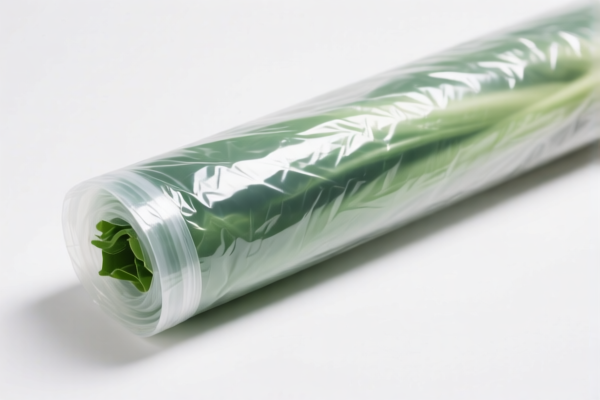
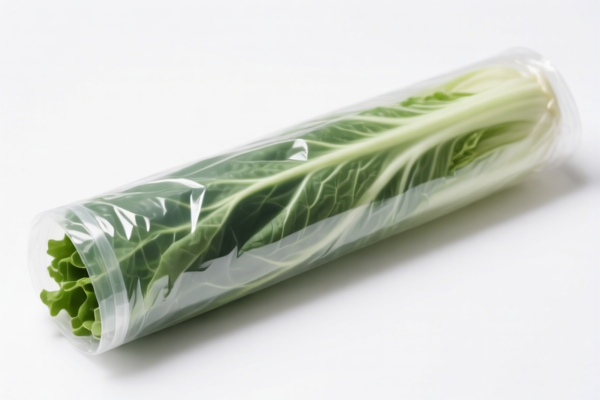


AI Analysis
🚜 Agricultural PET Plastic Film: HS Code Classification & Customs Clearance Guide (2026)
🌐 HS Code Reference & Customs Strategy | 2026 Tariff Breakdown | Professional Clearance Protocol
📌 I. Product Definition & Core Characteristics: Is It Really Just "Plastic Film"?
Polyester plastic film for agricultural use (often referred to as PET Agricultural Film) is a high-performance material used in greenhouse covering, mulching, and crop protection. Unlike traditional low-density polyethylene (LDPE) films, PET films offer superior strength, tear resistance, and thermal stability.
In international trade, these films are not classified as simple "plastic bags" or "general packaging." Their classification depends on chemical composition, physical form, and specific polymer type (e.g., PET vs. PE). Misclassification can lead to severe penalties, as these goods often attract Section 301 and Section 122 additional tariffs.
⚠️ Key Distinction Point:
- If the material is Polyethylene (PE) → Likely3901or3920series.
- If the material is Polyester (PET/Polyethylene Terephthalate) → Likely3920or3921series.
- Critical Alert: Most PET agricultural films fall under 3920 or 3921, subject to high additional tariffs if from China.
📦 II. HS Code Classification Matrix (Based on Provided Data)
| HS Code | Product Description & Summary | Key Characteristics | Material | Form |
|---|---|---|---|---|
| 3921.90.50.50 | PET Plastic Agricultural Film | Other plastic plates, sheets, film, foil, and strips. | Polyester (PET) | Film |
| 3921.19.00.10 | PET Plastic Agricultural Film | Plates, sheets, film, foil, and strip of plastics. | Polyester (PET) | Film |
| 3920.62.00.90 | PET Plastic Agricultural Film | Non-cellular, non-reinforced, non-laminated, unworked or simply worked. | Polyethylene Terephthalate (PET) | Film |
| 3920.99.20.00 | PET Plastic Agricultural Film | Other plates, sheets, film, foil, and strip, non-cellular, non-reinforced. | Polyester (PET) | Film |
| 3901.10.50.20 | LDPE Resin for Agricultural Film | Primary forms of plastics; Low-Density Polyethylene. | Low-Density Polyethylene (LDPE) | Resin/Granules |
🔍 Critical Note on 3901.10.50.20:
- This HS Code refers to raw resin material, NOT finished film.
- If you are importing finished agricultural films, do NOT use 3901.10.50.20. This is a common error that leads to customs rejection.
- Only use 3901.10.50.20 if you are importing plastic pellets/resin to manufacture the film domestically.
💰 III. 2026 Tariff Rate Breakdown (Detailed Tax Analysis)
✅ Applicable Country: United States (US)
✅ Country of Origin: China (CN) (Assumed based on "122 Clause" and high tariff context)
✅ Effective Date: Current (2026)
🎯 1. PET Film Categories: 3921.90.50.50, 3921.19.00.10, 3920.62.00.90, 3920.99.20.00
All four finished film HS Codes share a similar tariff structure due to similar nature and origin.
| Item | Content |
|---|---|
| Base Tariff Rate | 4.2% – 6.5% (Ad Valorem) |
| Section 301 Additional Tariff | +25.0% (USITC Footnote) |
| Section 122 Additional Tariff | +10.0% (USITC Footnote) |
| Total Effective Rate | 39.2% – 41.5% |
| Tax Calculation | CIF Value × Total Rate |
| De Minimis Exemption | ❌ NOT APPLICABLE (Section 301 & 122 duties are not exempted under $800 threshold) |
| Legal Basis Path | HTSUS:3920/3921 → USITC:301 → USITC:122 |
📌 Detailed Explanation:
- Base Rate: Varies slightly based on sub-heading specificity (e.g.,3921.19.00.10has a 6.5% base, while3920.62.00.90has 4.2%).
- Section 301 (25%): Imposed on Chinese plastics under Trade Promotion Authority.
- Section 122 (10%): Additional duty on specific plastics from China.
- Total Burden: Importers must budget for ~40% total tax. This significantly impacts profit margins for agricultural film exporters/importers.
🎯 2. Raw Resin Category: 3901.10.50.20 (LDPE Resin)
| Item | Content |
|---|---|
| Base Tariff Rate | 6.5% (Ad Valorem) |
| Section 301 Additional Tariff | +25.0% |
| Section 122 Additional Tariff | +10.0% |
| Total Effective Rate | 41.5% |
| Tax Calculation | CIF Value × 41.5% |
| De Minimis Exemption | ❌ NOT APPLICABLE |
📌 Note: Even raw resin attracts high tariffs if from China. However, this is only for resin, not finished film.
🛠️ IV. Customs Clearance Practical Advice (Avoiding Pitfalls)
✅ 1. Required Documentation Checklist
| Document | Mandatory? | Purpose |
|---|---|---|
| ✅ Commercial Invoice | ✔️ | Must clearly state: "PET Agricultural Film" or "LDPE Resin", not generic "Plastic" |
| ✅ Packing List | ✔️ | Detail weight, volume, and number of rolls/pallets |
| ✅ Product Specification Sheet | ✔️ | Must specify: Material (PET/PE), Thickness (microns), Width, Application (Agricultural) |
| ✅ Certificate of Origin (CO) | ✔️ | Critical for proving origin. If not from China, may avoid 301/122 duties |
| ✅ Bill of Lading (B/L) | ✔️ | Ensure HS Codes match invoice exactly |
| ✅ FDA Declaration (if applicable) | ❌ | Generally not required for non-food-contact plastic film, but confirm if film touches crops directly |
✅ 2. Declaration Best Practices
🔥 Golden Rule: "Be Specific on Material & Form"
| Scenario | Correct Declaration | Incorrect Declaration | Consequence |
|---|---|---|---|
| Finished PET Film | "Plastic Film, Polyethylene Terephthalate, for Agricultural Use, 50mic, Roll Form" | "Plastic Sheet" or "Polymer" | Customs may assign default higher rate or request clarification |
| LDPE Resin | "Low-Density Polyethylene Resin, Primary Form, Pellets" | "Plastic Film Raw Material" | Misdeclaration risk; may be classified as finished goods |
| Non-China Origin | State Country of Origin as Vietnam/Malaysia | Hide origin or claim China | Penalties for false origin; potential loss of exemption |
✅ 3. Special Cases & Mitigation
| Situation | Recommendation |
|---|---|
| Mixed Container | If container has both finished film and resin, declare separately with distinct HS Codes. Do not lump under one code. |
| Private Label/OEM | Provide customer contract and product specs to prove actual use (agricultural) to avoid misclassification as "general packaging." |
| Origin Diversification | Consider sourcing from Vietnam, Malaysia, or Thailand to avoid Section 301 & 122 tariffs. These countries may have lower or zero tariffs for similar HS codes. |
| Section 301 Exclusion | Check current USITC exclusion lists. Some plastic films may have temporary exclusions, but most agricultural plastics do NOT. |
🌍 V. Global Market Comparison (2026)
| Country/Region | Recommended HS Code | Tariff (China Origin) | Certification Required | Notes |
|---|---|---|---|---|
| 🇺🇸 USA | 3920.62.00.90 / 3921.90.50.50 |
39.2% – 41.5% | None specific | High duties due to 301/122 |
| 🇨🇳 China | 3920.62.00.90 |
5% – 6.5% | CCC (if applicable) | Lower base duty, no 301/122 |
| 🇪🇺 EU | 3920.62.00.90 |
6.5% | REACH, RoHS | No Section 301/122 equivalent |
| 🇦🇺 Australia | 3920.62.00.90 |
5% | None | Preferential rates if under FTA |
| 🇯🇵 Japan | 3920.62.00.90 |
5% | PSE (if electrical) | No special additional tariffs |
📌 Strategic Insight:
- USA is the most expensive market for Chinese-origin PET/PE agricultural films due to cumulative 35-41.5% tariffs.
- EU and Asia offer more competitive tariff structures. Consider supply chain diversification for US-bound goods.
📌 VI. Common Errors & Pitfalls (Lessons Learned)
❌ Error 1: Declaring PET Film as LDPE Resin (3901.10.50.20) to avoid higher film tariffs.
👉 Consequence: Customs seizure, fines, and shipment delay. Material composition tests will reveal PET vs. PE.
❌ Error 2: Using generic term "Plastic Sheet" without specifying Polyester (PET).
👉 Consequence: Customs may assign a higher default rate or require extensive documentation to prove material.
❌ Error 3: Ignoring Section 122 tariffs.
👉 Consequence: Underpayment of duties. Remember: Base + 301 (25%) + 122 (10%) = Total Tax.
✅ Correct Approach:
"Plastic Film, Polyethylene Terephthalate (PET), Agricultural Grade, 45 Microns, Width 3m, Roll, HS Code 3920.62.00.90, Origin: China"
🎯 VII. Conclusion: Precision is Profit
🎯 Remember These Keys:
🔹 Material Matters: PET ≠ PE. HS Codes differ significantly.
🔹 Form Matters: Film ≠ Resin. Finished goods ≠ Raw material.
🔹 Tariff Trap: USA imposes ~40% total tax on Chinese plastic films. Factor this into pricing.
🔹 Documentation: Clear, specific descriptions prevent delays and audits.
📌 Pro Tip:
If you are importing into the USA, consider:
1. Pre-Ruling: Apply for a Customs Ruling Letter to confirm HS Code.
2. Third-Country Sourcing: Explore suppliers in Vietnam or Malaysia to bypass Section 301/122 duties.
3. Duty Drawback: If re-exporting, investigate duty drawback programs.
📣 Immediate Action:
📞 Consult a licensed customs broker.
📄 Provide detailed product specs (material, thickness, width).
📊 Calculate landed cost including ~40% tax for US imports.
✨ Professional Clearance Starts with Accurate Classification!
💼 Every percent of tariff saved is pure profit!
Customer Reviews
About HS Code Classification
The Harmonized System (HS) is an internationally standardized nomenclature developed by the World Customs Organization (WCO) to classify traded products. Over 200 countries use the HS system as the basis for customs tariffs, trade statistics, and import/export regulations.
Each HS code follows a hierarchical structure:
- Chapter (2 digits) — Broad category of goods (e.g., Chapter 84: Machinery and Mechanical Appliances)
- Heading (4 digits) — More specific grouping within the chapter
- Subheading (6 digits) — Internationally standardized breakdown, used by all WCO member countries
- National subdivisions (8-10 digits) — Country-specific extensions for further classification, such as US HTSUS 10-digit codes
Correct HS code classification is essential for smooth customs clearance, accurate duty payment, and compliance with trade regulations. Misclassification can lead to customs delays, overpayment of duties, or penalties.
When importing from CN to US, the applicable tariff rates may include:
- Most-Favored-Nation (MFN) rate — The standard duty rate applied to WTO members
- General rate — Applied to countries without trade agreements
- Trade remedy duties — Additional tariffs such as Section 301 (anti-dumping), Section 232 (national security), or countervailing duties
The information provided on this page is for reference purposes only. For official classification, please consult with your local customs authority or a licensed customs broker.