polyester plastic film for greenhouse
CN → US| HS Code | Tariff Rate | Origin | Destination | Doc |
|---|---|---|---|---|
| 5903902000 | 35.0% | CN | US | Official Doc |
| 3919905060 | 40.8% | CN | US | Official Doc |
| 5903102090 | 35.0% | CN | US | Official Doc |
| 3919102055 | 40.8% | CN | US | Official Doc |
| 3920100000 | 39.2% | CN | US | Official Doc |
Product Images
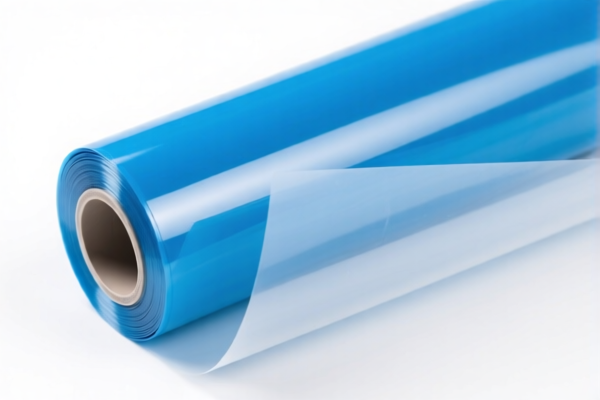
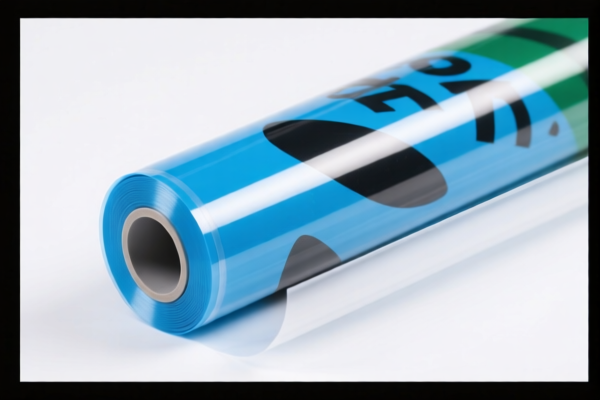
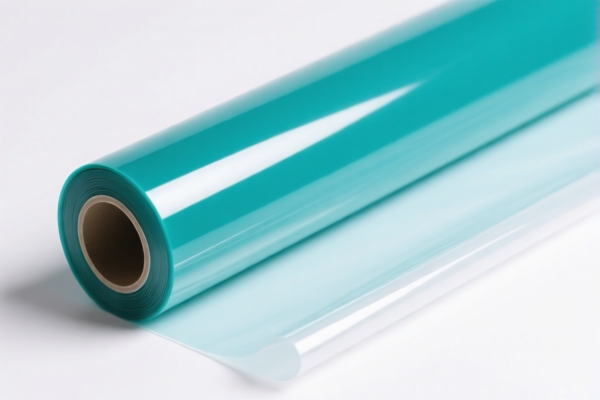
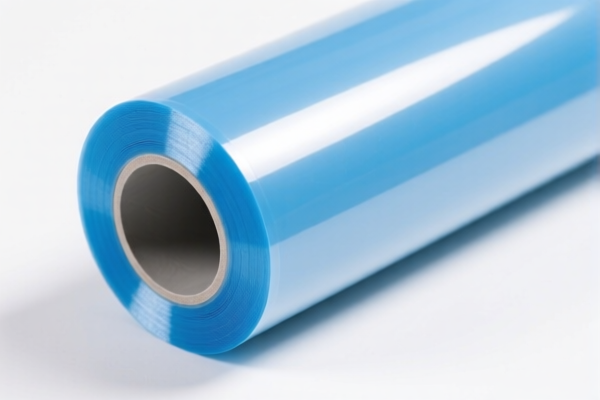
AI Analysis
🌿 Greenhouse Plastic Film (Polyester/PVC/Polyethylene)
🌐 HS Code Reference & Customs Clearance Guide | 2026 Latest Tariff Analysis | Professional Clearance Strategy
📌 1. Product Definition and Classification: Do You Really Know "Greenhouse Film"?
Greenhouse plastic films are essential agricultural materials used to cover greenhouses, creating a controlled microclimate for plant growth. In international trade, these films are classified based on their material composition, physical form, and structural features (such as lamination or coating).
Although your query mentions "polyester," the provided indicates that the specific greenhouse films in question are primarily classified under Chapter 39 (Plastics and Articles Thereof) or Chapter 59 (Textile Articles Impregnated, Coated, Covered or Laminated), depending on their exact manufacturing process and material dominance.
⚠️ Key Distinction Points:
- If the film is primarily plastic (e.g., PVC, PE) and structured as a simple flat sheet → Often classified under Chapter 39 (3919, 3920).
- If the film is impregnated, coated, covered, or laminated with plastic (even if plastic >70%), it may fall under Chapter 59 (5903).
- "Polyester" alone is ambiguous; however, based on the provided data, the films are treated as plastic-dominated (PE/PVC) or layered/laminated structures, not pure polyester textiles.
📦 2. HS Code Classification Details (2026 Latest Tariff Authority Comparison)
Based on the provided , here are the five most likely HS Codes for greenhouse films, along with their descriptions and tax implications:
| HS Code | Product Description | Applicability Scenario | Tax Detail (Total Rate) |
|---|---|---|---|
5903.90.20.00 |
Greenhouse film, shape: film, laminated/covered characteristics, plastic >70% | Films with significant plastic content in a layered structure | 35.0% |
3919.90.50.60 |
Greenhouse film, plastic material, flat sheet definition | Plastic films fitting "other flat shapes" (self-adhesive or not) | 40.8% |
5903.10.20.90 |
Greenhouse film, coated/laminated type, PE or PVC plastic | Standard agricultural films coated with PVC or PE | 35.0% |
3919.10.20.55 |
Greenhouse film, plastic material, flat sheet (fallback category) | Plastic films defined under Chapter 39, self-adhesive or not | 40.8% |
3920.10.00.00 |
Greenhouse film, vinyl polymer (PE) shape, non-cellular, un-laminated | Pure PE films without lamination or coating | 39.2% |
🔍 Critical Note:
- Chapter 59 (5903): Applies when the film is laminated, coated, or impregnated. The plastic content must be dominant (>70% in some cases).
- Chapter 39 (3919, 3920): Applies to simple plastic films (flat sheets, self-adhesive or not).
- "Polyester" vs. "PE/PVC": If the film is explicitly labeled "polyester," ensure it doesn't fall under textile chapters (Chapter 54/55). However, the provided data assumes plastic dominance (PE/PVC) or laminated structures, so we stick to Chapters 39/59.
💰 3. 2026 Latest Tariff Rate Breakdown (Including Additional Taxes)
✅ Applicable Country: USA (US)
✅ Origin: China (CN)
✅ Effective Date: From November 10, 2025 (including subsequent imports)
🎯 1. 5903.90.20.00 & 5903.10.20.90 —— Laminated/Coated Greenhouse Films (Plastic >70% or PE/PVC)
| Item | Content |
|---|---|
| Base Tariff | 0.0% (ad valorem) |
| Section 301 Additional Tariff | +25.0% |
| IEEPA Additional Tariff | +10.0% (China/HK specific, effective Nov 2025) |
| Total Tariff | 35.0% |
| Tax Calculation | CIF Value × 35% |
| De Minimis Eligibility | ❌ Not Eligible (deny_de_minimis) |
| Legal Basis Path | IEEPA:9903.01.24 → USITC:5903.10.20.90 / 5903.90.20.00 → FOOTNOTE:301 |
📌 Explanation:
- These codes apply to laminated or coated films where plastic is the dominant material.
- Despite a 0% base tariff, the 35% total rate is significant due to Section 301 and IEEPA tariffs.
- High Cost Alert: This rate is lower than pure plastic films (40.8%) due to the 0% base rate.
🎯 2. 3919.90.50.60 & 3919.10.20.55 —— Flat Plastic Films (Self-Adhesive or Not)
| Item | Content |
|---|---|
| Base Tariff | 5.8% (ad valorem) |
| Section 301 Additional Tariff | +25.0% |
| IEEPA Additional Tariff | +10.0% |
| Total Tariff | 40.8% |
| Tax Calculation | CIF Value × 40.8% |
| De Minimis Eligibility | ❌ Not Eligible (deny_de_minimis) |
| Legal Basis Path | IEEPA:9903.01.24 → USITC:3919.10.20.55 / 3919.90.50.60 → FOOTNOTE:301 |
📌 Note:
- These codes apply to simple plastic films that do not meet the "laminated/coated" criteria of Chapter 59.
- The base tariff of 5.8% pushes the total rate to 40.8%, making this the highest cost option among the provided codes.
- Avoid Misclassification: Do not classify coated films here if they qualify for Chapter 59.
🎯 3. 3920.10.00.00 —— Vinyl Polymer (PE) Films (Non-Cellular, Un-laminated)
| Item | Content |
|---|---|
| Base Tariff | 4.2% (ad valorem) |
| Section 301 Additional Tariff | +25.0% |
| IEEPA Additional Tariff | +10.0% |
| Total Tariff | 39.2% |
| Tax Calculation | CIF Value × 39.2% |
| De Minimis Eligibility | ❌ Not Eligible (deny_de_minimis) |
| Legal Basis Path | IEEPA:9903.01.24 → USITC:3920.10.00.00 → FOOTNOTE:301 |
📌 Explanation:
- Applies specifically to PE (Polyethylene) films that are non-cellular and un-laminated.
- This is a middle-ground option (39.2%), cheaper than Chapter 39 self-adhesive films but more expensive than Chapter 59 laminated films.
- Material Specific: Ensure the film is indeed PE. If it’s PVC or PET, this code may not apply.
🛠️ 4. Customs Clearance Practical Advice (Battle-Tested Pitfall Avoidance)
✅ 1. Required Documentation Checklist (All or Nothing)
| Document | Mandatory? | Description |
|---|---|---|
| ✅ Product Specification Sheet | ✔️ | Must include dimensions, thickness, material composition (e.g., "PE >70%, laminated"), UV resistance, and lifespan. |
| ✅ Material Composition Certificate | ✔️ | Critical for distinguishing between Chapter 39 and 59. Must state % of plastic vs. other materials. |
| ✅ Product Photos (including Labels) | ✔️ | Clear images showing the film texture, packaging, and any "Laminated/Coated" markings. |
| ✅ Third-Party Test Report | ✔️ | ASTM/ISO standards for tensile strength, light transmission, and durability. |
| ✅ Commercial Invoice | ✔️ | Must explicitly state: "Greenhouse Plastic Film, Laminated/Coated, Material: PE/PVC, HS Code: [Code]" |
| ✅ Packing List | ✔️ | Detail roll dimensions, weight, and handling instructions. |
✅ 2. Declaration Tips (Key Mantra)
🔥 "Material Defines Chapter, Lamination Moves to 59, Name Precisely, Tariff Minimized!"
| Scenario | Correct Declaration | Wrong Practice |
|---|---|---|
| Laminated/Coated Film | 5903.10.20.90 or 5903.90.20.00 |
Misdeclare as 3919 → 40.8% tariff |
| Simple PE Film (Un-laminated) | 3920.10.00.00 |
Misdeclare as 5903 → Possible rejection |
| Self-Adhesive Plastic Film | 3919.10.20.55 or 3919.90.50.60 |
Misdeclare as 3920 → Incorrect base rate |
| Mixed Material (Non-Plastic Dominant) | Check Textile Chapters (54/55) | Force into Chapter 39/59 → Misclassification penalty |
✅ 3. Special Handling Cases
| Case | Handling Advice |
|---|---|
| OEM Custom Film | Provide client order + design specs to prove specific use and material. |
| Multilayer Film | Declare the primary material and structure. If >70% plastic and laminated, prefer 5903. |
| Recycled Plastic Film | Same HS codes apply, but ensure compliance with environmental regulations. |
| Films for Non-Agricultural Use | If used for industrial covering, still classified by material/structure, not end-use. |
🌍 5. Global Market Comparison (2026 Latest)
| Country/Region | Recommended HS Code | Tariff Rate | Certification Requirements | Notes |
|---|---|---|---|---|
| 🇺🇸 USA | 5903.10.20.90 / 3919.10.20.55 |
35.0% - 40.8% | None specific, but documentation critical | High Tariff: Base + 301 + IEEPA. |
| 🇨🇳 China | 5903.10.20.90 / 3919.10.20.55 |
5% - 9% | CCC (if applicable), RoHS | No Section 301 or IEEPA tariffs. |
| 🇪🇺 EU | 5903.10.20.90 / 3919.10.20.55 |
0% - 4.5% | CE, REACH, RoHS | No additional tariffs if origin compliant. |
| 🇦🇺 Australia | 5903.10.20.90 / 3919.10.20.55 |
5% | RCM, AS/NZS Standards | No additional tariffs. |
| 🇯🇵 Japan | 5903.10.20.90 / 3919.10.20.55 |
0% | PSE (if applicable), JIS Standards | No additional tariffs. |
📌 Conclusion:
- USA is the most expensive market for greenhouse films due to the 35-40.8% total tariff.
- China, EU, Australia, and Japan have significantly lower tariffs, making them more attractive for cost-sensitive shipments.
- Strategy: For US-bound goods, consider supply chain diversification (e.g., Vietnam, Thailand) if eligible for tariff exemptions.
📌 6. Common Mistakes & Pitfall Guide (Lessons Learned)
❌ Mistake 1: Declaring a laminated film as a simple plastic film (3919 or 3920)
👉 Consequence: Higher tariff (40.8% vs 35.0%) → Overpayment of 5.8%!
❌ Mistake 2: Misidentifying PE films as PVC films under the wrong Chapter 39 code
👉 Consequence: Incorrect base rate (4.2% vs 5.8%) → Discrepancy in tax calculation!
❌ Mistake 3: Not providing material composition proof for laminated films
👉 Consequence: Customs may reclassify to a higher tax bracket or delay clearance → Storage fees + Delays!
❌ Mistake 4: Using vague terms like "Plastic Sheet" instead of "Greenhouse Film, Laminated, PE"
👉 Consequence: Ambiguity leads to manual review and potential misclassification → Risk of Penalties!
✅ Correct Practice:
"Greenhouse Plastic Film, Laminated, 100% PE Core with PVC Coating, 200 Microns, UV Stabilized, Model XYZ, HS Code: 5903.10.20.90"
🎯 7. Conclusion: Precise Classification, Cost Savings, Efficient Clearance!
🎯 Remember the Mantra:
🔹 "Laminated = Chapter 59 (35%), Simple PE = Chapter 39 (39.2%), Other Plastic = Chapter 39 (40.8%)"
🔹 "Chapter Defines Tax, Rate Differs by 5.8%, Declare Precisely, Save Thousands!"
📌 Pro Tip:
If your greenhouse films are originating from Vietnam, Mexico, Thailand, or Malaysia, you may be eligible for IEEPA exemptions or lower Section 301 rates.
Recommend applying for an Advance Ruling (Pre-classification) from US Customs and Border Protection (CBP) to avoid clearance risks.
📣 Immediate Action:
📞 Contact a professional customs broker + Provide product photos + Apply for HS Code Advance Ruling
🚀 Ensure your greenhouse films clear customs smoothly, reduce costs, and maximize profits!
✨ Professional clearance starts with precise classification!
💼 Every cent of your cost deserves precise calculation!
Customer Reviews
About HS Code Classification
The Harmonized System (HS) is an internationally standardized nomenclature developed by the World Customs Organization (WCO) to classify traded products. Over 200 countries use the HS system as the basis for customs tariffs, trade statistics, and import/export regulations.
Each HS code follows a hierarchical structure:
- Chapter (2 digits) — Broad category of goods (e.g., Chapter 84: Machinery and Mechanical Appliances)
- Heading (4 digits) — More specific grouping within the chapter
- Subheading (6 digits) — Internationally standardized breakdown, used by all WCO member countries
- National subdivisions (8-10 digits) — Country-specific extensions for further classification, such as US HTSUS 10-digit codes
Correct HS code classification is essential for smooth customs clearance, accurate duty payment, and compliance with trade regulations. Misclassification can lead to customs delays, overpayment of duties, or penalties.
When importing from CN to US, the applicable tariff rates may include:
- Most-Favored-Nation (MFN) rate — The standard duty rate applied to WTO members
- General rate — Applied to countries without trade agreements
- Trade remedy duties — Additional tariffs such as Section 301 (anti-dumping), Section 232 (national security), or countervailing duties
The information provided on this page is for reference purposes only. For official classification, please consult with your local customs authority or a licensed customs broker.