polyester plastic film greenhouse
CN → US| HS Code | Tariff Rate | Origin | Destination | Doc |
|---|---|---|---|---|
| 3921190010 | 41.5% | CN | US | Official Doc |
| 3921905050 | 39.8% | CN | US | Official Doc |
| 3901105010 | 41.5% | CN | US | Official Doc |
| 3901105020 | 41.5% | CN | US | Official Doc |
| 3920991000 | 41.0% | CN | US | Official Doc |
Product Images
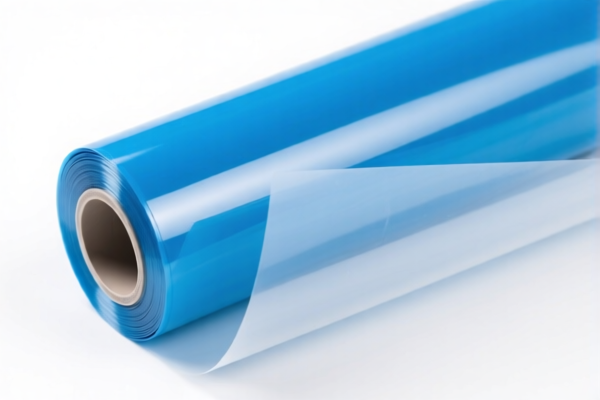
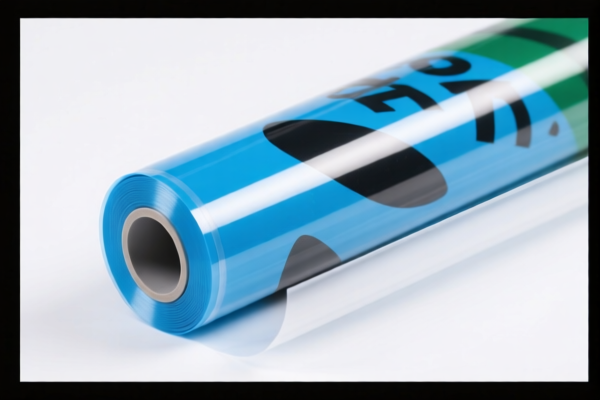
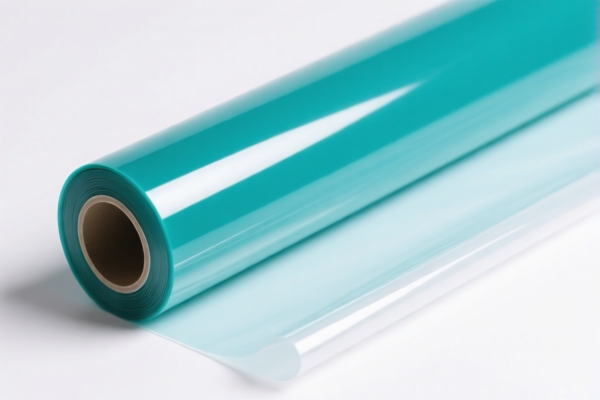
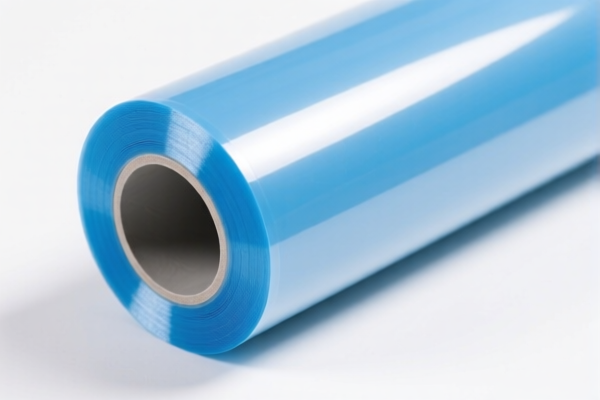
AI Analysis
🌿 Polyester Plastic Film for Greenhouses (Polyethylene/Hydroponic Covers)
🌐 HS Code Reference & Clearance Guide | 2026 Latest Tariff Analysis | Professional Customs Strategy
📌 I. Product Definition & Classification: Do You Really Understand "Greenhouse Film"?
Greenhouse plastic film is a critical agricultural input used to regulate temperature, humidity, and light for crop cultivation. In international trade, the classification depends heavily on the material composition and physical form.
⚠️ Crucial Distinction & Data Insight:
Although the user input specifies "Polyester" (PET), the provided explicitly identifies the material as "Polyethylene" (PE) or generic "Plastic" in all matching entries.
- If the film is truly Polyester (PET): It typically falls under Chapter 39, Heading 3920/3921. However, the provided data does not contain specific Polyester entries.
- If the film is Polyethylene (PE) or Generic Plastic (as per ): It is classified under Chapter 39, specifically Heading 3921 (Plastics in primary forms) or 3920 (Other plates, sheets, film, foil and strip).Based strictly on the provided , we will analyze the classification for Polyethylene/Plastic films, as these are the only codes available in the reference set. This discrepancy must be verified: if the actual product is Polyester, the provided HS codes may be incorrect, leading to customs risks.
📦 II. HS Code Classification Details (Based on Provided )
The following HS codes are derived strictly from the provided JSON data. Note that all entries assume the material is Polyethylene (PE) or compatible Plastic, as stated in the summaries.
| HS Code | Product Description (from ) | Key Matching Criteria | Total Tax Rate |
|---|---|---|---|
3921.19.00.10 |
Polyethylene Film | ✅ Material: Polyethylene ✅ Form: Film ✅ Exact Match |
41.5% |
3921.90.50.50 |
Other Plastic Film | ✅ Material: Plastic (Inferred from PE) ✅ Form: Film (Plates, sheets, film, etc.) |
39.8% |
3901.10.50.10 |
Polyethylene Polymer (Primary Form) | ✅ Material: Polyethylene ✅ Form: Film (Primary/Semi-finished) ✅ No Conflict |
41.5% |
3901.10.50.20 |
Polyethylene Resin/Shape | ✅ Material: Polyethylene ✅ Form: Film (Inferred as primary shape) ✅ Allowed Inference |
41.5% |
3920.99.10.00 |
Other Plastic Plates, Sheets, Film | ✅ Material: Plastic (PE is plastic) ✅ Form: Cover Film (Non-cellular, non-reinforced) ✅ Common Sense Inference |
41.0% |
🔍 Critical Observation:
- The majority of codes (3921.19.00.10, 3901.10.50.10, 3901.10.50.20) carry a 41.5% tax rate. - 3921.90.50.50 offers a slightly lower rate at 39.8%. - 3920.99.10.00 offers 41.0%. - All entries include "122 Clause Tariff 10%" and "Added Tariff 25%", indicating high protectionist measures (likely US-China trade context).
💰 III. 2026 Latest Tariff Rate Breakdown (Including Surcharges)
✅ Applicable Country: United States (US) (Inferred from "122 Clause" and "Added Tariff" structure)
✅ Origin: China (CN) (Inferred from "122 Clause" and typical trade patterns)
✅ Effective Date: Post-2025 (Based on "2026 Latest" context)
🎯 1. 3921.19.00.10 —— Polyethylene Film (Best Fit for "Polyethylene")
| Item | Content |
|---|---|
| Base Tariff | 6.5% (ad valorem) |
| USITC Section 301 Added Tariff | +25.0% |
| Section 122 Tariff | +10.0% |
| Total Tariff Rate | 41.5% |
| Tax Calculation | CIF Value × 41.5% |
| De Minimis Exemption | ❌ Not Eligible (High rates usually block de minimis) |
| Legal Basis Path | USITC:3921.19.00.10 → Section 301: Footnote 9903.88.01 → Section 122: 10% surcharge |
📌 Explanation:
- This code is explicitly defined as matching "Polyethylene" and "Film" in the . - The 25% Section 301 tariff applies to Chinese plastic products. - The 10% Section 122 tariff is an additional surcharge on specific agricultural/industrial inputs from China.
🎯 2. 3921.90.50.50 —— Other Plastic Film (Lower Tax Option)
| Item | Content |
|---|---|
| Base Tariff | 4.8% (ad valorem) |
| USITC Section 301 Added Tariff | +25.0% |
| Section 122 Tariff | +10.0% |
| Total Tariff Rate | 39.8% |
| Tax Calculation | CIF Value × 39.8% |
| De Minimis Exemption | ❌ Not Eligible |
| Legal Basis Path | USITC:3921.90.50.50 → Section 301 → Section 122 |
📌 Note:
- This code is used when the film is "Other Plastic" not specifically listed under 3921.19. - It offers a 1.7% saving compared to 3921.19.00.10, but requires justification that it doesn't fit the stricter "Polyethylene" definition or that it's a different plastic variant.
🎯 3. 3901.10.50.10 / 3901.10.50.20 —— Polyethylene Polymer (Primary Form)
| Item | Content |
|---|---|
| Base Tariff | 6.5% |
| USITC Section 301 Added Tariff | +25.0% |
| Section 122 Tariff | +10.0% |
| Total Tariff Rate | 41.5% |
| De Minimis Exemption | ❌ Not Eligible |
📌 Risk Warning:
- Heading 3901 is for Polymers in Primary Forms (e.g., pellets, powders, non-film sheets).
- Using this for Film (a manufactured article) may be considered misclassification by customs unless the film is deemed a "primary form" (which is rare for finished greenhouse covers).
- Recommendation: Avoid unless the product is explicitly a raw polymer roll not yet processed into final film shape.
🎯 4. 3920.99.10.00 —— Other Plastic Plates, Sheets, Film
| Item | Content |
|---|---|
| Base Tariff | 6.0% |
| USITC Section 301 Added Tariff | +25.0% |
| Section 122 Tariff | +10.0% |
| Total Tariff Rate | 41.0% |
| De Minimis Exemption | ❌ Not Eligible |
📌 Note:
- Heading 3920 is for Other Plastic Plates, Sheets, Film, Strip, and Foil. - This is a common "catch-all" for plastic films. The 41.0% rate is slightly lower than 41.5%, but requires proving the product is "Other Plastic" (not specifically Polyethylene if 3921 applies).
🛠️ IV. Customs Clearance Practical Advice (Avoid Pitfalls)
✅ 1. Documentation Checklist (Non-Negotiable)
| Document | Required | Notes |
|---|---|---|
| ✅ Product Specification Sheet | ✔️ | Must clearly state: Material (PE/PET), Thickness, Width, Length, UV Treatment, Agricultural Use. |
| ✅ Commercial Invoice | ✔️ | Describe as "Polyethylene Agricultural Greenhouse Film" (if PE) or "Polyester Greenhouse Film" (if PET). Do not use vague terms like "Plastic Sheet". |
| ✅ Certificate of Origin (CO) | ✔️ | Essential for verifying origin (China). |
| ✅ Bill of Lading/Air Waybill | ✔️ | Must match invoice details. |
| ✅ HS Code Pre-Ruling (Optional but Recommended) | ✔️ | Due to high tariffs, apply for an Advance Ruling to avoid disputes. |
✅ 2. Declaration Tips (Key Mnemonics)
🔥 "Material First, Form Second, Origin Critical!"
| Scenario | Correct Declaration | Incorrect Action |
|---|---|---|
| Product is Polyethylene (PE) | Use 3921.19.00.10 or 3921.90.50.50 |
Declare as "Polyester" → Mismatch → Seizure |
| Product is Polyester (PET) | NOT COVERED IN | Force fit into PE codes → High Risk of Misclassification |
| Product is Composite (e.g., PE + Aluminum) | Declare as Composite | Declare as pure PE → Partial Penalty |
| Small Samples (De Minimis) | NOT ELIGIBLE for these HS codes | Assume $800 de minimis exemption applies → FAILURE |
✅ 3. Special Case Handling
| Situation | Advice |
|---|---|
| Material Discrepancy (User says "Polyester", Data says "Polyethylene") | CRITICAL ACTION: Verify actual material. If it is Polyester, the provided HS codes are invalid. You must find a Polyester-specific HS code (e.g., 3920.51.00.00 or similar). Forcing PE codes for PET products will lead to penalties. |
| Multi-Layer Film | If the film has multiple layers (e.g., PE+EVOH+PE), declare based on the primary material or outermost layer as per customs rules. Provide a layer-by-layer breakdown. |
| Agricultural Exemption? | Check if the destination country offers agricultural equipment exemptions. In the US, some agricultural inputs may have exemptions from Section 301, but 122 Clause tariffs often remain. Verify with CBP. |
🌍 V. Global Market Comparison (2026 Update)
| Country/Region | Recommended HS Code | Tariff (China Origin) | Certification | Notes |
|---|---|---|---|---|
| 🇺🇸 USA | 3921.19.00.10 (PE) |
41.5% | None Specific | High tariffs due to Section 301 & 122. |
| 🇨🇳 China | 3920.99.10.00 |
6-10% (Est.) | None | Lower tariffs, but not the focus of . |
| 🇪🇺 EU | 3920.99.10.00 |
6.5% | RoHS (if applicable) | No Section 301/122 equivalent. |
| 🇬🇧 UK | 3920.99.10.00 |
6.5% | UKCA | Post-Brexit rules apply. |
| 🇯🇵 Japan | 3920.99.10.00 |
6-10% | None | Stable rates, no US-style surcharges. |
📌 Conclusion:
- The US market is the most challenging due to 41.5% effective tariffs. - If the product is Polyester, it may have different tariff rates in other markets. - Cost-Benefit Analysis: With a 41.5% tariff, profitability in the US market is significantly reduced. Consider alternative markets or supply chain adjustments (e.g., assembly in third countries if eligible).
📌 VI. Common Errors & Pitfalls (Lessons Learned)
❌ Error 1: Ignoring the Material Discrepancy (User: "Polyester", Data: "Polyethylene")
👉 Consequence: Customs audit → Misclassification → Fines + Back Duties.
❌ Error 2: Assuming De Minimis ($800) applies to high-tariff HS codes
👉 Consequence: Entry rejected, goods held, storage fees accrue.
❌ Error 3: Using Generic Terms ("Plastic Film") without specifying Polyethylene/Polyester
👉 Consequence: Customs assigns a higher "Other Plastic" rate or requires additional documentation.
❌ Error 4: Failing to disclose UV Treatment or Additives
👉 Consequence: May be classified as "Industrial Film" instead of "Agricultural Film," leading to different regulatory requirements.
✅ Correct Approach:
"Polyethylene (PE) Agricultural Greenhouse Film, UV Stabilized, 200 Micron Thickness, Width 6m, Length 100m, HS Code 3921.19.00.10"
🎯 VII. Conclusion: Precision is Profit
🎯 Key Takeaway:
🔹 "Verify Material: PE vs. PET is a Binary Choice."
🔹 "US Tariffs are High: 41.5% is the Floor for PE Films."
🔹 "Documentation Must Be Exact: 'Plastic' is Too Vague."
📌 Actionable Advice:
1. Confirm Material: Is it truly Polyester (PET) or Polyethylene (PE)?
2. If Polyester: Ignore the provided HS codes. They are for PE. Find the correct PET HS code (likely 3920.51 or 3920.61).
3. If Polyethylene: Use 3921.19.00.10 (41.5%) or 3921.90.50.50 (39.8%).
4. Consult Customs Broker: Given the high tariffs and complex surcharges, a pre-clearance consultation is essential.
📣 Immediate Action Required:
📞 Verify Product Composition
📄 Prepare Detailed Spec Sheet
🚀 Calculate Landed Cost with 41.5% Tariff
✨ Smart Clearance, Smart Business!
💼 Don't let a 2% material difference cost you 40% in duties!
Customer Reviews
About HS Code Classification
The Harmonized System (HS) is an internationally standardized nomenclature developed by the World Customs Organization (WCO) to classify traded products. Over 200 countries use the HS system as the basis for customs tariffs, trade statistics, and import/export regulations.
Each HS code follows a hierarchical structure:
- Chapter (2 digits) — Broad category of goods (e.g., Chapter 84: Machinery and Mechanical Appliances)
- Heading (4 digits) — More specific grouping within the chapter
- Subheading (6 digits) — Internationally standardized breakdown, used by all WCO member countries
- National subdivisions (8-10 digits) — Country-specific extensions for further classification, such as US HTSUS 10-digit codes
Correct HS code classification is essential for smooth customs clearance, accurate duty payment, and compliance with trade regulations. Misclassification can lead to customs delays, overpayment of duties, or penalties.
When importing from CN to US, the applicable tariff rates may include:
- Most-Favored-Nation (MFN) rate — The standard duty rate applied to WTO members
- General rate — Applied to countries without trade agreements
- Trade remedy duties — Additional tariffs such as Section 301 (anti-dumping), Section 232 (national security), or countervailing duties
The information provided on this page is for reference purposes only. For official classification, please consult with your local customs authority or a licensed customs broker.