polyester resin for molding
CN → US| HS Code | Tariff Rate | Origin | Destination | Doc |
|---|---|---|---|---|
| 3907995050 | 41.5% | CN | US | Official Doc |
| 3907992000 | 35.0% | CN | US | Official Doc |
| 3824994900 | 41.5% | CN | US | Official Doc |
| 3907912000 | 35.0% | CN | US | Official Doc |
| 3824992900 | 41.5% | CN | US | Official Doc |
Product Images

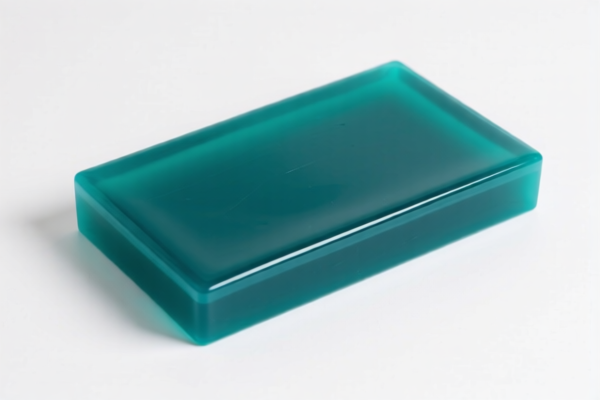
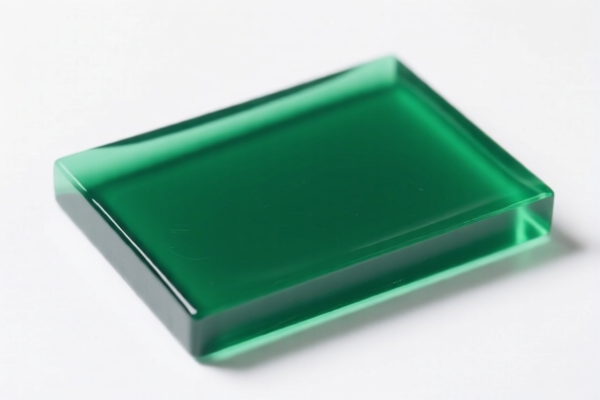

AI Analysis
🏭 Polyester Resin for Molding (Primary Forms)
🌐 HS Code Reference & Customs Clearance Guide | 2026 Latest Tariff Analysis | Professional Clearance Strategy
📌 I. Product Definition & Classification: What is "Polyester Resin for Molding"?
Polyester Resin is a thermosetting plastic derived from polyols and dibasic acids. In international trade, its classification heavily depends on whether it is in its "primary form" (raw material, granules, flakes, powders) or if it has been processed into preparations or finished articles.
- Primary Forms (Raw Material): Granules, flakes, powders, or liquids ready for polymerization. These fall under Chapter 39.
- Preparations/Industrial Use: Mixtures, additives, or industrial chemical preparations. These may fall under Chapter 38.
⚠️ Key Distinction Point:
- If the product is a pure chemical substance in raw form → It is likely HS 3907 (Polymers of Ethylene Glycol).
- If the product is a mixture, adhesive, or industrial preparation not classified elsewhere → It may be HS 3824.
📦 II. HS Code Classification Details (2026 Latest Tariff Authority Comparison)
| HS Code | Product Description | Application Scenario | Conflict Status |
|---|---|---|---|
3907.99.50.50 |
Other polyester resins, primary forms, raw material state | Raw polyester for molding, general industrial use | ✅ No Conflict |
3907.99.20.00 |
Polyester resins, primary forms | High-purity polyester resins matching primary form attributes | ✅ Match Successful |
3824.99.49.00 |
Other chemical products & preparations (Hydrocarbon derivatives) | Industrial uses of polyester resin, classified as chemical product | ✅ Meets Chemical Definition |
3907.91.20.00 |
Other polyesters, other forms | Polyester resin assigned to "other polyester" category | ✅ No Material Conflict |
3824.99.29.00 |
Other chemical products & preparations | Polyester resin classified as other chemical preparations | ✅ No Obvious Conflict |
🔍 Key Reminder:
- HS 3907 is generally preferred for pure primary forms of polyester.
- HS 3824 is used for preparations or when the resin is part of a complex chemical mixture for industrial use.
- Misclassification Risk: Declaring a raw resin as an "industrial preparation" (3824) may trigger higher base tariffs (6.5% vs 0%).
💰 III. 2026 Latest Tariff Rate Breakdown (Including Surtaxes & Policy Add-ons)
✅ Applicable Country: United States (US)
✅ Country of Origin: China (CN)
✅ Effective Date: November 10, 2025 (Including subsequent imports)
🎯 1. 3907.99.50.50 —— Polyester Resin Raw Material
| Item | Content |
|---|---|
| Base Tariff | 6.5% (Ad Valorem) |
| USITC Surtax (Section 301) | +25.0% |
| IEEPA Surtax (122 Clause) | +10.0% |
| Total Tax Rate | 41.5% |
| Tax Calculation | CIF Value × 41.5% |
| De Minimis Exemption | ❌ Not Eligible (deny_de_minimis) |
| Legal Basis Path | Base: 3907.99.50.50 → USITC: 301 Footnote → IEEPA: 122 Clause |
📌 Explanation:
- This code attracts the 6.5% base duty because it is classified under "Other polyester" with specific sub-category duties.
- Combined with 25% Section 301 and 10% IEEPA, the total burden is 41.5%.
- High cost alert: This is a significant expense for raw material importers.
🎯 2. 3907.99.20.00 —— Polyester Resin (Primary Form)
| Item | Content |
|---|---|
| Base Tariff | 0.0% (Ad Valorem) |
| USITC Surtax (Section 301) | +25.0% |
| IEEPA Surtax (122 Clause) | +10.0% |
| Total Tax Rate | 35.0% |
| Tax Calculation | CIF Value × 35.0% |
| De Minimis Exemption | ❌ Not Eligible (deny_de_minimis) |
| Legal Basis Path | Base: 3907.99.20.00 → USITC: 301 Footnote → IEEPA: 122 Clause |
📌 Key Advantage:
- Zero base duty makes this the most cost-effective option if the product strictly qualifies as "Polyester Resin, Primary Form."
- Savings: 6.5% less than3907.99.50.50.
- Condition: Must provide proof that the product is in primary form (e.g., MSDS, physical state description).
🎯 3. 3907.91.20.00 —— Other Polyesters
| Item | Content |
|---|---|
| Base Tariff | 0.0% (Ad Valorem) |
| USITC Surtax (Section 301) | +25.0% |
| IEEPA Surtax (122 Clause) | +10.0% |
| Total Tax Rate | 35.0% |
| Tax Calculation | CIF Value × 35.0% |
| De Minimis Exemption | ❌ Not Eligible (deny_de_minimis) |
| Legal Basis Path | Base: 3907.91.20.00 → USITC: 301 Footnote → IEEPA: 122 Clause |
📌 Note:
- Similar to3907.99.20.00, this code also has a 0% base duty.
- Suitable if the resin falls under "Other Polyesters" rather than specific primary form definitions.
🎯 4. 3824.99.49.00 & 3824.99.29.00 —— Industrial Chemical Preparations
| Item | Content |
|---|---|
| Base Tariff | 6.5% (Ad Valorem) |
| USITC Surtax (Section 301) | +25.0% |
| IEEPA Surtax (122 Clause) | +10.0% |
| Total Tax Rate | 41.5% |
| Tax Calculation | CIF Value × 41.5% |
| De Minimis Exemption | ❌ Not Eligible (deny_de_minimis) |
| Legal Basis Path | Base: 3824.99 → USITC: 301 Footnote → IEEPA: 122 Clause |
📌 Warning:
- These codes are for industrial uses and chemical preparations.
- They incur the 6.5% base duty, resulting in the same 41.5% total rate as3907.99.50.50.
- Only use if the product is a mixture or preparation and not a pure primary resin.
🛠️ IV. Customs Clearance Practical Advice (Battle-Tested Pitfall Avoidance)
✅ 1. Required Documentation Checklist (All Mandatory)
| Document | Mandatory | Explanation |
|---|---|---|
| ✅ Material Safety Data Sheet (MSDS) | ✔️ | Proves chemical composition and state (solid/liquid). Crucial for distinguishing "Primary Form" vs "Preparation." |
| ✅ Product Specification Sheet | ✔️ | Must detail polymerization level, viscosity, and physical form (flakes, powder, liquid). |
| ✅ Certificate of Origin (CO) | ✔️ | Required for Section 301 and IEEPA tracking. Must state "China." |
| ✅ Commercial Invoice | ✔️ | Clearly describe as "Polyester Resin, Primary Form, for Molding." Avoid vague terms like "Plastic Raw Material." |
| ✅ Packing List | ✔️ | Show net/gross weight. Ensure packaging matches raw material standards. |
| ✅ Import License/Regulatory Approval | ✔️ | If classified under Chapter 38, additional chemical handling permits may be needed. |
✅ 2. Declaration Tips (Key Mantra)
🔥 “Raw Form Zero Base, Preparation Six-Five, 301 & 122 Always Apply!”
| Scenario | Correct Declaration | Incorrect Practice |
|---|---|---|
| Pure polyester granules for molding | 3907.99.20.00 (0% Base) |
Declaring as 3824 (6.5% Base) → Higher Cost |
| Polyester mixed with additives/solvents | 3824.99.49.00 (6.5% Base) |
Declaring as 3907 → Misclassification Risk |
| Liquid polyester resin (uncured) | 3907.99.20.00 if primary form |
Declaring as finished plastic → Wrong Chapter |
| Finished polyester molding parts | Not covered (Different HS) | Declaring resin as part → Severe Penalty |
✅ 3. Special Case Handling
| Situation | Handling Advice |
|---|---|
| OEM Custom Resin | Provide customer specs + chemical formula to prove "Primary Form" status for 3907.99.20.00. |
| Hybrid Resin Blends | If mixed with fillers (e.g., glass fiber), may shift to 3907.99.50.50 or 3926 (Finished Articles). Assess composition carefully. |
| Chemical Preparations | If the resin is part of a glue or coating mixture, use 3824 codes but be prepared for 41.5% total tax. |
| Pre-Ruling Application | Highly recommended for large volume imports. Submit samples and MSDS to CBP for an Advance Ruling to lock in the HS Code. |
🌍 V. Global Market Clearance Comparison (2026 Latest)
| Country/Region | Recommended HS Code | Base Tariff | Total Tax (CN Origin) | Certification |
|---|---|---|---|---|
| 🇺🇸 USA | 3907.99.20.00 |
0% | 35.0% | None specific |
| 🇺🇸 USA | 3824.99.49.00 |
6.5% | 41.5% | TSCA Compliance |
| 🇨🇳 China | 3907.99.20.00 |
6.5% | 6.5% (No 301/IEEPA) | None |
| 🇪🇺 EU | 3907.99.20.00 |
5.3% | 5.3% (No 301/IEEPA) | REACH Registration |
| 🇬🇧 UK | 3907.99.20.00 |
5.3% | 5.3% | UK REACH |
📌 Conclusion:
- USA is the highest cost market due to 35-41.5% total duties.
- China and EU are significantly cheaper for importers.
- Strategy: Consider supply chain diversification (e.g., sourcing from Vietnam or India) to avoid US Section 301 and IEEPA surtaxes if possible.
📌 VI. Common Mistakes & Pitfall Guide (Lessons Learned)
❌ Mistake 1: Declaring all polyester products under 3907 without verifying "Primary Form"
👉 Consequence: If classified as a preparation, you might get hit with 6.5% base duty if the importer assumed 0%. Or, if misclassified as a finished article, penalties apply.
❌ Mistake 2: Ignoring Section 301 and IEEPA surtaxes
👉 Consequence: Budgeting only for base duty leads to 30-40% unexpected cost overruns.
❌ Mistake 3: Using vague descriptions like "Plastic Raw Material"
👉 Consequence: CBP may reclassify to a higher duty rate or demand detailed chemical breakdowns, causing delays.
❌ Mistake 4: Failing to provide MSDS
👉 Consequence: Customs cannot verify the chemical state, leading to hold-ups or audit flags.
✅ Correct Approach:
"Unsaturated Polyester Resin, Primary Form, in Flakes, for Molded Parts, Chemical Name: [Insert Name], MSDS Attached, HS Code: 3907.99.20.00"
🎯 VII. Conclusion: Precise Classification Saves Costs!
🎯 Remember the Mantra:
🔹 “Primary Form is King (0% Base), Preparation is Pricy (6.5% Base).”
🔹 “301 + 122 = 35%, 301 + 122 + Base = 41.5%. Know your Code!”
📌 Pro Tip:
- For large-volume imports, apply for a CBP Advance Ruling to confirm whether your specific polyester formulation qualifies for 3907.99.20.00 (0% Base) or 3907.99.50.50 (6.5% Base).
- Consider tariff engineering: Can the resin be imported in a form that qualifies for the lower base duty?
- Explore Exclusions: Check if your specific product code is eligible for any Section 301 exclusions (though IEEPA 122 Clause usually remains).
📣 Immediate Action:
📞 Contact a Licensed Customs Broker + Provide MSDS + Apply for Pre-Ruling
🚀 Minimize Duties, Maximize Margins, Clear Customs Smoothly!
✨ Professional Clearance Starts with Accurate Classification!
💼 Every Percent Counts in Your Supply Chain!
Customer Reviews
About HS Code Classification
The Harmonized System (HS) is an internationally standardized nomenclature developed by the World Customs Organization (WCO) to classify traded products. Over 200 countries use the HS system as the basis for customs tariffs, trade statistics, and import/export regulations.
Each HS code follows a hierarchical structure:
- Chapter (2 digits) — Broad category of goods (e.g., Chapter 84: Machinery and Mechanical Appliances)
- Heading (4 digits) — More specific grouping within the chapter
- Subheading (6 digits) — Internationally standardized breakdown, used by all WCO member countries
- National subdivisions (8-10 digits) — Country-specific extensions for further classification, such as US HTSUS 10-digit codes
Correct HS code classification is essential for smooth customs clearance, accurate duty payment, and compliance with trade regulations. Misclassification can lead to customs delays, overpayment of duties, or penalties.
When importing from CN to US, the applicable tariff rates may include:
- Most-Favored-Nation (MFN) rate — The standard duty rate applied to WTO members
- General rate — Applied to countries without trade agreements
- Trade remedy duties — Additional tariffs such as Section 301 (anti-dumping), Section 232 (national security), or countervailing duties
The information provided on this page is for reference purposes only. For official classification, please consult with your local customs authority or a licensed customs broker.