polyester uv absorber raw material
CN → US| HS Code | Tariff Rate | Origin | Destination | Doc |
|---|---|---|---|---|
| 3824405000 | 40.0% | CN | US | Official Doc |
| 3824992900 | 41.5% | CN | US | Official Doc |
| 3907912000 | 35.0% | CN | US | Official Doc |
| 3907914000 | 40.8% | CN | US | Official Doc |
Product Images
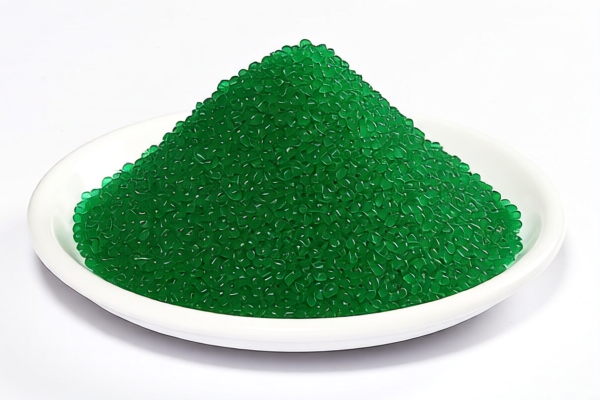
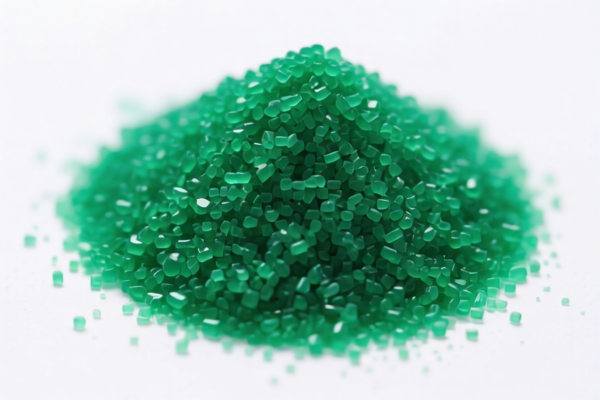
AI Analysis
🧪 Polyester UV Absorber Raw Material
🌐 HS Code Reference & Customs Clearance Guide | 2026 Latest Tariff Analysis | Professional Clearance Strategy 📌 I. Product Definition: What is "Polyester UV Absorber Raw Material"?
This product represents a specialized chemical intermediate. It is not a simple polyester resin nor a simple UV absorber, but a composite raw material often used in coatings, plastics, and fibers to provide UV resistance while maintaining the structural properties of polyester.
In international trade, its classification hinges on two key attributes: 1. Chemical Composition: It contains Polyester Resin (a chemical polymer). 2. Functional Additive: It contains UV Absorbers (chemical制剂/preparations).
Depending on the manufacturing process and the dominant component, it can be classified into four distinct HS Codes under the current US Tariff Schedule (2026).
📦 II. HS Code Classification Details (2026 Latest Tariff Authority)
| HS Code | Product Description | Classification Logic | Total Tax Rate |
|---|---|---|---|
3824.40.50.00 |
Chemical Additive / Resin Prep | Polyester resin treated as a chemical additive ingredient. | 40.0% |
3824.99.29.00 |
Chemical Preparation (Misc) | Composite of Polyester + UV Absorber, treated as a general chemical preparation. | 41.5% |
3907.91.20.00 |
Other Unsaturated Polyester Resins | Classified primarily as an unsaturated/allylic type resin (raw material logic). | 35.0% |
3907.91.40.00 |
Polyester Resins, Primary Shapes | Classified as Polyester in primary shape (原料形态). | 40.8% |
🔍 Key Distinction: - 3824.xxxx: Focuses on the chemical preparation/additive aspect (mixed ingredients). - 3907.xxxx: Focuses on the polymer/resin aspect (primary shape or specific resin type).
💰 III. 2026 Latest Tariff Rate Breakdown (Including Surcharges)
✅ Applicable Country: United States (US)
✅ Origin: China (CN)
✅ Effective Date: Post-November 2025 (Current Enforcement)
🎯 1. 3824.40.50.00 — Polyester Resin as Chemical Additive
| Item | Content |
|---|---|
| Base Tariff | 5.0% |
| Section 301 Surcharge | +25.0% |
| Section 122 Surcharge | +10.0% |
| Total Effective Rate | 40.0% |
| De Minimis Eligibility | ❌ No (Subject to strict scrutiny) |
| Legal Path | USITC:3824.40.50.00 → SECTION301:25% → SECTION122:10% |
📌 Explanation: - This code treats the material as a chemical additive prepared from polyester. - The 25% is the standard Section 301 tariff for chemical preparations from China. - The 10% is the specific Section 122 tariff applied to certain chemical inputs. - Total: 40%. High cost, requires precise documentation of "additive" function.
🎯 2. 3824.99.29.00 — Other Chemical Preparations (Polyester + UV Absorber)
| Item | Content |
|---|---|
| Base Tariff | 6.5% |
| Section 301 Surcharge | +25.0% |
| Section 122 Surcharge | +10.0% |
| Total Effective Rate | 41.5% |
| De Minimis Eligibility | ❌ No |
| Legal Path | USITC:3824.99.29.00 → SECTION301:25% → SECTION122:10% |
📌 Explanation: - This is the fallback category for chemical preparations not elsewhere specified. - Because it combines Polyester and UV Absorber, it may be deemed a complex mixture. - Highest Base Rate (6.5%) among the options, leading to the highest total (41.5%). - Use only if no other specific polyester or additive code fits.
🎯 3. 3907.91.20.00 — Other Unsaturated/Allylic Polyester Resins
| Item | Content |
|---|---|
| Base Tariff | 0.0% |
| Section 301 Surcharge | +25.0% |
| Section 122 Surcharge | +10.0% |
| Total Effective Rate | 35.0% |
| De Minimis Eligibility | ❌ No |
| Legal Path | USITC:3907.91.20.00 → SECTION301:25% → SECTION122:10% |
📌 Explanation: - Lowest Total Rate (35%)! - Classification logic: The product is primarily an unsaturated or allylic polyester resin. - Critical Requirement: Must prove the material’s primary identity is the resin structure, with UV absorber as a minor functional component. - Best for Cost Saving, but requires strong technical justification.
🎯 4. 3907.91.40.00 — Polyester Resins, Primary Shapes
| Item | Content |
|---|---|
| Base Tariff | 5.8% |
| Section 301 Surcharge | +25.0% |
| Section 122 Surcharge | +10.0% |
| Total Effective Rate | 40.8% |
| De Minimis Eligibility | ❌ No |
| Legal Path | USITC:3907.91.40.00 → SECTION301:25% → SECTION122:10% |
📌 Explanation: - If the material is in primary shape (e.g., pellets, powders, liquids) and identified as a generic polyester resin. - Moderate cost (40.8%). - Use if the UV absorber content is negligible or if the product is simply "Polyester Resin" with trace stabilizers.
🛠️ IV. Customs Clearance Practical Advice (Avoid Pitfalls)
✅ 1. Documentation Checklist (Non-Negotiable)
| Document | Must Provide | Purpose |
|---|---|---|
| ✅ Technical Data Sheet (TDS) | ✔️ | Must show % composition of Polyester vs. UV Absorber. |
| ✅ Certificate of Analysis (COA) | ✔️ | Proves chemical structure (Unsaturated vs. Saturated). |
| ✅ Product Photos | ✔️ | Show form: Pellets, Powder, or Liquid. |
| ✅ Commercial Invoice | ✔️ | Must clearly state "Polyester Resin with UV Absorber" or "Chemical Preparation". |
| ✅ Origin Certificate (CO) | ✔️ | To confirm China origin for Section 301/122 application. |
✅ 2. Classification Strategy (Key Tips)
🔥 "Resin First, Additive Second: If it’s Resin, use 3907. If it’s Mix, use 3824."
| Scenario | Recommended HS Code | Reason |
|---|---|---|
| High UV Absorber Content (>10%) | 3824.99.29.00 |
Treated as a chemical preparation/mixture. |
| Low UV Absorber, Unsaturated Resin | 3907.91.20.00 |
Treated as Unsaturated Polyester. Lowest Tax (35%). |
| Low UV Absorber, Primary Shape | 3907.91.40.00 |
Treated as Polyester Resin. |
| Generic Chemical Additive | 3824.40.50.00 |
If marketed specifically as a UV-blocking additive for polyester. |
✅ 3. Special Considerations
| Situation | Advice |
|---|---|
| OEM Custom Blend | Provide formula sheets. If UV absorber is <5%, argue for 3907 classification. |
| Liquid vs. Solid | Liquid may be harder to classify as "Primary Shape" (3907.91.40). Prefer 3824 or 3907.91.20. |
| Pre-Mixed vs. Blended at Import | Pre-mixed = One HS Code. Blended at import = Two HS Codes (Higher risk, complex clearance). |
🌍 V. Global Market Comparison (2026)
| Country/Region | Recommended HS Code | Tariff (China Origin) | Notes |
|---|---|---|---|
| 🇺🇸 USA | 3907.91.20.00 |
35.0% | Best Rate. Requires strong resin argument. |
| 🇨🇳 China | 3907.91.20.00 |
0% - 5% | Import duty low, but VAT applies. |
| 🇪🇺 EU | 3907.91.20.00 |
0% - 6.5% | REACH registration required. |
| 🇯🇵 Japan | 3907.91.20.00 |
0% - 5% | Shinryo (Chemical) report required. |
📌 Conclusion: - USA is the most challenging market due to Section 301 (25%) + Section 122 (10%). - Strategic Choice: Aim for
3907.91.20.00to achieve the lowest effective rate of 35%. - Avoid3824.99.29.00unless technically unavoidable, as it carries the highest rate (41.5%).
📌 VI. Common Mistakes & Pitfalls (Lessons Learned)
❌ Mistake 1: Classifying as 3902.10 (Polypropylene) by mistake.
👉 Consequence: Wrong classification, penalties, and delayed clearance. Polyester ≠ Polyolefin.
❌ Mistake 2: Ignoring Section 122 Tariff.
👉 Consequence: Underpayment. Section 122 adds 10% on top of Section 301 for many chemicals.
❌ Mistake 3: Claiming "De Minimis" for small shipments.
👉 Consequence: Denied. Chemicals under Section 301/122 are not eligible for $800 de minimis exemption if origin is China.
❌ Mistake 4: Vague Description ("Resin Additive").
👉 Consequence: Customs may reclassify to 3824.99.29.00 (41.5%) due to uncertainty.
✅ Correct Practice:
"Unsaturated Polyester Resin with UV Absorber, Primary Shape, Model XYZ, CAS No. XXXXX-XX-X"
🎯 VII. Conclusion: Professional Clearance, Cost Optimization!
🎯 Remember:
🔹 "If it’s Resin, use 3907. If it’s Mix, use 3824."
🔹 "Target 3907.91.20.00 for 35% Tax. Avoid 3824.99.29.00 at 41.5%."
🔹 "Section 301 (25%) + Section 122 (10%) is Mandatory for China Origin."
📌 Pro Tip:
If your product is OEM blended with <5% UV absorber, argue for 3907.91.20.00 with a COA proving resin dominance. This can save 6.5% in tariffs.
📣 Immediate Action:
📞 Contact a Customs Broker + Provide TDS + Request Advance Ruling
🚀 Clear Customs Efficiently, Maximize Profit, Stay Compliant!
✨ Professional Clearance Starts with Accurate Classification!
💼 Every Percent Counts in Chemical Trading!
Customer Reviews
About HS Code Classification
The Harmonized System (HS) is an internationally standardized nomenclature developed by the World Customs Organization (WCO) to classify traded products. Over 200 countries use the HS system as the basis for customs tariffs, trade statistics, and import/export regulations.
Each HS code follows a hierarchical structure:
- Chapter (2 digits) — Broad category of goods (e.g., Chapter 84: Machinery and Mechanical Appliances)
- Heading (4 digits) — More specific grouping within the chapter
- Subheading (6 digits) — Internationally standardized breakdown, used by all WCO member countries
- National subdivisions (8-10 digits) — Country-specific extensions for further classification, such as US HTSUS 10-digit codes
Correct HS code classification is essential for smooth customs clearance, accurate duty payment, and compliance with trade regulations. Misclassification can lead to customs delays, overpayment of duties, or penalties.
When importing from CN to US, the applicable tariff rates may include:
- Most-Favored-Nation (MFN) rate — The standard duty rate applied to WTO members
- General rate — Applied to countries without trade agreements
- Trade remedy duties — Additional tariffs such as Section 301 (anti-dumping), Section 232 (national security), or countervailing duties
The information provided on this page is for reference purposes only. For official classification, please consult with your local customs authority or a licensed customs broker.