polyester waterproof bag
CN → US| HS Code | Tariff Rate | Origin | Destination | Doc |
|---|---|---|---|---|
| 4202920809 | 42.0% | CN | US | Official Doc |
| 6307909891 | 24.5% | CN | US | Official Doc |
| 4202920807 | 42.0% | CN | US | Official Doc |
Product Images
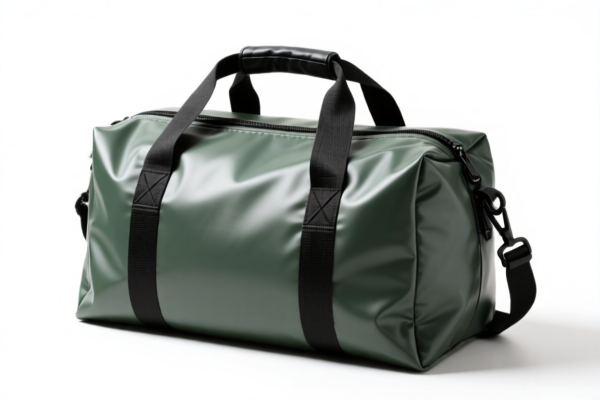

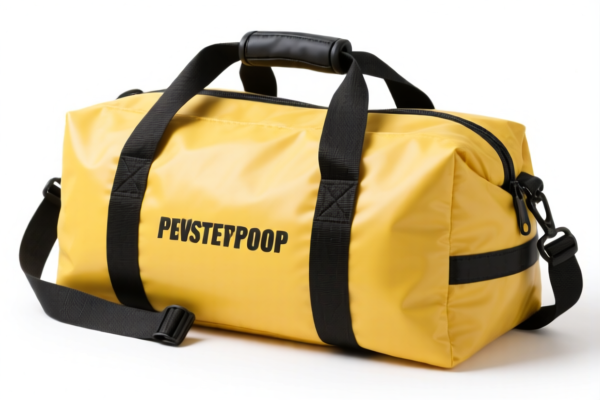
AI Analysis
🎒 Polyester Waterproof Bag (Insulated Food Bag / Lunch Bag)
🌐 HS Code Reference & Customs Clearance Guide | 2026 Latest Tariff Analysis | Professional Clearance Strategy
📌 I. Product Definition & Classification: What Exactly is a "Polyester Waterproof Bag"?
A "Polyester Waterproof Bag" in international trade typically refers to insulated food carriers, lunch bags, or thermal bags made from polyester (synthetic textile). These items fall under Chapter 42 (Articles of Leather; Saddle and Harness Trading; Travel Goods, Handbags...) or Chapter 63 (Other Made Up Articles), depending on their specific construction, lining, and primary function.
Key Classification Distinctions: 1. Insulated/Thermal Bags (Chapter 42): If the bag is designed specifically for food storage (lunch, picnic, transport) and has a lining of insulating material (like foam or foil) or is shaped for carrying food containers, it is often classified under Headline 4202. 2. General Purpose Textile Bags (Chapter 63): If the bag is a simple "pouch" or "bag" without specific thermal insulation features or food-specific shaping, and is considered a "made-up article," it may fall under Headline 6307.
⚠️ Critical Distinction:
- If the bag is explicitly an insulated food bag (thermal bag) → Look at 4202.92 (Travel goods, handbags, etc., with outer surface of man-made textile).
- If the bag is a generic polyester bag (e.g., a simple tote or pouch used loosely for food) → Look at 6307.90 (Other made-up articles).
📦 II. HS Code Classification Details (2026 Latest Tariff Reference)
Based on the provided data, here are the three most relevant HS Codes for Polyester Waterproof Bags, their descriptions, and tax implications.
| HS Code | Product Description | Application Scenario | Key Feature |
|---|---|---|---|
4202.92.08.09 |
Polyester (Synthetic Fiber) Insulated Food Bag | Insulated lunch bags, thermal picnic bags, food transport bags | Outer surface: Synthetic fiber; Function: Food insulation |
4202.92.08.07 |
Polyester (Artificial Fiber) Insulated Food Bag | Insulated food bags with artificial fiber exterior | Outer surface: Artificial fiber; Function: Insulated food storage |
6307.90.98.91 |
Polyester (Polyester Fiber) Food Bag | General purpose polyester bags, non-insulated food pouches | Categorized as "Other made-up articles"; No material/shape conflict |
🔍 Important Note:
- The distinction between4202.92.08.09and4202.92.08.07often lies in the specific type of "man-made textile" (synthetic vs. artificial) and the exact construction. Both are treated as insulated food containers/bags. -6307.90.98.91is a catch-all category for other made-up textile articles. If the bag lacks specific insulation or food-specific design features, it might be classified here, resulting in a lower tax rate.
💰 III. 2026 Latest Tariff Rate Breakdown (Including Surtaxes & Policy Surcharges)
✅ Applicable Country: United States (US)
✅ Country of Origin: China (CN)
✅ Effective Date: Ongoing (including subsequent imports)
🎯 1. 4202.92.08.09 — Polyester Insulated Food Bag (Synthetic)
| Item | Content |
|---|---|
| Base Tariff Rate | 7.0% (ad valorem) |
| Section 301 Surtax | +25.0% (USITC Footnote 9903.88.01 / Trade Act 301) |
| Section 122 Surtax | +10.0% (IEEPA / Executive Order provisions) |
| Total Tariff Rate | 42.0% |
| Tax Calculation | CIF Value × 42% |
| De Minimis Exemption | ❌ Not Eligible |
| Legal Basis Path | Base: 7.0% → 301: 25.0% → 122: 10.0% |
📌 Explanation:
- This is a high-tariff category due to the combination of base tariffs and US-China trade war surcharges. - The 301 Section (25%) applies to most textile and apparel products from China. - The 122 Section (10%) is an additional surcharge often applied to specific categories.
🎯 2. 4202.92.08.07 — Polyester Insulated Food Bag (Artificial)
| Item | Content |
|---|---|
| Base Tariff Rate | 7.0% (ad valorem) |
| Section 301 Surtax | +25.0% |
| Section 122 Surtax | +10.0% |
| Total Tariff Rate | 42.0% |
| Tax Calculation | CIF Value × 42% |
| De Minimis Exemption | ❌ Not Eligible |
| Legal Basis Path | Base: 7.0% → 301: 25.0% → 122: 10.0% |
📌 Note:
- Tax rate is identical to4202.92.08.09. - Both codes fall under the same high-tax bracket due to similar trade policy treatments for textile food bags.
🎯 3. 6307.90.98.91 — Polyester Food Bag (General Made-Up Article)
| Item | Content |
|---|---|
| Base Tariff Rate | 7.0% (ad valorem) |
| Section 301 Surtax | +7.5% |
| Section 122 Surtax | +10.0% |
| Total Tariff Rate | 24.5% |
| Tax Calculation | CIF Value × 24.5% |
| De Minimis Exemption | ❌ Not Eligible |
| Legal Basis Path | Base: 7.0% → 301: 7.5% → 122: 10.0% |
📌 Strategic Advantage:
- This code has a significantly lower surtax (7.5% vs. 25%) under Section 301. - Total Tariff: 24.5%, which is 17.5 percentage points lower than the insulated bag codes. - Use Case: If the bag is not specifically insulated or is a simple polyester pouch, classifying under 6307.90.98.91 can save substantial costs.
🛠️ IV. Customs Clearance Practical Advice (Battle-Tested Pitfall Guide)
✅ 1. Required Documentation Checklist (All are Mandatory)
| Document | Must Provide | Description |
|---|---|---|
| ✅ Product Specification Sheet | ✔️ | Details material (polyester type), dimensions, zipper type, lining material |
| ✅ Product Photos | ✔️ | Clear images of the bag inside and out, showing no specific food container integration |
| ✅ Commercial Invoice | ✔️ | Clearly describe as "Polyester Bag" or "Food Carrier Bag," avoid "Insulated Lunch Bag" if using 6307 code |
| ✅ Packing List | ✔️ | Standard packing details |
| ✅ Origin Certificate | ✔️ | If claiming preferential treatment (though unlikely for China-US trade currently) |
✅ 2. Declaration Strategy (Key Mnemonic)
🔥 "Insulated vs. General: Choose Wisely, Save 17.5%!"
| Scenario | Correct HS Code | Tax Rate | Risk if Misclassified |
|---|---|---|---|
| Insulated/Thermal Food Bag | 4202.92.08.09 or .07 |
42.0% | If declared as 6307, customs may reclassify and charge back taxes + penalties |
| Simple Polyester Bag (No Insulation) | 6307.90.98.91 |
24.5% | If declared as 4202, you overpay by 17.5% unnecessarily |
| Bag with Specific Food Container Shape | 4202.92.08.xx |
42.0% | Must provide proof of thermal/insulating properties |
✅ 3. Special Handling Tips
| Situation | Advice |
|---|---|
| OEM Custom Bags | Provide design drawings to prove if insulation is present or absent. |
| Mixed Shipments | If a shipment contains both insulated and non-insulated bags, declare separately to optimize tax for each. |
| Material Definition | Ensure "Polyester" is correctly defined. Synthetic vs. Artificial fibers can affect sub-classification within 4202. |
| Function Declaration | For 6307, emphasize "General Use" or "Storage Bag," not "Food Insulation." |
🌍 V. Global Market Comparison (2026 Latest)
| Country/Region | Recommended HS Code | Tariff Rate (China Origin) | Certification | Remarks |
|---|---|---|---|---|
| 🇺🇸 USA | 6307.90.98.91 |
24.5% | No specific | Lowest among US options for polyester bags |
| 🇺🇸 USA | 4202.92.08.09 |
42.0% | No specific | High tax for insulated food bags |
| 🇨🇳 China | 6307.90.98.91 |
~5-10% | CCC (if applicable) | Lower tax domestically |
| 🇪🇺 EU | 6307.90.98.91 |
~4-6% | CE (if applicable) | No Section 301/122 surcharges |
| 🇬🇧 UK | 6307.90.98.91 |
~4-6% | UKCA | Post-Brexit standards |
📌 Conclusion:
- USA is the most challenging market due to Section 301 (25% or 7.5%) and Section 122 (10%) surcharges. - EU/UK/China have significantly lower tariffs without these punitive surcharges. - Strategy: If exporting to the US, consider classifying non-insulated bags under 6307.90.98.91 to reduce tariff from 42% to 24.5%.
📌 VI. Common Mistakes & Pitfalls (Lessons from the Field)
❌ Mistake 1: Declaring an insulated lunch bag as 6307.90.98.91
👉 Consequence: Customs reclassifies to 4202.92.08.09, charging back 17.5% more tax + penalties + delay.
❌ Mistake 2: Declaring a simple polyester bag as 4202.92.08.09
👉 Consequence: Overpaying 17.5% unnecessarily. Every dollar saved is profit!
❌ Mistake 3: Vague Description "Polyester Bag"
👉 Consequence: Customs uncertainty → Increased Inspection Rate → Delays.
✅ Correct Description: "Polyester Water-Resistant Storage Bag, Non-Insulated, General Purpose"
❌ Mistake 4: Ignoring Section 122 Tariff
👉 Consequence: Underestimating total cost. The 10% surcharge applies to all these codes.
🎯 VII. Conclusion: Smart Classification, Smarter Profits!
🎯 Remember the Golden Rule:
🔹 "Insulated = 4202 (42% Tax)"
🔹 "Non-Insulated = 6307 (24.5% Tax)"
🔹 "Difference = 17.5% Savings!"
📌 Pro Tip:
If your bag is not specifically designed for thermal insulation, argue for classification under 6307.90.98.91. Provide product specs that show no reflective lining or foam insulation. This simple distinction can save you 17.5% in tariffs on every shipment to the US.
📣 Immediate Action Required:
📞 Contact your Customs Broker: Provide product photos and material specs.
🚀 Request Pre-Ruling: If unsure, apply for a Customs Ruling to confirm the correct HS Code.
💼 Optimize Your Cost Structure: Choose the right HS Code to maximize profit margins.
✨ Professional Clearance Starts with Precise Classification!
💼 Every Percent of Tax Saved is Pure Profit!
Customer Reviews
About HS Code Classification
The Harmonized System (HS) is an internationally standardized nomenclature developed by the World Customs Organization (WCO) to classify traded products. Over 200 countries use the HS system as the basis for customs tariffs, trade statistics, and import/export regulations.
Each HS code follows a hierarchical structure:
- Chapter (2 digits) — Broad category of goods (e.g., Chapter 84: Machinery and Mechanical Appliances)
- Heading (4 digits) — More specific grouping within the chapter
- Subheading (6 digits) — Internationally standardized breakdown, used by all WCO member countries
- National subdivisions (8-10 digits) — Country-specific extensions for further classification, such as US HTSUS 10-digit codes
Correct HS code classification is essential for smooth customs clearance, accurate duty payment, and compliance with trade regulations. Misclassification can lead to customs delays, overpayment of duties, or penalties.
When importing from CN to US, the applicable tariff rates may include:
- Most-Favored-Nation (MFN) rate — The standard duty rate applied to WTO members
- General rate — Applied to countries without trade agreements
- Trade remedy duties — Additional tariffs such as Section 301 (anti-dumping), Section 232 (national security), or countervailing duties
The information provided on this page is for reference purposes only. For official classification, please consult with your local customs authority or a licensed customs broker.