polyester wear resistant bag
CN → US| HS Code | Tariff Rate | Origin | Destination | Doc |
|---|---|---|---|---|
| 4202923131 | 52.6% | CN | US | Official Doc |
| 4202923120 | 52.6% | CN | US | Official Doc |
| 6305330080 | 25.9% | CN | US | Official Doc |
| 6305390000 | 25.9% | CN | US | Official Doc |
| 3923290000 | 38.0% | CN | US | Official Doc |
| 3923210095 | 38.0% | CN | US | Official Doc |
Product Images
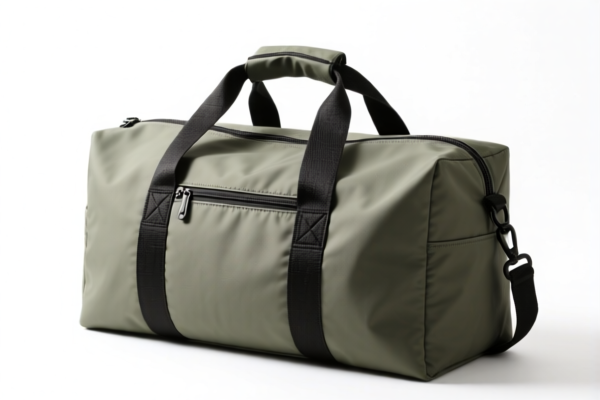
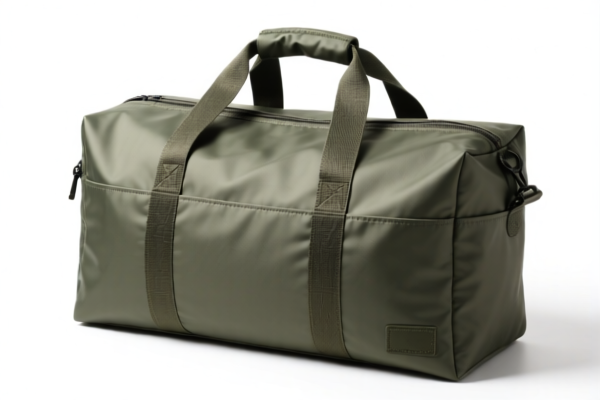
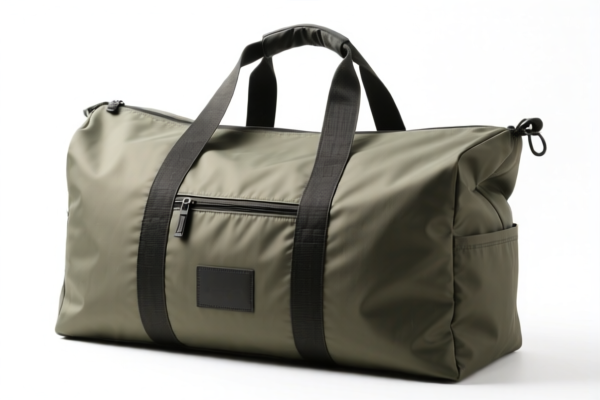
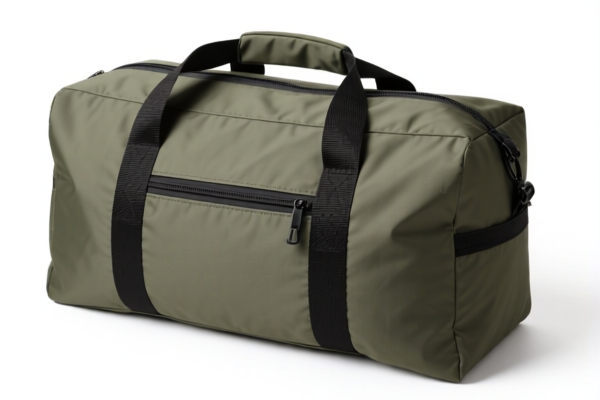
AI Analysis
🛍️ Polyester Wear-Resistant Bag (Polypropylene/Polyethylene Textile Bags)
🌐 HS Code Reference & Customs Clearance Guide | 2026 Latest Tariff Analysis | Professional Clearance Strategy
📌 I. Product Definition & Classification: What Exactly Is a "Polyester Wear-Resistant Bag"?
The term "Polyester Wear-Resistant Bag" in international trade often refers to durable textile sacks or bags used for packing goods. However, the HS Code classification depends heavily on the specific material composition (polyester vs. polypropylene/polyethylene strip) and the intended use (industrial packing vs. consumer shopping/backpack).
Based on the provided <DATA>, we are dealing primarily with industrial packing sacks and bags made of man-made textile materials (often polypropylene/polyethylene woven fabric, frequently called "PP bags" or "BOPP bags," which are wear-resistant).
⚠️ Key Distinction:
- If the bag is made of woven polypropylene/polyethylene strips (common industrial "wear-resistant" sacks): It falls under 6305.33.00.80.
- If the bag is made of other man-made textiles (e.g., pure polyester non-woven or woven): It falls under 6305.39.00.00.
- If the bag is made of plastic film (not woven textile): It falls under 3923.29.00.00 or 3923.21.00.95.
- If the bag is a consumer fashion bag (handbag, backpack, tote): It falls under 4202.92.31.31 or 4202.92.31.20.
📦 II. HS Code Classification Details (2026 Latest Tariff Authority Comparison)
| HS Code | Product Description | Applicable Scenario | Material Type |
|---|---|---|---|
6305.33.00.80 |
Sacks and bags, of man-made textile materials: Other, of polyethylene or polypropylene strip or the like: Other | Industrial PP/PE woven sacks, bulk packaging, wear-resistant grain/cement bags | ✅ Polypropylene (PP) / Polyethylene (PE) Strip |
6305.39.00.00 |
Sacks and bags, of man-made textile materials: Other | Industrial bags made of other man-made fibers (e.g., pure polyester woven sacks) | ✅ Other Man-Made Textiles (e.g., Polyester) |
3923.29.00.00 |
Articles for conveyance/packing of goods, of plastics: Sacks and bags... Of other plastics | Plastic film bags (not woven textile), rigid plastic containers | ❌ Plastic Film/Rigid Plastic |
3923.21.00.95 |
Sacks and bags of polymers of ethylene: Other | Polyethylene bags (plastic, not textile woven) | ❌ Polyethylene (Plastic) |
4202.92.31.31 |
Trunks, suitcases, bags...: With outer surface of sheeting of plastics or textile materials: Travel, sports and similar bags: Of man-made fibers: Other | Consumer fashion bags, shopping totes, cosmetic bags made of textile/plastic laminate | ✅ Textile/Plastic Laminate (Consumer Use) |
4202.92.31.20 |
...: Backpacks | Consumer backpacks made of man-made fibers | ✅ Man-Made Fibers (Consumer Use) |
🔍 Key Reminder:
- If your "Polyester Wear-Resistant Bag" is an industrial packing sack (like those used for rice, flour, or chemical powder), it is NOT classified as a plastic bag (3923) but as a textile bag (6305).
- If it is a consumer shopping bag or backpack, it falls under Chapter 42 (4202).
- Do not mix industrial sacks with consumer bags in one declaration.
💰 III. 2026 Latest Tariff Rate Details (Detailed Tax Clauses)
✅ Applicable Country: United States (US)
✅ Origin: China (CN)
✅ Effective Date: 2025 onwards (Check specific footnotes for changes)
🎯 1. 6305.33.00.80 —— Sacks/Bags of PP/PE Strip (Textile)
| Item | Detail |
|---|---|
| Basic Tariff | 0.0% |
| Additional Tariff (Section 301) | 0.0% |
| Total Tax Rate | 0.0% |
| Tax Calculation | CIF Value × 0% = $0 |
| De Minimis Exemption | ✅ Eligible (if value < $800) |
| Legal Basis | HTSUS 6305.33.00.80 |
📌 Explanation:
- Industrial PP/PE woven sacks are classified under 6305.33.
- The data shows 0% total tax. This is a low-risk, low-cost classification for industrial packaging materials.
- Note: Ensure the bag is truly "woven" or made of "strip" to fit 6305.33. If it is non-woven, it may fall under 6305.39.
🎯 2. 6305.39.00.00 —— Other Man-Made Textile Bags
| Item | Detail |
|---|---|
| Basic Tariff | 0.0% |
| Additional Tariff (Section 301) | 0.0% |
| Total Tax Rate | 0.0% |
| Tax Calculation | CIF Value × 0% = $0 |
| De Minimis Exemption | ✅ Eligible (if value < $800) |
| Legal Basis | HTSUS 6305.39.00.00 |
📌 Explanation:
- If the bag is made of pure polyester (not PP/PE strip), it falls here.
- 0% tax makes it very competitive.
- Warning: If the bag has plastic lining or is a laminate, customs may challenge the classification.
🎯 3. 3923.21.00.95 —— Polyethylene Bags (Plastic, Not Textile)
| Item | Detail |
|---|---|
| Basic Tariff | 3.0% |
| Additional Tariff (Section 301) | 25.0% |
| Total Tax Rate | 28.0% |
| Tax Calculation | CIF Value × 28% |
| De Minimis Exemption | ❌ Not Eligible (for Section 301 goods) |
| Legal Basis | HTSUS 3923.21.00.95 |
📌 Critical Warning:
- If your "wear-resistant bag" is mistakenly classified as a plastic bag (3923) instead of a textile bag (6305), you will pay 28% tax instead of 0%.
- Why this matters: Polyethylene film bags are taxed at 28%, but Polyethylene woven strip bags are taxed at 0%. Clarify the structure!
🎯 4. 4202.92.31.31 / 4202.92.31.20 —— Consumer Bags (Backpacks, Shopping Bags)
| Item | Detail |
|---|---|
| Basic Tariff | 0.0% |
| Additional Tariff (Section 301) | 0.0% |
| Total Tax Rate | 0.0% |
| Tax Calculation | CIF Value × 0% = $0 |
| De Minimis Exemption | ✅ Eligible (if value < $800) |
| Legal Basis | HTSUS 4202.92.31.31 / 4202.92.31.20 |
📌 Explanation:
- Consumer fashion bags (backpacks, totes) have 0% tax.
- Ensure the description matches Chapter 42 (articles of apparel/accessories), not Chapter 63 (other made-up articles).
🛠️ IV. Customs Clearance Practical Advice (Battle-Tested Pitfall Guide)
✅ 1. Required Documentation (Non-Negotiable)
| Document | Must Provide | Description |
|---|---|---|
| ✅ Product Specifications | ✔️ | Material composition (e.g., "100% Polypropylene Woven"), weight, dimensions |
| ✅ Photos | ✔️ | Show the texture (woven vs. film), handles, closures |
| ✅ Commercial Invoice | ✔️ | Clearly state: "Industrial Packing Sack, PP Woven, Not Plastic Film" |
| ✅ Packing List | ✔️ | Quantity, gross weight, net weight |
| ✅ Material Certificate | ✔️ | To prove it is "Textile" and not "Plastic Film" if challenged |
✅ 2. Declaration Tips (Key Mantra)
🔥 "Woven is Textile, Film is Plastic, Name it Right, Tax Drops to Zero!"
| Scenario | Correct Declaration | Wrong Declaration | Consequence |
|---|---|---|---|
| Industrial PP Sack | 6305.33.00.80 - "PP Woven Sack" |
3923.21.00.95 - "Plastic Bag" |
Pay 28% instead of 0% |
| Polyester Woven Bag | 6305.39.00.00 - "Polyester Woven Bag" |
3923.29.00.00 - "Plastic Bag" |
Pay 28% instead of 0% |
| Shopping Tote (Fashion) | 4202.92.31.31 - "Shopping Bag" |
6305.39.00.00 - "Sack" |
Possible reclassification, delay |
| Backpack | 4202.92.31.20 - "Backpack" |
4202.92.31.31 - "Other Bag" |
Minor risk, but 4202.31.20 is more precise |
✅ 3. Special Cases
| Case | Handling Advice |
|---|---|
| Lined Bags | If the sack has a plastic liner, it may still be classified as textile (6305) if the outer surface is woven. Provide photos showing the outer woven layer. |
| Printed Bags | Printing does not change the HS Code. Still 6305.33.00.80 or 6305.39.00.00. |
| Reusable Shopping Bags | If designed for consumer retail use, classify under 4202 (Consumer Bag), not 6305 (Industrial Sack). |
🌍 V. Global Market Clearance Comparison (2026 Latest)
| Country/Region | Recommended HS Code | Tariff Rate | Certification Required | Notes |
|---|---|---|---|---|
| 🇺🇸 USA | 6305.33.00.80 / 6305.39.00.00 |
0% | None | Avoid 3923 to save 28% |
| 🇪🇺 EU | 6305.33 / 6305.39 |
0% - 2% | REACH (if plastic additive) | Low tariffs for textile sacks |
| 🇨🇳 China | 6305.33 / 6305.39 |
0% - 5% | CCC (if specific use) | Generally low import duty |
| 🇬🇧 UK | 6305.33 / 6305.39 |
0% - 2% | UKCA (if applicable) | Post-Brexit rules apply |
📌 Conclusion:
- USA: The key is to avoid Chapter 39 (Plastic Bags) and ensure classification under Chapter 63 (Textile Bags) for 0% tax.
- EU/UK/China: Tariffs are generally low regardless, but consistency with US data is important for global supply chains.
📌 VI. Common Mistakes & Pitfalls (Blood-Taught Lessons)
❌ Mistake 1: Calling a "PP Woven Sack" a "Plastic Bag"
👉 Result: Customs assigns 3923.21.00.95 → 28% Tax instead of 0%.
✅ Fix: Use terms like "Woven Polypropylene Sack", "Textile Bag", "Industrial Packing Sack".
❌ Mistake 2: Confusing "Non-Woven" with "Woven"
👉 Result: Non-woven bags may still be 6305.39, but if they are too thin, customs may view them as 3923.
✅ Fix: Provide material density and structure photos.
❌ Mistake 3: Mixing Industrial Sacks with Consumer Backpacks in One Declaration
👉 Result: Customs delay, potential reclassification.
✅ Fix: Separate declarations for Chapter 63 (Industrial) and Chapter 42 (Consumer).
🎯 VII. Conclusion: Smart Classification, Zero Tax, Smooth Clearance!
🎯 Remember the Mantra:
🔹 "Woven = Textile (6305) = 0% Tax"
🔹 "Film = Plastic (3923) = 28% Tax"
🔹 "Fashion Bag = 4202 = 0% Tax"
📌 Pro Tip:
If your bag is made of polyester (not PP/PE), ensure it is clearly labeled as "Polyester Woven Bag" to fall under 6305.39.00.00 (0% tax). Do not let customs classify it as a plastic bag.
📣 Action Required:
📞 Consult your customs broker to verify the weave structure (woven vs. non-woven vs. film).
🚀 Declare correctly to save 28% on every container!
✨ Professional Clearance Starts with Accurate Classification!
💼 Every Percent Saved Is Profit Gained!
Customer Reviews
About HS Code Classification
The Harmonized System (HS) is an internationally standardized nomenclature developed by the World Customs Organization (WCO) to classify traded products. Over 200 countries use the HS system as the basis for customs tariffs, trade statistics, and import/export regulations.
Each HS code follows a hierarchical structure:
- Chapter (2 digits) — Broad category of goods (e.g., Chapter 84: Machinery and Mechanical Appliances)
- Heading (4 digits) — More specific grouping within the chapter
- Subheading (6 digits) — Internationally standardized breakdown, used by all WCO member countries
- National subdivisions (8-10 digits) — Country-specific extensions for further classification, such as US HTSUS 10-digit codes
Correct HS code classification is essential for smooth customs clearance, accurate duty payment, and compliance with trade regulations. Misclassification can lead to customs delays, overpayment of duties, or penalties.
When importing from CN to US, the applicable tariff rates may include:
- Most-Favored-Nation (MFN) rate — The standard duty rate applied to WTO members
- General rate — Applied to countries without trade agreements
- Trade remedy duties — Additional tariffs such as Section 301 (anti-dumping), Section 232 (national security), or countervailing duties
The information provided on this page is for reference purposes only. For official classification, please consult with your local customs authority or a licensed customs broker.