polyether plasticizer compound
CN → US| HS Code | Tariff Rate | Origin | Destination | Doc |
|---|---|---|---|---|
| 3907210000 | 41.5% | CN | US | Official Doc |
| 3506915000 | 37.1% | CN | US | Official Doc |
| 3824992900 | 41.5% | CN | US | Official Doc |
| 3907290000 | 41.5% | CN | US | Official Doc |
| 3506990000 | 37.1% | CN | US | Official Doc |
Product Images
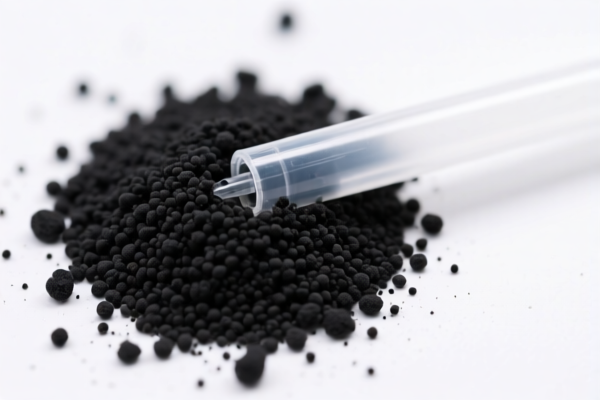
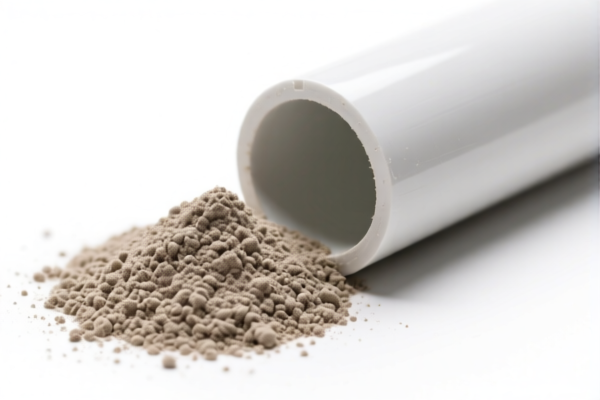
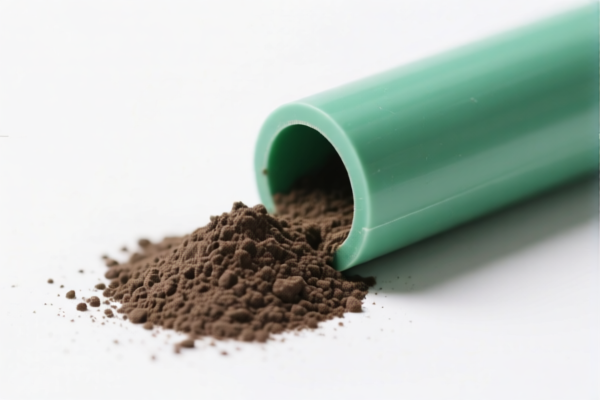
AI Analysis
🧪 Polyether Plasticizer Compound
🌐 HS Code Reference & Customs Clearance Guide | 2026 Latest Tariff Analysis | Professional Clearance Strategy
📌 Part 1: Product Definition & Classification: What exactly is a "Polyether Plasticizer Compound"?
A Polyether Plasticizer Compound refers to a mixture where polyethers (polymers containing ether linkages) are combined with other chemical agents to modify flexibility, viscosity, or processing properties. In international trade, these are not simple single-substance chemicals but formulations/mixtures.
Key Distinction in Classification: 1. Unformulated Polyethers: If the product is a pure polyether resin or oligomer without specific "preparation" for adhesive or plasticizing use, it may fall under Chapter 39 (Plastics and Articles Thereof). 2. Formulated Mixtures: If the polyether is mixed with other substances to create a specific functional product (like an adhesive, sealant, or specialized chemical preparation), it falls under Chapter 35 (Albuminoidal substances; Modified Starches) or Chapter 38 (Miscellaneous Chemical Products).
⚠️ Critical Classification Point:
- If the product is a premixed adhesive where polyether is a key component → HS 3506.91.50.00 or 3506.99.00.00
- If the product is a chemical mixture/preparation (not an adhesive) → HS 3824.99.29.00
- If the product is considered a raw polyether material (even if mixed, but classified as plastic/resin) → HS 3907.21.00.00 or 3907.29.00.00
📦 Part 2: HS Code Classification Details (2026 Latest Tariff Authority Comparison)
| HS Code | Product Description | Application Scenario | Tax Rate (China Origin → US) |
|---|---|---|---|
3907.21.00.00 |
Polyethers in primary forms; Chemical mixtures meeting other polyether material requirements | Raw polyether resins, unformulated or lightly mixed, used as plasticizers or base polymers | 41.5% |
3907.29.00.00 |
Other polyethers; Explicitly includes other polyether chemical raw materials containing polyether materials | Other forms of polyether plastics, semi-finished products | 41.5% |
3506.91.50.00 |
Adhesive mixtures preformulated within the scope of polyether polymers | Polyether-based adhesives, sealants, or bonding agents | 37.1% |
3506.99.00.00 |
Adhesives where polyether is an ingredient | Other prepared adhesives containing polyether components | 37.1% |
3824.99.29.00 |
Mixtures of polyether chemical products and preparations | Specialized chemical mixtures, non-adhesive polyether formulations | 41.5% |
🔍 Key Reminder:
- Chapter 39 (3907.xx): Focuses on the material itself (plastics/resins). If the polyether is the primary functional component as a raw material, even if mixed, it may stay here.
- Chapter 35 (3506.xx): Focuses on adhesive preparations. If the polyether is mixed specifically to form an adhesive, it moves here.
- Chapter 38 (3824.xx): Focuses on miscellaneous chemical mixtures. If it’s a chemical preparation that doesn’t fit Chapter 35 (adhesive) or Chapter 39 (plastic resin), it falls here.
💰 Part 3: 2026 Latest Tariff Rate Breakdown (Including Surtaxes, Policy Add-ons)
✅ Applicable Country: United States (US)
✅ Origin: China (CN)
✅ Effective Time: From November 10, 2025 (including subsequent imports)
🎯 1. 3907.21.00.00 & 3907.29.00.00 — Polyethers (Plastic/Resin Base)
| Item | Content |
|---|---|
| Base Tariff Rate | 6.5% (Ad Valorem) |
| Section 301 Surtax | +25.0% |
| Section 122 Tariff | +10.0% |
| Total Tax Rate | 41.5% |
| Tax Calculation | CIF Value × 41.5% |
| De Minimis Exemption | ❌ Not Eligible (deny_de_minimis) |
| Legal Basis Path | USITC:3907.21.00.00 → Section 301: 25% → Section 122: 10% |
📌 Explanation:
- Base 6.5%: Standard Most Favored Nation (MFN) rate for polyethers in primary forms.
- Section 301 (25%): Additional tariff imposed on Chinese goods under U.S. Trade Act Section 301.
- Section 122 (10%): Additional tariff under Section 122 of the Trade Expansion Act, often applied to certain chemical imports.
- Total 41.5%: A very high effective tariff rate.
🎯 2. 3824.99.29.00 — Polyether Chemical Mixtures/Preparations
| Item | Content |
|---|---|
| Base Tariff Rate | 6.5% (Ad Valorem) |
| Section 301 Surtax | +25.0% |
| Section 122 Tariff | +10.0% |
| Total Tax Rate | 41.5% |
| Tax Calculation | CIF Value × 41.5% |
| De Minimis Exemption | ❌ Not Eligible (deny_de_minimis) |
| Legal Basis Path | USITC:3824.99.29.00 → Section 301: 25% → Section 122: 10% |
📌 Note:
- Same tax structure as3907categories because they are subject to the same Section 301 and Section 122 surcharges.
- Classification depends on whether the product is a "chemical preparation" (3824) vs. "plastic resin" (3907).
🎯 3. 3506.91.50.00 & 3506.99.00.00 — Polyether-Based Adhesives
| Item | Content |
|---|---|
| Base Tariff Rate | 2.1% (Ad Valorem) |
| Section 301 Surtax | +25.0% |
| Section 122 Tariff | +10.0% |
| Total Tax Rate | 37.1% |
| Tax Calculation | CIF Value × 37.1% |
| De Minimis Exemption | ❌ Not Eligible (deny_de_minimis) |
| Legal Basis Path | USITC:3506.91.50.00 → Section 301: 25% → Section 122: 10% |
📌 Advantage:
- Lower Total Tax (37.1%) compared to polyether resins/chemicals (41.5%) due to a lower base tariff (2.1% vs. 6.5%).
- Eligibility: Only applies if the product is clearly an adhesive (prepared for bonding).
- Risk: Misclassifying a non-adhesive chemical as an adhesive to save 4.4% is a high-risk compliance error.
🛠️ Part 4: Customs Clearance Practical Advice (Real-World Pitfall Avoidance Guide)
✅ 1. Documentation Checklist (All Required)
| Document | Must Provide | Description |
|---|---|---|
| ✅ Product Specification Sheet | ✔️ | Detailed composition: % of polyether, additives, solvent content, function (adhesive vs. plasticizer). |
| ✅ Safety Data Sheet (SDS) | ✔️ | Must clearly state product identity and hazards. |
| ✅ Formula/Composition Breakdown | ✔️ | Essential for Customs to verify if it’s an adhesive (3506) or chemical mixture (3824) or resin (3907). |
| ✅ Product Photos | ✔️ | Show packaging, labeling, and physical state (liquid, paste, solid). |
| ✅ Commercial Invoice | ✔️ | Clear description: "Polyether-Based Adhesive" or "Polyether Plasticizer Compound". Do not use vague terms like "Chemical Mix". |
| ✅ Certificate of Origin | ✔️ | Proof of Chinese origin to assess correct surtaxes. |
| ✅ Packing List | ✔️ | Net/Gross weight, volume. |
✅ 2. Declaration Strategy (Key Mantra)
🔥 “Function Determines Chapter, Composition Defines Code, Misclassification Costs Big!”
| Scenario | Correct Declaration | Wrong Practice | Consequence |
|---|---|---|---|
| Polyether mixed for Adhesive Use | 3506.91.50.00 or 3506.99.00.00 |
Declaring as 3907 (Plastic) |
Overpay tax (37.1% vs 41.5%)? No, risk of penalty for misdescription. |
| Polyether mixed as General Chemical/Plasticizer | 3824.99.29.00 or 3907.xx |
Declaring as 3506 (Adhesive) |
High Risk: Customs will reject if not adhesive. Penalty + Back Taxes. |
| Pure Polyether Resin/Mix | 3907.21.00.00 or 3907.29.00.00 |
Declaring as 3824 |
Risk of reclassification and audit. |
📌 Advice:
- If the product is primarily used as an adhesive, use HS 3506. It has a 4.4% tax advantage (37.1% vs 41.5%).
- If the product is a plasticizer or raw polymer, use HS 3907 or 3824.
- Do not claim "De Minimis" (Section 321) for these items; they are explicitly denied.
✅ 3. Special Situations Handling
| Situation | Handling Advice |
|---|---|
| OEM Custom Formulation | Provide the customer’s formula and intended use (e.g., "for bonding polyethylene") to support HS 3506 classification if applicable. |
| Multi-Use Product | If it can be an adhesive OR a plasticizer, declare based on principal use or commercial reality. If marketed as an adhesive, use 3506. |
| Raw Material vs. Finished Good | If sold as a bulk chemical to be further formulated, it may be 3824 or 3907. If sold in ready-to-use tubes/bottles for bonding, it’s 3506. |
| High Value Shipments | Consider applying for an Advance Ruling (Ruling Letter) from U.S. Customs to lock in the HS code and tax rate. |
🌍 Part 5: Global Main Market Clearance Comparison (2026 Latest)
| Country/Region | Recommended HS Code | Tariff (China Origin) | Certification Required | Notes |
|---|---|---|---|---|
| 🇺🇸 USA | 3506.91.50.00 / 3907.21.00.00 / 3824.99.29.00 |
37.1% – 41.5% | No specific FDA/EPA unless for food/medical | High Section 301 + 122 tariffs apply. |
| 🇨🇳 China | 3506.91.50.00 / 3907.21.00.00 |
~2% – 6% | No special certs | Lower base tariffs, no 301/122. |
| 🇪🇺 EU | 3506.91.00 / 3907.21.00 |
~5% – 6.5% | REACH Registration Required | No Section 301/122, but REACH compliance is critical. |
| 🇦🇺 Australia | 3506.91.00 / 3907.21.00 |
~5% | No special certs | Similar to EU, lower tariffs. |
| 🇯🇵 Japan | 3506.91.00 / 3907.21.00 |
~0% – 6% | JIS/PSE if applicable | Often 0% for many chemical products. |
📌 Conclusion:
- USA is the most expensive market due to Section 301 and Section 122 tariffs.
- EU/Japan/Australia offer significantly lower tariff burdens, but Regulatory Compliance (REACH, etc.) is a major barrier.
- China Origin triggers high surtaxes in the US only.
📌 Part 6: Common Errors & Pitfall Guide (Lessons from Blood and Tears)
❌ Error 1: Declaring "Polyether Plasticizer" as 3907 when it is clearly an adhesive.
👉 Consequence: Customs may accept it, but if audited, they may reclassify it, leading to penalties for misdeclaration. Also, you miss the 37.1% rate if it should have been 3506, or vice versa.
❌ Error 2: Assuming "Plasticizer" means 3907.
👉 Consequence: If it’s a mixture for bonding, it’s 3506. If it’s a chemical mix, it’s 3824. Wrong code = Wrong tax + Audit risk.
❌ Error 3: Trying to use De Minimis (Section 321) for small samples.
👉 Consequence: Denied. These HS codes are explicitly listed as deny_de_minimis. Every shipment is subject to full duty.
❌ Error 4: Vague Description: "Chemical Mixture".
👉 Consequence: Customs will request further info, delaying clearance. Be Specific: "Polyether-Based Adhesive, Type X, for Metal Bonding".
✅ Correct Practice:
"Polyether-Based Adhesive, Preformed, for Industrial Use, Model XYZ, SDS Provided"
OR
"Polyether Chemical Mixture, for Plasticizing PVC, Composition: 80% Polyether, 20% Additives, HS 3824.99.29.00"
🎯 Part 7: Conclusion: Professional Declaration, Cost Savings, Efficiency!
🎯 Remember the Mantra:
🔹 "Adhesive? Use 3506 (37.1%). Resin/Chemical? Use 3907/3824 (41.5%). Never De Minimis!"
🔹 "Base Tariff 2.1% vs 6.5% makes a 4.4% difference. Check the function!"
📌 Pro Tip:
If your polyether compound is produced in Vietnam, Mexico, Thailand, or Malaysia, you may be eligible for IEEPA Exemptions or lower tariffs under FTAs (e.g., USMCA, CPTPP).
For US imports, strongly consider applying for an Advance Ruling to confirm if your specific "plasticizer compound" qualifies as an adhesive (3506) to save 4.4% in duties.
📣 Immediate Action:
📞 Contact a professional customs broker + Provide Product Formula + Apply for HS Code Advance Ruling
🚀 Ensure your polyether plasticizer compound clears customs smoothly, efficiently, and profitably!
✨ Professional Clearance Starts with Precise Classification!
💼 Every Cent of Your Cost Deserves Precise Calculation!
Customer Reviews
About HS Code Classification
The Harmonized System (HS) is an internationally standardized nomenclature developed by the World Customs Organization (WCO) to classify traded products. Over 200 countries use the HS system as the basis for customs tariffs, trade statistics, and import/export regulations.
Each HS code follows a hierarchical structure:
- Chapter (2 digits) — Broad category of goods (e.g., Chapter 84: Machinery and Mechanical Appliances)
- Heading (4 digits) — More specific grouping within the chapter
- Subheading (6 digits) — Internationally standardized breakdown, used by all WCO member countries
- National subdivisions (8-10 digits) — Country-specific extensions for further classification, such as US HTSUS 10-digit codes
Correct HS code classification is essential for smooth customs clearance, accurate duty payment, and compliance with trade regulations. Misclassification can lead to customs delays, overpayment of duties, or penalties.
When importing from CN to US, the applicable tariff rates may include:
- Most-Favored-Nation (MFN) rate — The standard duty rate applied to WTO members
- General rate — Applied to countries without trade agreements
- Trade remedy duties — Additional tariffs such as Section 301 (anti-dumping), Section 232 (national security), or countervailing duties
The information provided on this page is for reference purposes only. For official classification, please consult with your local customs authority or a licensed customs broker.