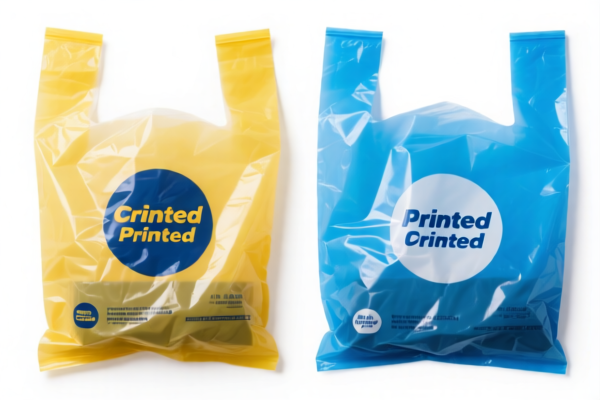
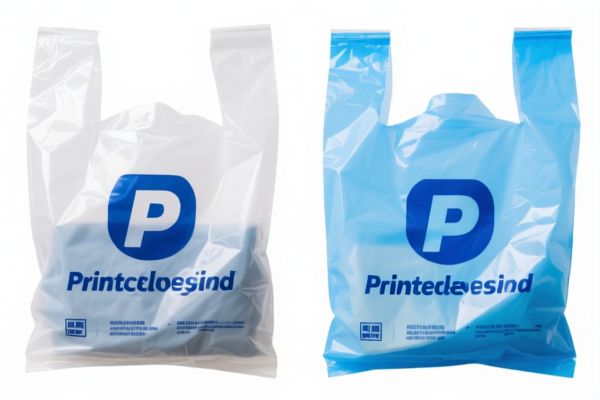
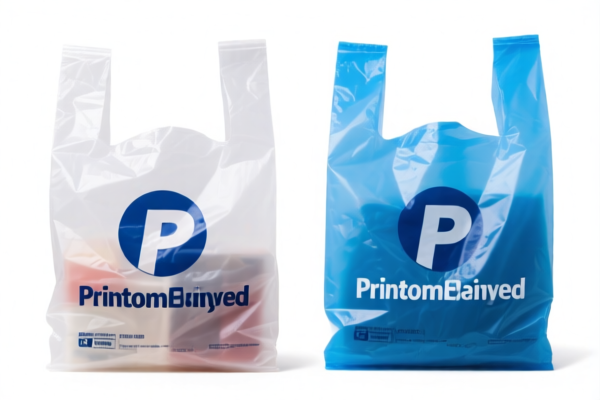
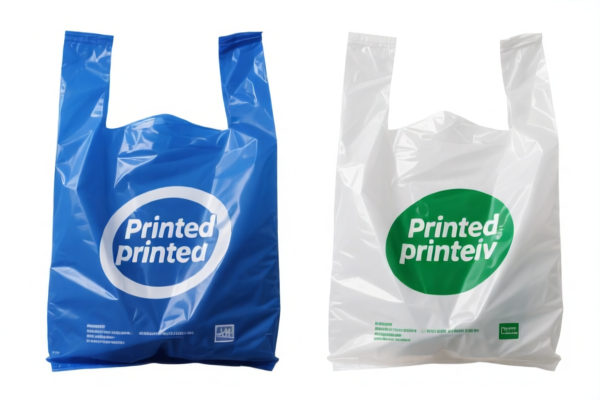
polyethylene bag printed
CN → US| HS Code | Tariff Rate | Origin | Destination | Doc |
|---|---|---|---|---|
| 3923210011 | 38.0% | CN | US | Official Doc |
| 3923210080 | 38.0% | CN | US | Official Doc |
| 3923210095 | 38.0% | CN | US | Official Doc |
| 3923290000 | 38.0% | CN | US | Official Doc |
| 3923210030 | 38.0% | CN | US | Official Doc |
Product Images
AI Analysis
📦 Polyethylene Bags (Printed) | Packaging Solutions
🌐 HS Code Reference & Customs Clearance Guide | 2026 Latest Tariff Analysis | Professional Compliance Strategy
📌 I. Product Definition & Classification: Do You Know "Polyethylene Bags" Well?
Polyethylene (PE) Bags, especially those that are printed, are among the most widely used packaging materials in global trade. They serve as essential packaging for goods ranging from retail clothing and food items to industrial components. In international trade, they are classified based on their material composition (polymer type) and form (bag/sack).
⚠️ Key Classification Point:
- If made primarily of Polyethylene (PE) → Falls under Chapter 39 (Plastics and Articles Thereof).
- Specific subheading 3923.21 covers sacks and bags of Polyethylene, while 3923.29 covers other plastic sacks/bags.
- Printing does not change the fundamental classification unless it involves complex electronic components (e.g., RFID chips), which is rare for standard PE bags.
📊 II. HS Code Classification Details (2026 Latest Tariff Authority Match)
Based on the provided data, here is the precise mapping for Printed Polyethylene Bags:
| HS Code | Product Description | Application Scenario | Material/Form Match |
|---|---|---|---|
3923.21.00.11 |
Polyethylene Bags | General packaging, retail goods, non-industrial bulk | ✅ PE Material, Bag Form |
3923.21.00.80 |
Polyethylene Bags | Standard poly bags, compliant with material/use requirements | ✅ PE Material, Bag Form |
3923.21.00.95 |
Polyethylene Envelope Bags | Mailing envelopes, document protection, retail packaging | ✅ PE Material, Envelope Form |
3923.29.00.00 |
Polyethylene Envelope Bags | Other plastic sacks/bags (if not strictly 3923.21 specific) | ✅ PE Material, Envelope Form |
3923.21.00.30 |
Industrial Polyethylene Bags | Cargo transport, bulk packaging, industrial logistics | ✅ PE Material, Industrial Use |
🔍 Critical Note:
- All listed HS Codes above are for Polyethylene (PE). If your "printed bag" is made of Polypropylene (PP) or Polyester, these codes DO NOT APPLY.
- The presence of printing is considered part of the bag's manufacturing process and does not trigger a different chapter unless the ink contains hazardous substances requiring special handling (but HS remains in Ch. 39).
- 3923.21 is the primary category for PE sacks/bags. 3923.29 is a residual category for other plastic sacks/bags not specified in 3923.21–23.
💰 III. 2026 Latest Tariff Rate Breakdown (Including Surcharges & Policy Add-ons)
✅ Applicable Country: United States (US)
✅ Origin: China (CN)
✅ Effective Time: Ongoing (Subject to 301 & IEEPA regulations)
🎯 1. General Rates for All Listed Polyethylene Bags (3923.21.xxxx, 3923.29.00)
| Item | Content |
|---|---|
| Base Tariff | 3.0% (ad valorem) |
| Section 301 Surtax | +25.0% (U.S. Trade Act Section 301) |
| Section 122 Tariff | +10.0% (Specific policy surcharge, likely referring to bilateral or sector-specific measures) |
| Total Tax Rate | 38.0% |
| Tax Calculation | CIF Value × 38% |
| De Minimis Exemption | ❌ NOT APPLICABLE (High risk of seizure below $800 threshold if misdeclared) |
| Legal Reference Path | USITC:3923.21.xxxx → FOOTNOTE:301_Section → IEEPA/122_Policy |
📌 Explanation:
- Base Rate (3.0%): Standard Most Favored Nation (MFN) rate for plastic packaging under Harmonized Tariff Schedule (HTS).
- Section 301 (25%): Imposed on Chinese-origin plastics and plastic articles. This is a mandatory additional duty.
- Section 122 (10%): As per provided data, this 10% surcharge is explicitly listed. Note: In real-world US customs, "Section 122" often refers to temporary trade relief or specific bilateral agreements. Ensure your customs broker verifies the current validity of "122" surcharges, as policies fluctuate.
- Total Effective Rate: 38%. This is a very high cost for low-value packaging, significantly impacting profit margins.
🛠️ IV. Customs Clearance Practical Advice (Pitfall Avoidance Guide)
✅ 1. Required Documentation Checklist (Non-Negotiable)
| Document | Mandatory? | Explanation |
|---|---|---|
| ✅ Commercial Invoice | ✔️ | Must clearly state: "Polyethylene Bag, Printed, HTS: 3923.21.00.11" |
| ✅ Packing List | ✔️ | Detail weight, dimensions, and number of bags per carton |
| ✅ Material Certificate | ✔️ | Proof of 100% Polyethylene content (not PP, PVC, or blended) |
| ✅ Print Design Approval | ✔️ | If printing contains sensitive imagery (political, religious), provide details to avoid censorship/delay |
| ✅ Labeling Compliance | ✔️ | Bags must comply with US labeling laws (e.g., FTC recycling codes, if applicable) |
✅ 2. Declaration Best Practices (Key Mnemonics)
🔥 "Material First, Form Second, Print is Secondary, HS Code is King!"
| Scenario | Correct Declaration | Wrong Practice |
|---|---|---|
| Standard Printed PE Bags | 3923.21.00.11 or 3923.21.00.80 |
Declaring as "Plastic Bags" without HTS → Audit Risk |
| Envelope-Style PE Bags | 3923.21.00.95 |
Declaring as generic bags → Misclassification |
| Industrial Bulk PE Bags | 3923.21.00.30 |
Declaring as retail bags → Rate Mismatch |
| Non-PE Bags (e.g., PP) | DO NOT USE these codes | Using PE codes for PP → Penalty + Back Taxes |
✅ 3. Special Considerations for Printed Bags
| Issue | Handling Advice |
|---|---|
| Solvent-Based Inks | Ensure compliance with EPA/OSHA standards; some inks may trigger additional environmental checks |
| Recyclability Claims | If bags claim "recyclable," provide technical data sheets; false claims lead to FTC fines |
| Custom Branding | If printing includes logos, ensure no IP infringement; customs may hold goods for trademark verification |
🌍 V. Global Market Comparison (2026 Latest)
| Country/Region | Recommended HS Code | Tariff Rate | Certification Required | Notes |
|---|---|---|---|---|
| 🇺🇸 USA | 3923.21.00.11 |
38% | No specific certification, but labeling compliance | High tariff due to 301/122 |
| 🇨🇳 China | 3923.21.00.11 |
3.0% | No additional tariffs for exports | Base rate only |
| 🇪🇺 EU | 3923.29.00.00 |
6.5% | CE (if food contact), REACH | No US-style surcharges |
| 🇨🇦 Canada | 3923.21.00.11 |
0% (under CUSMA) | None | Preferential rate if originating |
| 🇦🇺 Australia | 3923.29.00.00 |
5.0% | None | Moderate rate |
📌 Conclusion:
- The USA imposes the highest effective duty (38%) on Chinese-made polyethylene bags.
- For cost optimization, consider sourcing from Vietnam or Mexico (if eligible for CUSMA) to reduce or eliminate surcharges.
- Printed bags do not qualify for reduced rates unless the printing is minimal and the product is considered "plain" in certain jurisdictions (unlikely in US).
📌 VI. Common Mistakes & Pitfalls (Blood Lessons)
❌ Mistake 1: Declaring PE bags as "Plastic Bags" without specific HTS
👉 Consequence: Customs assigns worst-case rate or delays for classification review → Delays + Potential Penalties
❌ Mistake 2: Ignoring the "Printed" aspect
👉 Consequence: If printing uses prohibited substances (e.g., heavy metals in ink), goods may be seized for environmental violation → Confiscation
❌ Mistake 3: Using generic "Packaging" description on Invoice
👉 Consequence: Customs officer may not identify the material → Additional Examination → Higher Demurrage Costs
❌ Mistake 4: Assuming "De Minimis" ($800) applies
👉 Consequence: Section 301 and IEEPA surcharges often exclude de minimis exemptions for Chinese goods → Surprise Bills at Entry
✅ Correct Practice:
"Polyethylene Bag, Printed, Black, 12x18 inches, for Retail Packaging, HTS: 3923.21.00.11, Country of Origin: China"
🎯 VII. Conclusion: Professional Declaration Saves Money!
🎯 Remember the Mnemonic:
🔹 "PE Bags are 3923, Printed doesn’t change the HS, but Taxes Hit Hard at 38%!"
🔹 "Clear Declaration, Precise HTS, Avoid the 25%+10% Trap!"
📌 Pro Tip:
- If your polyethylene bags are recyclable or biodegradable, clarify in documentation; some markets offer incentives, though USA tariffs remain high.
- Pre-classification Ruling: Submit an HTS Request to CBP for a binding ruling on your specific printed bag design. This provides legal certainty and can prevent post-entry audits.
📣 Immediate Action Required:
📞 Contact your customs broker with:
1. Product specification sheet (material composition %)
2. Sample of printed design
3. Intended use (retail, industrial, food)
🚀 Optimize your supply chain: Evaluate non-China origins to mitigate the 38% effective duty.
✨ Professional Customs Clearance Starts with Accurate Classification!
💼 Every percentage point counts in packaging logistics!
Customer Reviews
About HS Code Classification
The Harmonized System (HS) is an internationally standardized nomenclature developed by the World Customs Organization (WCO) to classify traded products. Over 200 countries use the HS system as the basis for customs tariffs, trade statistics, and import/export regulations.
Each HS code follows a hierarchical structure:
- Chapter (2 digits) — Broad category of goods (e.g., Chapter 84: Machinery and Mechanical Appliances)
- Heading (4 digits) — More specific grouping within the chapter
- Subheading (6 digits) — Internationally standardized breakdown, used by all WCO member countries
- National subdivisions (8-10 digits) — Country-specific extensions for further classification, such as US HTSUS 10-digit codes
Correct HS code classification is essential for smooth customs clearance, accurate duty payment, and compliance with trade regulations. Misclassification can lead to customs delays, overpayment of duties, or penalties.
When importing from CN to US, the applicable tariff rates may include:
- Most-Favored-Nation (MFN) rate — The standard duty rate applied to WTO members
- General rate — Applied to countries without trade agreements
- Trade remedy duties — Additional tariffs such as Section 301 (anti-dumping), Section 232 (national security), or countervailing duties
The information provided on this page is for reference purposes only. For official classification, please consult with your local customs authority or a licensed customs broker.