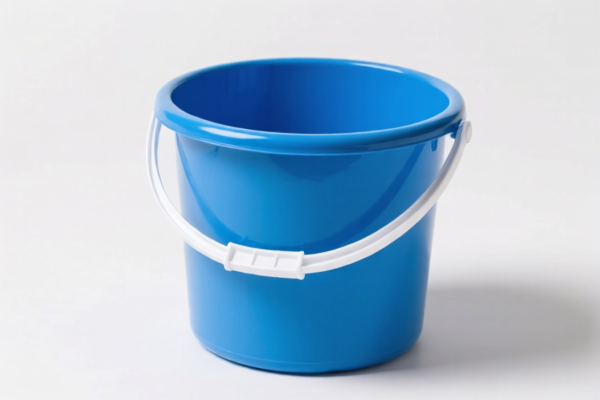
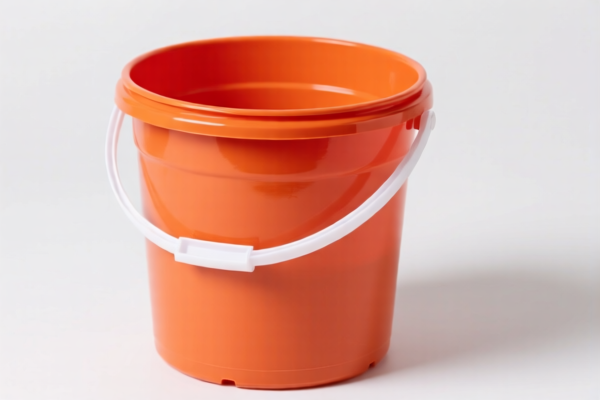
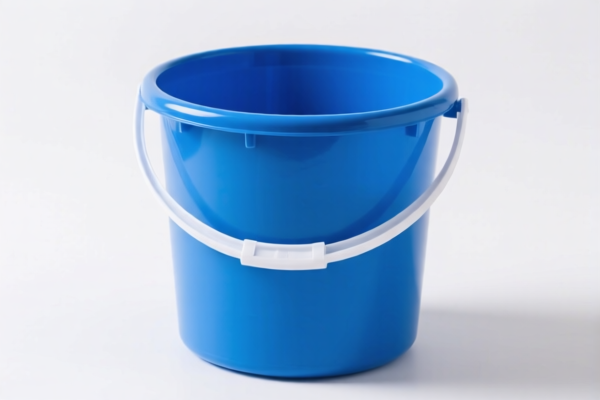
polyethylene bucket
CN → US| HS Code | Tariff Rate | Origin | Destination | Doc |
|---|---|---|---|---|
| 3923900012 | 38.0% | CN | US | Official Doc |
| 3923900014 | 38.0% | CN | US | Official Doc |
| 7310100090 | 85.0% | CN | US | Official Doc |
| 4415106000 | 35.0% | CN | US | Official Doc |
| 4415103000 | 35.0% | CN | US | Official Doc |
Product Images

AI Analysis
🛠️ Polyethylene Bucket (Plastic Container for Packaging or Transport)
🌐 HS Code Reference & Customs Clearance Guide | 2026 Latest Tariff Analysis | Professional Import Strategy
📌 One, Product Definition & Classification: What Exactly Is a Polyethylene Bucket?
A polyethylene bucket is a durable, lightweight container made from polyethylene (PE) plastic, commonly used for packaging, storage, or transport of liquids, powders, or granular materials. In international trade, it falls under plastic packaging items due to its form, function, and material composition.
⚠️ Key Classification Criteria: - Material: Polyethylene (plastic) – not metal, wood, or composite. - Form: Bucket-shaped, open-top, rigid container – matches “Buckets/Containers” category. - Use: Packaging or transport – not for industrial machinery or structural use. - Not a toy, tool, or part of a larger system – standalone container.
📦 Two, HS Code Classification Details (2026 Latest Tariff Authority)
| HS Code | Product Description | Applicable Use Case | Tax Category |
|---|---|---|---|
3923.90.00.12 |
Polyethylene (plastic) bucket, used for packaging or transport, fits plastic packaging item classification | General-purpose plastic bucket – e.g., for chemicals, food, cleaning agents | ✅ Plastic Packaging |
3923.90.00.14 |
Polyethylene (plastic) can or bucket, shape matches “Buckets/Containers” category, fits plastic packaging classification | Similar to above – includes drums, pails, or large-capacity containers | ✅ Plastic Packaging |
🔍 Critical Note:
- Both codes apply only if the product is made entirely of polyethylene and functions as a container for goods. - If the bucket has metal parts, wood lining, or composite structure, it may fall under different HS codes (see below). - No internal mechanical components, electronics, or functional parts – otherwise, it may be misclassified.
💰 Three, 2026 Latest Tariff Breakdown (With Detailed Duty Clauses)
✅ Applicable Country: United States (US)
✅ Origin: China (CN)
✅ Effective Date: November 10, 2025 (and onward)
🎯 1. 3923.90.00.12 — Polyethylene Bucket (Plastic Packaging)
| Item | Detail |
|---|---|
| Base Tariff Rate | 3.0% (ad valorem) |
| Section 301 Tariff (USITC) | +25.0% (from USITC Footnote 9903.88.01) |
| Section 122 Tariff (IEEPA) | +10.0% (applies to China-origin goods under IEEPA) |
| Total Effective Tariff | 38.0% |
| Tax Calculation | CIF Value × 38.0% |
| De Minimis Exemption | ❌ Not available (denied under US law) |
| Legal Basis Path | IEEPA:9903.01.25 → IEEPA:9903.01.24 → USITC:3923.90.00.12 → FOOTNOTE:9903.88.01 |
📌 Explanation: - 3.0% Base: Standard tariff for plastic packaging items. - +25% USITC (Section 301): Imposed under the U.S. Trade Act of 1974, targeting unfair trade practices by China. - +10% IEEPA (Section 122): From the International Emergency Economic Powers Act, applied to goods from China since 2025. - Total = 38% – Highly punitive, especially for bulk shipments.
🎯 2. 3923.90.00.14 — Polyethylene Can or Bucket (Container Form)
| Item | Detail |
|---|---|
| Base Tariff Rate | 3.0% |
| Section 301 Tariff (USITC) | +25.0% |
| Section 122 Tariff (IEEPA) | +10.0% |
| Total Effective Tariff | 38.0% |
| Tax Calculation | CIF × 38.0% |
| De Minimis Exemption | ❌ Not applicable |
| Legal Basis Path | IEEPA:9903.01.25 → IEEPA:9903.01.24 → USITC:3923.90.00.14 → FOOTNOTE:9903.88.01 |
📌 Note:
- This code applies to similar products with matching shape and function (e.g., 5-gallon pails, industrial containers). - No difference in tax rate between12and14– both are treated identically under current U.S. tariff rules.
🛠️ Four, Customs Clearance Best Practices (Real-World Tips)
✅ 1. Required Documentation (Must-Have Checklist)
| Document | Required? | Purpose |
|---|---|---|
| ✅ Product Specifications | ✔️ | Confirm material (PE), dimensions, capacity |
| ✅ Material Safety Data Sheet (MSDS) | ✔️ | For chemical/food-grade buckets |
| ✅ Product Photos (Clear, with label) | ✔️ | Show shape, brand, markings |
| ✅ Commercial Invoice | ✔️ | Must state “Polyethylene Bucket, Packaging Use” |
| ✅ Certificate of Origin (CO) | ✔️ | Essential for tariff claims |
| ✅ Test Reports (RoHS, FDA, REACH if applicable) | ✔️ | For food/chemical safety |
| ✅ Packing List | ✔️ | Show quantity, weight, packaging type |
✅ 2.申报技巧 (Pro Tips for Accurate Classification)
🔥 “Material First, Form Second, Use Last – No Exceptions!”
| Scenario | Correct HS Code | Wrong Approach |
|---|---|---|
| Pure PE bucket, no metal parts | 3923.90.00.12 or 3923.90.00.14 |
Misclassify as metal → 85% tax |
| Bucket with metal rim or handle | Re-evaluate – may fall under 7310.10.00.90 |
Apply plastic rate → underpaid duties |
| Wooden-lined or composite bucket | Not plastic → consider 4415.10.60.00 or 4415.10.30.00 |
Risk of audit & penalties |
✅ 3. Special Cases & Risk Mitigation
| Situation | Recommended Action |
|---|---|
| Bucket used for food or medical products | Provide FDA/CE certification – may affect safety classification |
| Custom-designed bucket (OEM) | Submit design drawings + usage proof – avoid “non-standard” classification |
| Bulk shipment (1000+ units) | Apply for Advance Ruling (Pre-Review) to lock in HS code & tariff |
| Shipments from Vietnam/Mexico/Thailand | Eligible for IEEPA exemption – can reduce tariff to 3.0% or 0% |
| Bucket with internal liner or liner material | Declare material composition clearly – may affect tariff |
🌍 Five, Global Market Tariff Comparison (2026)
| Country/Region | Recommended HS Code | Tariff Rate | Certification Required | Notes |
|---|---|---|---|---|
| 🇺🇸 United States | 3923.90.00.12 / 14 |
38.0% (China-origin) | FCC, RoHS, FDA (if food-grade) | Highest tax – avoid China origin if possible |
| 🇨🇳 China | 3923.90.00.12 |
5.0% | CCC, RoHS | No extra tariffs |
| 🇪🇺 European Union | 3923.90.00.12 |
0% (if CE compliant) | CE, REACH | No additional tariffs |
| 🇦🇺 Australia | 3923.90.00.12 |
5.0% | RCM | No extra duties |
| 🇯🇵 Japan | 3923.90.00.12 |
0% | PSE | No additional taxes |
📌 Insight:
- The U.S. is the only major market with 38% tariff on Chinese-origin polyethylene buckets. - Vietnam, Mexico, Thailand, and Malaysia are preferred sourcing countries to avoid IEEPA/301 tariffs.
📌 Six, Common Mistakes & How to Avoid Them (Real-World Pitfalls)
❌ Mistake 1: Declaring a metal-rimmed PE bucket as pure plastic
👉 Result: Underpaid duties → penalties + back taxes + interest
❌ Mistake 2: Using “plastic drum” or “plastic can” as a generic name
👉 Result: Customs may reclassify under metal or wood → 85% tax!
❌ Mistake 3: Not providing material proof (e.g., lab test, COO)
👉 Result: Delayed clearance, random audit, or refusal
❌ Mistake 4: Shipping from China without origin proof
👉 Result: 38% tax applied automatically – no appeal
✅ Best Practice:
“Polyethylene Bucket, 5-Gallon, Food-Grade, Made in China, PE Material, No Metal Parts, For Packaging Use, Commercial Invoice Attached”
🎯 Seven, Conclusion: Precision Pays Off!
🎯 Remember the Golden Rule:
🔹 “If it’s plastic, shape it right, declare it true – or pay 38%!”
🔹 “One wrong label = 38% tax on every unit!”
📌 Pro Tip:
If your polyethylene buckets are manufactured in Vietnam, Mexico, or Thailand, you can avoid IEEPA + 301 tariffs and pay only 3.0% base tariff.
✅ Apply for Advance Ruling (Pre-Review) to lock in the correct HS code and tariff rate.
📣 Take Action Now:
📞 Contact a licensed customs broker + provide product photos + request HS Code pre-determination
🚀 Cut your tariff risk by 80% – and ship with confidence!
✨ Smart Classification = Lower Costs = Faster Shipments = Higher Profits!
💼 Your next shipment starts with the right HS Code. Don’t guess – verify!
Customer Reviews
About HS Code Classification
The Harmonized System (HS) is an internationally standardized nomenclature developed by the World Customs Organization (WCO) to classify traded products. Over 200 countries use the HS system as the basis for customs tariffs, trade statistics, and import/export regulations.
Each HS code follows a hierarchical structure:
- Chapter (2 digits) — Broad category of goods (e.g., Chapter 84: Machinery and Mechanical Appliances)
- Heading (4 digits) — More specific grouping within the chapter
- Subheading (6 digits) — Internationally standardized breakdown, used by all WCO member countries
- National subdivisions (8-10 digits) — Country-specific extensions for further classification, such as US HTSUS 10-digit codes
Correct HS code classification is essential for smooth customs clearance, accurate duty payment, and compliance with trade regulations. Misclassification can lead to customs delays, overpayment of duties, or penalties.
When importing from CN to US, the applicable tariff rates may include:
- Most-Favored-Nation (MFN) rate — The standard duty rate applied to WTO members
- General rate — Applied to countries without trade agreements
- Trade remedy duties — Additional tariffs such as Section 301 (anti-dumping), Section 232 (national security), or countervailing duties
The information provided on this page is for reference purposes only. For official classification, please consult with your local customs authority or a licensed customs broker.