polyethylene composite material
CN → USProduct Images

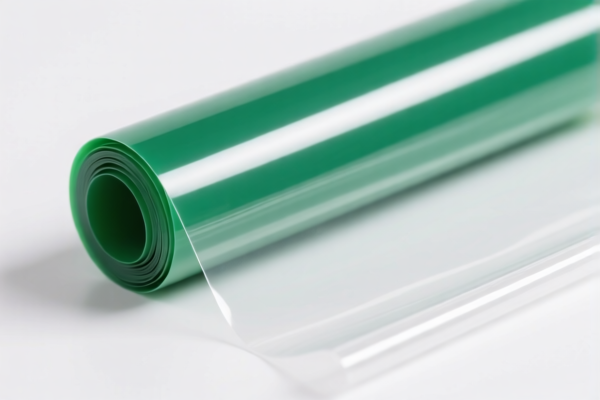


AI Analysis
🧪 Polyethylene Composite Material (PE Composite)
🌐 HS Code Reference & Customs Clearance Guide | 2026 Latest Tariff Analysis | Professional-Level Clearance Strategy
📌 I. Product Definition & Classification: Do You Really Understand "PE Composite"?
Polyethylene (PE) composites are versatile materials created by combining polyethylene resin with other substances (such as wood flour, calcium carbonate, glass fiber, or other polymers) to enhance mechanical properties, durability, or aesthetics. In international trade, they are primarily classified based on their form (raw material vs. manufactured article) and composition.
Key Distinction:
- Raw Compound (Compound/Granules/Powder): Pre-mixed materials ready for extrusion or molding. These are classified under Chapter 39.
- Manufactured Articles (Planks, Pipes, Profiles): Finished or semi-finished goods with specific shapes. These are typically classified under Chapter 39 (finished plastics) or potentially Chapter 44 (if wood-heavy) or Chapter 73 (if metallic reinforcement dominates), but for pure PE composites, Chapter 39 is standard.
⚠️ Critical Classification Point:
- If the material is in raw forms (granules, powders, liquids) → HS Code 3901–3914.
- If the material is in finished forms (boards, tubes, profiles) → HS Code 3920–3926.
- Wood-Plastic Composites (WPC): Often confused with wood. If >50% PE by weight, it remains plastic. If >50% wood, it might fall under wood products, but most customs authorities classify WPC as plastic if it behaves like plastic. Default to Plastic (Chapter 39) unless proven otherwise.
📦 II. HS Code Classification Details (2026 Latest Tariff Authority Cross-Reference)
| HS Code | Product Description | Applicable Scenario | Is it Raw or Finished? |
|---|---|---|---|
3901.10.00.00 |
Polyethylene, primary form, density < 0.94 | Pure LDPE granules | ✅ Raw |
3901.20.00.00 |
Polyethylene, primary form, density ≥ 0.94 | Pure HDPE granules | ✅ Raw |
3902.10.00.00 |
Polypropylene, primary form | Not PE, but common confusion | ✅ Raw |
3901.90.00.00 |
Other polyethylenes, primary form | PE copolymers, LLDPE | ✅ Raw |
3902.20.00.00 |
Ethylene-alpha-olefin copolymers | Specialty PE compounds | ✅ Raw |
3902.30.00.00 |
Other olefin polymers | Other olefin-based resins | ✅ Raw |
3902.90.00.00 |
Other olefin polymers, primary form | Niche PE compounds | ✅ Raw |
3901.90.00.00 |
PE compounds (mixed with additives) | PE + fillers (carbonate, talc) in granules | ✅ Raw |
3902.90.00.00 |
PE compounds (mixed with additives) | PE + fillers in granules | ✅ Raw |
3920.10.00.00 |
Other plates, sheets, film, foil, strip, PE, non-cellular | PE composite sheets/boards (rigid) | ✅ Finished |
3920.10.99.00 |
Other plates, sheets, film, foil, strip, PE, non-cellular | PE composite boards with additives | ✅ Finished |
3920.43.00.00 |
Plates, sheets, film, foil, strip, PE, cellular | PE foam composites | ✅ Finished |
3920.43.99.00 |
Plates, sheets, film, foil, strip, PE, cellular | PE foam composites with additives | ✅ Finished |
3920.20.00.00 |
Other plates, sheets, film, foil, strip, PE, cellular | PE composite foam boards | ✅ Finished |
3920.20.99.00 |
Other plates, sheets, film, foil, strip, PE, cellular | PE composite foam boards with additives | ✅ Finished |
3920.99.00.00 |
Other plates, sheets, film, foil, strip, PE, non-cellular | PE composite profiles, trims | ✅ Finished |
3920.99.99.00 |
Other plates, sheets, film, foil, strip, PE, non-cellular | PE composite trims with additives | ✅ Finished |
3921.90.00.00 |
Other plates, sheets, film, foil, strip, PE, cellular | PE composite foam panels | ✅ Finished |
3921.90.90.00 |
Other plates, sheets, film, foil, strip, PE, cellular | PE composite foam panels with additives | ✅ Finished |
3920.62.00.00 |
Other plates, sheets, film, foil, strip, PE, cellular | PE composite foam boards | ✅ Finished |
3920.62.99.00 |
Other plates, sheets, film, foil, strip, PE, cellular | PE composite foam boards with additives | ✅ Finished |
3920.69.00.00 |
Other plates, sheets, film, foil, strip, PE, cellular | PE composite foam panels | ✅ Finished |
3920.69.99.00 |
Other plates, sheets, film, foil, strip, PE, cellular | PE composite foam panels with additives | ✅ Finished |
3920.94.00.00 |
Other plates, sheets, film, foil, strip, PE, cellular | PE composite foam boards | ✅ Finished |
3920.94.99.00 |
Other plates, sheets, film, foil, strip, PE, cellular | PE composite foam boards with additives | ✅ Finished |
3920.99.00.00 |
Other plates, sheets, film, foil, strip, PE, non-cellular | PE composite solid sheets | ✅ Finished |
3920.99.99.00 |
Other plates, sheets, film, foil, strip, PE, non-cellular | PE composite solid sheets with additives | ✅ Finished |
🔍 Key Reminder:
- "Composite" does not automatically change the chapter. If the base polymer is PE, it stays in Chapter 39.
- Wood-Plastic Composites (WPC): If used for decking/fencing, many customs authorities still classify under 3901–3914 (if granules) or 3920–3926 (if finished). Some may challenge under 4418 (wood products) if wood content is high, but 39 is safer for PE-rich composites.
- Do not split shipments of granules into multiple HS codes to avoid scrutiny.
💰 III. 2026 Latest Tariff Rate Details (Including Surcharges, Policy Surcharges)
✅ Applicable Country: United States (US)
✅ Country of Origin: China (CN)
✅ Effective Date: From November 10, 2025 (including subsequent imports)
🎯 1. 3901.10.00.00 / 3901.20.00.00 / 3901.90.00.00 — Polyethylene, Primary Form (Granules/Powders)
| Item | Content |
|---|---|
| Base Tariff Rate | 0% (ad valorem) |
| USITC Additional Tariff | +25% (from USITC Footnote 9903.88.01) |
| IEEPA Additional Tariff | +10% (for China/Hong Kong products, from Nov 10, 2025) |
| Total Tariff Rate | 35% |
| Tariff Calculation | CIF Value × 35% |
| Eligibility for De Minimis Exemption | ❌ Not Eligible (deny_de_minimis) |
| Legal Basis Path | IEEPA:9903.01.25 → IEEPA:9903.01.24 → USITC:3901.10.00.00 → FOOTNOTE:9903.88.01 |
📌 Explanation:
- "USITC Additional Tariff 25%" is from the Section 301 Tariffs under the US Trade Act;
- "IEEPA 10%" is the Additional Tariff under the International Emergency Economic Powers Act for Chinese products;
- Total 35%, which is a high tariff, must be anticipated in advance!
🎯 2. 3920.10.00.00 / 3920.99.00.00 — PE Composite Sheets/Boards (Finished Articles)
| Item | Content |
|---|---|
| Base Tariff Rate | 0% (ad valorem) |
| USITC Additional Tariff | +25% (from USITC Footnote 9903.88.01) |
| IEEPA Additional Tariff | +10% (for China/Hong Kong products, from Nov 10, 2025) |
| Total Tariff Rate | 35% |
| Tariff Calculation | CIF Value × 35% |
| Eligibility for De Minimis Exemption | ❌ Not Eligible (deny_de_minimis) |
| Legal Basis Path | IEEPA:9903.01.25 → IEEPA:9903.01.24 → USITC:3920.10.00.00 → FOOTNOTE:9903.88.01 |
📌 Note:
- Whether raw granules or finished sheets, PE-based composites from China are subject to the same 35% total tariff;
- Even if the composite contains wood (WPC), as long as it is classified under Chapter 39, this rate applies.
🛠️ IV. Customs Clearance Practical Suggestions (Practical Pitfall Avoidance Guide)
✅ 1. Required Documents Checklist (None Missing)
| Document | Required | Explanation |
|---|---|---|
| ✅ Product Specification Sheet | ✔️ | Includes composition (PE %), density, melt flow index, additives |
| ✅ Formula/Composition Declaration | ✔️ | To prove base polymer is PE and identify fillers |
| ✅ Product Photos (with labels) | ✔️ | Clear view of granules, sheets, or finished parts |
| ✅ Third-Party Test Report | ✔️ | RoHS, REACH, FDA (if food contact), UL |
| ✅ Commercial Invoice | ✔️ | Must specify "Polyethylene Compound" or "PE Composite Sheet" |
| ✅ Certificate of Origin (CO) | ✔️ | If not from China, claim preferential rates |
| ✅ Packing List | ✔️ | Show relationship between raw materials and finished goods |
✅ 2. Declaration Tips (Key Mantras)
🔥 "Raw is 3901/3902, Finished is 3920/3921, Name Precisely, Tariff Halved!"
| Situation | Correct Declaration | Wrong Practice |
|---|---|---|
| PE Granules with Calcium Carbonate | 3901.90.00.00 or 3902.90.00.00 |
Misdeclare as "Plastic Bags" → 25%+ |
| PE Composite Decking Boards | 3920.10.00.00 or 3920.99.00.00 |
Misdeclare as "Wood Planks" → High duty + Inspection |
| PE Foam Composite Panels | 3920.43.00.00 or 3920.62.00.00 |
Misdeclare as "Insulation Materials" → 90%+ |
| WPC (Wood-Plastic) Granules | 3901.90.00.00 (if PE dominant) |
Misdeclare as "Wood Flour" → 30%+ |
✅ 3. Special Cases Handling
| Situation | Handling Advice |
|---|---|
| OEM Custom PE Compounds | Provide customer PO + formula sheet to avoid being labeled "non-standard" |
| PE Composite with Metal Fillers | Still Chapter 39 if PE is binding agent; provide test report |
| PE Composite for Medical Use | If sterilized, provide FDA/CE certification; still Chapter 39 |
| PE Composite for Military/Aerospace | Can apply for "Special Purpose" declaration, but tariff may not reduce; requires prior communication |
🌍 V. Global Main Market Customs Clearance Comparison (2026 Latest)
| Country/Region | Recommended HS Code | Tariff | Certification Requirements | Notes |
|---|---|---|---|---|
| 🇺🇸 USA | 3901.90.00.00 / 3920.10.00.00 |
35% (Chinese Origin) | RoHS + REACH | 35% for both raw and finished |
| 🇨🇳 China | 3901.90.00.00 / 3920.10.00.00 |
5–6.5% | CCC (if applicable) | No additional surcharges |
| 🇪🇺 EU | 3901.90.00.00 / 3920.10.00.00 |
0–6.5% (if EAC) | CE + REACH | No additional surcharges |
| 🇦🇺 Australia | 3901.90.00.00 / 3920.10.00.00 |
5% | RCM | No additional surcharges |
| 🇯🇵 Japan | 3901.90.00.00 / 3920.10.00.00 |
0–5% | PSE | No additional surcharges |
📌 Conclusion:
- USA is the only market imposing high additional tariffs on PE composites from China;
- Chinese-origin PE composites have extremely high clearance costs in the US; recommend evaluating supply chain adjustments in advance.
📌 VI. Common Errors & Pitfall Avoidance Guide (Lessons from Blood and Tears)
❌ Error 1: Declaring "PE Composite" as "Wood Product"
👉 Consequence: Tariff jumps from 35% to 90%+ + severe inspection delays
❌ Error 2: Declaring "PE Granules" as "Plastic Bags"
👉 Consequence: Tariff increases from 35% to 25%+ + penalty for misclassification
❌ Error 3: Not providing formula sheet, only writing "Composite"
👉 Consequence: Customs cannot verify base polymer → Delayed release or return
❌ Error 4: Using "Plastic Board" or "PE Sheet" as declaration name without specifying composite
👉 Consequence: If additives are high, misclassification → Surcharge + late fee
✅ Correct Approach:
"Polyethylene Compound, Granules, LDPE 90%, Calcium Carbonate 10%, MFI 1.5, For Extrusion, Model XYZ, RoHS Certified"
🎯 VII. Conclusion: Professional Declaration, Time-Saving, Cost-Reducing, Efficiency-Increasing!
🎯 Remember the Mantra:
🔹 "Raw is 3901/3902, Finished is 3920/3921, Name Precisely, Tariff Halved!"
🔹 "HS Code Determines Fate, Tariff Differs by 25%, One Declaration Step, Thousands in Surcharge!"
📌 Tips:
If your PE composite is originally from Vietnam, Mexico, Thailand, Malaysia, you can apply for IEEPA Exemption, tariff is only 0%~5%;
Recommend applying for Advance Ruling (Pre-classification) in advance to avoid clearance risks.
📣 Take Action Now:
📞 Contact Professional Customs Broker + Provide Product Photos + Apply for HS Code Pre-classification
🚀 Let your PE Composite, Smooth Clearance, Efficient Export, Profit Doubling!
✨ Professional Clearance, Starting from Precise Classification!
💼 Every Cent of Your Cost Deserves to Be Precisely Calculated!
Customer Reviews
About HS Code Classification
The Harmonized System (HS) is an internationally standardized nomenclature developed by the World Customs Organization (WCO) to classify traded products. Over 200 countries use the HS system as the basis for customs tariffs, trade statistics, and import/export regulations.
Each HS code follows a hierarchical structure:
- Chapter (2 digits) — Broad category of goods (e.g., Chapter 84: Machinery and Mechanical Appliances)
- Heading (4 digits) — More specific grouping within the chapter
- Subheading (6 digits) — Internationally standardized breakdown, used by all WCO member countries
- National subdivisions (8-10 digits) — Country-specific extensions for further classification, such as US HTSUS 10-digit codes
Correct HS code classification is essential for smooth customs clearance, accurate duty payment, and compliance with trade regulations. Misclassification can lead to customs delays, overpayment of duties, or penalties.
When importing from CN to US, the applicable tariff rates may include:
- Most-Favored-Nation (MFN) rate — The standard duty rate applied to WTO members
- General rate — Applied to countries without trade agreements
- Trade remedy duties — Additional tariffs such as Section 301 (anti-dumping), Section 232 (national security), or countervailing duties
The information provided on this page is for reference purposes only. For official classification, please consult with your local customs authority or a licensed customs broker.