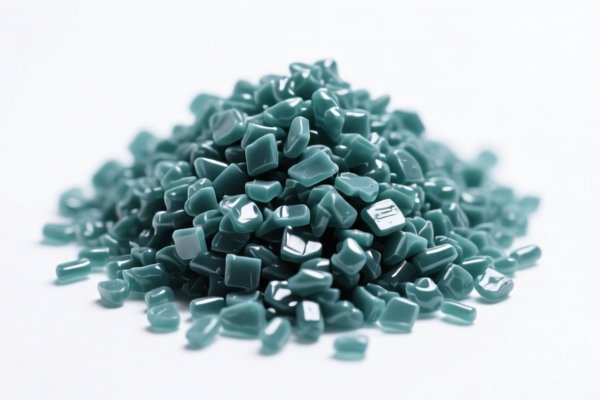
polyethylene extrusion raw materials
CN → US| HS Code | Tariff Rate | Origin | Destination | Doc |
|---|---|---|---|---|
| 3901101000 | 41.5% | CN | US | Official Doc |
| 3901105010 | 41.5% | CN | US | Official Doc |
| 3901205000 | 41.5% | CN | US | Official Doc |
| 3901201000 | 41.5% | CN | US | Official Doc |
| 3916100000 | 40.8% | CN | US | Official Doc |
Product Images



AI Analysis
🏭 Polyethylene Extrusion Raw Materials (PE)
🌐 HS Code Reference & Customs Clearance Guide | 2026 Latest Tariff Analysis | Professional Clearance Strategy
📌 I. Product Definition & Classification: Understanding "Polyethylene"
Polyethylene (PE) is the most widely produced plastic in the world, used for everything from grocery bags to industrial piping. In international trade, PE is strictly categorized by its physical state (usually "primary form") and density characteristics.
For "Extrusion Raw Materials", the key distinction lies in whether the material is a basic polymer resin or a processed compound. The Data provided focuses on Primary Forms of Ethylene Polymers, specifically distinguishing between Low-Density Polyethylene (LDPE) and High-Density Polyethylene (HDPE).
⚠️ Key Distinction Point:
- Primary Form (Resin/Granules): Must be classified under Chapter 39, specifically heading 3901 (Ethylene Polymers in Primary Forms).
- Density Matters:
- LDPE (Low-Density): Usually classified under 3901.10.
- HDPE (High-Density): Usually classified under 3901.20 (specifically if density ≥ 0.94) or other subheadings depending on specific polymer structure.
- Note: "Extrusion Grade" describes the processing method but does not change the fundamental chemical classification under HS Code rules for primary resins.
📦 II. HS Code Classification Details (2026 Latest Authorized Reference)
Based on the provided <DATA>, here is the precise mapping for Polyethylene Extrusion Raw Materials. All entries indicate Primary Forms of Ethylene Polymers.
| HS Code | Product Summary | Classification Logic | Density/Type |
|---|---|---|---|
3901.10.10.00 |
Polyethylene Extrusion Grade Raw Material | Fits the general classification of Polyethylene Polymers in primary form. | General LDPE |
3901.10.50.10 |
Polyethylene Extrusion Grade Raw Material | Specifically classified as Low-Density Polyethylene (LDPE) in primary form. | LDPE |
3901.20.50.00 |
High-Density Polyethylene (HDPE) Extrusion Material | Classified as HDPE with a Specific Gravity ≥ 0.94. | HDPE (High Density) |
3901.20.10.00 |
High-Density Polyethylene (HDPE) Extrusion Material | Classified as an Ethylene Polymer in primary form (generic HDPE category). | HDPE |
3916.10.00.00 |
High-Density Polyethylene (HDPE) Extrusion Material | Classified as an Article of Plastic (shapes/mouldings) rather than raw primary resin. Note: This is a critical distinction. | Processed HDPE Article |
🔍 Critical Alert:
- Items3901.xx.xxare Primary Forms (resins, granules, powders).
- Item3916.10.00.00is considered a Manufactured Article (e.g., rods, tubes, profiles) or a specific processed form, not raw resin. This changes the tariff rate slightly (see below).
💰 III. 2026 Latest Tariff Rate Breakdown (Including Surtaxes & Policy Add-ons)
✅ Applicable Country: United States (US)
✅ Origin: China (CN)
✅ Effective Time: Current rates include Section 301 and Section 232/122 implications.
🎯 1. LDPE & General HDPE Primary Forms (3901.10 & 3901.20 Series)
Applies to HS Codes: 3901.10.10.00, 3901.10.50.10, 3901.20.50.00, 3901.20.10.00
| Item | Detail |
|---|---|
| Base Tariff Rate | 6.5% (Ad Valorem) |
| Section 301 Surtax | +25.0% (Retaliatory tariffs on Chinese goods) |
| Section 122 Tariff | +10.0% (Specific statutory surcharge applicable to certain industrial materials) |
| Total Effective Rate | 41.5% |
| Tax Calculation | CIF Value × 41.5% |
| De Minimis Exemption | ❌ NOT APPLICABLE (deny_de_minimis). These high-value industrial chemicals are excluded from the $800 de minimis rule. |
| Legal Basis Path | USITC:3901.xxxx → Section 301: Footnote 9903.03.01 → Section 122 Statute |
📌 Explanation:
- 6.5% Base: The standard Most Favored Nation (MFN) duty for ethylene polymers.
- 25% Section 301: The primary punitive tariff on Chinese plastics.
- 10% Section 122: Often applied to steel/aluminum-related inputs or specific industrial raw materials under separate authorities.
- Total 41.5%: This is a very high tariff barrier. Importers must price this into their COGS (Cost of Goods Sold).
🎯 2. Processed HDPE Article (3916.10.00.00)
Applies to HS Code: 3916.10.00.00
| Item | Detail |
|---|---|
| Base Tariff Rate | 5.8% (Ad Valorem) |
| Section 301 Surtax | +25.0% (Same Section 301 liability) |
| Section 122 Tariff | +10.0% |
| Total Effective Rate | 40.8% |
| Tax Calculation | CIF Value × 40.8% |
| De Minimis Exemption | ❌ NOT APPLICABLE |
| Legal Basis Path | USITC:3916.10.00.00 → Section 301 → Section 122 |
📌 Note:
- While slightly lower (40.8% vs 41.5%), the risk profile changes.3916implies a "good" or "article." If you ship raw granules but classify as3916, Customs may audit you for misclassification, leading to penalties. Only use3916if the product is already shaped (e.g., rods, films, profiles).
🛠️ IV. Customs Clearance Practical Advice (Real-World Pitfall Avoidance)
✅ 1. Documentation Checklist (Non-Negotiable)
| Document | Required? | Reason |
|---|---|---|
| Commercial Invoice | ✔️ | Must clearly state "Polyethylene Resin" or "HDPE/LDPE Granules" and origin "China". |
| Certificate of Origin (CO) | ✔️ | To verify Country of Origin for Section 301 applicability. |
| Product Specification Sheet | ✔️ | Must include: Melt Flow Index (MFI), Density (g/cm³), and "Primary Form" declaration. |
| Safety Data Sheet (SDS) | ✔️ | Required for hazardous material checks (though PE is generally non-hazardous, it's standard). |
| Bill of Lading (B/L) | ✔️ | Ensure goods description matches invoice exactly. |
| Import License | ❌ | Generally not required for standard PE, but verify with broker. |
✅ 2. Classification Strategy (The "Granule vs. Article" Trap)
🔥 "Granules are Primary (3901); Rods are Articles (3916). Do Not Mix!"
| Scenario | Correct HS Code | Wrong HS Code | Consequence |
|---|---|---|---|
| Raw PE Granules/Powder | 3901.10.xxxx or 3901.20.xxxx |
3916.10.00.00 |
Penalty! Misclassification. Customs will reclassify and charge 41.5% + penalties. |
| HDPE Pipes/Rods (Pre-shaped) | 3916.10.00.00 |
3901.20.xxxx |
Underpayment Risk! If declared as resin, you might pay 41.5%, but if it's actually shaped, the description must match. |
| Blends/Compounds | Check Chapter 39 Headings | N/A | If additives are >10%, it may still be primary form. Consult a specialist. |
✅ 3. Specific Clearance Tips for US Customs (CBP)
-
Declare "Primary Form" Explicitly:
Use language like "Polyethylene Resin, Granules, Primary Form, LDPE/HDPE" on the commercial invoice. Avoid vague terms like "Plastic Material." -
Section 122 Awareness:
Since the data includes a 10% Section 122 tariff, ensure your broker is aware of this statutory addition. It is automatic but must be accounted for in your landed cost calculations. -
Section 301 Exclusions:
Historically, some PE grades had exclusions. Check the latest USTR Exclusion List for your specific HS Code. If an exclusion exists, you might save 25%. However, the data provided assumes standard rates (41.5%), so assume no exclusion unless verified. -
Value Assessment:
Ensure the Transaction Value on the invoice is arm's length. CBP scrutinizes plastic resin imports for undervaluation. Provide purchase orders to prove the price.
🌍 V. Global Market Comparison (Contextual Insight)
| Market | Typical Base Duty | Surtax (China Origin) | Total Approx. | Notes |
|---|---|---|---|---|
| 🇺🇸 USA | 5.8% - 6.5% | +25% (Sec 301) +10% (Sec 122) | ~41% | High barrier. |
| 🇨🇳 China | 0% - 5% | None (If imported INTO China) | Low | If exporting TO China, rates vary. |
| 🇪🇺 EU | 6.5% | No Section 301/122 | ~6.5% | Competitive. No punitive tariffs. |
| 🇲🇽 Mexico | 5% - 6% | USMCA Benefits Apply | Low/0% | If processed in Mexico, can enter US duty-free. |
| 🇻🇳 Vietnam | Varies | USMCA not applicable, but US has low duties | Low | Many manufacturers shift here to avoid Sec 301. |
📌 Strategic Insight:
- Due to the 41.5% US tariff, many buyers source PE from Vietnam, Mexico, or Middle East to mitigate costs.
- If you are importing into the US from China, calculate the Landed Cost carefully. A $10,000 shipment incurs $4,150 in duties alone.
📌 VI. Common Errors & Pitfalls (Blood & Tears Lessons)
❌ Error 1: Declaring "Plastic Pellets" without specifying LDPE/HDPE.
👉 Result: CBP assesses the wrong HS code, leading to delays and potential re-audit.
✅ Fix: Always specify Polyethylene, Density, and Form.
❌ Error 2: Misclassifying Granules as 3916.10.00.00 (Articles) to confuse customs.
👉 Result: If CBP determines they are granules, they will reclassify to 3901 with penalties. If they are articles, 3916 is correct, but the description must match the shape.
✅ Fix: Be honest about the physical form. Granules = 3901. Shaped items = 3916.
❌ Error 3: Ignoring the 10% Section 122 Tariff.
👉 Result: Underpayment of duties, leading to interest and penalties upon CBP review.
✅ Fix: Add the 10% to your financial model explicitly.
❌ Error 4: Using "De Minimis" (Section 321) for bulk shipments.
👉 Result: HS Codes 3901 and 3916 are excluded from the $800 de minimis exemption for China-origin goods.
✅ Fix: File formal entry (Type 03 or 04) regardless of value.
🎯 VII. Conclusion: Professional Declaration, Cost Control, and Efficiency
🎯 Remember the Key Rules:
🔹 "Granules are 3901, Shaped is 3916."
🔹 "China Origin = 41.5% Duty (Base 6.5% + 25% Sec 301 + 10% Sec 122)."
🔹 "No De Minimis Exemption for PE from China."
📌 Pro Tip:
If you are importing large volumes, consider duty drawback programs if the PE is re-exported, or explore FTZ (Foreign Trade Zone) storage to defer payments. Also, verify if your specific PE grade qualifies for any Section 301 Exclusions published by USTR.
✨ Professional Clearance Starts with Precise Classification!
💼 Your Bottom Line Depends on Accurate Tariff Application!
Customer Reviews
About HS Code Classification
The Harmonized System (HS) is an internationally standardized nomenclature developed by the World Customs Organization (WCO) to classify traded products. Over 200 countries use the HS system as the basis for customs tariffs, trade statistics, and import/export regulations.
Each HS code follows a hierarchical structure:
- Chapter (2 digits) — Broad category of goods (e.g., Chapter 84: Machinery and Mechanical Appliances)
- Heading (4 digits) — More specific grouping within the chapter
- Subheading (6 digits) — Internationally standardized breakdown, used by all WCO member countries
- National subdivisions (8-10 digits) — Country-specific extensions for further classification, such as US HTSUS 10-digit codes
Correct HS code classification is essential for smooth customs clearance, accurate duty payment, and compliance with trade regulations. Misclassification can lead to customs delays, overpayment of duties, or penalties.
When importing from CN to US, the applicable tariff rates may include:
- Most-Favored-Nation (MFN) rate — The standard duty rate applied to WTO members
- General rate — Applied to countries without trade agreements
- Trade remedy duties — Additional tariffs such as Section 301 (anti-dumping), Section 232 (national security), or countervailing duties
The information provided on this page is for reference purposes only. For official classification, please consult with your local customs authority or a licensed customs broker.