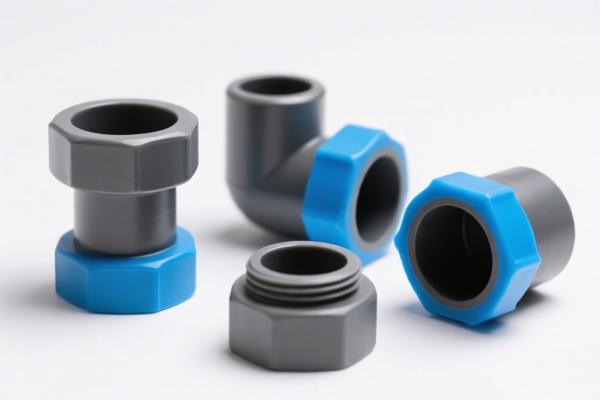
polyethylene fitting
CN → US| HS Code | Tariff Rate | Origin | Destination | Doc |
|---|---|---|---|---|
| 3917210000 | 38.1% | CN | US | Official Doc |
| 3917320020 | 38.1% | CN | US | Official Doc |
| 3926909987 | 22.8% | CN | US | Official Doc |
| 3917400095 | 40.3% | CN | US | Official Doc |
| 3926909989 | 22.8% | CN | US | Official Doc |
Product Images


AI Analysis
🛢️ Polyethylene Fittings (PE Fittings)
🌐 HS Code Reference & Customs Clearance Guide | 2026 Latest Tariff Analysis | Professional Clearance Strategy
📌 One, Product Definition & Classification: What Exactly Are "Polyethylene Fittings"?
Polyethylene (PE) fittings are critical components used to connect, branch, or terminate sections of polyethylene pipes. They are widely used in gas distribution, water supply, industrial fluid transport, and irrigation systems. In international trade, classification depends heavily on the specific HS Code chosen, which directly impacts the Total Tax Rate.
⚠️ Critical Distinction for 2026 Trade: - High Risk Category: PE fittings classified under
3917.21.00.00,3917.32.00.20, or3917.40.00.95/80face a TOTAL TAX of 38.1% - 40.3% due to Section 301 and Section 122 tariffs. - Alternative Category: Some plastic fittings may be classified under3926.90.99.87with a lower total tax of 22.8%, but this requires strict justification that the item is NOT a "pipe accessory" under Chapter 3917.
📦 Two, HS Code Classification Details (2026 Latest Tariff Authority)
Based on the provided data, here are the specific HS Codes applicable to Polyethylene/Plastic Fittings and their corresponding tax structures.
| HS Code | Product Description | Total Tax Rate | Tax Composition Details |
|---|---|---|---|
| 3917.21.00.00 | Polyethylene Pipe Fittings (PE Material, Pipe Form) | 38.1% | Base Tariff: 3.1% + Section 301: 25.0% + Section 122: 10.0% |
| 3917.32.00.20 | Polyethylene Pipe Fittings (PE Material, Pipe Form) | 38.1% | Base Tariff: 3.1% + Section 301: 25.0% + Section 122: 10.0% |
| 3926.90.99.87 | Plastic Fittings (General Plastic, Accessory Form) | 22.8% | Base Tariff: 5.3% + Section 301: 7.5% + Section 122: 10.0% |
| 3917.40.00.95 | Plastic Pipe Fittings (Plastic Material, Pipe Accessory) | 40.3% | Base Tariff: 5.3% + Section 301: 25.0% + Section 122: 10.0% |
| 3917.40.00.80 | Plastic Pipe Fittings (Plastic Material, Pipe Accessory) | 40.3% | Base Tariff: 5.3% + Section 301: 25.0% + Section 122: 10.0% |
🔍 Key Insight: - HS Codes 3917.21, 3917.32, 3917.40: These fall under "Artificial Plastics and Articles Thereof: Tubes, Pipes and Hoses... With Fittings". They are subject to the 25% Section 301 tariff. - HS Code 3926.90: This falls under "Other Articles of Plastic". It is subject to a reduced 7.5% Section 301 tariff (if eligible for this specific subheading), resulting in a significantly lower total tax. - Section 122 (10%): Applies to all items from China in this list, regardless of the base HS code.
💰 Three, 2026 Latest Tariff Rate Breakdown (Detailed Policy Explanation)
✅ Applicable Country: United States (US)
✅ Origin: China (CN)
✅ Effective Time: 2025/2026 Trade Cycle
🎯 1. 3917.21.00.00 & 3917.32.00.20 — Polyethylene Pipe Fittings
| Item | Content |
|---|---|
| Base Tariff | 3.1% (Standard MFN Rate) |
| Section 301 Tariff | +25.0% (US Trade Act Section 301, List 3/4B) |
| Section 122 Tariff | +10.0% (USMCA Implementation/Related Provisions) |
| Total Tax Rate | 38.1% |
| Tax Calculation | CIF Value × 38.1% |
| De Minimis Exemption | ❌ Not Applicable (High value items typically excluded) |
| Legal Basis | USITC:3917.21.00.00 + Section 301 Footnote + Section 122 |
📌 Explanation: - PE fittings under Chapter 3917 are considered essential pipeline components. - The 25% Section 301 duty is the primary cost driver. - Even with a low base rate (3.1%), the combined burden makes this category expensive.
🎯 2. 3917.40.00.95 & 3917.40.00.80 — Other Plastic Pipe Fittings
| Item | Content |
|---|---|
| Base Tariff | 5.3% (Standard MFN Rate) |
| Section 301 Tariff | +25.0% (US Trade Act Section 301) |
| Section 122 Tariff | +10.0% |
| Total Tax Rate | 40.3% |
| Tax Calculation | CIF Value × 40.3% |
| De Minimis Exemption | ❌ Not Applicable |
| Legal Basis | USITC:3917.40.00.95 + Section 301 Footnote + Section 122 |
📌 Explanation: - This category includes fittings made of other plastics (not just PE) or specific types of pipe accessories. - The base tariff is slightly higher (5.3% vs 3.1%), leading to a total rate of 40.3%. - Risk: High tariff burden requires careful margin calculation.
🎯 3. 3926.90.99.87 — Other Plastic Articles (Potential Optimization)
| Item | Content |
|---|---|
| Base Tariff | 5.3% |
| Section 301 Tariff | +7.5% (Reduced rate for certain "Other Plastic Articles") |
| Section 122 Tariff | +10.0% |
| Total Tax Rate | 22.8% |
| Tax Calculation | CIF Value × 22.8% |
| De Minimis Exemption | ❌ Not Applicable |
| Legal Basis | USITC:3926.90.99.87 + Section 301 Reduced Footnote |
📌 Explanation: - Crucial Strategy: If the fitting can be classified as a general plastic article (3926) rather than a pipe fitting (3917), the Section 301 duty drops from 25% to 7.5%. - Caveat: This classification must be defensible. CBP may challenge if the item is clearly designed for pipe connection. Requires strong product description and functional evidence.
🛠️ Four, Customs Clearance Practical Advice (Real-World Pitfall Guide)
✅ 1. Essential Documentation Checklist
| Document | Required? | Description |
|---|---|---|
| ✅ Product Specification Sheet | ✔️ | Must clearly state material (PE vs. Other Plastic), dimensions, and pressure rating. |
| ✅ Functional Diagram/Photo | ✔️ | Show how it connects to pipes. Is it a "fitted" part or a "general" plastic component? |
| ✅ Commercial Invoice | ✔️ | Clearly describe as "Polyethylene Pipe Fittings" or "Plastic Connector Components". Avoid vague terms like "Plastic Part". |
| ✅ Certificate of Origin | ✔️ | Must declare China origin to trigger Section 301/122 correctly. |
| ✅ Packing List | ✔️ | List quantities by HS Code if multiple types are mixed. |
✅ 2. Declaration Strategy (Key Rules)
🔥 "Material Defines Code, Function Defines Rate!"
| Scenario | Correct HS Code | Wrong Action | Consequence |
|---|---|---|---|
| Pure PE Pipe Fittings | 3917.21.00.00 or 3917.32.00.20 |
Declare as 3926.90 |
High Risk of Audit + Penalty (Misclassification) |
| Other Plastic Pipe Fittings | 3917.40.00.95 |
Declare as 3917.21 |
Underpayment of Duty (40.3% vs 38.1% base diff) |
| Generic Plastic Connectors | 3926.90.99.87 |
Declare as 3917 |
Overpayment of Duty (Pay 38.1% when 22.8% might apply) |
| Mixed Shipment | Separate HS Codes | Single Line Item | Customs Delay & Rejection |
✅ 3. Special Handling Tips
| Situation | Handling Advice |
|---|---|
| OEM/Custom Fittings | Provide engineering drawings to prove specific pipe compatibility. If it’s for a specific pipe size, CBP may insist on 3917. |
| Non-Pipe Plastic Parts | If the item is a generic plastic bracket, clamp, or non-pipe-specific connector, argue for 3926.90.99.87 to save 15.3% in tariffs. |
| Section 122 Applicability | Ensure the Section 122 duty is applied correctly. It is a flat 10% on most Chinese plastics. |
| Pre-Ruling Application | HIGHLY RECOMMENDED: Apply for an Advance Ruling from CBP for new product lines. This locks in the HS Code and avoids surprise assessments. |
🌍 Five, Global Market Comparison (2026)
| Country/Region | Recommended HS Code | Tariff (China Origin) | Certification | Notes |
|---|---|---|---|---|
| 🇺🇸 USA | 3917.21.00.00 / 3926.90.99.87 |
38.1% or 22.8% | None specific | Section 301 & 122 apply. Critical to choose correct code. |
| 🇨🇳 China | 3917.21.00.00 |
0-5% | CCC (if applicable) | Low import duty, but high export VAT refund considerations. |
| 🇪🇺 EU | 3917.21.00 |
~3-5% | CE (if for pressure) | No Section 301. Much more favorable for Chinese PE fittings. |
| 🇬🇧 UK | 3917.21.00 |
~3-5% | UKCA | Post-Brexit regime similar to EU but requires UKCA marking. |
| 🇦🇺 Australia | 3917.21.00 |
5% | RCM | Low duty, no major trade barriers. |
📌 Conclusion: - USA is the most challenging market due to Section 301 (25% or 7.5%) and Section 122 (10%). - Total Tax in USA: 38.1% (for PE) or 40.3% (for other plastics) vs. 22.8% (if misclassified as general plastic). - Strategy: If the product is NOT strictly a "pipe fitting," push for
3926.90.99.87to save 15.3%.
📌 Six, Common Mistakes & Pitfalls (Lessons Learned)
❌ Mistake 1: Using "Plastic Fitting" as a generic description without specifying material.
👉 Result: CBP may assign the highest duty rate (3917.40 at 40.3%) out of caution.
❌ Mistake 2: Forcing 3926.90.99.87 for obvious PE pipe elbows.
👉 Result: Audit Trigger. CBP will reclassify as 3917 and assess back-taxes + penalties.
❌ Mistake 3: Ignoring Section 122.
👉 Result: Underpayment by 10%. CBP will collect the difference plus interest.
❌ Mistake 4: Mixed container without separate line items.
👉 Result: The entire shipment may be audited at the highest rate applied to any item.
✅ Correct Action:
"Polyethylene Pipe Elbow, 2-inch, Schedule 40, PE 100 Material, for Water Distribution System. HS Code: 3917.21.00.00"
🎯 Seven, Conclusion: Precision in Classification, Profit in Clearance!
🎯 Key Takeaways:
🔹 "PE Fittings under 3917 = 38.1% Tax. General Plastics under 3926 = 22.8% Tax."
🔹 "Section 122 is a constant 10% – plan for it."
🔹 "Section 301 is the killer – 25% for pipe fittings, 7.5% for general articles."
📌 Pro Tip:
If you are importing large volumes, consult a licensed customs broker to apply for an Advance Ruling before shipment. This provides legal certainty and prevents costly delays or penalties at US ports of entry.
📣 Immediate Action:
📞 Engage a Customs Broker + Provide Product Photos & Specs + Request Pre-Classification
🚀 Minimize Tariff Burden, Maximize Profit, Ensure Smooth Customs Clearance!
✨ Professional Classification Starts with Precision!
💼 Every Percent Saved is Pure Profit in International Trade!
Customer Reviews
About HS Code Classification
The Harmonized System (HS) is an internationally standardized nomenclature developed by the World Customs Organization (WCO) to classify traded products. Over 200 countries use the HS system as the basis for customs tariffs, trade statistics, and import/export regulations.
Each HS code follows a hierarchical structure:
- Chapter (2 digits) — Broad category of goods (e.g., Chapter 84: Machinery and Mechanical Appliances)
- Heading (4 digits) — More specific grouping within the chapter
- Subheading (6 digits) — Internationally standardized breakdown, used by all WCO member countries
- National subdivisions (8-10 digits) — Country-specific extensions for further classification, such as US HTSUS 10-digit codes
Correct HS code classification is essential for smooth customs clearance, accurate duty payment, and compliance with trade regulations. Misclassification can lead to customs delays, overpayment of duties, or penalties.
When importing from CN to US, the applicable tariff rates may include:
- Most-Favored-Nation (MFN) rate — The standard duty rate applied to WTO members
- General rate — Applied to countries without trade agreements
- Trade remedy duties — Additional tariffs such as Section 301 (anti-dumping), Section 232 (national security), or countervailing duties
The information provided on this page is for reference purposes only. For official classification, please consult with your local customs authority or a licensed customs broker.