polyethylene plastic agricultural irrigation pipe
CN → US| HS Code | Tariff Rate | Origin | Destination | Doc |
|---|---|---|---|---|
| 3926909989 | 22.8% | CN | US | Official Doc |
| 3917400095 | 40.3% | CN | US | Official Doc |
| 3917400080 | 40.3% | CN | US | Official Doc |
| 8424820020 | 37.4% | CN | US | Official Doc |
| 8424820090 | 37.4% | CN | US | Official Doc |
| 3926909987 | 22.8% | CN | US | Official Doc |
Product Images
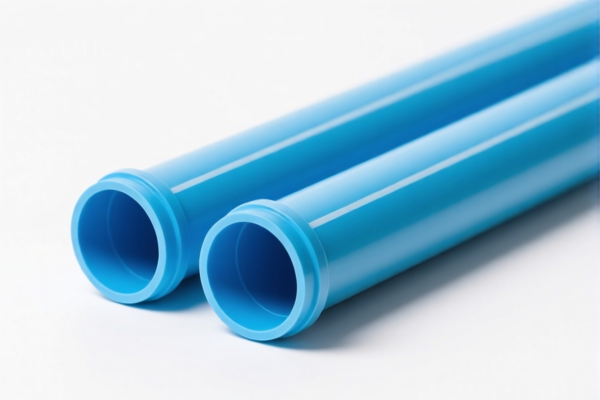

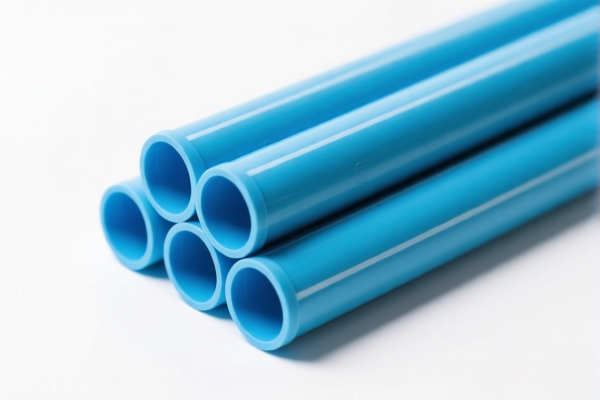
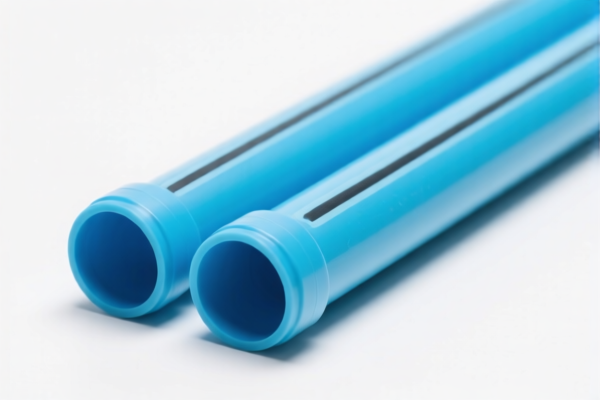
AI Analysis
🌾 Polyethylene Plastic Agricultural Irrigation Pipe
🌐 HS Code Reference & Customs Clearance Guide | 2026 Latest Tariff Analysis | Professional Strategy for Agri-Tech Exports
📌 I. Product Definition & Classification: Are You Sure It’s Just a "Pipe"?
Polyethylene (PE) plastic agricultural irrigation pipes are critical components in modern farming systems. However, in international trade, their classification hinges on form, function, and connection type. They are not a single unified category but fall into three distinct buckets based on how they are used and shaped:
- Generic Plastic Parts (Unconnected, simple fittings): Classified as general plastic articles.
- Pipe Fittings/Connectors (Elbows, tees, couplings): Classified specifically as plastic pipe accessories.
- Irrigation Equipment (Sprinklers, emitters, drippers): Classified as agricultural machinery/equipment.
⚠️ Critical Distinction Point:
- If the item is a straight pipe or simple non-specialized connector without specific irrigation mechanics → Often falls under 3926.90 (Other plastic articles).
- If the item is a specific connector (joint/coupling) for pipes → Falls under 3917.40 (Plastic pipe fittings).
- If the item is part of an irrigation system (e.g., sprinkler head, drip emitter) → Falls under 8424.82 (Other irrigation equipment).
📦 II. HS Code Classification Details (2026 Latest Tariff Authority Comparison)
| HS Code | Product Description | Application Scenario | Tax Rate (China Origin to US) |
|---|---|---|---|
3926.90.99.89 |
Plastic materials, classified as other parts/accessories of plastic products | Generic plastic fittings, non-specific connectors, raw plastic components | 22.8% |
3917.40.00.95 |
Plastic material, form is connector/joint, fits plastic pipe accessories category | Pipe joints, couplings, elbows specifically for PE pipes | 40.3% |
3917.40.00.80 |
Plastic material, form is connector/joint, falls under "other" category in pipe accessories | Other plastic pipe fittings not specifically listed | 40.3% |
8424.82.00.20 |
Use is irrigation equipment, plastic material, fits definition of other irrigation equipment | Sprinklers, drip irrigation heads, nozzles made of plastic | 37.4% |
8424.82.00.90 |
Use is in irrigation field, plastic material, fits catch-all logic for other irrigation equipment | Other irrigation devices, general irrigation attachments | 37.4% |
3926.90.99.87 |
Plastic material, form is connector/joint, belongs to "other" category of plastic products | Generic plastic connectors not classified as pipe fittings | 22.8% |
🔍 Key Reminder:
- Pipe Fittings (3917.40) are heavily taxed (40.3%) due to high "Section 301" tariffs.
- General Plastic Parts (3926.90) have lower tariffs (22.8%) but require strict proof that they are not specialized pipe fittings.
- Irrigation Equipment (8424.82) falls in the middle (37.4%) if the item has a specific mechanical function (e.g., spraying, dripping).
💰 III. 2026 Latest Tariff Rate Breakdown (Including Surtaxes & Policy Add-ons)
✅ Applicable Country: United States (US)
✅ Origin: China (CN)
✅ Effective Date: 2025/2026 (Post-Section 301 & IEEPA Rules)
🎯 1. 3926.90.99.89 & 3926.90.99.87 —— Plastic Parts (Other)
| Item | Details |
|---|---|
| Base Tariff | 5.3% (Most Favored Nation rate for plastic articles) |
| Section 301 Surtax | +7.5% (Applicable to certain plastic parts under USITC Footnote) |
| 122-Clause Tariff | +10% (Specific to certain plastic manufacturing inputs/parts) |
| Total Rate | 22.8% |
| Tax Calculation | CIF Value × 22.8% |
| De Minimis Exemption | ❌ Not Eligible (High value items subject to full duties) |
| Legal Path | USITC:3926.90.99 → Section 301: 7.5% → 122-Clause: 10% |
📌 Explanation:
- These codes are often used for "miscellaneous" plastic items.
- To qualify for 22.8%, you must prove the item is not a specialized pipe connector (which would jump to 40.3%).
- Documentation must emphasize "general utility" rather than "specific pipe joining function."
🎯 2. 3917.40.00.95 & 3917.40.00.80 —— Plastic Pipe Connectors/Joints
| Item | Details |
|---|---|
| Base Tariff | 5.3% |
| Section 301 Surtax | +25.0% (High-tier classification for pipe fittings) |
| 122-Clause Tariff | +10% |
| Total Rate | 40.3% |
| Tax Calculation | CIF Value × 40.3% |
| De Minimis Exemption | ❌ Not Eligible |
| Legal Path | USITC:3917.40.00 → Section 301: 25% → 122-Clause: 10% |
📌 Warning:
- This is the most expensive category in the dataset.
- If customs determines your "generic plastic part" is actually a pipe joint/connector, they will reclassify it here, adding 17.5% extra tax.
- Strategy: Avoid using terms like "pipe fitting," "coupling," or "joint" in documentation if possible, unless accurately declaring.
🎯 3. 8424.82.00.20 & 8424.82.00.90 —— Irrigation Equipment
| Item | Details |
|---|---|
| Base Tariff | 2.4% (Lower base rate for machinery/equipment) |
| Section 301 Surtax | +25.0% |
| 122-Clause Tariff | +10% |
| Total Rate | 37.4% |
| Tax Calculation | CIF Value × 37.4% |
| De Minimis Exemption | ❌ Not Eligible |
| Legal Path | USITC:8424.82.00 → Section 301: 25% → 122-Clause: 10% |
📌 Note:
- Although the base tariff is lower (2.4%), the high surtaxes push the total to 37.4%.
- This category applies if the plastic item is part of a functional irrigation system (e.g., a sprinkler head, not just a pipe segment).
🛠️ IV. Customs Clearance Practical Advice (Combat Pitfalls Guide)
✅ 1. Preparation Checklist (Non-Negotiable)
| Document | Required | Purpose |
|---|---|---|
| ✅ Product Specification Sheet | ✔️ | Define material (PE/HDPE), dimensions, pressure rating |
| ✅ Product Photos (Clear) | ✔️ | Show ends (plain vs. threaded), shape (straight vs. elbow) |
| ✅ Commercial Invoice | ✔️ | Use precise descriptions (see below) |
| ✅ Packing List | ✔️ | Separate fittings from pipes if possible |
| ✅ Function Statement | ✔️ | Explain if item is a "connector," "nozzle," or "generic part" |
✅ 2. Declaration Strategies (Key Mantras)
🔥 "Don't Call it a Pipe Fitting Unless It Is One. Be Specific About Function."
| Scenario | Correct Declaration Approach | Wrong Approach |
|---|---|---|
| Generic Plastic Tube/Part | "Plastic Accessory, General Utility, No Specific Pipe Function" | "Plastic Pipe Fitting" → Leads to 40.3% |
| Elbow/Coupling for PE Pipe | "Plastic Pipe Joint, for Irrigation Systems" | "Plastic Part" → Risk of reclassification penalty |
| Sprinkler/Dripper Head | "Plastic Irrigation Nozzle, Agricultural Equipment" | "Plastic Part" → Under-declares function |
| Straight PE Pipe | (Note: Not in dataset, but usually 3917.29) | Do not mix with fittings in one line item if values differ significantly |
✅ 3. Special Case Handling
| Situation | Recommendation |
|---|---|
| Mixed Shipment (Pipes + Fittings) | Split the invoice! Declare pipes (if applicable) and fittings separately to avoid cross-contamination of duty rates. |
| OEM Custom Fittings | Provide CAD drawings to prove shape is unique. If it looks like a standard joint, expect 40.3%. |
| "122-Clause" Eligibility | Verify if your plastic resin or specific manufacturing process qualifies for the 10% 122-clause adjustment. Not all plastic parts do. |
| Section 301 Exclusion | Check if your specific HS Code had exclusions in 2025. Most plastic pipe fittings do not have exclusions. |
🌍 V. Global Market Comparison (2026 Snapshot)
| Market | Recommended HS Code (Example) | Approx. Duty | Key Certification |
|---|---|---|---|
| 🇺🇸 USA | 3917.40.00.95 (Fitting) |
40.3% | None specific, but accurate description is critical |
| 🇨🇳 China | 3917.29 (Pipe) / 3917.40 |
~5-10% | CCC (if applicable) |
| 🇪🇺 EU | 3917.29 (Pipe) / 3917.39 |
~3-5% | REACH, RoHS |
| 🇦🇺 Australia | 3917.29 |
~5% | RCM |
📌 Conclusion:
- The US market is the most punitive for plastic pipe fittings due to Section 301 and 122-Clause tariffs.
- EU and China have significantly lower duties for similar items.
- Strategy: If exporting to the US, ensure the description matches the lowest possible tariff category that is still legally accurate.
📌 VI. Common Errors & Pitfalls (Lessons Learned)
❌ Error 1: Calling a "Pipe Joint" a "Plastic Part"
👉 Consequence: Customs reclassification to 3917.40.00.95 → Sudden 17.5% tax hike + penalties.
❌ Error 2: Mixing "Irrigation Equipment" with "Plastic Pipes"
👉 Consequence: Confusion over base rates (2.4% vs 5.3%) → Delays and audits.
❌ Error 3: Ignoring the "122-Clause"
👉 Consequence: Missing out on potential duty offsets if the plastic material qualifies.
❌ Error 4: Vague Descriptions ("Plastic Accessory")
👉 Consequence: CBP (Customs and Border Protection) assumes worst-case scenario → Highest possible duty.
✅ Correct Practice:
"PE Plastic Irrigation Pipe Connector, 1/2 Inch, Black, for Agricultural Use, Model XYZ"
For generic parts: "Generic Plastic Mounting Bracket, Non-Pipe Function, Polyethylene"
🎯 VII. Conclusion: Precision in Description Saves Money!
🎯 Remember the Mantras:
🔹 "Fittings are 40.3%, Parts are 22.8%. Prove the difference!"
🔹 "Irrigation Equipment is 37.4%. Show the Function!"
🔹 "Don't Hide the Truth – Misclassification Costs More Than the Tariff!"
📌 Pro Tip:
If your product is exclusively a straight pipe (not a fitting or equipment), it may fall under 3917.29 (not in this specific dataset but common). Always check if the 10% 122-Clause applies to your specific polymer type. For the items listed above, accurate description is your best defense against high tariffs.
📣 Immediate Action:
📞 Consult a Customs Broker to classify your specific item.
📄 Prepare Detailed Photos showing if the item is a joint, nozzle, or generic part.
🚀 Optimize Your Supply Chain – High US duties may make local sourcing or third-country manufacturing more viable.
✨ Professional Clearance Starts with Accurate Classification!
💼 Your Profit Margin Depends on These Percentages!
Customer Reviews
About HS Code Classification
The Harmonized System (HS) is an internationally standardized nomenclature developed by the World Customs Organization (WCO) to classify traded products. Over 200 countries use the HS system as the basis for customs tariffs, trade statistics, and import/export regulations.
Each HS code follows a hierarchical structure:
- Chapter (2 digits) — Broad category of goods (e.g., Chapter 84: Machinery and Mechanical Appliances)
- Heading (4 digits) — More specific grouping within the chapter
- Subheading (6 digits) — Internationally standardized breakdown, used by all WCO member countries
- National subdivisions (8-10 digits) — Country-specific extensions for further classification, such as US HTSUS 10-digit codes
Correct HS code classification is essential for smooth customs clearance, accurate duty payment, and compliance with trade regulations. Misclassification can lead to customs delays, overpayment of duties, or penalties.
When importing from CN to US, the applicable tariff rates may include:
- Most-Favored-Nation (MFN) rate — The standard duty rate applied to WTO members
- General rate — Applied to countries without trade agreements
- Trade remedy duties — Additional tariffs such as Section 301 (anti-dumping), Section 232 (national security), or countervailing duties
The information provided on this page is for reference purposes only. For official classification, please consult with your local customs authority or a licensed customs broker.