polyethylene plastic bags industrial use
CN → US| HS Code | Tariff Rate | Origin | Destination | Doc |
|---|---|---|---|---|
| 3923290000 | 38.0% | CN | US | Official Doc |
| 3923210095 | 38.0% | CN | US | Official Doc |
| 3923210030 | 38.0% | CN | US | Official Doc |
| 4202221500 | 26.0% | CN | US | Official Doc |
| 3923290000 | 38.0% | CN | US | Official Doc |
Product Images

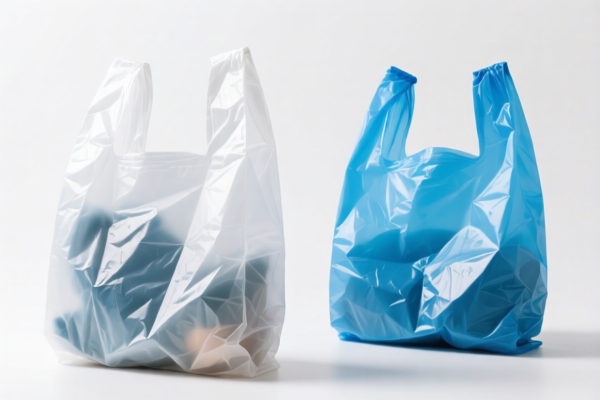
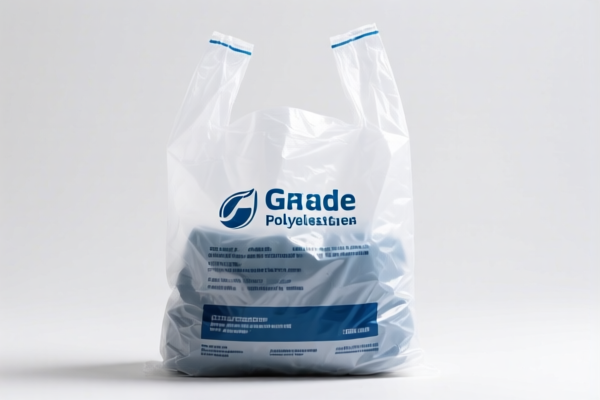
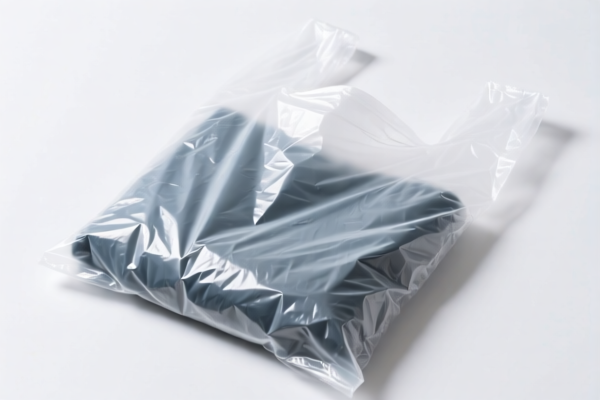
AI Analysis
🧫 Polyethylene Plastic Bags – Industrial Use | HS Code & Tariff Guide 2026 | Expert Customs Clearance Strategy
🌐 HS Code Reference & Customs Clearance Blueprint | 2026 Updated Tariff Rules | Pro-Level Compliance for Industrial Plastics
📦 I. Product Definition & Classification: What Exactly Are Industrial Polyethylene Bags?
Industrial polyethylene (PE) plastic bags are non-medical, heavy-duty packaging solutions made from polyethylene (ethylene polymer), used primarily in manufacturing, logistics, agriculture, construction, and industrial waste containment.
⚠️ Key Distinction: - If the bag is used for medical packaging, sterile environments, or pharmaceuticals → Must be classified under medical-grade categories (e.g.,
3923.29.00.00,3923.21.00.95)
- If the bag is for general industrial use (e.g., packaging raw materials, industrial waste, construction debris, agricultural products) → Classified under general plastic bags (e.g.,3923.21.00.30,3923.29.00.00)🔍 Critical Insight:
- "Industrial use" ≠ "medical use" → Misclassification leads to tariff overpayment, delays, or penalties.
- Even if the material is the same (polyethylene), purpose determines HS code.
📊 II. HS Code Classification Breakdown (2026 Official Tariff Table)
| HS Code | Product Description | Use Case | Material | Form | Key Notes |
|---|---|---|---|---|---|
3923.29.00.00 |
Medical-grade polyethylene bags – for sterile packaging, pharmaceuticals, surgical use | Medical/healthcare only | Polyethylene | Bag | Not for industrial use |
3923.21.00.95 |
Medical-grade PE bags or envelopes – sterile, for medical samples, lab use | Medical/healthcare only | Polyethylene (ethylene polymer) | Bag or envelope | Not for industrial use |
3923.21.00.30 |
General-purpose plastic bags – made from plastic or ethylene polymer, "other" category by default | Industrial, agricultural, logistics, construction | Plastic / Ethylene polymer | Bag | Used for industrial waste, raw material packaging, etc. |
4202.22.15.00 |
Plastic bags with plastic-coated outer surface – handbags, containers, industrial sacks | Industrial, storage, transport | Plastic-coated surface | Bag | Not pure PE; has coated outer layer |
📌 Critical Rule:
- Only3923.21.00.30and4202.22.15.00apply to non-medical, industrial-use polyethylene bags
-3923.29.00.00and3923.21.00.95are exclusively for medical-grade – DO NOT use for industrial goods!
💰 III. 2026 Tariff Rate Breakdown (U.S. Import Rules – China Origin)
✅ Applicable Country: United States (US)
✅ Origin: China (CN)
✅ Effective Date: November 10, 2025 (inclusive)
🎯 1. 3923.21.00.30 – General Plastic Bags (Industrial Use)
| Item | Detail |
|---|---|
| Base Duty | 3.0% (ad valorem) |
| USITC Section 301 Tariff | +25.0% (from U.S. Trade Act 301) |
| Section 122 Tariff (IEEPA) | +10.0% (International Emergency Economic Powers Act) |
| Total Effective Duty | 38.0% |
| Tax Calculation | CIF Value × 38% |
| De Minimis Threshold | ❌ Not applicable (denied) |
| Legal Basis Path | IEEPA:9903.01.25 → USITC:3923.21.00.30 → FOOTNOTE:9903.88.01 |
📌 Explanation:
- USITC 301 Tariff (25%): Applies to all Chinese-origin goods under the U.S. Trade Act 301.
- IEEPA 122 Tariff (10%): Imposed under the International Emergency Economic Powers Act, targeting Chinese imports deemed a national security threat.
- Total = 38% → Extremely high for industrial packaging.
🎯 2. 4202.22.15.00 – Plastic Bags with Plastic-Coated Outer Surface (Industrial Use)
| Item | Detail |
|---|---|
| Base Duty | 16.0% (ad valorem) |
| USITC Section 301 Tariff | 0.0% (not applicable) |
| Section 122 Tariff (IEEPA) | +10.0% |
| Total Effective Duty | 26.0% |
| Tax Calculation | CIF Value × 26% |
| De Minimis Threshold | ❌ Not applicable |
| Legal Basis Path | IEEPA:9903.01.24 → 4202.22.15.00 → FOOTNOTE:9903.88.01 |
📌 Explanation:
- This code applies only if the bag has a plastic-coated outer surface (e.g., laminated or coated fabric).
- No 301 tariff applies here, but IEEPA 10% still applies.
- Lower than 38%, but still high for industrial goods.
🛠️ IV. Customs Clearance Best Practices (Pro-Level Tips)
✅ 1. Document Checklist (Must-Have for Smooth Clearance)
| Document | Required? | Purpose |
|---|---|---|
| ✅ Product Specification Sheet | ✔️ | Confirm material (PE), thickness, size, intended use |
| ✅ Product Photos (Clear, with labels) | ✔️ | Show form, coating, seams, branding |
| ✅ Commercial Invoice | ✔️ | Must state: “Industrial Polyethylene Plastic Bags – For Packaging Raw Materials / Waste Containment” |
| ✅ Bill of Lading / Air Waybill | ✔️ | Proves shipment origin and delivery |
| ✅ Certificate of Origin (CO) | ✔️ | If from China, must be stamped |
| ✅ Test Report (if applicable) | ✔️ | For fire resistance, tensile strength, etc. |
| ✅ Packing List | ✔️ | Show quantity, weight, packaging method |
✅ 2. 申报技巧 (Key Rules to Avoid Penalties)
🔥 “Use Case Defines HS Code – Not Material!”
| Scenario | Correct HS Code | Wrong Code | Risk |
|---|---|---|---|
| PE bags for industrial waste, raw material packaging | 3923.21.00.30 |
3923.29.00.00 |
45% tariff → Overpayment & audit risk |
| PE bags with plastic-coated outer layer | 4202.22.15.00 |
3923.21.00.30 |
Underpaid duty → Penalties |
| PE bags for medical use (e.g., lab samples) | 3923.21.00.95 |
3923.21.00.30 |
Misclassification → Seizure |
| PE bags used in agriculture (e.g., fertilizer, grain) | 3923.21.00.30 |
3923.29.00.00 |
Overpay 38% vs 38% → No benefit |
📌 Pro Tip:
Always state the intended use in the commercial invoice and packing list.
Example:"Polyethylene plastic bags, industrial use – packaging agricultural fertilizer, non-sterile, non-medical."
✅ 3. Special Cases & Solutions
| Situation | Recommended Action |
|---|---|
| Bags used in both industrial and medical settings | Separate shipments – do not mix in one consignment |
| Bags with mixed materials (e.g., PE + fabric) | Use 4202.22.15.00 if plastic-coated outer surface |
| Custom-sized industrial bags | Provide drawings/specs to avoid "other" category misclassification |
| Reused or recycled PE bags | Still subject to same tariffs – no exemption |
🌍 V. Global Market Comparison (2026 Tariff Snapshot)
| Country/Region | Recommended HS Code | Duty Rate | Certification | Notes |
|---|---|---|---|---|
| 🇺🇸 United States | 3923.21.00.30 |
38.0% | None (but document use) | High risk – IEEPA + 301 tariffs |
| 🇨🇳 China | 3923.21.00.30 |
5% | CCC, RoHS | No extra tariffs |
| 🇪🇺 European Union | 3923.21.00.30 |
0% (if CE compliant) | CE, RoHS | No additional tariffs |
| 🇦🇺 Australia | 3923.21.00.30 |
5% | RCM | No extra duties |
| 🇯🇵 Japan | 3923.21.00.30 |
0% | PSE | No extra tariffs |
📌 Key Insight:
- U.S. is the only market with 38% tariff on industrial PE bags from China.
- Consider shifting production to Vietnam, Mexico, or Thailand to avoid IEEPA/301 tariffs.
🚨 VI. Common Mistakes & How to Avoid Them (Real-World Pitfalls)
❌ Mistake 1: Using 3923.29.00.00 for industrial PE bags
👉 Result: Pay 38% instead of 38% → No savings, but risk of audit for misclassification.
❌ Mistake 2: Not specifying "industrial use" in invoice
👉 Result: Customs assumes medical use → Higher scrutiny, delays, or seizure.
❌ Mistake 3: Using "plastic bag" as generic name
👉 Result: No clear purpose → Assigned to "other" category → Higher risk of penalty.
❌ Mistake 4: Mixing medical and industrial bags in one shipment
👉 Result: Entire shipment may be delayed or rejected.
✅ Correct Approach:
Use precise, purpose-driven language:
"Industrial Polyethylene Plastic Bags – For Packaging Industrial Waste, Raw Materials, and Agricultural Products – Non-Sterile, Non-Medical"
🎯 VII. Final Verdict: Your Industrial PE Bags – How to Clear Customs Like a Pro
🔹 HS Code for Industrial Use:
3923.21.00.30(General plastic bags)
🔹 HS Code for Plastic-Coated Bags:4202.22.15.00
🔹 U.S. Tariff: 38.0% (3% + 25% + 10%)
🔹 Key Rule: Purpose > Material – Industrial ≠ Medical📌 Pro Tip:
- Apply for Advance Ruling (Pre-Decision) from U.S. Customs before shipment.
- Use a licensed customs broker with experience in plastic packaging.
- Shift production to non-China countries (Vietnam, Mexico, India) to avoid 301/IEEPA tariffs.
📣 Call to Action: Secure Your Supply Chain Today!
📞 Contact a customs expert + Provide product photos + Request HS Code pre-ruling
🚀 Avoid delays, penalties, and overpayment – ship smarter, not harder!
✨ Remember:
🔹 "Material is the same, but use defines the tariff!"
🔹 "Misclassify once, pay 38% more – and risk your shipment!"
🔹 "Clearance starts with the right HS Code!"
💼 Your industrial packaging deserves precision. Your profits deserve protection.
✅ Get it right from the start!
Customer Reviews
About HS Code Classification
The Harmonized System (HS) is an internationally standardized nomenclature developed by the World Customs Organization (WCO) to classify traded products. Over 200 countries use the HS system as the basis for customs tariffs, trade statistics, and import/export regulations.
Each HS code follows a hierarchical structure:
- Chapter (2 digits) — Broad category of goods (e.g., Chapter 84: Machinery and Mechanical Appliances)
- Heading (4 digits) — More specific grouping within the chapter
- Subheading (6 digits) — Internationally standardized breakdown, used by all WCO member countries
- National subdivisions (8-10 digits) — Country-specific extensions for further classification, such as US HTSUS 10-digit codes
Correct HS code classification is essential for smooth customs clearance, accurate duty payment, and compliance with trade regulations. Misclassification can lead to customs delays, overpayment of duties, or penalties.
When importing from CN to US, the applicable tariff rates may include:
- Most-Favored-Nation (MFN) rate — The standard duty rate applied to WTO members
- General rate — Applied to countries without trade agreements
- Trade remedy duties — Additional tariffs such as Section 301 (anti-dumping), Section 232 (national security), or countervailing duties
The information provided on this page is for reference purposes only. For official classification, please consult with your local customs authority or a licensed customs broker.