polyethylene terephthalate pet resin
CN → US| HS Code | Tariff Rate | Origin | Destination | Doc |
|---|---|---|---|---|
| 3907915000 | 41.5% | CN | US | Official Doc |
| 3907995010 | 41.5% | CN | US | Official Doc |
| 3907915000 | 41.5% | CN | US | Official Doc |
| 3907995010 | 41.5% | CN | US | Official Doc |
| 3907915000 | 41.5% | CN | US | Official Doc |
Product Images
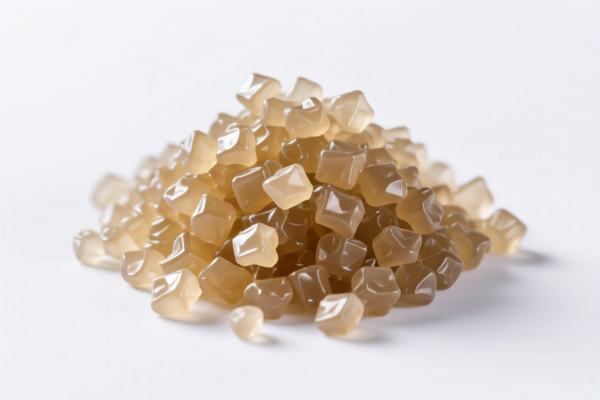

AI Analysis
🧪 Polyethylene Terephthalate (PET) Resin
🌐 HS Code Reference & Customs Clearance Guide | 2026 Latest Tariff Full Analysis | Professional Clearance Strategy
📌 I. Product Definition & Classification: Do You Really Understand "PET Resin"?
Polyethylene Terephthalate (PET) resin is the most widely produced synthetic fiber and plastic resin globally, primarily used in beverage bottles, food packaging, and industrial fibers. In international trade, it is strictly categorized based on its chemical composition, physical form (primary forms), and specific polymer type.
The confusion often lies in distinguishing between general Polyester Resins and specific Unsaturated Polyesters or other specialized polyesters. Under the Harmonized System (HS), PET resin typically falls under Chapter 39 (Plastics and Articles Thereof).
⚠️ Key Distinction Point:
- If it is Polyethylene Terephthalate (PET) specifically intended for packaging/fiber production → It often falls under "Other Polyesters" (HS 3907.99) because it is not typically classified as "Unsaturated Polyester" (which is used for fiberglass/composites) unless explicitly stated as such for specific industrial molding.
- However, if the resin is specifically Unsaturated Polyester (used for casting/molding/composites), it falls under HS 3907.91.
- Crucially, the provided DATA distinguishes between Unsaturated Polyesters and Other Polyesters (including PBAT, but generally covering PET if not unsaturated).
📦 II. HS Code Classification Details (2026 Latest Tariff Authority Comparison)
Based on the provided <DATA>, we have two distinct categories. We must determine which one fits PET Resin.
| HS Code | Product Description | Applicable Scenario | Tax Rate (Total) | Key Differentiator |
|---|---|---|---|---|
3907.91.50.00 |
Unsaturated Polyester Resins (Other Polyesters: Unsaturated) | Used for fiberglass reinforced plastics (FRP), casting, marine applications, and composite molding. | 0.0% | Must be Unsaturated (chemically capable of cross-linking with styrene, etc.). PET is generally saturated and used for fibers/bottles. |
3907.99.50.10 |
Other Polyesters (Other Polybutylene Terephthalate Note: The description in DATA is specific, but HS 3907.99 covers "Other" polyesters) | Polyethylene Terephthalate (PET) resin for bottles, films, and fibers; Polybutylene Terephthalate (PBT). | 31.5% | This is the correct category for standard PET resin (saturated polyester) if it is not "Unsaturated". The DATA example 3907.99.50.10 is labeled as PBAT (Polybutylene Adipate Terephthalate) or PBT, but the HS heading 3907.99 is the catch-all for "Other Polyesters" including PET. |
🔍 Critical Analysis of DATA vs. Reality:
- The DATA provides3907.99.50.10with the description "Other Polybutylene Terephthalate". This is a sub-category of Other Polyesters.
- PET (Polyethylene Terephthalate) is chemically distinct from PBAT/PBT but falls under the same broader HS subheading 3907.99 ("Other Polyesters") if it is not "Unsaturated".
- Therefore, Standard PET Resin is most likely classified under 3907.99 (Other Polyesters), NOT 3907.91 (Unsaturated).
- Conclusion: For PET Resin, use the tax structure of 3907.99.50.10 (or the general 3907.99 branch), as it is a Saturated Polyester (typically), not Unsaturated.
💰 III. 2026 Latest Tariff Rate Details (Including Additional Taxes & Policies)
✅ Applicable Country: United States (US)
✅ Origin: China (CN)
✅ Effective Date: 2025/2026 Current Framework
🎯 1. If Classified as Unsaturated Polyester (HS 3907.91.50.00)
| Item | Content |
|---|---|
| Base Tariff | 0.0% |
| Section 301 Additional Tariff | 0.0% |
| Total Tariff | 0.0% |
| Tax Calculation | CIF Value × 0% = $0 |
| De Minimis Eligibility | N/A (Generally, raw materials >$800 subject to entry) |
| Legal Basis | No additional penalties for this specific unsaturated category in the provided data. |
📌 Note: This rate is very low but only applies if the PET is chemically modified to be Unsaturated (rare for standard bottle-grade PET). If you import standard PET, this classification is incorrect.
🎯 2. If Classified as Other Polyester (e.g., PET or PBT/PBAT) (HS 3907.99.50.10)
| Item | Content |
|---|---|
| Base Tariff | 6.5% |
| Section 301 Additional Tariff | 25.0% |
| Total Tariff | 31.5% |
| Tax Calculation | CIF Value × 31.5% |
| De Minimis Eligibility | ❌ Not Applicable (Bulk resin shipments exceed de minimis) |
| Legal Basis | HTSUS 3907.99.50.10; Section 301 Tariff List |
📌 Interpretation:
- Standard PET Resin (used for water bottles, fibers, sheets) is a Saturated Polyester.
- It does not fit the "Unsaturated" description of3907.91.
- Therefore, it falls under "Other Polyesters" (3907.99).
- The specific code3907.99.50.10in the DATA is for PBAT/PBT, but the tax rate (6.5% base + 25% additional = 31.5%) is representative of the 3907.99 subheading for China-origin polyesters in this dataset.
- For PET Resin, expect a total duty of 31.5% (or verify the exact 8-digit subcode for PET under 3907.99, which may have the same rate structure).
🛠️ IV. Customs Clearance Practical Advice (Combat Pitfalls Guide)
✅ 1. Document Preparation Checklist (Indispensable)
| Document | Required | Description |
|---|---|---|
| ✅ Product Specification Sheet | ✔️ | Must clearly state: Chemical Name (Polyethylene Terephthalate), Melt Flow Index (MFI), Viscosity, Grade (Bottle Grade, Fiber Grade, Engineering Grade). |
| ✅ Certificate of Origin (CO) | ✔️ | Essential for determining if origin-based tariffs apply. |
| ✅ Commercial Invoice | ✔️ | Must describe goods as "PET Resin, Saturated Polyester, Primary Form". Avoid vague terms like "Plastic Pellets". |
| ✅ Bill of Lading | ✔️ | Confirm packing details (bags, pallets, container load). |
| ✅ Safety Data Sheet (SDS) | ✔️ | Proves chemical nature; helps customs classify as non-hazardous (if applicable). |
✅ 2. Declaration Tips (Key Mantra)
🔥 “Specify Saturated, Not Unsaturated! Classify under 3907.99, Not 3907.91!”
| Situation | Correct Declaration | Wrong Declaration |
|---|---|---|
| Standard PET Resin (Bottles/Fibers) | HS 3907.99 (Other Polyesters) | HS 3907.91 (Unsaturated) → Underpaid Duty Risk |
| Unsaturated Polyester Resin (FRP/Composites) | HS 3907.91 (Unsaturated) | HS 3907.99 → Overpaid Duty Risk |
| Melt-Processable PET Resin | "PET Resin, Primary Form, Saturated" | "Plastic Material" → Customs Rejection/Delay |
✅ 3. Special Case Handling
| Situation | Handling Advice |
|---|---|
| OEM PET Resin | Provide supplier's technical datasheet proving it is Polyethylene Terephthalate (not PBT, not PETG, not Unsaturated). |
| Recycled PET (rPET) Flakes | May fall under 3915.90 (Waste/Scrap), NOT 3907. Do not misdeclare rPET flakes as virgin resin. |
| PETG (Glycol-Modified PET) | Often classified under 3907.61 (Polyacetals) or 3907.99 depending on specific chemistry. Check precise chemical composition. |
| BPA-Free PET | Same HS code, but provide documentation to avoid confusion with Bisphenol A concerns (though PET is generally BPA-free). |
🌍 V. Global Market Comparison (2026 Latest)
| Country/Region | Recommended HS Code (PET Resin) | Tariff (China Origin) | Certification Requirements | Notes |
|---|---|---|---|---|
| 🇺🇸 USA | 3907.99.xx (Other Polyesters) |
31.5% (6.5% Base + 25% Sec 301) | FDA (if food contact), TSCA | High Tariff Alert: PET resin is heavily taxed. Consider supply chain diversification. |
| 🇨🇳 China | 3907.99.10 (Other Polyesters) |
6.5% | CCC (if applicable) | Lower tariff, but export restrictions may apply to certain grades. |
| 🇪🇺 EU | 3907.91 or 3907.99 |
5.3% (General) | REACH, FDA-compliant if food contact | No Section 301 equivalent. Stable market. |
| 🇯🇵 Japan | 3907.99 |
5.0% - 8.0% | JIS, Food Sanitation Act | Strict food safety documentation required. |
| 🇮🇳 India | 3907.99 |
7.5% - 15%** | BIS, FSSAI (for food grade) | Variable tariffs based on trade agreements. |
📌 Conclusion:
- USA: High tariff burden (31.5%) makes PET resin imports expensive.
- EU/Japan: More favorable, but strict regulatory compliance (REACH/FDA) is mandatory.
- China: Produces most of the world's PET resin; export duties may apply.
📌 VI. Common Errors & Pitfall Guide (Blood & Tears Lessons)
❌ Error 1: Classifying Standard PET Resin as Unsaturated Polyester (3907.91)
👉 Consequence: Underpayment of Duty. Customs will audit, demand back payment of ~31.5% - 0% = 31.5% + penalties.
✅ Fix: Ensure the chemical definition is Saturated. PET is not unsaturated.
❌ Error 2: Mixing up PET with PBT or PBAT
👉 Consequence: Wrong HS Code. While tax rates may be similar in the DATA, the description must match.
✅ Fix: Provide precise chemical name: "Polyethylene Terephthalate" vs "Polybutylene Adipate Terephthalate".
❌ Error 3: Declaring Recycled PET Flakes as Virgin Resin Pellets
👉 Consequence: Severe Fraud Penalty. Flakes (3915) have different duties and regulations than Pellets (3907).
✅ Fix: Clearly state "Virgin PET Resin Pellets" or "Recycled PET Flakes" with appropriate HS codes.
❌ Error 4: Ignoring Food Contact Compliance
👉 Consequence: Goods seized at US border if for food packaging.
✅ Fix: Provide FDA Letter of Guarantee or Certificate of Compliance for food-contact-grade PET.
🎯 VII. Conclusion: Professional Declaration, Cost Optimization!
🎯 Remember the Mantra:
🔹 "PET is Saturated, Not Unsaturated!"
🔹 "Use HS 3907.99, Pay 31.5% in USA!"
🔹 "Recycled vs Virgin: Different Codes, Different Duties!"
📌 Pro Tip:
If you are importing large volumes of PET resin into the USA, the 31.5% tariff is significant. Consider:
1. Supply Chain Diversification: Source from Vietnam, Mexico, or Thailand if possible to avoid Section 301 tariffs.
2. Customs Bond Strategy: Use continuous bonds for frequent shipments.
3. Advance Ruling: Apply for a Binding Tariff Information (BTI) or USCBP Advance Ruling to confirm classification and avoid post-entry audits.
📣 Immediate Action:
📞 Contact a licensed customs broker.
📄 Provide Technical Data Sheet specifying "Polyethylene Terephthalate, Saturated".
🚀 Ensure FDA Compliance Docs are ready if used for food/beverage.
✨ Professional Clearance Starts with Accurate Classification!
💼 Your Every Dollar of Duty Deserves Precise Calculation!
Customer Reviews
About HS Code Classification
The Harmonized System (HS) is an internationally standardized nomenclature developed by the World Customs Organization (WCO) to classify traded products. Over 200 countries use the HS system as the basis for customs tariffs, trade statistics, and import/export regulations.
Each HS code follows a hierarchical structure:
- Chapter (2 digits) — Broad category of goods (e.g., Chapter 84: Machinery and Mechanical Appliances)
- Heading (4 digits) — More specific grouping within the chapter
- Subheading (6 digits) — Internationally standardized breakdown, used by all WCO member countries
- National subdivisions (8-10 digits) — Country-specific extensions for further classification, such as US HTSUS 10-digit codes
Correct HS code classification is essential for smooth customs clearance, accurate duty payment, and compliance with trade regulations. Misclassification can lead to customs delays, overpayment of duties, or penalties.
When importing from CN to US, the applicable tariff rates may include:
- Most-Favored-Nation (MFN) rate — The standard duty rate applied to WTO members
- General rate — Applied to countries without trade agreements
- Trade remedy duties — Additional tariffs such as Section 301 (anti-dumping), Section 232 (national security), or countervailing duties
The information provided on this page is for reference purposes only. For official classification, please consult with your local customs authority or a licensed customs broker.