polymer powder coating
CN → US| HS Code | Tariff Rate | Origin | Destination | Doc |
|---|---|---|---|---|
| 3209900000 | 40.9% | CN | US | Official Doc |
| 3208100000 | 38.7% | CN | US | Official Doc |
| 3209100000 | 40.1% | CN | US | Official Doc |
Product Images


AI Analysis
🧪 Polymer Powder Coating (Polymer Particles for Paints)
🌐 HS Code Reference & Customs Clearance Guide | 2026 Latest Tariff Analysis | Professional Entry Strategy
📌 Part I: Product Definition & Classification: What exactly is "Polymer Powder Coating"?
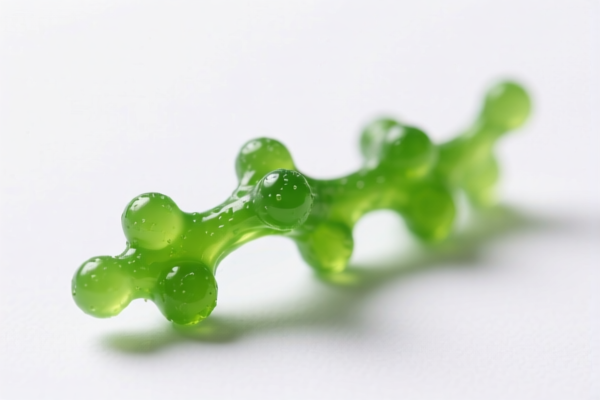
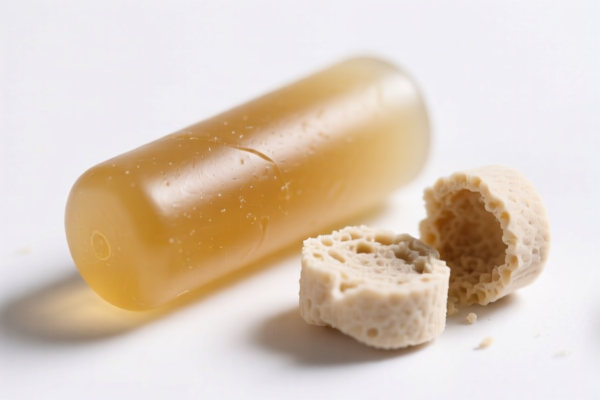
Polymer Powder Coatings, in the context of international trade and HS classification, refer to synthetic polymer particles used as core ingredients or raw materials for paints and varnishes. Unlike liquid paints, these are in a granular/powder form (primary forms) and must be applied via electrostatic spraying or fluidized bed techniques, then cured to form a durable film.
In the Harmonized System, these are classified under Chapter 32 (Tanning or Dyeing Extracts; Tannins and Their Derivatives; Dyes, Pigments and Other Coloring Matter; Paints and Varnishes; Putty and Other Masses; Inks).
⚠️ Key Distinction Point:
- If the product is a finished ready-to-use paint (liquid or paste with solvents/binders already mixed for final application) → It falls under different subheadings (e.g., 3208/3209 as finished coatings).
- However, the data provided specifically describes "Polymer particles... consistent with primary form characteristics" or "core component of paints". This implies these are intermediate raw materials (resins/polymers) specifically destined for the paint industry, not necessarily the final consumer-ready liquid spray.
- Crucial: The classification depends heavily on the chemical composition (Acrylic? Polyester? Synthetic Polymer?) and the specific chemical definition within HS Code 3208 vs. 3209.
📦 Part II: HS Code Classification Details (2026 Latest Tariff Authority)
Based on the provided data, there are three distinct HS Codes depending on the specific polymer base. All are subject to significant US import duties due to their origin (likely China, given the tax structure).
| HS Code | Product Description | Key Characteristics | Primary Chemical Base |
|---|---|---|---|
3209.90.00.00 |
Synthetic Polymer Particles for Paints | Particles in primary form; Generic synthetic polymers not specified elsewhere | General Synthetic Polymers (e.g., PVC, PE, PP based, or unspecified synthetics) |
3208.10.00.00 |
Polyester-Based Polymer Particles | Granular form; Consistent with paint raw material characteristics | Polyesters (Alkyd or other synthetic polyesters) |
3209.10.00.00 |
Acrylic or Vinyl-Based Polymer Particles | Particles; Core component of paint formulations | Acrylics or Vinyl Polymers |
🔍 Critical Note:
- Do not confuse with "Finished Paints": While Chapter 3208/3209 often covers paints, these specific codes with "primary form" or "polymer particles" descriptions often fall into specific subheadings for resins used in paints.
- Misclassification Risk: Declaring generic "Powder Coating" without specifying the polymer type (Acrylic vs. Polyester vs. Other Synthetic) can lead to misclassification. Customs may select the highest duty rate if the exact chemistry is not documented.
💰 Part III: 2026 Latest Tariff Rate Breakdown (Including Surcharges & Policy Add-ons)
✅ Applicable Country: United States (US)
✅ Origin: China (CN) (Inferred from the tax structure: Base + 301/232/122 add-ons)
✅ Effective Time: Current as of 2025-2026 trade policies
🎯 1. 3209.90.00.00 —— Generic Synthetic Polymer Particles
| Item | Detail |
|---|---|
| Base Tariff Rate | 5.9% (Ad Valorem) |
| Section 301 / Add-on Tariff | 25.0% (Trade war surcharge) |
| Section 122 / Other Add-on | 10.0% (Specific regulatory surcharge) |
| Total Effective Duty | 40.9% |
| Calculation Basis | CIF Value × 40.9% |
| De Minimis Exemption? | ❌ NO (Section 3232/3238 exclusions apply; no $800 exemption for these goods) |
| Legal Authority Path | HTSUS: 3209.90.00.00 → Section 301 Footnote → IEEPA Section 122 Add-on |
📌 Explanation:
- 5.9%: Standard MFN (Most Favored Nation) rate for general synthetic polymers for paints.
- 25.0%: Standard Section 301 tariff for Chinese-origin goods in this category.
- 10.0%: An additional specific surcharge (labeled as "122 clause tariff" in the data), often related to specific trade remedies or sectoral tariffs.
- Total 40.9% is a very high barrier. Profit margins must absorb this, or costs must be shifted.
🎯 2. 3208.10.00.00 —— Polyester-Based Polymer Particles
| Item | Detail |
|---|---|
| Base Tariff Rate | 3.7% (Ad Valorem) |
| Section 301 / Add-on Tariff | 25.0% (Trade war surcharge) |
| Section 122 / Other Add-on | 10.0% (Specific regulatory surcharge) |
| Total Effective Duty | 38.7% |
| Calculation Basis | CIF Value × 38.7% |
| De Minimis Exemption? | ❌ NO |
| Legal Authority Path | HTSUS: 3208.10.00.00 → Section 301 Footnote → IEEPA Section 122 Add-on |
📌 Explanation:
- 3.7%: Slightly lower base rate for Polyesters compared to general synthetics.
- Total 38.7% is marginally better than3209.90, but still prohibitive for low-margin goods.
- Common Use: Thermosetting polyester resins are very common in powder coatings for metal finishes (appliances, automotive parts).
🎯 3. 3209.10.00.00 —— Acrylic or Vinyl-Based Polymer Particles
| Item | Detail |
|---|---|
| Base Tariff Rate | 5.1% (Ad Valorem) |
| Section 301 / Add-on Tariff | 25.0% (Trade war surcharge) |
| Section 122 / Other Add-on | 10.0% (Specific regulatory surcharge) |
| Total Effective Duty | 40.1% |
| Calculation Basis | CIF Value × 40.1% |
| De Minimis Exemption? | ❌ NO |
| Legal Authority Path | HTSUS: 3209.10.00.00 → Section 301 Footnote → IEEPA Section 122 Add-on |
📌 Explanation:
- 5.1%: Base rate for Acrylics/Vinyls.
- Total 40.1%: Almost identical to the generic synthetic category.
- Common Use: Acrylic powder coatings are used for architectural aluminum profiles and automotive touch-ups due to UV resistance.
🛠️ Part IV: Customs Clearance Practical Advice (Avoiding Pitfalls)
✅ 1. Required Documentation Checklist (Non-Negotiable)
| Document | Required? | Explanation |
|---|---|---|
| ✅ Technical Data Sheet (TDS) | ✔️ | Must specify chemical composition (e.g., "Polyester Resin," "Acrylic Emulsion Powder"). Vague terms like "Paint Raw Material" are rejected. |
| ✅ Statement of Composition | ✔️ | Percentage by weight of key polymers. Essential for distinguishing between 3208 (Polyester) and 3209 (Other/Acrylic). |
| ✅ Formula Sheet | ✔️ | Proves it is a raw material/polymer and not a finished paint mixture (which might have different duties). |
| ✅ Product Photos | ✔️ | Show granular/powder form, not a liquid can or pre-mixed jar. |
| ✅ Commercial Invoice | ✔️ | Must clearly state: "Polymer Powder for Paint Manufacturing, Not Finished Paint." |
| ✅ Certificate of Origin | ✔️ | Essential for claiming any potential preferential rates (though unlikely for China-US under current 301 tariffs). |
✅ 2. Declaration Strategy (Key Mantras)
🔥 "Declare the Resin, Not the Paint; Specify the Chemistry, Not the Use!"
| Scenario | Correct Declaration | Incorrect Declaration |
|---|---|---|
| Polyester Powder | "Polyester Resin Particles, HS 3208.10.00.00, For Paint Manufacturing" |
"Powder Coating Paint" (Risk: Wrong HS, higher duty) |
| Acrylic Powder | "Acrylic Polymer Particles, HS 3209.10.00.00, Raw Material for Coatings" |
"Acrylic Spray Paint" (Risk: Misclassification) |
| Generic Synthetic | "Synthetic Polymer Particles, HS 3209.90.00.00, Primary Form" |
"Chemical Powder" (Too vague, leads to audit) |
✅ 3. Special Cases & Risk Management
| Scenario | Handling Advice |
|---|---|
| OEM Custom Resins | Provide the client's formula specification. If the resin is custom-modified, ensure the TDS matches the HS description exactly. |
| Mixed Shipments | If a container has both Polyester and Acrylic powders, separate lines on the commercial invoice. Do not average the duties. |
| "Paint" vs. "Resin" | If the product contains solvents, thinners, or pigments already mixed, it is likely a Finished Paint (HS 3208/3209 as paints), which may have different duty rates (often higher base rates but potentially different surcharge applicability). Verify with a customs broker if pigments are pre-added. |
| Small Samples | Even small samples are subject to the 40%+ duty. Do not rely on de minimis ($800) for B2B shipments of these chemical products. |
🌍 Part V: Global Market Comparison (2026 Update)
| Country/Region | Recommended HS Code | Estimated Duty (China Origin) | Certification/Notes |
|---|---|---|---|
| 🇺🇸 USA | 3208.10 / 3209.10 / 3209.90 |
38.7% – 40.9% (Base + 25% + 10%) | High compliance risk. Section 301 applies. |
| 🇨🇳 China | Same HS Codes | 5% - 10% (Import Duty) | No Section 301 surcharge. |
| 🇪🇺 EU | 39.01/39.02 (Polymers) or 32.08/32.09 |
~0% - 4.5% | Usually classified as Polymers (Ch 39) if raw, not paints. Much lower duty than US. |
| 🇬🇧 UK | Same as EU | ~0% - 4.5% | Post-Brexit tariffs similar to EU for raw polymers. |
| 🇲🇽 Mexico | 39.01/39.02 |
0% - 5% | Under USMCA, if Mexican-made. If China-made, US tariffs apply for re-export. |
📌 Strategic Insight:
- USA is the most expensive market for these imports due to the 35% cumulative surcharge (25% + 10%).
- EU often classifies raw polymer powders as Plastics (Chapter 39) rather than Paints (Chapter 32), which can result in significantly lower duties. If you are targeting the EU, consider if your product fits Chapter 39 descriptions (e.g., "Polymers in primary forms").
📌 Part VI: Common Errors & Pitfalls (Lessons Learned)
❌ Error 1: Declaring as "Paint" or "Coating" without specifying it's a raw polymer powder.
👉 Consequence: Customs may assess Finished Paint duties (often higher base rates) + all surcharges, leading to overpayment by 5-10% or audits.
❌ Error 2: Ignoring the 10% "122 Clause" tariff.
👉 Consequence: Many brokers only account for the 25% Section 301 tariff. Missing the 10% add-on leads to underpayment, penalties, and interest.
❌ Error 3: Using vague descriptions like "Chemical Material".
👉 Consequence: High risk of Customs Audit. CBP (U.S. Customs and Border Protection) will detain the shipment until detailed chemical composition is provided.
✅ Correct Practice:
"Polyester Resin Powder, 100% Synthetic, HS 3208.10.00.00, For Industrial Paint Manufacturing, Made in China"
🎯 Part VII: Conclusion: Smart Classification, Cost Savings!
🎯 Remember This Mantra:
🔹 "Polymer Powder ≠ Finished Paint"
🔹 "Specify the Chemistry: Polyester (3208) vs. Acrylic (3209) vs. Other (3209)"
🔹 "US Duty is ~40%. Plan margins accordingly or explore non-Chinese origins."
📌 Pro Tip:
If your polymer powder is pre-pigmented, it may be classified as Paint (Finished) rather than Resin (Raw). The duty structure might change. Always consult a customs broker with your TDS before shipping to the US.
📣 Immediate Action Required:
📞 Contact a Licensed Customs Broker
📄 Prepare TDS and Chemical Composition Statement
🚀 Calculate Landed Cost Including 38-41% Duty
Make sure your Profit Margin covers the high US tariffs!
✨ Precision in Classification Saves Thousands in Duties!
💼 Don't let vague declarations cost you your margin!
Customer Reviews
About HS Code Classification
The Harmonized System (HS) is an internationally standardized nomenclature developed by the World Customs Organization (WCO) to classify traded products. Over 200 countries use the HS system as the basis for customs tariffs, trade statistics, and import/export regulations.
Each HS code follows a hierarchical structure:
- Chapter (2 digits) — Broad category of goods (e.g., Chapter 84: Machinery and Mechanical Appliances)
- Heading (4 digits) — More specific grouping within the chapter
- Subheading (6 digits) — Internationally standardized breakdown, used by all WCO member countries
- National subdivisions (8-10 digits) — Country-specific extensions for further classification, such as US HTSUS 10-digit codes
Correct HS code classification is essential for smooth customs clearance, accurate duty payment, and compliance with trade regulations. Misclassification can lead to customs delays, overpayment of duties, or penalties.
When importing from CN to US, the applicable tariff rates may include:
- Most-Favored-Nation (MFN) rate — The standard duty rate applied to WTO members
- General rate — Applied to countries without trade agreements
- Trade remedy duties — Additional tariffs such as Section 301 (anti-dumping), Section 232 (national security), or countervailing duties
The information provided on this page is for reference purposes only. For official classification, please consult with your local customs authority or a licensed customs broker.