polymer spunbond composite wall cloth
CN → US| HS Code | Tariff Rate | Origin | Destination | Doc |
|---|---|---|---|---|
| 3926904800 | 13.4% | CN | US | Official Doc |
| 5911900080 | 38.8% | CN | US | Official Doc |
| 3926903500 | 24.0% | CN | US | Official Doc |
Product Images
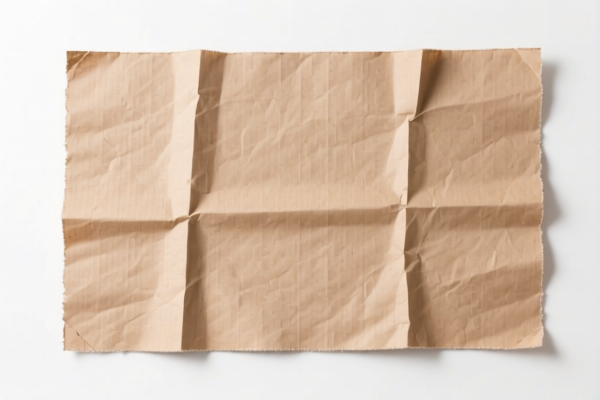
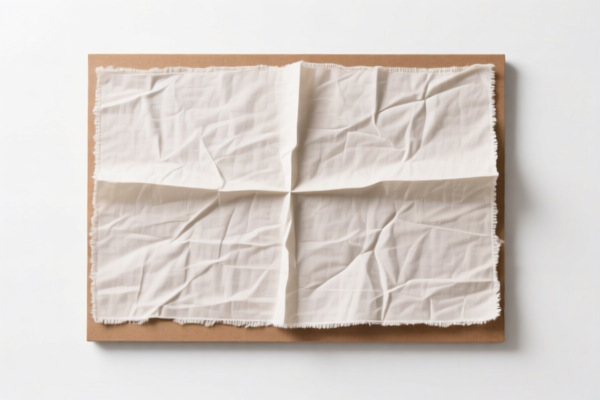
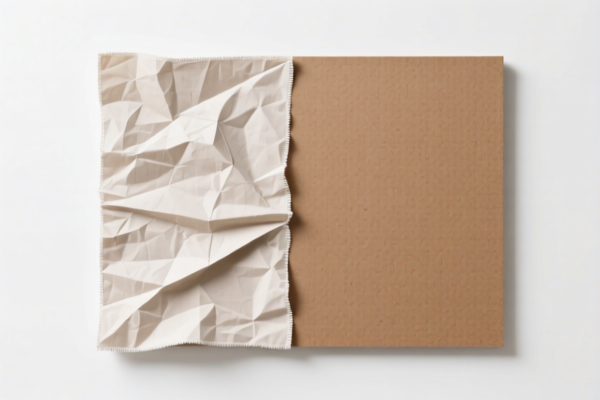
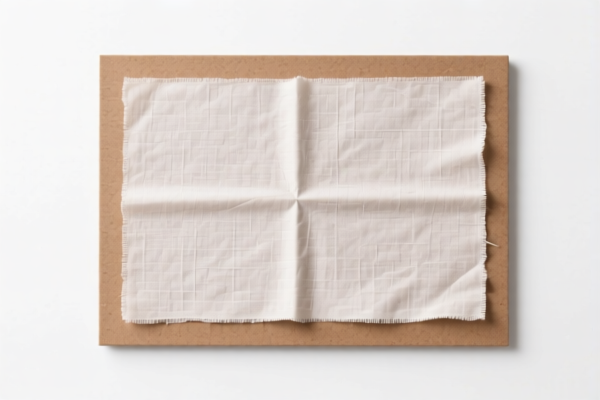
AI Analysis
🧱 Polymer Spunbond Composite Wall Cloth (Wallpaper/Textile)
🌐 HS Code Reference & Customs Clearance Guide | 2026 Latest Tariff Analysis | Professional Clearance Strategy
📌 I. Product Definition & Classification: Do You Really Understand "Wall Cloth"?
Polymer Spunbond Composite Wall Cloth refers to decorative or technical wall coverings made from polymer materials using spunbond nonwoven fabric technology, often compounded with other layers. In international trade, its classification is critical because it straddles the line between textiles and plastic products, leading to significantly different tax liabilities.
Key Distinction Criteria: * Textile Nature (Heading 59): If the fabric is primarily used for technical/textile purposes, has textile properties, and the polymer is merely a backing or coating, it may fall under 5911. * Plastic Nature (Heading 39): If the product is primarily considered a plastic article, made predominantly of plastic/polymer sheets or films with non-woven reinforcement, it may fall under 3926 (Other articles of plastic).
⚠️ Critical Decision Point:
- If the textile character prevails (woven/non-woven fabric base) → HS 5911.90.00.80
- If the plastic character prevails (plastic composite article) → HS 3926.90.35.00 or 3926.90.48.00
- Misclassification Risk: High. Customs may reclassify "Wall Cloth" as a plastic article if the polymer content exceeds 50% or if it lacks traditional textile handling properties.
📦 II. HS Code Classification Details (2026 Latest Tariff Authority Comparison)
| HS Code | Product Description | Applicable Scenario | Primary Material Basis |
|---|---|---|---|
5911.90.00.80 |
Other technical textile products and articles (including polymer spunbond composite wall cloth considered as textile) | Technical uses, textile-grade backing | ✅ Textile/Non-woven |
3926.90.35.00 |
Other plastic articles (polymer or polymer-based spunbond composite wall cloth) | Plastic/polymer category articles | ✅ Plastic/Polymer |
3926.90.48.00 |
Other articles of plastic or of other materials (Polymer spunbond composite wall cloth in other subheadings) | General plastic composite articles | ✅ Plastic |
🔍 Key Reminder:
- The term "Wall Cloth" is descriptive, not a legal HS definition. You must declare the material composition and manufacturing process. - If the product is used for decorative purposes but made of polymer, US Customs often favors Chapter 39 (Plastics) over Chapter 59 (Textiles) unless specific textile criteria are met.
💰 III. 2026 Latest Tariff Rate Details (Including Surtaxes & Policy Add-ons)
✅ Applicable Country: United States (US)
✅ Country of Origin: China (CN)
✅ Effective Date: From November 10, 2025 (inclusive of subsequent imports)
🎯 1. 5911.90.00.80 —— Technical Textile Products (Textile Classification)
| Item | Content |
|---|---|
| Base Tariff | 3.8% (ad valorem) |
| USITC Additional Tariff (Section 301) | +25.0% |
| IEEPA Additional Tariff (Section 122) | +10.0% |
| Total Tariff Rate | 38.8% |
| Tax Calculation | CIF Value × 38.8% |
| De Minimis Exemption Eligible? | ❌ No (deny_de_minimis) |
| Legal Basis Path | IEEPA:9903.01.25 → IEEPA:9903.01.24 → USITC:5911.90.00.80 → FOOTNOTE:9903.88.01 |
📌 Explanation:
- This classification treats the wall cloth as a technical textile. - The 25% Section 301 tariff is applied on top of the base rate. - The 10% IEEPA tariff is the additional surcharge on Chinese goods. - Total burden: 38.8%. This is a high-cost classification for textiles.
🎯 2. 3926.90.35.00 —— Other Plastic Articles (Plastic Classification - High Surtax)
| Item | Content |
|---|---|
| Base Tariff | 6.5% (ad valorem) |
| USITC Additional Tariff (Section 301) | +7.5% |
| IEEPA Additional Tariff (Section 122) | +10.0% |
| Total Tariff Rate | 24.0% |
| Tax Calculation | CIF Value × 24.0% |
| De Minimis Exemption Eligible? | ❌ No (deny_de_minimis) |
| Legal Basis Path | IEEPA:9903.01.25 → IEEPA:9903.01.24 → USITC:3926.90.35.00 → FOOTNOTE:9903.88.01 |
📌 Note:
- Despite a higher base rate (6.5%), the Section 301 surtax is lower (7.5% vs. 25%). - Total burden: 24.0%. This is significantly cheaper than the textile classification (38.8%). - This classification assumes the product is primarily a plastic article.
🎯 3. 3926.90.48.00 —— Other Plastic Articles (Plastic Classification - Low Surtax)
| Item | Content |
|---|---|
| Base Tariff | 3.4% (ad valorem) |
| USITC Additional Tariff (Section 301) | +0.0% |
| IEEPA Additional Tariff (Section 122) | +10.0% |
| Total Tariff Rate | 13.4% |
| Tax Calculation | CIF Value × 13.4% |
| De Minimis Exemption Eligible? | ❌ No (deny_de_minimis) |
| Legal Basis Path | IEEPA:9903.01.25 → IEEPA:9903.01.24 → USITC:3926.90.48.00 → FOOTNOTE:9903.88.01 |
📌 Critical Insight:
- This is the most cost-effective classification among the three. - Total burden: 13.4%. - Zero Section 301 surtax applies to this specific subheading. - Strategy: If your product qualifies as a general plastic article under 3926.90.48.00, you can save 25.4 percentage points compared to the textile classification (5911).
🛠️ IV. Customs Clearance Practical Advice (Battle-Tested Pitfall Avoidance Guide)
✅ 1. Required Documentation Checklist (None are Optional)
| Document | Mandatory | Description |
|---|---|---|
| ✅ Product Specification Sheet | ✔️ | Detailed material composition (polymer type, non-woven vs. woven), weight per square meter, dimensions |
| ✅ Manufacturing Process Description | ✔️ | Explain if it's "spunbond," "compounded," "coated." Crucial for distinguishing textile vs. plastic |
| ✅ Product Photos (Clear Labels) | ✔️ | Show texture, layers, and any technical markings |
| ✅ Commercial Invoice | ✔️ | Must clearly state "Polymer Spunbond Composite Wall Cloth" and not just "Wallpaper" |
| ✅ Packing List | ✔️ | Detail inner/outer packaging to prevent value misdeclaration |
| ✅ Country of Origin Certificate | ✔️ | Required for tariff calculation and Section 301/122 applicability |
| ✅ Pre-Ruling Application (Optional but Recommended) | ✔️ | Apply for an Advance Ruling from CBP to confirm HS Code |
✅ 2. Declaration Strategy (Key Mantra)
🔥 "Material Prevails, Code Decides, Tax Savings are Real!"
| Scenario | Correct Declaration | Incorrect Action |
|---|---|---|
| Product is primarily plastic composite | 3926.90.48.00 (13.4%) |
Misclassify as Textile → 38.8% |
| Product is primarily technical textile | 5911.90.00.80 (38.8%) |
Misclassify as Plastic → Underpayment Penalties |
| Generic "Wallpaper" | Avoid vague terms | "Wallpaper" may trigger random examination and reclassification |
| Mixed materials | Declare primary material | If polymer > 50%, lean towards 3926 |
✅ 3. Special Handling Scenarios
| Scenario | Recommendation |
|---|---|
| High Polymer Content (>50%) | Strongly consider 3926.90.48.00 to benefit from 0% Section 301 surtax |
| Technical Use (e.g., Geotextile for Walls) | If used for reinforcement, not decoration, 5911 may be appropriate, but expect higher tax |
| Decorative Purpose | Customs often views this as a consumer good, favoring 3926 if plastic-dominated |
| OEM Custom Orders | Provide design specs to prove material composition. Avoid "generic" descriptions |
🌍 V. Global Market Customs Comparison (2026 Latest)
| Country/Region | Recommended HS Code | Tariff Rate | Certification Requirements | Notes |
|---|---|---|---|---|
| 🇺🇸 USA | 3926.90.48.00 |
13.4% | No special certs | Cheapest US option |
| 🇨🇳 China | 5911.90.00.80 |
~3.8% | None | Lower base tax, but US import sees surtaxes |
| 🇪🇺 EU | 5907.00.00 / 3926.90 |
6.5% - 12% | REACH, RoHS | Varies by exact composition |
| 🇦🇺 Australia | 3926.90 |
5% | None | No Section 301 equivalent |
| 🇬🇧 UK | 3926.90 |
4.5% | UKCA | Post-Brexit rules apply |
📌 Conclusion:
- USA is the most complex market due to Section 301 and IEEPA surtaxes. - Choosing the right HS Code (3926.90.48.00) can save you 25.4% in tariffs compared to textile classification. - China-origin goods face high taxes in the US, so accurate classification is financially critical.
📌 VI. Common Mistakes & Pitfall Guide (Blood & Tears Lessons)
❌ Mistake 1: Declaring as "Wallpaper" without material detail
👉 Consequence: Customs may reclassify to the highest duty rate (e.g., 38.8%) or demand additional documentation, causing delays.
❌ Mistake 2: Assuming "Non-woven" always means "Textile" (5911)
👉 Consequence: Non-woven polymers are often classified as Plastics (3926). Misclassification leads to underpayment of duties and penalties.
❌ Mistake 3: Ignoring Section 301 Surtax Differences
👉 Consequence: Paying 25% extra tax when 0% is available under 3926.90.48.00. Loss of profit margin.
❌ Mistake 4: Using "Spunbond" as a standalone HS descriptor
👉 Consequence: "Spunbond" is a manufacturing process, not a HS code. You must declare the article type and material.
✅ Correct Approach:
"Polymer Spunbond Composite Wall Cloth, Plastic-based, 100% Polymer, For Decorative Wall Covering, Model XYZ"
🎯 VII. Conclusion: Precision Classification, Profit Protection!
🎯 Remember the Mantra:
🔹 "Textile or Plastic? It Depends on the Material!"
🔹 "3926.90.48.00 is the Winner: 13.4% Total Tax vs. 38.8% for Textiles!"
🔹 "Don't Let 'Wall Cloth' Fool You: Declare Material, Save Money!"
📌 Pro Tip:
- If your polymer content is high, lean towards 3926.90.48.00.
- Apply for a Pre-Ruling with US Customs if the product is ambiguous. It provides legal certainty and protects you from retroactive penalties.
- Consult a Customs Broker who specializes in textile/plastic hybrids to validate your HS Code selection.
📣 Immediate Action Required:
📞 Contact a Certified Customs Broker
📤 Submit Product Specs for Classification Review
🚀 Optimize Your Supply Chain for Lowest Duty Rate!
✨ Professional Clearance Starts with Accurate Classification!
💼 Every Percentage Point of Tax Saved is Pure Profit!
Customer Reviews
About HS Code Classification
The Harmonized System (HS) is an internationally standardized nomenclature developed by the World Customs Organization (WCO) to classify traded products. Over 200 countries use the HS system as the basis for customs tariffs, trade statistics, and import/export regulations.
Each HS code follows a hierarchical structure:
- Chapter (2 digits) — Broad category of goods (e.g., Chapter 84: Machinery and Mechanical Appliances)
- Heading (4 digits) — More specific grouping within the chapter
- Subheading (6 digits) — Internationally standardized breakdown, used by all WCO member countries
- National subdivisions (8-10 digits) — Country-specific extensions for further classification, such as US HTSUS 10-digit codes
Correct HS code classification is essential for smooth customs clearance, accurate duty payment, and compliance with trade regulations. Misclassification can lead to customs delays, overpayment of duties, or penalties.
When importing from CN to US, the applicable tariff rates may include:
- Most-Favored-Nation (MFN) rate — The standard duty rate applied to WTO members
- General rate — Applied to countries without trade agreements
- Trade remedy duties — Additional tariffs such as Section 301 (anti-dumping), Section 232 (national security), or countervailing duties
The information provided on this page is for reference purposes only. For official classification, please consult with your local customs authority or a licensed customs broker.