polymer stabilizer compound
CN → US| HS Code | Tariff Rate | Origin | Destination | Doc |
|---|---|---|---|---|
| 2942003500 | 41.5% | CN | US | Official Doc |
| 3824992900 | 41.5% | CN | US | Official Doc |
| 3824994900 | 41.5% | CN | US | Official Doc |
| 2942005000 | 38.7% | CN | US | Official Doc |
| 3901905501 | 41.5% | CN | US | Official Doc |
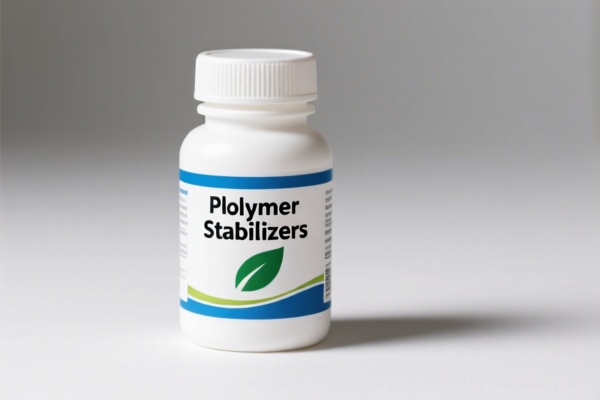
Product Images


AI Analysis
🧪 Polymer Stabilizer Compound (Composite Additive)
🌐 HS Code Reference & Customs Clearance Guide | 2026 Latest Tariff Analysis | Professional Clearance Strategy
📌 I. Product Definition & Classification: What is a "Polymer Stabilizer Compound"?
A Polymer Stabilizer Compound (often referred to as a composite additive or stabilizing agent) is a chemical preparation designed to protect polymers (plastics) from degradation during processing and service life. It typically contains: * Primary Function: Prevents thermal, oxidative, or UV degradation of plastic materials. * Composition: Often a mixture of organic compounds, hydrocarbon derivatives, or specific chemical modifiers. * Material Nature: Chemically, these are organic compounds or chemical preparations not elsewhere specified. In customs classification, the key is determining whether it is classified as a specific "Organic Chemical" (Chapter 29) or a "Miscellaneous Chemical Product/Preparation" (Chapter 38).
⚠️ Key Classification Conflict:
- Is it a pure Organic Compound? → Look at Chapter 29 (e.g., 2942).
- Is it a Preparation/Mixture for industrial use? → Look at Chapter 38 (e.g., 3824).
- Does it have a polymeric base? → Look at Chapter 39 (e.g., 3901).
📦 II. HS Code Classification Details (2026 Latest Tariff Authoritative Comparison)
Based on the provided data, there are 5 potential HS Codes with varying tax implications. Below is the breakdown:
| HS Code | Product Description | Matching Logic & Summary | Total Tax Rate |
|---|---|---|---|
| 2942.00.35.00 | Other Organic Compounds (Aromatic Modified Components) | "Plastic" material + "Composite Agent" chemical form. Matches "Other Organic Compounds" for chemical additives. No obvious material conflict. | 41.5% |
| 3824.99.29.00 | Other Chemical Products and Preparations | "Composite Agent" shape. Material is "Plastic Stabilizer," a chemical product related to the chemical industry. Fits the "catch-all" logic for miscellaneous chemical preparations. | 41.5% |
| 3824.99.49.00 | Unnamed Chemical Products and Preparations | Usage Match: Chemical industry-related preparation. Material Match: Inferred to contain hydrocarbons or chemical auxiliaries. Fits "unnamed chemical preparations." | 41.5% |
| 2942.00.50.00 | Other Organic Compounds | Chemical Essence: Organic compound. Form: "Composite Agent" implies raw chemical nature. Fits "Other" catch-all for organic compounds. No material conflict. | 38.7% |
| 3901.90.55.01 | Ethylene Copolymers (Primary Forms) | "Plastic" inference. Material inferred as polymeric range, fitting "Ethylene Copolymer" primary form characteristics. No material conflict. | 41.5% |
🔍 Critical Insight:
- Most Likely Classifications: The product is most commonly classified under 3824.99 (Chemical Preparations) or 2942.00 (Other Organic Compounds) depending on the exact chemical composition and whether it is considered a "preparation" or a "pure compound." - Lowest Tax Option:2942.00.50.00offers the lowest total tax rate (38.7%), but requires strong evidence that the product is an "Organic Compound" rather than a "Preparation." - Highest Risk:3901.90.55.01(Plastic/Polymer) carries a 41.5% tax. Misclassifying a stabilizer as a raw polymer can lead to disputes if the product is clearly an additive, not a base resin.
💰 III. 2026 Latest Tariff Rate Details (Including Surcharges & Policy Add-ons)
✅ Applicable Country: United States (US)
✅ Origin: China (CN)
✅ Effective Time: Post-2025 November 10 (Including subsequent imports)
🎯 1. High-Tax Categories (Total Tax: 41.5%)
Applies to HS Codes: 2942.00.35.00, 3824.99.29.00, 3824.99.49.00, 3901.90.55.01
| Item | Detail |
|---|---|
| Basic Tariff | 6.5% (Ad Valorem) |
| Section 301 Surcharge | +25.0% (USITC Footnote) |
| IEEPA Surcharge | +10.0% (122 Clause Tariff for China/HK products) |
| Total Tax Rate | 41.5% |
| Tax Calculation | CIF Value × 41.5% |
| De Minimis Exemption? | ❌ No (Deny De Minimis) |
| Legal Basis Path | IEEPA:9903.01.24 → USITC:3824/2942/3901 → FOOTNOTE:301_Section |
📌 Explanation:
- The 6.5% is the standard MFN (Most Favored Nation) tariff for these chemical/plastic categories. - The 25% is the standard Section 301 tariff for many chemical and plastic-related goods from China. - The 10% is the new IEEPA (International Emergency Economic Powers Act) tariff specifically targeting Chinese origin goods. - Total: 41.5%. This is a very high tariff, significantly impacting cost competitiveness.
🎯 2. Low-Tax Category (Total Tax: 38.7%)
Applies to HS Code: 2942.00.50.00
| Item | Detail |
|---|---|
| Basic Tariff | 3.7% (Ad Valorem) |
| Section 301 Surcharge | +25.0% (USITC Footnote) |
| IEEPA Surcharge | +10.0% (122 Clause Tariff for China/HK products) |
| Total Tax Rate | 38.7% |
| Tax Calculation | CIF Value × 38.7% |
| De Minimis Exemption? | ❌ No (Deny De Minimis) |
| Legal Basis Path | IEEPA:9903.01.24 → USITC:2942.00.50.00 → FOOTNOTE:301_Section |
📌 Explanation:
- The 3.7% basic tariff is lower than the 6.5% for other categories, saving 2.8% on the base. - Total: 38.7%. Still high, but 2.8% lower than the 41.5% bracket. - Strategy: If your product can be scientifically proven to be an "Organic Compound" (not a mixture/preparation) and fits the "Other" subheading, this is the cost-saving choice.
🛠️ IV. Customs Clearance Practical Advice (Real-World Pitfall Avoidance Guide)
✅ 1. Required Documentation List (Missing Any Will Cause Delays)
| Document | Must Provide | Notes |
|---|---|---|
| ✅ Product Specification Sheet | ✔️ | Must detail chemical composition, CAS numbers (if applicable), and function (Stabilizer). |
| ✅ Structure/Formula Diagram | ✔️ | Crucial for distinguishing between "Organic Compound" (Ch29) and "Preparation" (Ch38). |
| ✅ Product Photos (with Label) | ✔️ | Clear view of model number, brand, and hazard symbols (if any). |
| ✅ Third-Party Test Report | ✔️ | COA (Certificate of Analysis) confirming purity or mixture ratio. |
| ✅ Commercial Invoice | ✔️ | Must clearly state "Polymer Stabilizer" or "Chemical Additive," NOT just "Plastic." |
| ✅ Certificate of Origin (CO) | ✔️ | Required for origin verification and tariff application. |
| ✅ Packing List | ✔️ | Details net/gross weight, volume, and package type. |
✅ 2. Declaration Tips (Key Mantra)
🔥 "Chemical Nature Determines Code, Stability Function Defines Use, Accuracy Saves Tax!"
| Scenario | Correct Declaration | Wrong Practice |
|---|---|---|
| Pure Chemical Compound | Use 2942.00.50.00 (38.7%) | Declare as "Preparation" → 41.5% |
| Mixture/Additive Blend | Use 3824.99.29.00 or 3824.99.49.00 (41.5%) | Declare as "Pure Organic Compound" → Risk of misclassification penalty |
| Plastic Resin Base | Use 3901.90.55.01 (41.5%) | Only if it IS a resin, not an additive |
| Generic "Plastic Chemical" | Avoid vague terms | Use specific chemical names or "Stabilizer" |
✅ 3. Special Situations Handling
| Situation | Handling Advice |
|---|---|
| OEM Custom Stabilizer | Provide customer order + formula details to prove it’s not a standard commodity. |
| Liquid vs. Solid Form | Liquid stabilizers often fall under 3824.99. Solid granules may fall under 2942 if pure. |
| Multi-Component Mixture | If >1 chemical component, likely 3824 (Preparation). If 1 main organic component, 2942 is possible. |
| Hazardous Chemical | Must provide MSDS (Material Safety Data Sheet) and UN Number. Additional regulations apply. |
🌍 V. Global Main Market Customs Comparison (2026 Latest)
| Country/Region | Recommended HS Code | Tariff (China Origin) | Certification Requirements | Notes |
|---|---|---|---|---|
| 🇺🇸 USA | 2942.00.50.00 or 3824.99 |
38.7% - 41.5% | EPA, TSCA Compliance | High tariffs due to Section 301 + IEEPA. |
| 🇨🇳 China | 3824.99.99 or 2942 |
Low (5-10%) | No extra surcharges | Import duty is low, but VAT 13% applies. |
| 🇪🇺 EU | 3824.72 or 2942 |
~6.5% | REACH Registration | No Section 301/IEEPA tariffs. |
| 🇦🇺 Australia | 3824.99 |
5% | AICIS Registration | Lower tariffs than US. |
| 🇯🇵 Japan | 3824.99 |
0-6% | Fertilization Control Act (if applicable) | Preferential rates under CPTPP. |
📌 Conclusion:
- USA is the most expensive market due to layered tariffs (Base + 301 + IEEPA).
- China, EU, and Australia offer significantly lower tariff burdens for chemical additives.
- Strategy: If exporting to the US, consider supply chain diversification (e.g., assembling/packaging in a third country) or pre-ruling applications to secure the lower 38.7% rate if possible.
📌 VI. Common Errors & Pitfall Avoidance (Blood & Tears Lessons)
❌ Error 1: Declaring as "Plastic" or "Polymer" without specifying "Stabilizer"
👉 Consequence: Misclassification under Chapter 39 → 41.5% + potential seizure if not a resin.
❌ Error 2: Declaring as "Preparation" when it’s a Pure Organic Compound
👉 Consequence: Missed opportunity for 38.7% rate → Lose 2.8% unnecessarily.
❌ Error 3: Vague Description: "Chemical Additive"
👉 Consequence: Customs holds cargo for inspection → Delay costs + Demurrage.
❌ Error 4: Ignoring IEEPA 10% Surcharge
👉 Consequence: Under-declaring tax → Penalties + Back Payment + Fines.
✅ Correct Practice:
"Polymer Stabilizer Compound, Organic Chemical Additive, CAS No. XXXXX-XX-X, For Plastic Processing, Model XYZ, TSCA Compliant."
🎯 VII. Conclusion: Professional Declaration, Time-Saving, Cost-Reducing!
🎯 Remember the Mantra:
🔹 "Pure Compound = 2942 (38.7%), Mixture = 3824 (41.5%), Plastic Resin = 3901 (41.5%)."
🔹 "HS Code Determines Tax, 2.8% Difference Adds Up, Accurate Declaration Saves Thousands!"
📌 Pro Tip:
If your stabilizer is originally from Vietnam, Mexico, Thailand, or Malaysia, you may apply for IEEPA Exemption, reducing the total tax to 0%~6.5%.
Recommendation: Apply for an Advance Ruling from US Customs (CBP) to lock in the 38.7% rate if your product qualifies as an "Other Organic Compound."
📣 Immediate Action:
📞 Contact a professional customs broker + Provide Product Spec Sheet + Apply for HS Code Pre-Ruling
🚀 Let your Polymer Stabilizer Compound clear customs smoothly, exit efficiently, and boost profits!
✨ Professional Clearance Starts with Accurate Classification!
💼 Every cent of your cost deserves precise calculation!
Customer Reviews
About HS Code Classification
The Harmonized System (HS) is an internationally standardized nomenclature developed by the World Customs Organization (WCO) to classify traded products. Over 200 countries use the HS system as the basis for customs tariffs, trade statistics, and import/export regulations.
Each HS code follows a hierarchical structure:
- Chapter (2 digits) — Broad category of goods (e.g., Chapter 84: Machinery and Mechanical Appliances)
- Heading (4 digits) — More specific grouping within the chapter
- Subheading (6 digits) — Internationally standardized breakdown, used by all WCO member countries
- National subdivisions (8-10 digits) — Country-specific extensions for further classification, such as US HTSUS 10-digit codes
Correct HS code classification is essential for smooth customs clearance, accurate duty payment, and compliance with trade regulations. Misclassification can lead to customs delays, overpayment of duties, or penalties.
When importing from CN to US, the applicable tariff rates may include:
- Most-Favored-Nation (MFN) rate — The standard duty rate applied to WTO members
- General rate — Applied to countries without trade agreements
- Trade remedy duties — Additional tariffs such as Section 301 (anti-dumping), Section 232 (national security), or countervailing duties
The information provided on this page is for reference purposes only. For official classification, please consult with your local customs authority or a licensed customs broker.