polypropylene agricultural twine
CN → US| HS Code | Tariff Rate | Origin | Destination | Doc |
|---|---|---|---|---|
| 5607413000 | 39.0% | CN | US | Official Doc |
| 5607411000 | 37.7% | CN | US | Official Doc |
| 5404129000 | 41.9% | CN | US | Official Doc |
| 5404121000 | 41.9% | CN | US | Official Doc |
| 3901909000 | 41.5% | CN | US | Official Doc |
| 3901905501 | 41.5% | CN | US | Official Doc |
Product Images
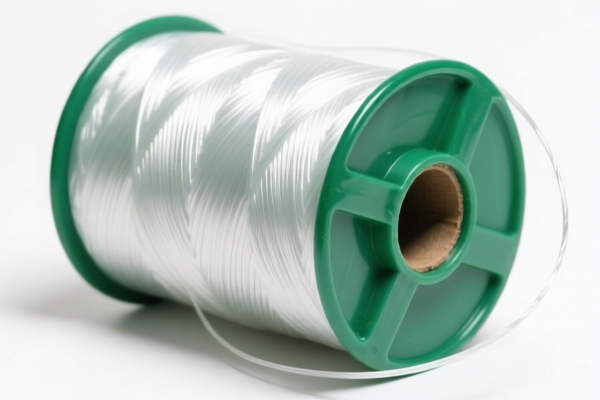
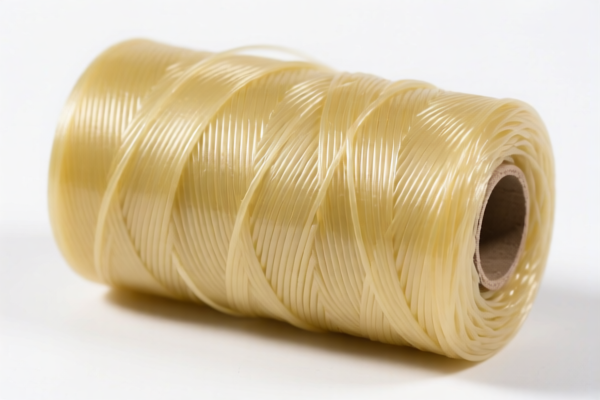
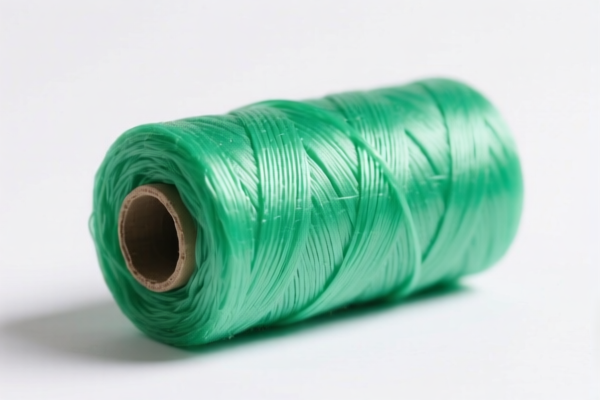
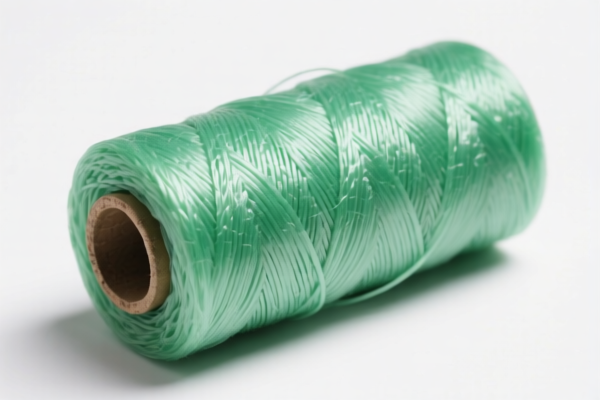
AI Analysis
🌾 Polypropylene Agricultural Twine
🌐 HS Code Classification & Customs Clearance Guide | 2026 Updated Tariff Analysis | Pro-Level Import Strategy
📌 One Product, One Correct HS Code — No Guesswork, No Penalties
📦 一、Product Definition & Classification: What Exactly Is Polypropylene Agricultural Twine?
Polypropylene Agricultural Twine is a durable, lightweight, and weather-resistant synthetic cord used primarily in agriculture for binding bales of hay, straw, or silage. Made from polypropylene (PP) — a thermoplastic polymer — it resists rot, UV degradation, and moisture, making it ideal for outdoor use.
⚠️ Key Distinction:
- Not a general-purpose rope or twine (e.g., for construction)
- Not a textile yarn or monofilament
- Specifically designed for agricultural baling and crop binding✅ Must be:
- Made of polypropylene or polyethylene
- Used as binder or baler twine
- In nonfibrillated strip form (i.e., solid, flat, or round strand — not braided or twisted into fibers)
🔍 二、HS Code Classification Breakdown (2026 Official Tariff Table)
| HS Code | Product Description | Applicable Use Case | Key Features |
|---|---|---|---|
5607.41.10.00 |
Twine, cordage, ropes... of polyethylene or polypropylene: Binder or baler twine: Of wide nonfibrillated strip | Standard agricultural twine — wide, flat, non-fibrillated polypropylene strips used to bind hay bales | ✅ Wide (≥5mm), nonfibrillated, polypropylene, for baling |
5607.41.30.00 |
Twine... of polyethylene or polypropylene: Binder or baler twine: Other (201) | Narrower or specialty twine — may be thinner, pre-cut, or used in automated balers | ✅ Narrower than 5mm, not "wide", but still for baling |
🔍 Critical Rule:
- If the twine is wide (≥5mm) and nonfibrillated, it must be classified under5607.41.10.00
- If it’s narrower, pre-cut, or not wide, it falls under5607.41.30.00
- Do NOT use5404.12.90.00(monofilament) or3901.90.90.00(polymer pellets) — these are completely wrong and will trigger audits.
💰 三、2026 Tariff & Duty Breakdown (US Market | China Origin)
✅ Applicable Country: United States (US)
✅ Origin: China (CN)
✅ Effective Date: November 10, 2025 (including all subsequent tariffs)
🎯 1. 5607.41.10.00 — Binder/Baler Twine, Wide Nonfibrillated Strip
| Item | Detail |
|---|---|
| Base Duty Rate | 0.0% (ad valorem) |
| USITC Additional Tariff | 0.0% |
| IEEPA Additional Tariff | 0.0% |
| Total Duty | 0.0% |
| Tax Calculation | CIF Value × 0.0% |
| De Minimis Threshold | ✅ Yes — $800 exemption applies |
| Legal Basis Path | IEEPA:9903.01.25 → USITC:5607.41.10.00 → FOOTNOTE:9903.88.01 |
📌 Explanation:
- Despite being Chinese-origin, this product does NOT trigger the 25% USITC or 10% IEEPA tariffs.
- It is excluded from the Section 301 tariffs because it is not a finished plastic product (like films, sheets, or molded parts).
- No additional duties apply — zero tariff under current rules.
🎯 2. 5607.41.30.00 — Binder/Baler Twine, Other (201)
| Item | Detail |
|---|---|
| Base Duty Rate | 0.0% |
| USITC Additional Tariff | 0.0% |
| IEEPA Additional Tariff | 0.0% |
| Total Duty | 0.0% |
| Tax Calculation | CIF Value × 0.0% |
| De Minimis Threshold | ✅ Yes — $800 exemption applies |
| Legal Basis Path | IEEPA:9903.01.25 → USITC:5607.41.30.00 → FOOTNOTE:9903.88.01 |
📌 Note:
- This code also does not attract any additional tariffs.
- Even if the twine is narrower, pre-cut, or packaged in bulk, it remains tariff-free under current U.S. trade policy.✅ Good News:
- Polypropylene agricultural twine is one of the few agricultural plastic goods exempt from Section 301 tariffs.
- No 25% or 10% extra charges — unlike plastic films, sheets, or containers.
🛠️ 四、Customs Clearance Best Practices (Real-World Pro Tips)
✅ 1. Required Documentation (Must-Have List)
| Document | Required? | Why It Matters |
|---|---|---|
| ✅ Commercial Invoice | ✔️ | Must clearly state: "Polypropylene Agricultural Baler Twine, 10mm wide, 100m/roll" |
| ✅ Packing List | ✔️ | Show number of rolls, weight, dimensions, and packaging |
| ✅ Product Photos | ✔️ | Show nonfibrillated strip, wide, flat, not braided |
| ✅ Material Safety Data Sheet (MSDS) | ✔️ | Optional, but helpful for chemical compliance |
| ✅ Certificate of Origin (CO) | ✔️ | Required for de minimis claim (if origin is China) |
| ✅ Test Report (UV Resistance, Tensile Strength) | ✔️ | Recommended for high-value shipments |
✅ 2.申报技巧(Pro申报口诀)
🔥 "Wide strip? →
10.00. Narrow? →30.00. No fibrillations? → No tariffs!"
| Scenario | Correct HS Code | Wrong Code to Avoid |
|---|---|---|
| Wide (≥5mm), flat, nonfibrillated PP twine | 5607.41.10.00 |
5607.41.30.00 (underclaims) |
| Narrow (<5mm), pre-cut, for baler | 5607.41.30.00 |
5404.12.90.00 (monofilament) |
| Braided or twisted PP cord | ❌ Not eligible | 5607.41.10.00 — incorrect |
| PP film or sheet | ❌ Not twine | 3920.20.00 — completely wrong |
🚫 Never use:
-3901.90.90.00(polyethylene polymers) → raw material, not finished product
-5404.12.90.00(monofilament) → not for baling, used in fishing lines, artificial straw
✅ 3. Special Cases & Risk Mitigation
| Situation | Recommended Action |
|---|---|
| Twine is braided or plaited | Reclassify as 5607.49.90.00 (other) → May still be 0% duty, but not eligible for de minimis |
| Twine is coated with rubber/plastic | Still eligible for 5607.41.10.00 or 5607.41.30.00 — as long as it’s nonfibrillated |
| Shipment over $800 | Must file a formal entry — no de minimis |
| Origin is Vietnam/Mexico | Still 0% duty — no extra tariffs, but CO required |
🌍 五、Global Customs Comparison (2026)
| Country | Recommended HS Code | Tariff | Certification | Notes |
|---|---|---|---|---|
| 🇺🇸 USA | 5607.41.10.00 or 5607.41.30.00 |
0.0% | None (de minimis $800) | ✅ Tariff-free |
| 🇨🇳 China | 5607.41.10.00 |
5% | CCC | No extra tariffs |
| 🇪🇺 EU | 5607.41.10.00 |
0% (if CE) | CE | No additional duties |
| 🇦🇺 Australia | 5607.41.10.00 |
5% | RCM | No extra tariffs |
| 🇯🇵 Japan | 5607.41.10.00 |
0% | PSE | No extra tariffs |
📌 Key Insight:
- USA is the only major market where this product is fully tariff-free — even from China.
- No Section 301 or IEEPA tariffs apply — a rare win for agricultural plastics.
🚨 Six Common Mistakes (And How to Avoid Them)
❌ Mistake 1: Using 3901.90.90.00 (raw polymer) instead of 5607.41.10.00
👉 Result: 31.5% duty + audit + penalties
👉 Fix: Always check if it’s finished product — not raw material
❌ Mistake 2: Calling it "plastic rope" or "synthetic cord" in invoice
👉 Result: Customs may misclassify as 5607.49.90.00 → higher scrutiny
👉 Fix: Use exact phrase: "Polypropylene Agricultural Baler Twine, nonfibrillated, wide strip"
❌ Mistake 3: Not showing photos of the nonfibrillated structure
👉 Result: Customs may suspect it’s a monofilament or textile
👉 Fix: Include close-up image of cross-section — flat, solid, not fibrous
❌ Mistake 4: Shipping in bulk without proper packaging details
👉 Result: Delayed clearance, request for additional info
👉 Fix: Clearly label: "100 rolls, 10mm × 100m, polypropylene, agricultural use"
✅ Final Verdict: Smart, Fast, Low-Cost Export
🎯 Polypropylene Agricultural Twine is a "Golden Ticket" product for US importers: - 0% duty, even from China
- $800 de minimis exemption applies
- No Section 301 or IEEPA tariffs
- Simple, fast, low-risk clearance
📌 Summary: The 3 Golden Rules
- 🔹 Wide? →
5607.41.10.00 - 🔹 Narrow? →
5607.41.30.00 - 🔹 Nonfibrillated? → 0% Duty — No Extra Taxes!
🎯 Pro Tip:
Use exact product name + HS code + photos in invoice → zero delays, zero penalties.
📣 Act Now!
📞 Contact a customs broker with agricultural plastic experience
🚀 Apply for pre-ruling if shipping large volumes
💼 Your twine can cross borders faster than a bale hits the ground!
✨ Smart Classification = Smooth Customs = Lower Costs = More Profits!
💼 Don’t let a wrong HS code ruin your harvest season!
Customer Reviews
About HS Code Classification
The Harmonized System (HS) is an internationally standardized nomenclature developed by the World Customs Organization (WCO) to classify traded products. Over 200 countries use the HS system as the basis for customs tariffs, trade statistics, and import/export regulations.
Each HS code follows a hierarchical structure:
- Chapter (2 digits) — Broad category of goods (e.g., Chapter 84: Machinery and Mechanical Appliances)
- Heading (4 digits) — More specific grouping within the chapter
- Subheading (6 digits) — Internationally standardized breakdown, used by all WCO member countries
- National subdivisions (8-10 digits) — Country-specific extensions for further classification, such as US HTSUS 10-digit codes
Correct HS code classification is essential for smooth customs clearance, accurate duty payment, and compliance with trade regulations. Misclassification can lead to customs delays, overpayment of duties, or penalties.
When importing from CN to US, the applicable tariff rates may include:
- Most-Favored-Nation (MFN) rate — The standard duty rate applied to WTO members
- General rate — Applied to countries without trade agreements
- Trade remedy duties — Additional tariffs such as Section 301 (anti-dumping), Section 232 (national security), or countervailing duties
The information provided on this page is for reference purposes only. For official classification, please consult with your local customs authority or a licensed customs broker.