polypropylene car spoiler material
CN → US| HS Code | Tariff Rate | Origin | Destination | Doc |
|---|---|---|---|---|
| 3926305000 | 22.8% | CN | US | Official Doc |
| 3926909989 | 22.8% | CN | US | Official Doc |
| 8708295160 | 0.0% | CN | US | Official Doc |
| 8708295110 | 0.0% | CN | US | Official Doc |
| 3902100000 | 41.5% | CN | US | Official Doc |
| 3902300000 | 41.5% | CN | US | Official Doc |
Product Images
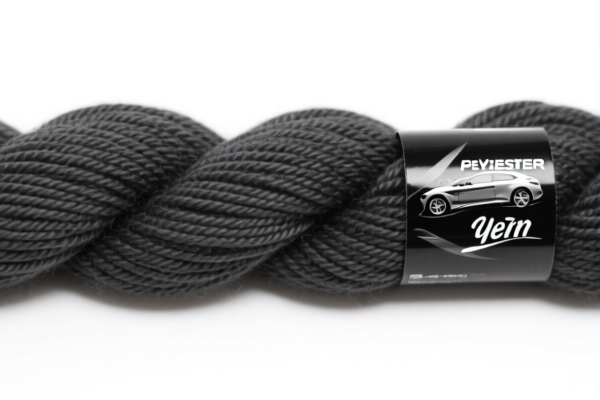
AI Analysis
🏎️ Polypropylene Car Spoiler Material (PP Spoilers)
🌐 HS Code Classification & Customs Clearance Guide | 2026 Latest Tariff Analysis | Professional Compliance Strategy
📌 I. Product Definition & Classification: Do You Know What "PP Spoiler Material" Actually Is?
A "Polypropylene Car Spoiler" is an automotive exterior accessory used to improve vehicle aerodynamics and aesthetics. In international trade, its classification depends strictly on its form and function:
- Raw Material/Form: If it refers to Polypropylene (PP) resin, pellets, or sheets before molding into a specific car part, it belongs to Chapter 39 (Plastics).
- Finished Part: If it refers to a finished, molded spoiler ready for installation on a car body, it belongs to Chapter 87 (Motor Vehicles) as a part/accessory.
⚠️ Critical Distinction:
- If the item is raw polymer (pellets/granules) → Classify under 3902
- If the item is a finished body part (molded spoiler) → Classify under 8708
- Misclassification Risk: Declaring a finished spoiler as "raw plastic" to avoid high tariffs is a common customs violation that leads to seizure, fines, and legal action.
📦 II. HS Code Classification Details (2026 Latest Tariff Authority Comparison)
Based on the provided data, here are the relevant HS Codes for Polypropylene products and automotive parts:
| HS Code | Product Description | Application Scenario | Classification Logic |
|---|---|---|---|
3902.10.00.00 |
Polypropylene (Polymers of propylene or other olefins, in primary forms) | Raw PP pellets, granules, or sheets used for manufacturing | ✅ Raw Material |
3902.30.00.00 |
Propylene Copolymers | Raw copolymer materials used for manufacturing | ✅ Raw Material |
3926.30.50.00 |
Fittings for furniture, coachwork or the like | Plastic trim pieces, handles, or non-structural fittings | ❌ Not for spoilers (Spoilers are structural/body parts) |
3926.90.99.89 |
Other articles of plastics | General plastic items not specified elsewhere | ❌ Not for spoilers (Specific auto parts take precedence) |
8708.29.51.10 |
Parts of bodies (including cabs): Stampings | Metal or plastic stampings for body structure | ✅ Finished Part (If molded/stamped body part) |
8708.29.51.60 |
Parts of bodies (including cabs): Other | Other non-stamped body parts, including molded plastic spoilers | ✅ Finished Part (Primary choice for finished PP spoilers) |
🔍 Key Note:
- Raw PP goes to 3902.10.00.00.
- Finished Spoiler goes to 8708.29.51.60 (Other parts of bodies).
- Do not use3926.90.99.89for a finished spoiler, as Chapter 87 provides a more specific classification for motor vehicle parts.
💰 III. 2026 Latest Tariff Rate Breakdown (Detailed Tax Clauses)
✅ Applicable Country: United States (US)
✅ Origin: China (CN)
✅ Effective Date: 2025-11-10 onwards (including subsequent imports)
🎯 1. 3902.10.00.00 – Polypropylene (Raw Material)
| Item | Detail |
|---|---|
| Base Tariff | 0.0% |
| Additional Tariff | 0.0% |
| Total Tax | 0.0% |
| Tax Detail | 基础关税: 0.0%, 加征关税: 0.0% |
| Legal Basis | Standard MFN rate for primary plastic forms |
📌 Explanation:
- Raw polypropylene in primary forms (pellets, powders) is considered an industrial raw material.
- No additional duties (Section 301 or IEEPA) are currently applied to these raw polymer forms.
- Benefit: Ideal for manufacturers importing raw PP to mold spoilers domestically.
🎯 2. 3902.30.00.00 – Propylene Copolymers (Raw Material)
| Item | Detail |
|---|---|
| Base Tariff | 0.0% |
| Additional Tariff | 0.0% |
| Total Tax | 0.0% |
| Tax Detail | 基础关税: 0.0%, 加征关税: 0.0% |
📌 Note:
- Same as above; raw copolymers enjoy 0% total duty.
- Ensure the description specifies "in primary forms" to avoid being classified as finished articles.
🎯 3. 8708.29.51.60 – Other Parts of Bodies (Finished Spoiler)
| Item | Detail |
|---|---|
| Base Tariff | 2.5% |
| Additional Tariff (USITC) | 25.0% |
| Additional Tariff (Steel/Aluminum/Copper) | 50% (If applicable, but PP is plastic) |
| Total Tax | 2.5% + 25.0% = 27.5% |
| Tax Detail | 基础关税: 2.5%, 加征关税: 25.0% |
| Applicable Clause | Section 301 Tariff (L3 List) for Motor Vehicle Parts |
📌 Critical Explanation:
- Base Rate: 2.5% for most auto parts.
- Section 301 Surcharge: +25% is applied to Chinese-origin motor vehicle parts and accessories.
- Total Cost: 27.5% of CIF value.
- Why not 50%? The 50% surcharge applies specifically to steel, aluminum, and copper products. Since the spoiler is made of Polypropylene (plastic), it only incurs the 25% surcharge, not the 50%.
- Legal Path:USITC:8708.29.51.60→FOOTNOTE:9903.01.03(Section 301 for Auto Parts)
🎯 4. 8708.29.51.10 – Stampings of Bodies (Less Likely for PP)
| Item | Detail |
|---|---|
| Total Tax | 2.5% + 25.0% = 27.5% |
| Tax Detail | 基础关税: 2.5%, 加征关税: 25.0% |
📌 Note:
- If the spoiler is made via stamping (usually metal, but sometimes plastic stamping exists), it falls here.
- Same 27.5% total tariff as8708.29.51.60.
- Recommendation: Use8708.29.51.60("Other") for molded plastic spoilers unless specifically stamped.
🛠️ IV. Customs Clearance Practical Advice (Pitfall Avoidance Guide)
✅ 1. Preparation Checklist (Non-Negotiable)
| Document | Required | Notes |
|---|---|---|
| ✅ Commercial Invoice | ✔️ | Must clearly state: "Polypropylene Car Spoiler" OR "Polypropylene Resin for Spoiler Manufacturing" |
| ✅ Product Specifications | ✔️ | Material composition (100% PP or PP+Filler?), dimensions, weight |
| ✅ HS Code Declaration Form | ✔️ | Self-declaration or broker confirmation |
| ✅ Country of Origin Certificate | ✔️ | Critical for Section 301 surcharge applicability |
| ✅ Photos of Goods | ✔️ | Show raw pellets (if raw material) OR finished installed spoiler (if finished part) |
✅ 2. Classification Strategy (Key Mnemonics)
🔥 "Raw is 0%, Finished is 27.5%, Don't Mix Them Up!"
| Scenario | Correct HS Code | Tariff | Common Mistake |
|---|---|---|---|
| Importing PP Pellets to make spoilers | 3902.10.00.00 |
0% | ❌ Declaring as finished part → 27.5% overpayment |
| Importing Finished Spoilers (molded PP) | 8708.29.51.60 |
27.5% | ❌ Declaring as raw plastic → Customs Fraud/Seizure |
| Importing Unpainted/Unfinished Body Parts | 8708.29.51.60 |
27.5% | ❌ Trying to use 3926.90.99.89 (5.3% + 7.5% = 12.8%) → High Risk |
⚠️ Warning:
- Never declare a finished car part as a "plastic article" (3926) to save tax. Customs will inspect, confirm it's an auto part, and charge back taxes + penalties.
- Section 301 (25%) applies to all motor vehicle parts from China, regardless of material (plastic, metal, rubber).
✅ 3. Special Case Handling
| Situation | Recommendation |
|---|---|
| Kit with Paint/Chrome | If imported as a painted/pre-assembled kit, still 8708.29.51.60. Tariff remains 27.5%. |
| Raw PP + Mold Tooling | Declare separately: PP as 3902.10.00.00 (0%), Tooling as 8207.50.00.00 (likely subject to separate rules). |
| OEM vs. Aftermarket | Tariff is the same (27.5%) for both. Origin (China) triggers the surcharge, not the brand. |
| Plastic Content > 90% | If the spoiler contains fiberglass or carbon fiber, re-evaluate classification. Pure PP stays in 8708. |
🌍 V. Global Market Comparison (2026 Latest)
| Country/Region | Recommended HS Code | Total Tariff (China Origin) | Key Certification | Notes |
|---|---|---|---|---|
| 🇺🇸 USA | 8708.29.51.60 |
27.5% (2.5% + 25%) | DOT/SAE (if safety-related) | Section 301 surcharge is mandatory |
| 🇨🇳 China | 8708.29.51.60 |
~10-15% (Import Duty) | CCC (if applicable) | Lower baseline, no Section 301 |
| 🇪🇺 EU | 8708.29.50.90 |
~4.5% | ECE R65/R69 (if structural) | No major surcharge for plastics |
| 🇬🇧 UK | 8708.29.50.00 |
~4.5% | UKCA | Post-Brexit tariffs |
| 🇦🇺 Australia | 8708.29.50.00 |
~5% | ADR (if safety) | Low tariff |
📌 Conclusion:
- USA is the highest-cost market due to Section 301.
- EU/UK/Australia offer lower barriers for plastic auto parts.
- Strategy: For US-bound PP spoilers, consider tariff engineering (import raw PP to 0% tariff, mold locally) if feasible.
📌 VI. Common Errors & Pitfalls (Blood Lessons)
❌ Error 1: Declaring a finished spoiler as 3926.90.99.89 (Other Plastic Articles)
👉 Consequence: Tax jumps from 12.8% (if correctly classified as plastic) to 27.5% (if corrected as auto part), plus penalties.
👉 Reality: Auto parts are excluded from Chapter 39 when specific Chapter 87 codes exist.
❌ Error 2: Assuming plastic spoilers are exempt from Section 301
👉 Consequence: 25% surcharge still applies. Only specific raw materials (like some PP resins) are exempt.
❌ Error 3: Mislabeling as "Plastic Fitting" (3926.30.50.00)
👉 Consequence: While 3926.30.50.00 has 0% base + 0% additional, customs will reject it for a spoiler. Spoilers are body parts, not furniture fittings.
✅ Correct Description Example:
"Automotive Polypropylene Spoiler, Molded, Black, Unpainted, Model XYZ, Made in China"
HS Code:8708.29.51.60
Duty: 27.5%
🎯 VII. Conclusion: Professional Classification Saves Money!
🎯 Remember:
🔹 "Raw PP is 0%, Finished Spoiler is 27.5%."
🔹 "Don't hide a spoiler in plastic articles."
🔹 "Section 301 hits all Chinese auto parts, plastic included."
📌 Tips:
- If you are a manufacturer, import raw PP (3902.10.00.00) to your US/other jurisdiction factory to avoid the 25% surcharge on finished goods.
- If you must import finished spoilers, budget for 27.5% total tariff.
- Use Advance Rulings from CBP to lock in classification for finished spoilers.
📣 Action Required:
📞 Confirm with your freight forwarder: "Is this raw material or finished part?"
📄 Prepare Material Safety Data Sheets (MSDS) for PP resin.
📋 For finished parts, ensure Country of Origin is clearly marked "Made in China".
✨ Professional Customs Compliance Starts with Accurate Classification!
💼 Every percentage point counts in auto part logistics!
Customer Reviews
About HS Code Classification
The Harmonized System (HS) is an internationally standardized nomenclature developed by the World Customs Organization (WCO) to classify traded products. Over 200 countries use the HS system as the basis for customs tariffs, trade statistics, and import/export regulations.
Each HS code follows a hierarchical structure:
- Chapter (2 digits) — Broad category of goods (e.g., Chapter 84: Machinery and Mechanical Appliances)
- Heading (4 digits) — More specific grouping within the chapter
- Subheading (6 digits) — Internationally standardized breakdown, used by all WCO member countries
- National subdivisions (8-10 digits) — Country-specific extensions for further classification, such as US HTSUS 10-digit codes
Correct HS code classification is essential for smooth customs clearance, accurate duty payment, and compliance with trade regulations. Misclassification can lead to customs delays, overpayment of duties, or penalties.
When importing from CN to US, the applicable tariff rates may include:
- Most-Favored-Nation (MFN) rate — The standard duty rate applied to WTO members
- General rate — Applied to countries without trade agreements
- Trade remedy duties — Additional tariffs such as Section 301 (anti-dumping), Section 232 (national security), or countervailing duties
The information provided on this page is for reference purposes only. For official classification, please consult with your local customs authority or a licensed customs broker.