polypropylene composite bags
CN → US| HS Code | Tariff Rate | Origin | Destination | Doc |
|---|---|---|---|---|
| 3921901950 | 40.3% | CN | US | Official Doc |
| 3923290000 | 38.0% | CN | US | Official Doc |
| 3923210095 | 38.0% | CN | US | Official Doc |
| 3921902900 | 39.4% | CN | US | Official Doc |
Product Images
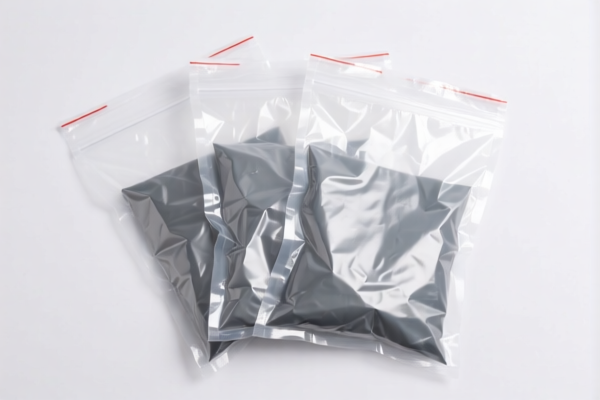
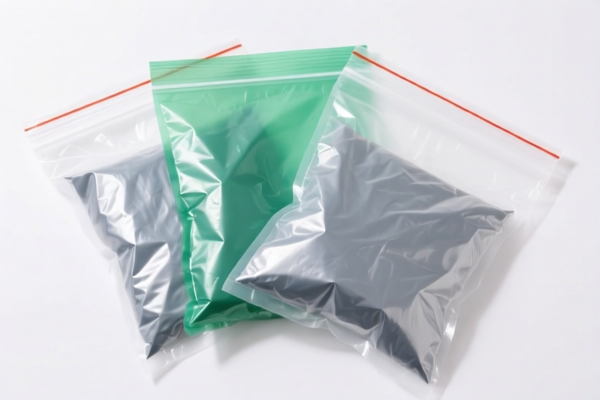
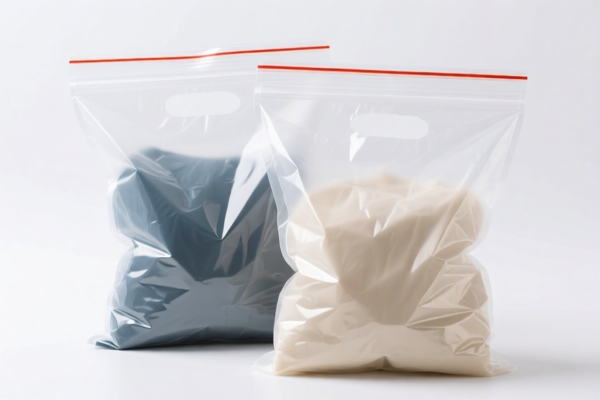
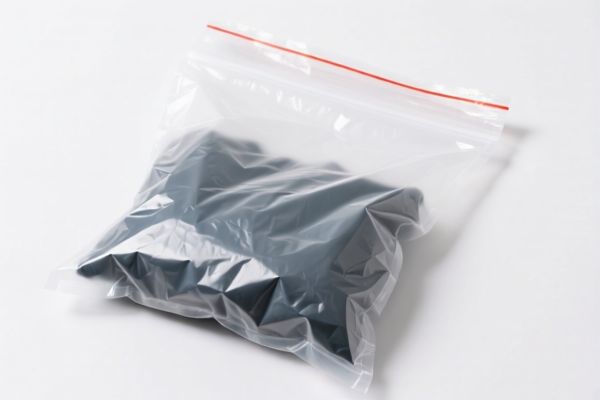
AI Analysis
🛍️ Polypropylene Composite Bags (Tea Packaging Focus)
🌐 HS Code Reference & Customs Clearance Guide | 2026 Latest Tariff Analysis | Professional Compliance Strategy
📌 I. Product Definition & Classification: What Exactly Are "Polypropylene Composite Bags"?
Polypropylene (PP) composite bags are flexible packaging materials widely used in the food industry, particularly for tea, coffee, and snacks. They are not single-layer plastics but multi-layer laminates designed to provide barrier properties (moisture, oxygen, light) while maintaining structural integrity.
In international trade, the classification depends heavily on the structure and intended use:
- Composite/Laminated Films: If the bag consists of multiple layers (e.g., PP/PE/Aluminum/Paper) bonded together, it may fall under Chapter 39, Heading 3921 (Plastics and articles thereof, plates, sheets, film, foil and strip, whether or not reinforced, laminated, supported or similarly combined with other materials).
- Packaging Containers: If the bag is shaped into a finished container (sack, pouch, bag) primarily for packaging goods, it may fall under Chapter 39, Heading 3923 (Articles for the conveyance or packing of goods).
⚠️ Key Classification Distinction:
- If the product is a finished bag/pouch used specifically for packing tea → Often classified under 3923 (Packing articles).
- If the product is viewed as a laminated plastic sheet/film cut into bag shape but defined by its composite material structure → Often classified under 3921 (Other plastics articles).
- Note: Customs authorities often scrutinize whether the primary characteristic is the material (3921) or the function as a container (3923).
📦 II. HS Code Classification Details (Based on Provided Data)
| HS Code | Product Description | Application Context | Basis for Classification |
|---|---|---|---|
3921.90.19.50 |
PP Composite Tea Bag; Material: Plastic; Form: Composite Bag | Fits category of plastics combined with other materials or other plastic articles | Material/Structure Focus: Viewed as a composite plastic article |
3923.29.00.00 |
PP Composite Tea Bag; Form: Packaging Bag; Use: Tea Packaging | Fits category of plastic packing articles | Function Focus: Viewed as a finished packing article for goods |
3923.21.00.95 |
PP Composite Tea Bag; Form: Sack/Pouch | PP is an ethylene polymer derivative; fits "other" provisions under sacks | Form Focus: Classified specifically as a sack/pouch under 3923.21 |
3921.90.29.00 |
PP Composite Tea Bag; Form: Film/Sheet application | Fallback code for other plastic articles not elsewhere specified | Fallback/General: Used when specific pouch codes don't apply, treated as general plastic article |
🔍 Critical Insight:
- Codes3923.29.00.00and3923.21.00.95share the same total tax rate (38.0%) and are often considered more accurate for finished bags. - Code3921.90.19.50has a higher total tax rate (40.3%) and is applied when customs prioritizes the composite material aspect over the packaging function. - Do not mix codes: Using a 3921 code for a finished bag might trigger higher duties if the importer prefers the 3923 rate, or vice versa, if documentation doesn't match.
💰 III. 2026 Latest Tariff Rate Breakdown (Detailed Tax Analysis)
✅ Applicable Market: United States (US)
✅ Origin: China (CN)
✅ Effective Date: 2025/2026 Import Regulations
🎯 1. Code 3921.90.19.50 – Highest Duty Rate
| Item | Detail |
|---|---|
| Base Duty | 5.3% (Ad Valorem) |
| Section 301 Duty | +25.0% (Additional tariff on Chinese goods) |
| 122 Clause Duty | +10.0% (Specific trade remedy/additional tariff) |
| Total Tax Rate | 40.3% |
| Calculation | CIF Value × 40.3% |
| De Minimis Exemption | ❌ Not Eligible (High risk of seizure if declared under $800 without proper classification) |
| Legal Path | HTSUS:3921.90.19.50 → Sec 301 Footnote → Trade Remedy 122 |
📌 Explanation:
This code is classified under "Other plastics articles." The 5.3% base rate is higher than many packaging codes. Combined with the aggressive 35% in additional tariffs (25% + 10%), it results in the highest cost among the options. Customs may apply this if they view the product as a composite film rather than a simple bag.
🎯 2. Code 3923.29.00.00 – Standard Packaging Rate
| Item | Detail |
|---|---|
| Base Duty | 3.0% (Ad Valorem) |
| Section 301 Duty | +25.0% |
| 122 Clause Duty | +10.0% |
| Total Tax Rate | 38.0% |
| Calculation | CIF Value × 38.0% |
| De Minimis Exemption | ❌ Not Eligible |
| Legal Path | HTSUS:3923.29.00.00 → Sec 301 Footnote → Trade Remedy 122 |
📌 Explanation:
This code falls under "Other articles for the conveyance or packing of goods." The lower base duty (3.0%) makes it 2.3% cheaper than the 3921 alternative. This is typically the preferred code for finished tea pouches/bags unless the composite structure is extremely complex.
🎯 3. Code 3923.21.00.95 – Sack/Pouch Specific
| Item | Detail |
|---|---|
| Base Duty | 3.0% (Ad Valorem) |
| Section 301 Duty | +25.0% |
| 122 Clause Duty | +10.0% |
| Total Tax Rate | 38.0% |
| Calculation | CIF Value × 38.0% |
| De Minimis Exemption | ❌ Not Eligible |
| Legal Path | HTSUS:3923.21.00.95 → Sec 301 Footnote → Trade Remedy 122 |
📌 Explanation:
Specifically targets sacks and bags. The 3.0% base rate aligns with3923.29.00.00. Use this if the bag is explicitly a sack (e.g., large bulk tea bags) rather than a retail pouch.
🎯 4. Code 3921.90.29.00 – Fallback Film/Sheet
| Item | Detail |
|---|---|
| Base Duty | 4.4% (Ad Valorem) |
| Section 301 Duty | +25.0% |
| 122 Clause Duty | +10.0% |
| Total Tax Rate | 39.4% |
| Calculation | CIF Value × 39.4% |
| De Minimis Exemption | ❌ Not Eligible |
| Legal Path | HTSUS:3921.90.29.00 → Sec 301 Footnote → Trade Remedy 122 |
📌 Explanation:
This is a "catch-all" for plastic films/foils/sheets. It is more expensive than the 3923 packaging codes (39.4% vs 38.0%) but cheaper than the composite article code (40.3%). Use only if the bag is considered a "sheet" or "film" application rather than a constructed bag.
🛠️ IV. Customs Clearance Practical Advice (Pitfall Avoidance Guide)
✅ 1. Essential Documentation Checklist
| Document | Required? | Notes |
|---|---|---|
| Product Specification Sheet | ✅ Yes | Must detail layers (e.g., PET/PE/PP), thickness, and barrier properties. |
| Commercial Invoice | ✅ Yes | Clearly state "Polypropylene Composite Bag for Tea Packaging." Avoid vague terms like "Plastic Film." |
| Bill of Lading / Air Waybill | ✅ Yes | Ensure cargo description matches the HS Code rationale. |
| Material Composition Proof | ✅ Yes | Lab report showing PP content and lamination structure. Critical for distinguishing 3921 vs 3923. |
| Customs Bond | ✅ Yes | Required for formal entry. |
✅ 2. Declaration Strategy (Key Rules)
🔥 "Function Dictates Code, Composition Dictates Duty!"
| Scenario | Recommended HS Code | Why? |
|---|---|---|
| Finished Retail Tea Pouch | 3923.29.00.00 or 3923.21.00.95 |
Primary function is packing. Lower base duty (3.0%). |
| Bulk Sacks for Tea | 3923.21.00.95 |
Specifically designed as a "sack." |
| Unformed Laminated Film Rolls | 3921.90.29.00 |
Not yet a bag; classified as film/foil. |
| Complex Composite with Non-Plastic Layers | 3921.90.19.50 |
If combined with textile/paper in a way that defines it as a "composite article," this code applies. |
📌 Warning:
- Do NOT use3921.90.19.50if you can clearly classify it as a3923bag, as it saves nothing and costs more. - Do NOT assume "Plastic Bag" automatically means3923. If the bag is made of a complex laminate that is primarily defined by its material science (e.g., high-tech barrier film), customs may reclassify to3921.
✅ 3. Special Circumstances
| Situation | Handling Advice |
|---|---|
| OEM Custom Bags | Provide design specs. If the bag has a unique shape (e.g., gusseted, zip-lock), emphasize the "packaging article" nature for 3923. |
| Tea with Residue | Ensure bags are clean. If they contain tea, they are considered "goods" not "packaging," requiring different clearance (food safety rules). |
| Mixed Containers | If shipping bags + loose film, declare separately to avoid misclassification of the entire shipment. |
🌍 V. Global Market Comparison (2026 Update)
| Country/Region | Preferred HS Code | Base Duty | Additional Tariffs | Total Impact | Notes |
|---|---|---|---|---|---|
| 🇺🇸 USA | 3923.29.00.00 |
3.0% | 35% (25% + 10%) | 38.0% | Highest complexity due to Section 301 & 122 clauses. |
| 🇨🇳 China | 3923.29.00.00 |
5.0% | 0% | 5.0% | No additional tariffs. Import from US is cheaper. |
| 🇪🇺 EU | 3923.29.00.00 |
4.5% | 0% | 4.5% | No Section 301 equivalent. Easier clearance. |
| 🇬🇧 UK | 3923.29.00.00 |
4.5% | 0% | 4.5% | Post-Brexit rules similar to EU for plastics. |
| 🇨🇦 Canada | 3923.29.00.00 |
5.0% | 0% | 5.0% | No significant anti-dumping duties on PP bags. |
📌 Conclusion:
- The US market is the most challenging due to the 38-40% total duty burden. - Canada, EU, and UK offer significantly lower entry barriers for these products. - Consider supply chain diversification if targeting the US with high-volume PP bags.
📌 VI. Common Mistakes & Pitfalls (Lessons Learned)
❌ Mistake 1: Calling the product "Plastic Film" when it is a finished bag.
👉 Result: Customs may reclassify to 3921 (40.3%) instead of 3923 (38.0%) or reject the declaration for misdescription.
❌ Mistake 2: Ignoring the 122 Clause.
👉 Result: If the 10% 122 clause is not applied, the shipment may be held for re-assessment and penalties upon audit.
❌ Mistake 3: Assuming De Minimis applies.
👉 Result: PP bags are not eligible for the $800 de minimis exemption in the US. Small shipments will still face full duty and formal entry requirements.
❌ Mistake 4: Using Generic Terms on Invoice.
👉 Result: "Packaging Materials" is too vague. Must specify "Polypropylene Composite Bag."
✅ Best Practice:
"PP Composite Flexible Packaging Bag for Tea, Multi-Layer Laminated, 3923.29.00.00, Origin: China, Subject to 301 & 122 Duties."
🎯 VII. Conclusion: Strategic Clearance for Profitability
🎯 Key Takeaways:
🔹 Use
3923Codes whenever possible to save 2.3% vs3921alternatives. 🔹 Prepare for 38-40% Total Duty in the US market. 🔹 Document the "Packaging Function" clearly to justify3923classification. 🔹 Avoid De Minimis Reliance; expect formal entry requirements.
📌 Pro Tip:
If your volume is high, consider Applying for an Advance Ruling with US Customs and Border Protection (CBP) to secure a binding classification under 3923.29.00.00. This provides legal certainty and protects against retrospective duty changes.
📣 Immediate Action:
📞 Consult a Licensed Customs Broker to verify the exact lamination structure against
3921vs3923definitions.
🚀 Optimize Your Invoice Description to reflect "Finished Packaging Article."
💼 Plan for Higher Landed Costs in the US market.
✨ Precision in Classification is the Key to Customs Compliance!
💼 Your Profit Margin Depends on Getting the HS Code Right!
Customer Reviews
About HS Code Classification
The Harmonized System (HS) is an internationally standardized nomenclature developed by the World Customs Organization (WCO) to classify traded products. Over 200 countries use the HS system as the basis for customs tariffs, trade statistics, and import/export regulations.
Each HS code follows a hierarchical structure:
- Chapter (2 digits) — Broad category of goods (e.g., Chapter 84: Machinery and Mechanical Appliances)
- Heading (4 digits) — More specific grouping within the chapter
- Subheading (6 digits) — Internationally standardized breakdown, used by all WCO member countries
- National subdivisions (8-10 digits) — Country-specific extensions for further classification, such as US HTSUS 10-digit codes
Correct HS code classification is essential for smooth customs clearance, accurate duty payment, and compliance with trade regulations. Misclassification can lead to customs delays, overpayment of duties, or penalties.
When importing from CN to US, the applicable tariff rates may include:
- Most-Favored-Nation (MFN) rate — The standard duty rate applied to WTO members
- General rate — Applied to countries without trade agreements
- Trade remedy duties — Additional tariffs such as Section 301 (anti-dumping), Section 232 (national security), or countervailing duties
The information provided on this page is for reference purposes only. For official classification, please consult with your local customs authority or a licensed customs broker.