Polypropylene Copolymer
CN → US| HS Code | Tariff Rate | Origin | Destination | Doc |
|---|---|---|---|---|
| 3902300000 | 41.5% | CN | US | Official Doc |
| 3902100000 | 41.5% | CN | US | Official Doc |
| 3926909989 | 22.8% | CN | US | Official Doc |
| 3926909905 | 22.8% | CN | US | Official Doc |
| 3902900050 | 41.5% | CN | US | Official Doc |
Product Images
AI Analysis
🧪 Polypropylene Copolymer (Polymer Forms & Plastic Articles)
🌐 HS Code Reference & Customs Clearance Guide | 2026 Latest Tariff Analysis | Professional Compliance Strategy
📌 I. Product Definition & Classification: What is "Polypropylene Copolymer"?
Polypropylene (PP) is one of the most widely used thermoplastics in the world. In international trade, the classification depends strictly on its physical state and chemical structure.
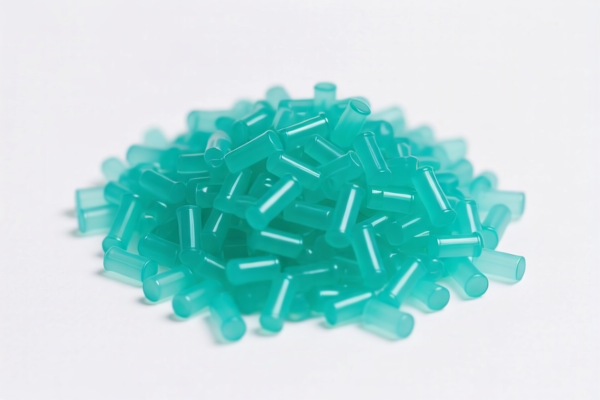
For Polypropylene Copolymers, the key distinction lies between: 1. Raw Polymer Forms (Chips/Granules): Unprocessed materials ready for manufacturing. These fall under Chapter 39, Heading 3902. 2. Finished Plastic Articles: Manufactured items (containers, pipes, films, etc.) made from the copolymer. These fall under Chapter 39, Heading 3926.
⚠️ Critical Distinction Point:
- If the item is raw polymer (pellets, powder, granules) → Classify under 3902.xx.xx.
- If the item is a manufactured plastic article (e.g., a box, a part, a sheet) → Classify under 3926.90.99.
- Do not mix "raw material" with "finished good" in a single shipment declaration to avoid misclassification penalties.
📦 II. HS Code Classification Details (2026 Latest Tariff Authority Cross-Reference)
| HS Code | Product Description | Application Scenario | Tax Rate (Total) |
|---|---|---|---|
3902.30.00.00 |
Polypropylene Copolymers, Primary Forms (Raw Pellets/Granules) | Raw material for injection molding, extrusion | 41.5% |
3902.10.00.00 |
Polypropylene, Primary Forms (Homopolymer/General) | Note: Often grouped with copolymers in tariff summaries for primary forms | 41.5% |
3926.90.99.89 |
Other Plastic Articles, Material Match: Polypropylene | Finished goods: Containers, packaging, household items | 22.8% |
3926.90.99.05 |
Polypropylene Copolymers, Classified as Plastic Articles | Specific plastic components made from copolymer resin | 22.8% |
3902.90.00.50 |
Other Olefin Polymers (e.g., Ethylene Copolymers) | Alternative classification if misidentified as PP but is actually PE Copolymer | 41.5% |
🔍 Key Insight:
- Raw Materials (3902): High tariff burden due to Section 301 and 122 clauses.
- Finished Articles (3926): Lower base tariff, but still subject to significant additional duties.
- Misclassification Risk: Declaring raw pellets as "finished goods" to save 18.7% in taxes is a major compliance violation.
💰 III. 2026 Latest Tariff Rate Breakdown (Including Surtaxes & Policy Add-ons)
✅ Applicable Country: United States (US)
✅ Country of Origin: China (CN)
✅ Effective Date: 2025-11-10 onwards (Including subsequent imports)
🎯 1. 3902.30.00.00 / 3902.10.00.00 —— Polypropylene Copolymer/Homopolymer (Primary Forms)
| Item | Content |
|---|---|
| Base Tariff Rate | 6.5% (ad valorem) |
| Section 301 Surcharge | +25.0% (Additional tariff under USITC Footnote 9903.02.01) |
| Section 122 Surcharge | +10.0% (Additional tariff for specific chemical/polymer categories) |
| Total Effective Rate | 41.5% |
| Tax Calculation | CIF Value × 41.5% |
| De Minimis Eligibility | ❌ Not Eligible (High-value industrial goods do not qualify for low-value exemption) |
| Legal Basis Path | HTSUS:3902.30.00.00 → Section 301: 9903.02.01 → Section 122: Additional Duty |
📌 Explanation:
- Base 6.5%: Standard Most Favored Nation (MFN) rate for polypropylene.
- Section 301 (25%): Retaliatory tariff on Chinese goods, specifically targeting industrial materials.
- Section 122 (10%): Additional duty applied to certain polymer products under specific trade enforcement actions.
- Total 41.5%: This is a high-cost input. Profit margins on raw PP imports from China are severely compressed.
🎯 2. 3926.90.99.89 / 3926.90.99.05 —— Other Plastic Articles (Finished Goods)
| Item | Content |
|---|---|
| Base Tariff Rate | 5.3% (ad valorem) |
| Section 301 Surcharge | +7.5% (Reduced additional tariff for certain manufactured articles) |
| Section 122 Surcharge | +10.0% (Still applicable to plastic articles) |
| Total Effective Rate | 22.8% |
| Tax Calculation | CIF Value × 22.8% |
| De Minimis Eligibility | ❌ Not Eligible |
| Legal Basis Path | HTSUS:3926.90.99 → Section 301: 9903.88.01 → Section 122 |
📌 Explanation:
- Base 5.3%: Lower than raw materials because finished goods have more processing value added.
- Section 301 (7.5%): Some finished plastic articles benefit from a lower 301 rate compared to raw polymers.
- Section 122 (10%): This surcharge remains constant, driving the total to 22.8%.
- Savings: Compared to raw materials (41.5%), this saves 18.7%, but only if the product is already manufactured.
🛠️ IV. Customs Clearance Practical Advice (Real-World Pitfall Avoidance)
✅ 1. Preparation Checklist (Non-Negotiable)
| Document | Required | Description |
|---|---|---|
| ✅ Product Specification Sheet | ✔️ | Must specify: Polymer Type (PP Copolymer vs. Homopolymer), Melt Flow Index (MFI), Density. |
| ✅ Technical Data Sheet (TDS) | ✔️ | Confirms whether it is a "Primary Form" (granules) or a "Finished Article." |
| ✅ Commercial Invoice | ✔️ | Must clearly state "Polypropylene Copolymer, Pellets/Granules" OR "Plastic Box/Part Made of PP Copolymer." |
| ✅ Certificate of Origin (CO) | ✔️ | Essential for verifying Chinese origin to apply correct surcharges. |
| ✅ Packing List | ✔️ | Detailed breakdown of net/gross weight, unit of measure (kg vs. pcs). |
| ✅ Structure Diagram | ✔️ | For articles (3926), show that it is not merely a "semi-finished" plastic sheet if claiming finished status. |
✅ 2. Declaration Strategy (Key Mantra)
🔥 "Raw vs. Finished: Know Your State! Misclassification = 18.7% Penalty Risk!"
| Scenario | Correct Declaration | Wrong Declaration | Consequence |
|---|---|---|---|
| Raw Pellets | 3902.30.00.00 (41.5%) |
Declare as 3926.90.99.89 (22.8%) |
Audit Failure: Customs will reclassify, charge back 18.7% + penalties. |
| Finished Plastic Part | 3926.90.99.89 (22.8%) |
Declare as 3902.30.00.00 (41.5%) |
Overpayment: You paid 18.7% more than necessary. Hard to refund. |
| Mixed Shipment | Split line items | Combine as one HS Code | Customs Delay: Cannot combine raw and finished goods under one HTS. |
| Ethylene Copolymer | 3902.90.00.50 |
Declare as 3902.30.00.00 (PP) |
Classification Error: Different chemical structure requires different code. |
✅ 3. Special Case Handling
| Situation | Handling Advice |
|---|---|
| Blends with Fillers | If PP is mixed with >5% fillers (e.g., calcium carbonate), it may no longer be "Pure Polymer." Check if it shifts to 3926 (Articles) or remains 3902. Provide exact composition. |
| Recycled PP | If the copolymer is recycled, it may still fall under 3902 but requires strict environmental compliance documentation. Ensure it meets "Clean Polymer" standards. |
| Private Label / OEM | Provide the supplier’s invoice. Do not add "Finished Product" claims if the goods are still in bulk packaging (drums/pallets). |
| Sample vs. Bulk | Samples of raw pellets are still subject to the 41.5% rate if declared as commercial goods. Use "Free of Charge" with caution; duties may still apply. |
🌍 V. Global Market Comparison (2026 Latest)
| Country/Region | Recommended HS Code | Tariff (China Origin) | Certifications Required | Notes |
|---|---|---|---|---|
| 🇺🇸 USA | 3902.30.00.00 (Raw)3926.90.99.89 (Art.) |
41.5% (Raw) 22.8% (Art.) |
No specific tech cert for PP, but Section 301/122 apply. | Highest Tariff Risk due to trade wars. |
| 🇨🇳 China | 3902.30.00.00 |
5.0% (Import Duty) | GB Standards for food contact (if applicable). | No Section 301. Lower cost for domestic manufacturing. |
| 🇪🇺 EU | 3902.30.00 |
0% - 6.5% | REACH Registration (Chemicals). | No heavy surcharges, but REACH compliance is costly. |
| 🇻🇳 Vietnam | 3902.30.00 |
0% (Under EVFTA) | None specific. | Supply Chain Shift: Many companies now import raw PP from China to Vietnam, then export to US as "Made in Vietnam" to avoid 41.5%. |
| 🇲🇽 Mexico | 3902.30.00 |
0% (Under USMCA) | No major barriers. | Nearshoring Option: Use Mexican manufacturing to bypass US tariffs on Chinese goods. |
📌 Conclusion:
- USA is the most expensive market for Chinese Polypropylene imports due to the 41.5% total tariff.
- Supply Chain Diversification is key: Consider sourcing raw materials from non-China origins or manufacturing in Vietnam/Mexico to leverage FTAs.
📌 VI. Common Errors & Pitfalls (Lessons Learned)
❌ Error 1: Declaring Raw Granules as "Plastic Parts" to get 22.8% tax.
👉 Result: Customs audit, seizure, back-taxes of 18.7%, and legal fees.
Fix: Always declare based on physical form at the time of import.
❌ Error 2: Confusing Polypropylene (PP) with Polyethylene (PE).
👉 Result: 3902.90.00.50 is for Olefin Polymers (like PE). If you import PP but declare as PE, you risk misdeclaration.
Fix: Provide TDS showing "Polypropylene" in the chemical composition.
❌ Error 3: Ignoring Section 122.
👉 Result: Even if Section 301 rates change, Section 122 (10%) may persist for certain chemical products.
Fix: Calculate total tax as Base + 301 + 122.
❌ Error 4: Assuming De Minimis applies to bulk chemical imports.
👉 Result: High-volume industrial goods do not qualify for low-value exemptions.
Fix: Plan for full duty payment in all cases.
✅ Correct Declaration Example:
"Polypropylene Copolymer, Primary Form, Granules, White, Unfilled, Used for Injection Molding, Model PP-C-100, Made in China, HS 3902.30.00.00"
🎯 VII. Conclusion: Precision in Classification, Profit in Logistics
🎯 Remember the Mantra:
🔹 "Raw Pellets = 41.5%, Finished Goods = 22.8%. Know your form!"
🔹 "Section 301 + 122 = High Cost. Diversify or Die!"
🔹 "TDS is Your Shield. Without it, You Are Blind."
📌 Pro Tip:
If you are importing high volumes of Polypropylene Copolymers into the US:
1. Evaluate Nearshoring: Can you source from Thailand, India, or Mexico to avoid Chinese origin tariffs?
2. Apply for Exclusions: Check if your specific HS code has any Section 301 exclusions available (though rare for basic polymers).
3. Consult a Customs Broker: Get a Pre-Ruling if the distinction between "Primary Form" and "Article" is blurred (e.g., pre-forms for bottles).
📣 Immediate Action:
📞 Verify your TDS (Technical Data Sheet).
📦 Confirm Physical Form (Pellets vs. Articles).
🚀 Optimize your Supply Chain to mitigate the 41.5% tariff burden.
✨ Professional Clearance Starts with Accurate Classification!
💼 Every Percent of Tariff Saved is Pure Profit!
Customer Reviews
About HS Code Classification
The Harmonized System (HS) is an internationally standardized nomenclature developed by the World Customs Organization (WCO) to classify traded products. Over 200 countries use the HS system as the basis for customs tariffs, trade statistics, and import/export regulations.
Each HS code follows a hierarchical structure:
- Chapter (2 digits) — Broad category of goods (e.g., Chapter 84: Machinery and Mechanical Appliances)
- Heading (4 digits) — More specific grouping within the chapter
- Subheading (6 digits) — Internationally standardized breakdown, used by all WCO member countries
- National subdivisions (8-10 digits) — Country-specific extensions for further classification, such as US HTSUS 10-digit codes
Correct HS code classification is essential for smooth customs clearance, accurate duty payment, and compliance with trade regulations. Misclassification can lead to customs delays, overpayment of duties, or penalties.
When importing from CN to US, the applicable tariff rates may include:
- Most-Favored-Nation (MFN) rate — The standard duty rate applied to WTO members
- General rate — Applied to countries without trade agreements
- Trade remedy duties — Additional tariffs such as Section 301 (anti-dumping), Section 232 (national security), or countervailing duties
The information provided on this page is for reference purposes only. For official classification, please consult with your local customs authority or a licensed customs broker.