polypropylene insulation material raw material
CN → US| HS Code | Tariff Rate | Origin | Destination | Doc |
|---|---|---|---|---|
| 3902100000 | 41.5% | CN | US | Official Doc |
| 3902900050 | 41.5% | CN | US | Official Doc |
| 3915900090 | 35.0% | CN | US | Official Doc |
| 3902300000 | 41.5% | CN | US | Official Doc |
| 3902100000 | 41.5% | CN | US | Official Doc |
Product Images
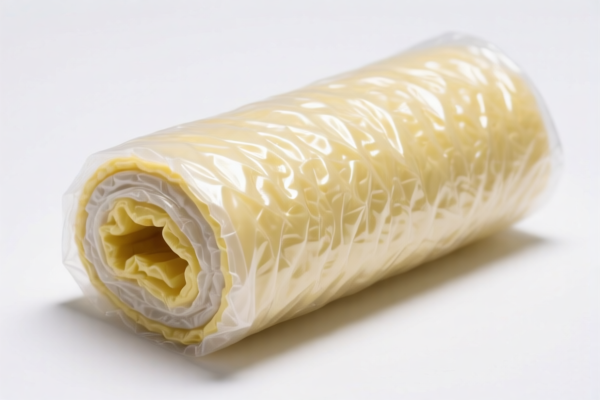
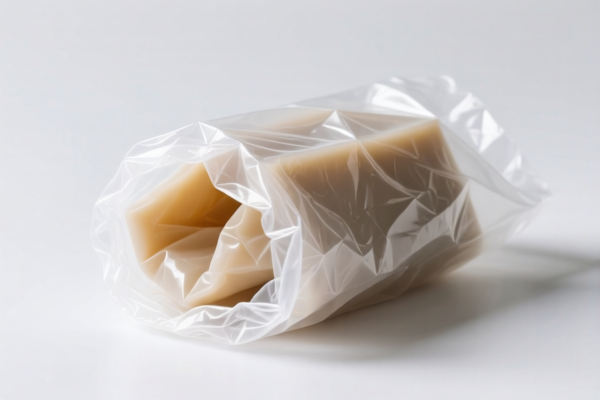

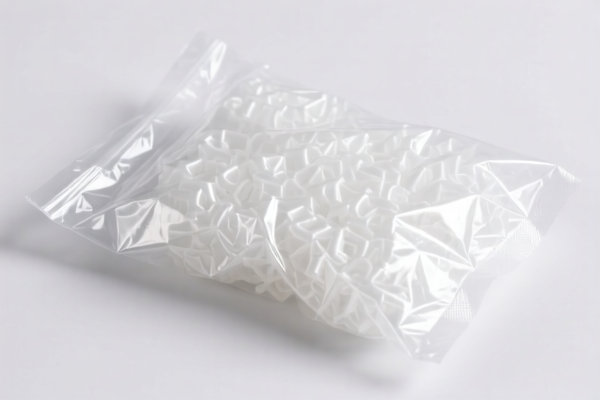
AI Analysis
🧪 Polypropylene Insulation Material Raw Material
🌐 HS Code Reference & Customs Clearance Guide | 2026 Latest Tariff Analysis | Professional Grade Strategy
📌 I. Product Definition & Classification: Do You Truly Understand "Polypropylene Raw Materials"?
Polypropylene (PP) is one of the most widely used thermoplastics in the world, prized for its chemical resistance, flexibility, and lightweight nature. In the context of "Insulation Material Raw Material," it typically refers to virgin PP pellets, flakes, or primary forms used in manufacturing insulation boards, pipes, or films.
However, in international trade (specifically under US Customs regulations), the form and specific polymer type determine the HS Code.
⚠️ Key Distinction:
- Primary Form (Granules/Pellets/Flakes): These are the "feedstock" for manufacturing. They are generally classified under Chapter 39, Heading 39.02.
- Finished/semi-finished Sheets: If the material is already in sheet form (even if raw for further processing), it may fall under Chapter 39, Heading 39.15 (waste/scrap) or other specific sheet headings, but 3915.90.00.90 is explicitly listed in your data for "sheet raw materials" in certain contexts.
- "Abrasion-Resistant" vs. "Insulation": The term "Insulation" often implies electrical or thermal properties. However, if the HS code is 3902.10 or 3902.30, the description emphasizes Polypropylene or Polymerization Grade. The term "Insulation Material" in your prompt maps to the raw polymer forms in .
📦 II. HS Code Classification Details (2026 Latest Tariff Authority Alignment)
Based strictly on the provided <DATA>, here are the applicable HS Codes for Polypropylene Insulation/Raw Materials:
| HS Code | Product Description (from ) | Form / State | Primary Use |
|---|---|---|---|
| 3902.10.00.00 | Polypropylene sheet raw material or abrasion-resistant material raw material; material is polypropylene, shape is primary form. | Primary Form (Pellets/Granules) | General PP usage, including insulation feedstock |
| 3902.90.00.50 | Polypropylene sheet raw material; material is propylene polymer, shape is primary form. | Primary Form (Pellets/Granules) | Specific propylene polymer grades for sheets/insulation |
| 3915.90.00.90 | Polypropylene sheet raw material, belonging to other plastic categories, shape is sheet raw material. | Sheet Form (Raw/Unprocessed) | PP sheets used as raw input for insulation manufacturing |
| 3902.30.00.00 | Polypropylene abrasion-resistant material raw material; material is propylene polymer, shape is original form. | Original Form (Pellets/Granules) | Durable PP applications, potentially heavy-duty insulation |
🔍 Critical Note on "Insulation":
- The term "Insulation" is not a direct HS Code descriptor. It is an application.
- If the PP is in primary form (pellets), it falls under 3902.10 or 3902.90.
- If the PP is in sheet form (raw sheets for cutting/insulating), it falls under 3915.90.00.90 according to your data.
- Do not assume "Insulation" = Lower Tariff. The Material (PP) and Form (Primary/Sheet) dictate the code.
💰 III. 2026 Latest Tariff Rate Breakdown (Including Additional Taxes)
✅ Applicable Country: United States (US)
✅ Origin: China (CN) (Implied by "122 Clause" and specific tariff details in )
✅ Effective Date: Current enforcement (Section 301 / IEEPA)
🎯 1. 3902.10.00.00 & 3902.90.00.50 & 3902.30.00.00 —— Primary Form Polypropylene
| Item | Content |
|---|---|
| Base Tariff | 6.5% (Ad Valorem) |
| Section 301 Additional Tariff | +25.0% |
| Section 122 Tariff | +10.0% |
| Total Effective Rate | 41.5% |
| Tax Calculation | CIF Value × 41.5% |
| De Minimis Eligibility | ❌ Not Eligible (De Minimis exemption typically does not apply to Section 301/122 duties) |
| Legal Basis Path | USITC:3902.10.00.00 → FOOTNOTE:301 → IEEPA/Section 122 |
📌 Explanation:
- Base Rate (6.5%): Standard MFN rate for polypropylene in primary forms.
- Section 301 (25%): Additional tariff on Chinese-made PP and plastics.
- Section 122 (10%): Additional tariff under the Trade Expansion Act, often applied to specific Chinese imports.
- Total: 41.5%. This is a high-duty category. Any misclassification can lead to significant underpayment penalties.
🎯 2. 3915.90.00.90 —— Other Plastic Waste/Scrap/Sheet Raw Materials
| Item | Content |
|---|---|
| Base Tariff | 0.0% (Ad Valorem) |
| Section 301 Additional Tariff | +25.0% |
| Section 122 Tariff | +10.0% |
| Total Effective Rate | 35.0% |
| Tax Calculation | CIF Value × 35.0% |
| De Minimis Eligibility | ❌ Not Eligible |
| Legal Basis Path | USITC:3915.90.00.90 → FOOTNOTE:301 → IEEPA/Section 122 |
📌 Explanation:
- Base Rate (0.0%): Lower base rate, likely because it is classified under "Other Waste/Scrap" or specific sheet forms with different base treatments.
- Still High: Despite 0% base, the 25% + 10% additional tariffs push the total to 35%.
- Risk: Misclassifying "Primary Form PP" (3902) as "Sheet Raw Material/Waste" (3915) to save 6.5% is illegal and easily detected by CBP via material analysis.
🛠️ IV. Customs Clearance Practical Advice (Battle-Tested Pitfall Guide)
✅ 1. Documentation Checklist (Non-Negotiable)
| Document | Mandatory? | Description |
|---|---|---|
| ✅ Material Safety Data Sheet (MSDS) | ✔️ | Must specify Polypropylene (PP) or Propylene Polymer. |
| ✅ Certificate of Origin (CO) | ✔️ | To prove origin (China). If non-China, check for FTZ/USMCA benefits (rare for PP). |
| ✅ Commercial Invoice | ✔️ | Must clearly state: "Polypropylene Resin, Primary Form, Not Yet Shaped into Final Insulation Product" |
| ✅ Product Specification Sheet | ✔️ | Include: Melt Flow Index (MFI), Density, Ash Content. Crucial: Distinguish between "Primary Form" (Pellets) vs. "Sheet Form". |
| ✅ Bill of Lading | ✔️ | Ensure no "Finished Insulation Boards" mentioned if declaring raw pellets. |
| ✅ Importer Security Filing (ISF) | ✔️ | Filed 24 hours before loading. |
✅ 2. Declaration Tactics (Key Mnemonics)
🔥 “Form Dictates Code, Origin Dictates Duty, Name Must Be Precise!”
| Scenario | Correct Declaration | Wrong Approach | Consequence |
|---|---|---|---|
| PP Pellets/Granules | 3902.10.00.00 |
Calling it "Insulation Material" | CBP may reclassify as "Plastic Articles" → Higher duty or delay |
| PP Sheet Rolls (Raw) | 3915.90.00.90 |
Calling it "Primary Form" | Mismatch in physical form → Seizure/Inspection |
| Mixed Packaging | Clear separation in packing list | Mixing pellets and sheets | Confusion in classification → Audit trigger |
| "Abrasion-Resistant" PP | 3902.30.00.00 |
General "PP Pellets" | Missed opportunity for specific subtype classification (though tax is same) |
✅ 3. Special Situations
| Situation | Handling Advice |
|---|---|
| OEM Branding on Pellets | Provide supplier letter confirming "OEM PP Resin, Primary Form". CBP focuses on chemical identity, not brand. |
| Recycled PP | If recycled, it may still fall under 3915.90.00.90 if considered waste/scrap. Ensure "Recycled" is declared to avoid "New Material" misclassification. |
| Insulation Boards (Finished) | NOT COVERED in . Finished boards (e.g., XPS, EPS) fall under 39.21 or 39.20. Using 3902 for finished boards is smuggling/fraud. |
| Non-China Origin | If from Vietnam/Malaysia, check for de minimis or lower Section 301 rates. The 122/301 tariffs are China-specific. |
🌍 V. Global Market Comparison (2026 Latest)
| Country/Region | Recommended HS Code | Tariff Rate (China Origin) | Certification | Remarks |
|---|---|---|---|---|
| 🇺🇸 USA | 3902.10.00.00 |
41.5% (6.5% + 25% + 10%) | None (PP is general) | Highest duty due to 122/301 |
| 🇨🇳 China | 3902.10.00.00 |
5% - 6.5% | N/A | Lower base rate, no 122/301 |
| 🇪🇺 EU | 3902.10.00.00 |
1.7% | REACH Registration | No major additional tariffs |
| 🇬🇧 UK | 3902.10.00.00 |
1.7% | UKCA (if applicable) | Post-Brexit tariffs apply |
| 🇦🇺 Australia | 3902.10.00.00 |
5% | AICIS | Moderate duty |
📌 Conclusion:
- USA is the most expensive market for PP imports from China due to the 41.5% total duty.
- EU and UK offer significant cost advantages with ~1.7% duty.
- Strategy: If shipping to the US, ensure strict HS Code accuracy to avoid penalties. Consider transshipment or origin changes if legally compliant.
📌 VI. Common Mistakes & Pitfall Guide (Blood & Tears)
❌ Mistake 1: Calling PP Pellets "Insulation Material" without specifying "Raw Material"
👉 Result: CBP may ask for end-use proof. If you can't prove it's raw, they may suspect finished goods → Delay.
❌ Mistake 2: Classifying Primary Form PP under 3915.90.00.90 (Sheet/Waste)
👉 Result: You save 6.5% base rate, but CBP will perform physical inspection. Finding pellets → Misclassification Penalty + Back Duties.
❌ Mistake 3: Ignoring the "122 Clause" in the invoice
👉 Result: Underpayment of 10% → CBP Audit + Interest.
❌ Mistake 4: Using "Plastic Sheet" for Pellets
👉 Result: Immediate Hold at Customs. CBP will classify as "Plastic Sheets" → Incorrect Duty + Storage Fees.
✅ Correct Practice:
"Polypropylene Resin, Virgin, Primary Form (Pellets), For Use in Manufacturing Insulation Boards, Model PP-2026, MSDS Attached"
🎯 VII. Conclusion: Professional Declaration, Save Time and Money!
🎯 Remember the Mnemonic:
🔹 "Primary Form = 3902, Sheet Form = 3915"
🔹 "China Origin = 41.5% (if 3902), 35% (if 3915)"
🔹 "Insulation is Application, PP is Material, Form is Key!"
📌 Pro Tip:
- If your PP is non-Chinese origin (e.g., from Saudi Arabia, Korea), the 122 and 301 tariffs may not apply. Check for FTZ/FTAA benefits.
- For finished insulation products (boards, pipes), do NOT use codes. They belong to 39.20/39.21. Using 3902 for finished goods is a major red flag.
📣 Immediate Action:
📞 Contact a Licensed Customs Broker
📤 Provide MSDS + Product Photos
📜 Apply for Advance Ruling (if large volume)
🚀 Ensure Your Invoice Matches the HS Code Exactly
✨ Professional Clearance Starts with Accurate Classification!
💼 Every 1% of Duty Saved is 1% of Profit Gained!
Customer Reviews
About HS Code Classification
The Harmonized System (HS) is an internationally standardized nomenclature developed by the World Customs Organization (WCO) to classify traded products. Over 200 countries use the HS system as the basis for customs tariffs, trade statistics, and import/export regulations.
Each HS code follows a hierarchical structure:
- Chapter (2 digits) — Broad category of goods (e.g., Chapter 84: Machinery and Mechanical Appliances)
- Heading (4 digits) — More specific grouping within the chapter
- Subheading (6 digits) — Internationally standardized breakdown, used by all WCO member countries
- National subdivisions (8-10 digits) — Country-specific extensions for further classification, such as US HTSUS 10-digit codes
Correct HS code classification is essential for smooth customs clearance, accurate duty payment, and compliance with trade regulations. Misclassification can lead to customs delays, overpayment of duties, or penalties.
When importing from CN to US, the applicable tariff rates may include:
- Most-Favored-Nation (MFN) rate — The standard duty rate applied to WTO members
- General rate — Applied to countries without trade agreements
- Trade remedy duties — Additional tariffs such as Section 301 (anti-dumping), Section 232 (national security), or countervailing duties
The information provided on this page is for reference purposes only. For official classification, please consult with your local customs authority or a licensed customs broker.