polysulfide thermosetting sealant
CN → US| HS Code | Tariff Rate | Origin | Destination | Doc |
|---|---|---|---|---|
| 4002990000 | 35.0% | CN | US | Official Doc |
| 3506915000 | 37.1% | CN | US | Official Doc |
| 3506990000 | 37.1% | CN | US | Official Doc |
| 3910000000 | 38.0% | CN | US | Official Doc |
| 4002800000 | 35.0% | CN | US | Official Doc |
Product Images
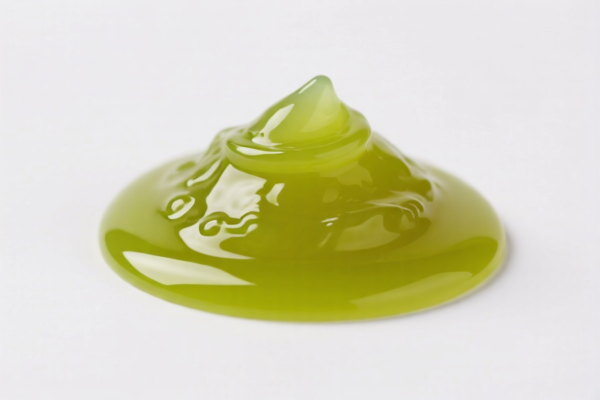
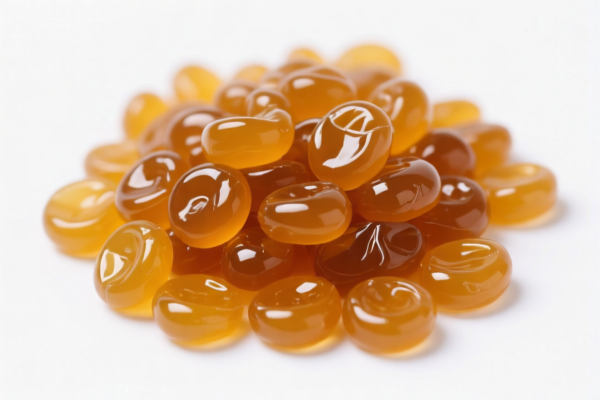

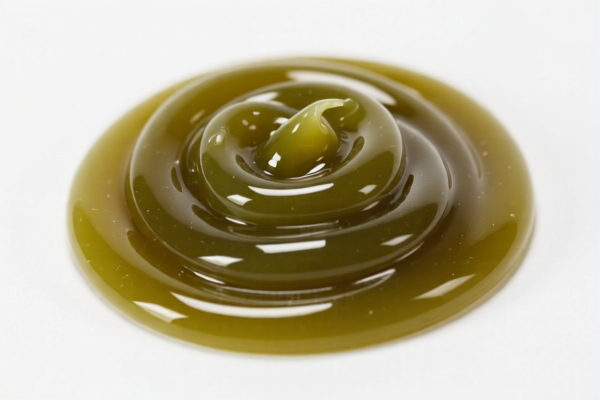
AI Analysis
🧪 Polysulfide Thermosetting Sealant
🌐 HS Code Reference & Customs Clearance Guide | 2026 Latest Tariff Analysis | Professional Level Clearance Strategy
📌 I. Product Definition & Classification: Do You Really Understand "Polysulfide Sealant"?
Polysulfide thermosetting sealants are high-performance, chemically resistant adhesives and sealants widely used in aerospace, construction, automotive, and marine industries. They are known for their exceptional flexibility, weather resistance, and fuel/oil resistance. In international trade, their classification depends heavily on whether they are viewed as raw synthetic rubber or as pre-mixed adhesive formulations.
⚠️ Key Distinction:
- If the product is considered a raw polymer/rubber in its primary form (e.g., uncured polysulfide polymer resin) → It may fall under Chapter 40 (Rubber).
- If the product is a pre-mixed, formulated sealant/adhesive ready for application (containing fillers, cross-linkers, etc.) → It falls under Chapter 35 (Animal/ Vegetable/ Mineral Glues) or 39 (Plastics) depending on the primary binding agent definition.
📦 II. HS Code Classification Details (2026 Latest Tariff Authority Comparison)
Based on the provided data, there are five potential HS Code classifications for Polysulfide Thermosetting Sealant. Below is the detailed breakdown of why each code applies and the associated tax implications.
| HS Code | Product Description & Classification Logic | Total Tax Rate |
|---|---|---|
4002.99.00.00 |
Synthetic Rubber View: Polysulfide is classified as a synthetic rubber. The sealant is viewed as a form of rubber shaped for sealing. Fits the category of "Other synthetic rubber and rubber compounding ingredients." | 35.0% |
3506.91.50.00 |
Polymer-Based Adhesive View: Polysulfide is seen as a polymer material. The sealant is categorized as a "modified adhesive." Fits definitions under headings 39.01 to 39.13 for polymers or rubber-based adhesives. | 37.1% |
3506.99.00.00 |
General Adhesive View: Polysulfide is treated as an organic/synthetic adhesive. The sealant is an "already prepared adhesive." Fits the "Other" catch-all category for prepared adhesives. | 37.1% |
3910.00.00.00 |
Silicone/Chemical Substance View: Polysulfide is classified as a silicone/sulfurized chemical substance. The sealant is viewed as a primary shape gelatinous substance, consistent with primary silicone materials. | 38.0% |
4002.80.00.00 |
Raw Rubber Form View: Polysulfide is a synthetic rubber under Heading 4002. The sealant is in a gelatinous form, fitting the requirement for primary shapes (blocks, sheets, strips) of raw rubber. | 35.0% |
🔍 Critical Insight:
- The lowest total tax rate (35.0%) applies if the product is classified under Chapter 40 (4002.99.00.00or4002.80.00.00). This requires arguing that the product is primarily a raw synthetic rubber rather than a formulated adhesive.
- The higher tax rates (37.1% - 38.0%) apply if the product is classified under Chapter 35 or 39, viewing it as a prepared adhesive or chemical substance.
- US Additional Tariffs: All these codes are subject to significant additional tariffs (Section 301, IEEPA), driving the effective cost significantly higher than the base rate suggests.
💰 III. 2026 Latest Tariff Rate Breakdown (Including Additional Taxes & Policy Add-ons)
✅ Applicable Country: United States (US)
✅ Country of Origin: China (CN)
✅ Effective Date: November 10, 2025 onwards (including subsequent imports)
🎯 1. Classification: 4002.99.00.00 (Synthetic Rubber - Other)
| Item | Details |
|---|---|
| Base Tariff | 0.0% (ad valorem) |
| Section 301 Tariff | +25.0% |
| IEEPA Section 122 Tariff | +10.0% |
| Total Effective Rate | 35.0% |
| Tax Calculation | CIF Value × 35.0% |
| De Minimis Eligibility | ❌ Not Eligible (deny_de_minimis) |
| Legal Basis Path | USITC:4002.99.00.00 → Section 301: 25% → IEEPA: 10% |
📌 Explanation:
- Section 301 Tariff (25%): Imposed under US Trade Law Section 301 on goods from China.
- IEEPA Tariff (10%): Additional tariff under the International Emergency Economic Powers Act targeting specific Chinese imports.
- No Base Duty: Since the base rate is 0%, the total burden is entirely driven by these punitive/additional tariffs.
🎯 2. Classification: 4002.80.00.00 (Synthetic Rubber - Primary Shapes)
| Item | Details |
|---|---|
| Base Tariff | 0.0% (ad valorem) |
| Section 301 Tariff | +25.0% |
| IEEPA Section 122 Tariff | +10.0% |
| Total Effective Rate | 35.0% |
| Tax Calculation | CIF Value × 35.0% |
| De Minimis Eligibility | ❌ Not Eligible (deny_de_minimis) |
| Legal Basis Path | USITC:4002.80.00.00 → Section 301: 25% → IEEPA: 10% |
📌 Note:
- Identical tax structure to4002.99.00.00.
- Key distinction: Requires demonstrating the product is in a "primary shape" (block/sheet/strip) rather than a finished sealant cartridge/tube.
🎯 3. Classification: 3506.91.50.00 (Modified Adhesives - Polymer Based)
| Item | Details |
|---|---|
| Base Tariff | 2.1% (ad valorem) |
| Section 301 Tariff | +25.0% |
| IEEPA Section 122 Tariff | +10.0% |
| Total Effective Rate | 37.1% |
| Tax Calculation | CIF Value × 37.1% |
| De Minimis Eligibility | ❌ Not Eligible (deny_de_minimis) |
| Legal Basis Path | USITC:3506.91.50.00 → Section 301: 25% → IEEPA: 10% |
📌 Note:
- Slightly higher cost due to the 2.1% base duty.
- Classification relies on the argument that polysulfide is a "polymer" and the product is a "modified adhesive."
🎯 4. Classification: 3506.99.00.00 (Other Prepared Adhesives)
| Item | Details |
|---|---|
| Base Tariff | 2.1% (ad valorem) |
| Section 301 Tariff | +25.0% |
| IEEPA Section 122 Tariff | +10.0% |
| Total Effective Rate | 37.1% |
| Tax Calculation | CIF Value × 37.1% |
| De Minimis Eligibility | ❌ Not Eligible (deny_de_minimis) |
| Legal Basis Path | USITC:3506.99.00.00 → Section 301: 25% → IEEPA: 10% |
📌 Note:
- "Catch-all" category for prepared adhesives not specified elsewhere.
- Same tax burden as3506.91.50.00.
🎯 5. Classification: 3910.00.00.00 (Silicones in Primary Forms)
| Item | Details |
|---|---|
| Base Tariff | 3.0% (ad valorem) |
| Section 301 Tariff | +25.0% |
| IEEPA Section 122 Tariff | +10.0% |
| Total Effective Rate | 38.0% |
| Tax Calculation | CIF Value × 38.0% |
| De Minimis Eligibility | ❌ Not Eligible (deny_de_minimis) |
| Legal Basis Path | USITC:3910.00.00.00 → Section 301: 25% → IEEPA: 10% |
📌 Note:
- Highest total tax rate among the options.
- Requires arguing that polysulfide is chemically equivalent to "silicones" or "sulfurized chemical substances" in primary form. Generally less favorable unless specific chemical analysis supports this.
🛠️ IV. Customs Clearance Practical Advice (Avoiding Pitfalls)
✅ 1. Document Checklist (Mandatory)
| Document | Required | Explanation |
|---|---|---|
| ✅ Product Specification Sheet | ✔️ | Must detail chemical composition, curing mechanism, and physical state (gel, liquid, paste). |
| ✅ Technical Data Sheet (TDS) | ✔️ | Clarifies if the product is a "raw polymer" or a "pre-mixed sealant." |
| ✅ Formula/Composition Breakdown | ✔️ | Critical for proving if it falls under Chapter 40 (Rubber) vs. Chapter 35/39 (Adhesives). |
| ✅ Product Photos (Inner/Outer Packaging) | ✔️ | Show form factor (cartridge, tube, bulk drum) to support "primary shape" argument if claiming Chapter 40. |
| ✅ Commercial Invoice | ✔️ | Accurately describe as "Polysulfide Polymer" or "Polysulfide Sealant" depending on HS code. |
| ✅ Certificate of Origin (CO) | ✔️ | Mandatory for claiming any potential preferential treatments (though unlikely for China-origin here). |
✅ 2. Declaration Strategy (Key Mnemonics)
🔥 “Rubber vs. Glue: Shape and Mix Decide the Price!”
| Scenario | Recommended Declaration | Risk |
|---|---|---|
| Raw Polysulfide Polymer (Uncured, bulk) | 4002.99.00.00 or 4002.80.00.00 |
Lower tax (35%). Requires proof it’s not a finished adhesive. |
| Pre-mixed Sealant (In cartridges/tubes) | 3506.91.50.00 or 3506.99.00.00 |
Higher tax (37.1%). Harder to argue as "raw rubber." |
| Misclassified as Non-Tariffed Item | ❌ Avoid | Penalties, delays, and back taxes. |
✅ 3. Special Case Handling
| Scenario | Recommendation |
|---|---|
| Aerospace Grade Sealant | Provide end-use documentation. May require stricter chemical analysis to justify Chapter 40 classification. |
| Industrial Bulk vs. Retail Packaging | Bulk drums may support "primary shape" argument for 4002.80.00.00. Retail cartridges strongly suggest "pre-formed product" → 3506 classification. |
| Hybrid Silicone-Polysulfide | Careful analysis required. If silicone is dominant, 3910.00.00.00 might be argued, but tax is highest. |
🌍 V. Global Market Comparison (2026 Latest)
| Country/Region | Recommended HS Code | Tariff (China Origin) | Certification Requirements | Notes |
|---|---|---|---|---|
| 🇺🇸 USA | 4002.99.00.00 / 3506.99.00.00 |
35% - 38% (incl. 301 & IEEPA) | SDS, TDS | High punitive tariffs. Classification strategy is critical. |
| 🇨🇳 China | 4002.99.00.00 |
5% - 10% | CCC (if applicable) | Lower base tariffs, no US punitive add-ons. |
| 🇪🇺 EU | 4002.99.00.00 |
0% - 4.5% | REACH, SDS | No Section 301 equivalent. Focus on REACH compliance. |
| 🇬🇧 UK | 4002.99.00.00 |
0% - 4.5% | UKCA, UK REACH | Post-Brexit, aligns with EU but requires UK-specific certs. |
| 🇯🇵 Japan | 4002.99.00.00 |
0% - 3% | JIS, PSE (if electrical) | Low base tariffs, strict quality standards. |
📌 Conclusion:
- The US is the most challenging market due to the combination of base duties and additional punitive tariffs (Section 301 + IEEPA).
- Classifying as Raw Rubber (Chapter 40) is the most tax-efficient strategy for US imports, but requires robust technical justification.
📌 VI. Common Errors & Pitfall Guide (Lessons Learned)
❌ Mistake 1: Declaring pre-mixed sealant as "Raw Rubber" without chemical proof
👉 Consequence: Customs audit, classification change to 3506, back taxes + interest.
❌ Mistake 2: Ignoring the 122 IEEPA Tariff
👉 Consequence: Underpayment by 10%. Penalty and seizure risk.
❌ Mistake 3: Using vague descriptions like "Sealant" without specifying chemical type
👉 Consequence: Delays for classification review. Potential re-routing to higher-tax codes.
❌ Mistake 4: Assuming "De Minimis" applies for small shipments
👉 Consequence: No exemption. All these codes are deny_de_minimis. Small shipments still incur full tax.
✅ Best Practice:
"Polysulfide Thermosetting Polymer, Uncured, Bulk Drum, Chemical Resistance Grade, SDS Available"
🎯 VII. Conclusion: Professional Declaration, Cost Efficiency, Risk Mitigation!
🎯 Remember the Mnemonic:
🔹 "Rubber First, Adhesive Second; 35% Wins, 38% Burns."
🔹 "HS Code Determines Destiny, Tax Differs by 3 Points, Declaration Steps Save Thousands!"
📌 Pro Tip:
If your polysulfide sealant is originating from Vietnam, Mexico, Thailand, or Malaysia, you may qualify for IEEPA Exemptions, reducing the tariff to 0%~5%.
It is highly recommended to apply for a Pre-Ruling (Advance Ruling) from US Customs (CBP) to lock in the favorable 4002 classification before shipment.
📣 Take Action Now:
📞 Contact a Professional Customs Broker + Provide Chemical Analysis + Request HS Code Pre-Ruling
🚀 Ensure Your Polysulfide Sealant Clears Customs Smoothly, Maximizes Profit, and Minimizes Risk!
✨ Professional Customs Clearance Starts with Accurate Classification!
💼 Every Cent of Your Cost Deserves to Be Precisely Calculated!
Customer Reviews
About HS Code Classification
The Harmonized System (HS) is an internationally standardized nomenclature developed by the World Customs Organization (WCO) to classify traded products. Over 200 countries use the HS system as the basis for customs tariffs, trade statistics, and import/export regulations.
Each HS code follows a hierarchical structure:
- Chapter (2 digits) — Broad category of goods (e.g., Chapter 84: Machinery and Mechanical Appliances)
- Heading (4 digits) — More specific grouping within the chapter
- Subheading (6 digits) — Internationally standardized breakdown, used by all WCO member countries
- National subdivisions (8-10 digits) — Country-specific extensions for further classification, such as US HTSUS 10-digit codes
Correct HS code classification is essential for smooth customs clearance, accurate duty payment, and compliance with trade regulations. Misclassification can lead to customs delays, overpayment of duties, or penalties.
When importing from CN to US, the applicable tariff rates may include:
- Most-Favored-Nation (MFN) rate — The standard duty rate applied to WTO members
- General rate — Applied to countries without trade agreements
- Trade remedy duties — Additional tariffs such as Section 301 (anti-dumping), Section 232 (national security), or countervailing duties
The information provided on this page is for reference purposes only. For official classification, please consult with your local customs authority or a licensed customs broker.