polyurethane coating curing agent for casting
CN → US| HS Code | Tariff Rate | Origin | Destination | Doc |
|---|---|---|---|---|
| 3909505000 | 41.3% | CN | US | Official Doc |
| 3909501000 | 35.0% | CN | US | Official Doc |
| 3824992600 | 35.0% | CN | US | Official Doc |
| 3824999361 | 40.0% | CN | US | Official Doc |
| 3209900000 | 40.9% | CN | US | Official Doc |
Product Images

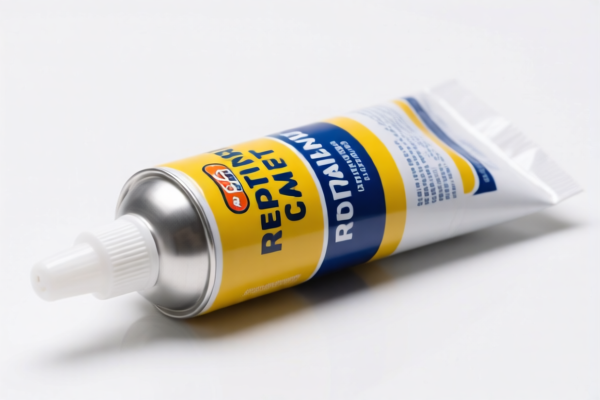
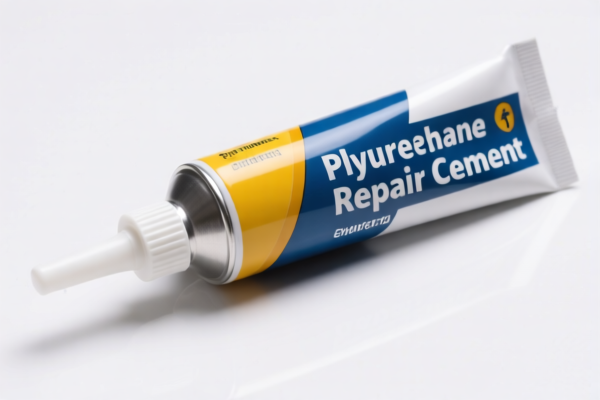
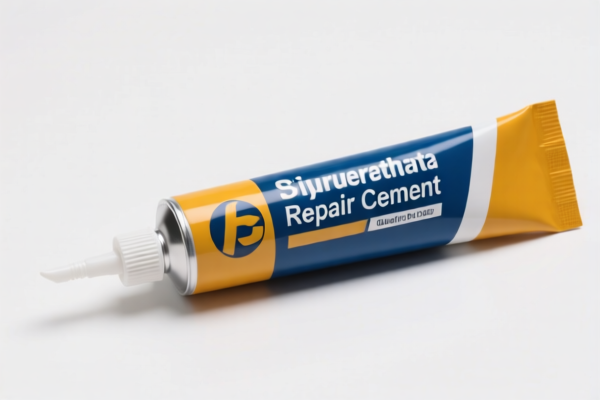
AI Analysis
🧪 Polyurethane Coating Curing Agent for Casting
🌐 HS Code Reference & Customs Clearance Guide | 2026 Latest Tariff Analysis | Professional-Level Clearance Strategy
📌 I. Product Definition & Classification: What Exactly Is a "Curing Agent" for Casting?
A Polyurethane (PU) Coating Curing Agent for Casting is a chemical intermediate used to cross-link polyol components, forming durable, high-performance coatings or molds. In international trade, its classification is critical because the HS Code determines not just the duty rate, but also regulatory compliance (e.g., chemical safety, origin rules).
The product falls into two primary categories depending on its physical form and specific chemical composition:
- Primary Raw Material (Pure/Technical Grade): If the product is a specific chemical compound (e.g., Isocyanate) intended as a raw material for PU synthesis, it may fall under Chapter 39 (Plastics/Polymers).
- Chemical Mixture/Preparation: If it is a formulated mixture containing solvents, catalysts, or other additives, it is typically classified under Chapter 38 (Miscellaneous Chemical Products).
⚠️ Key Distinction Point:
- If the product is a pure isocyanate or primary polymer form → Likely 3909.50 or 3824.99.
- If it is a formulated mixture (e.g., with diluents or specific casting aids) → Likely 3824.99 or 3824.99.93.
- If used as a coating component (added to paints/varnishes) → Could be 3209.90.
📦 II. HS Code Classification Details (2026 Latest Tariff Alignment)
Based on the provided data, here are the five most relevant HS Codes for this product:
| HS Code | Product Description | Application Scenario | Key Classification Logic |
|---|---|---|---|
3909.50.50.00 |
Polyurethane in Primary Forms; Chemical Auxiliary Materials | Raw material classification; general PU curing agent | Matches material (PU) + Form (Primary Shape) |
3909.50.10.00 |
Polyurethane Curing Agents | Specific for PU curing; fits PU category scope | Matches material (PU) + Function (Curing Agent) |
3824.99.26.00 |
Chemical Preparations for Casting Molds | Casting-specific application; chemical mixture | Matches Material (PU-class) + Use (Casting Molds) |
3824.99.93.61 |
Other Chemical Preparations | General chemical制剂; organic chemical components | Matches Organic Chemical Composition + Industrial Use |
3209.90.00.00 |
Paints/Varnishes Based on Synthetic Polymers | Functional additive for coatings/resins | Based on Coating/Resin Modification usage |
🔍 Critical Insight:
-3909.50.10.00is the most precise fit if the product is a pure PU curing agent.
-3824.99.26.00is the most accurate fit if the product is a mixture specifically designed for casting molds.
-3209.90.00.00is a riskier classification, applicable only if the curing agent is sold as part of a paint/coating system rather than a standalone chemical.
💰 III. 2026 Latest Tariff Rate Breakdown (Including Additional Duties & Policy Add-ons)
✅ Applicable Country: United States (US)
✅ Origin: China (CN)
✅ Effective Date: November 10, 2025 (and onwards)
🎯 1. 3909.50.50.00 —— Polyurethane in Primary Forms / General Chemical Auxiliary
| Item | Details |
|---|---|
| Base Tariff | 6.3% |
| USITC Additional Duty | +25.0% (Section 301) |
| IEEPA Additional Duty | +10.0% (China-specific, effective Nov 2025) |
| Total Tariff Rate | 41.3% |
| Tax Calculation | CIF Value × 41.3% |
| De Minimis Exemption | ❌ Not Eligible (High risk of inspection) |
| Legal Path | USITC:3909.50.50.00 → FOOTNOTE:301 → IEEPA:9903.01.25 |
📌 Explanation:
- This code applies to raw polyurethane materials or general auxiliary agents.
- The 41.3% total rate is very high.
- Warning: If your product is a simple curing agent, this classification might be too broad and attract higher scrutiny.
🎯 2. 3909.50.10.00 —— Polyurethane Curing Agents (Most Precise for Pure Agents)
| Item | Details |
|---|---|
| Base Tariff | 0.0% |
| USITC Additional Duty | +25.0% (Section 301) |
| IEEPA Additional Duty | +10.0% (China-specific) |
| Total Tariff Rate | 35.0% |
| Tax Calculation | CIF Value × 35.0% |
| De Minimis Exemption | ❌ Not Eligible |
| Legal Path | USITC:3909.50.10.00 → FOOTNOTE:301 → IEEPA:9903.01.25 |
📌 Advantage:
- Lower total rate (35%) compared to3909.50.50.00.
- More specific description reduces customs ambiguity.
- Best for pure, unformulated PU curing agents.
🎯 3. 3824.99.26.00 —— Chemical Preparations for Casting Molds (Best for Casting Applications)
| Item | Details |
|---|---|
| Base Tariff | 0.0% |
| USITC Additional Duty | +25.0% (Section 301) |
| IEEPA Additional Duty | +10.0% (China-specific) |
| Total Tariff Rate | 35.0% |
| Tax Calculation | CIF Value × 35.0% |
| De Minimis Exemption | ❌ Not Eligible |
| Legal Path | USITC:3824.99.26.00 → FOOTNOTE:301 → IEEPA:9903.01.25 |
📌 Advantage:
- Highly specific to "Casting Molds" — aligns perfectly with the product name.
- Base rate 0% makes it competitive.
- Ideal for formulated mixtures used in mold-making.
🎯 4. 3824.99.93.61 —— Other Chemical Preparations (General Organic Chemicals)
| Item | Details |
|---|---|
| Base Tariff | 5.0% |
| USITC Additional Duty | +25.0% (Section 301) |
| IEEPA Additional Duty | +10.0% (China-specific) |
| Total Tariff Rate | 40.0% |
| Tax Calculation | CIF Value × 40.0% |
| De Minimis Exemption | ❌ Not Eligible |
| Legal Path | USITC:3824.99.93.61 → FOOTNOTE:301 → IEEPA:9903.01.25 |
📌 Risk:
- This is a "Catch-all" category.
- Higher base rate (5%) than specific codes.
- Only use if the product doesn’t fit other specific descriptions.
🎯 5. 3209.90.00.00 —— Paints/Varnishes Based on Synthetic Polymers
| Item | Details |
|---|---|
| Base Tariff | 5.9% |
| USITC Additional Duty | +25.0% (Section 301) |
| IEEPA Additional Duty | +10.0% (China-specific) |
| Total Tariff Rate | 40.9% |
| Tax Calculation | CIF Value × 40.9% |
| De Minimis Exemption | ❌ Not Eligible |
| Legal Path | USITC:3209.90.00.00 → FOOTNOTE:301 → IEEPA:9903.01.25 |
📌 Caution:
- This code is for coatings/paints.
- Only classify as this if the curing agent is sold as part of a paint kit or explicitly marketed as a coating additive.
- Not recommended for standalone curing agents.
🛠️ IV. Customs Clearance Practical Advice (Avoid Pitfalls)
✅ 1. Document Checklist (Must-Haves)
| Document | Required | Notes |
|---|---|---|
| ✅ Product Specification Sheet | ✔️ | Must detail chemical composition, CAS numbers, and intended use (Casting). |
| ✅ MSDS/SDS (Safety Data Sheet) | ✔️ | Critical for chemical imports. Must comply with OSHA/GHS standards. |
| ✅ Commercial Invoice | ✔️ | Clearly state: "Polyurethane Curing Agent for Casting Molds" — avoid vague terms like "Chemical." |
| ✅ Packing List | ✔️ | Detail net/gross weight, number of containers, and chemical hazard labels. |
| ✅ Certificate of Origin (CO) | ✔️ | Essential for determining duty eligibility and tracing origin. |
| ✅ Third-Party Test Report | Optional but Recommended | Proves composition if customs questions the HS Code. |
✅ 2. Declaration Tips (Key Mantras)
🔥 "Be Specific, Be Accurate, Avoid 'Miscellaneous'!"
| Scenario | Correct Declaration | Incorrect Declaration | Consequence |
|---|---|---|---|
| Pure Curing Agent | 3909.50.10.00 — "PU Curing Agent" |
3824.99.93.61 — "Other Chemicals" |
Risk of overpayment or audit |
| Mold-Making Mixture | 3824.99.26.00 — "Chemical for Casting Molds" |
3909.50.50.00 — "General PU Material" |
Higher duty (41.3% vs 35%) |
| Paint Additive | 3209.90.00.00 — "Coating Component" |
3824.99.26.00 — "Mold Chemical" |
Misclassification penalty |
📌 Golden Rule:
- Use3909.50.10.00if it’s a pure chemical for curing.
- Use3824.99.26.00if it’s a mixture for casting molds.
- Avoid3209.90.00.00unless it’s explicitly part of a paint system.
✅ 3. Special Cases Handling
| Situation | Advice |
|---|---|
| OEM/Private Label | Provide client agreement + formula disclosure to prevent "origin fraud" suspicion. |
| Mixed Containers | Ensure each box/ton is clearly labeled as PU Curing Agent; mixed chemicals cause delays. |
| Hazardous Chemicals | If the curing agent is isocyanate-based, it may be classified as Dangerous Goods (DG). Ensure proper UN packaging and DG declaration. |
| Small Samples | Even small samples are subject to the same HS Code and tariffs. De minimis does NOT apply due to Section 301/IEEPA. |
🌍 V. Global Market Comparison (2026)
| Country/Region | Recommended HS Code | Total Tariff (China Origin) | Key Certification | Notes |
|---|---|---|---|---|
| 🇺🇸 USA | 3909.50.10.00 or 3824.99.26.00 |
35.0% | SDS, EPA Registration | High scrutiny on chemical composition. |
| 🇨🇳 China | 3909.50.10.00 |
~5-6% | CCC (if applicable) | Lower base tariff, but environmental regulations strict. |
| 🇪🇺 EU | 3909.50.10.00 or 3824.99.26.00 |
~5-6% | REACH, CLP | REACH registration mandatory for chemicals. |
| 🇬🇧 UK | 3909.50.10.00 |
~5-6% | UK REACH | Post-Brexit, separate chemical registration needed. |
| 🇦🇺 Australia | 3909.50.10.00 |
~5% | AICIS | Australian Industrial Chemicals Introduction Scheme. |
📌 Conclusion:
- USA has the highest effective tariff (35%) due to trade wars.
- EU/UK require chemical compliance (REACH/UK REACH) regardless of low duties.
- Accurate HS Code selection is critical to avoid 5-6% vs 35% duty differences.
📌 VI. Common Mistakes & Pitfalls (Lessons Learned)
❌ Mistake 1: Declaring as "Chemical Mixture" under 3824.99.93.61
👉 Consequence: Higher base tariff (5% vs 0%) → Higher total duty (40% vs 35%).
❌ Mistake 2: Using 3909.50.50.00 for a pure curing agent
👉 Consequence: Unnecessary 6.3% base tariff → Total 41.3% vs 35%.
❌ Mistake 3: Ignoring SDS/MSDS requirements
👉 Consequence: Shipment detention by customs or DOT (Department of Transportation) for hazardous material violations.
❌ Mistake 4: Assuming "De Minimis" (Section 321) applies
👉 Consequence: Package seized if value >$800 or if chemical is on exclusion list. Chemicals are high-risk for de minimis abuse.
✅ Correct Approach:
"Polyurethane Curing Agent for Casting Molds, Formulated, Non-Hazardous, CAS# XXXX-XX-X"
🎯 VII. Conclusion: Precision Classification Saves Money!
🎯 Remember the Mantra:
🔹 "Pure Agent → 3909.50.10.00 (35%)"
🔹 "Mold Mixture → 3824.99.26.00 (35%)"
🔹 "Paint Additive → 3209.90.00.00 (40.9%)"
🔹 "General Chemical → 3824.99.93.61 (40%)"📌 Pro Tip:
- Always pre-classify with a customs broker.
- SDS must match the declared HS Code description.
- Avoid vague terms like "Resin" or "Glue" — use "Curing Agent for Casting".
📣 Immediate Action:
📞 Contact a licensed customs broker + Provide SDS + Apply for Advance Ruling
🚀 Ensure smooth clearance, avoid audits, and maximize profit margins!
✨ Professional Classification Starts Here!
💼 Every percentage point counts in chemical imports!
Customer Reviews
About HS Code Classification
The Harmonized System (HS) is an internationally standardized nomenclature developed by the World Customs Organization (WCO) to classify traded products. Over 200 countries use the HS system as the basis for customs tariffs, trade statistics, and import/export regulations.
Each HS code follows a hierarchical structure:
- Chapter (2 digits) — Broad category of goods (e.g., Chapter 84: Machinery and Mechanical Appliances)
- Heading (4 digits) — More specific grouping within the chapter
- Subheading (6 digits) — Internationally standardized breakdown, used by all WCO member countries
- National subdivisions (8-10 digits) — Country-specific extensions for further classification, such as US HTSUS 10-digit codes
Correct HS code classification is essential for smooth customs clearance, accurate duty payment, and compliance with trade regulations. Misclassification can lead to customs delays, overpayment of duties, or penalties.
When importing from CN to US, the applicable tariff rates may include:
- Most-Favored-Nation (MFN) rate — The standard duty rate applied to WTO members
- General rate — Applied to countries without trade agreements
- Trade remedy duties — Additional tariffs such as Section 301 (anti-dumping), Section 232 (national security), or countervailing duties
The information provided on this page is for reference purposes only. For official classification, please consult with your local customs authority or a licensed customs broker.