polyurethane insulation board
CN → US| HS Code | Tariff Rate | Origin | Destination | Doc |
|---|---|---|---|---|
| 4016935050 | 37.5% | CN | US | Official Doc |
| 4016996050 | 37.5% | CN | US | Official Doc |
| 3926909989 | 22.8% | CN | US | Official Doc |
| 3921135000 | 39.2% | CN | US | Official Doc |
| 3921190090 | 41.5% | CN | US | Official Doc |
Product Images
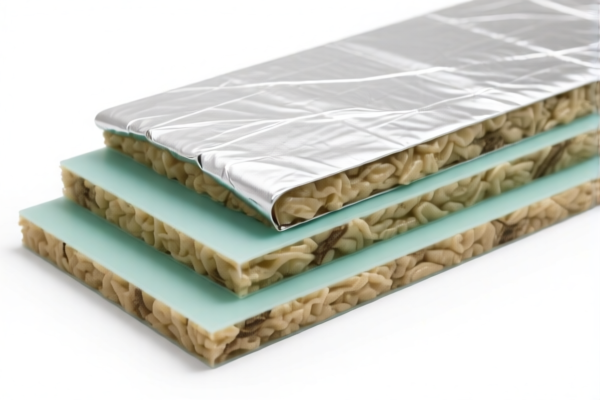
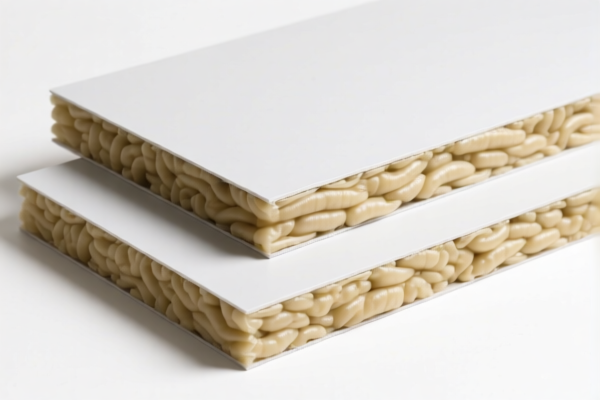
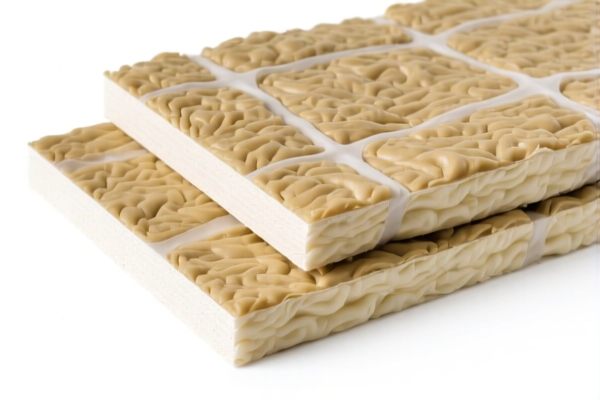
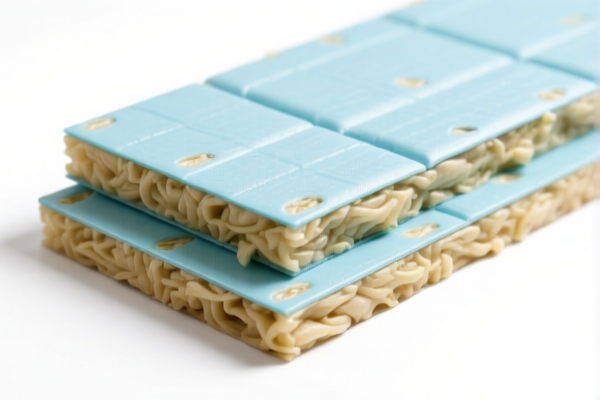
AI Analysis
🧱 Polyurethane Insulation Board (PU Foam Board)
🌐 HS Code Reference & Customs Clearance Guide | 2026 Latest Tariff Analysis | Strategic Clearance Strategy
📌 1. Product Definition & Classification: Do You Really Know "Polyurethane Board"?
Polyurethane (PU) Insulation Board is a high-performance thermal insulation material widely used in construction, refrigeration, and industrial piping. In international trade, its classification depends heavily on its physical state (solid vs. cellular/foam) and chemical composition (rubber vs. plastic).
Key Distinction: * Sulfurized Rubber Products (Ch. 40): If the PU is chemically modified to behave like rubber (sulfurized/cross-linked) and used as a seal or gasket. * Plastic/Foam Products (Ch. 39): If the PU is a rigid or flexible foam board used primarily for thermal insulation.
⚠️ Critical Classification Point:
- If it is a solid, non-foamed, elastic sheet used for sealing → Likely Ch. 40 (Rubber).
- If it is a foamed, cellular structure used for insulation → Likely Ch. 39 (Plastics/Foam).
- Note: The data below reflects specific classification scenarios provided.
📦 2. HS Code Classification Details (2026 Latest Tariff Reference)
Based on the provided data, here are the possible HS Codes for "Polyurethane Insulation Board" depending on its specific material structure and application:
| HS Code | Product Description (Summary) | Key Attribute | Tax Rate (Total) |
|---|---|---|---|
4016.93.50.50 |
Sulfurized Rubber Articles: Polyurethane Sealing Plates | Material: PU; Form: Sealing Plate | 37.5% |
4016.99.60.50 |
Other Sulfurized Rubber Articles: PU Elastic Board | Material: PU Elastic; Form: Plate | 37.5% |
3926.90.99.89 |
Plastic Articles: Polyurethane Plate | Material: Plastic; Form: Plate | 22.8% |
3921.13.50.00 |
Polyurethane Foam Plastic Plates | Material: PU Foam; Form: Plate | 39.2% |
3921.19.00.90 |
Other Plastic Plates: Polyurethane | Material: PU; Form: Plate | 41.5% |
🔍 Key Insight:
- Ch. 40 (Rubber) codes attract a 37.5% total tax due to high additional tariffs.
- Ch. 39 (Plastic) codes vary significantly: 22.8% to 41.5%, depending on whether it is classified as foam (3921.13) or other plastic plates (3921.19/3926.90).
- Misclassification between Rubber (Ch. 40) and Plastic (Ch. 39) can lead to significant duty discrepancies and customs penalties.
💰 3. 2026 Latest Tariff Rate Breakdown (Including Additional Taxes)
✅ Applicable Country: United States (US)
✅ Origin: China (CN)
✅ Effective Date: From November 10, 2025 (including subsequent imports)
🎯 1. 4016.93.50.50 & 4016.99.60.50 — Sulfurized Rubber PU Plates
| Item | Content |
|---|---|
| Base Duty | 2.5% |
| Section 301 Additional Duty | +25.0% |
| IEEPA 122-Clause Duty | +10.0% |
| Total Tax Rate | 37.5% |
| Tax Calculation | CIF Value × 37.5% |
| De Minimis Exemption | ❌ Not Applicable |
| Legal Basis Path | USITC:4016.93.50.50 → Footnote:301 → IEEPA:122 |
📌 Explanation:
- These codes fall under Chapter 40 (Rubber).
- The 25% Section 301 duty and 10% IEEPA duty are叠加 (stacked) on the base rate.
- This results in a high tax burden, making it crucial to verify if the product truly qualifies as "sulfurized rubber."
🎯 2. 3926.90.99.89 — Plastic PU Plate (Non-Foam/Other)
| Item | Content |
|---|---|
| Base Duty | 5.3% |
| Section 301 Additional Duty | +7.5% |
| IEEPA 122-Clause Duty | +10.0% |
| Total Tax Rate | 22.8% |
| Tax Calculation | CIF Value × 22.8% |
| De Minimis Exemption | ❌ Not Applicable |
| Legal Basis Path | USITC:3926.90.99.89 → Footnote:301 → IEEPA:122 |
📌 Explanation:
- This code represents Chapter 39 (Plastics), specifically other plastic articles.
- The Section 301 duty is lower (7.5%) compared to rubber or foam plates.
- 22.8% is the most cost-effective option among the listed codes, provided the product is not classified as foam.
🎯 3. 3921.13.50.00 — Polyurethane Foam Plastic Plates
| Item | Content |
|---|---|
| Base Duty | 4.2% |
| Section 301 Additional Duty | +25.0% |
| IEEPA 122-Clause Duty | +10.0% |
| Total Tax Rate | 39.2% |
| Tax Calculation | CIF Value × 39.2% |
| De Minimis Exemption | ❌ Not Applicable |
| Legal Basis Path | USITC:3921.13.50.00 → Footnote:301 → IEEPA:122 |
📌 Explanation:
- This code is for PU Foam Plates.
- Despite being plastic, the Section 301 duty is high (25%), leading to a 39.2% total rate.
- Common for rigid foam insulation boards.
🎯 4. 3921.19.00.90 — Other Plastic Plates
| Item | Content |
|---|---|
| Base Duty | 6.5% |
| Section 301 Additional Duty | +25.0% |
| IEEPA 122-Clause Duty | +10.0% |
| Total Tax Rate | 41.5% |
| Tax Calculation | CIF Value × 41.5% |
| De Minimis Exemption | ❌ Not Applicable |
| Legal Basis Path | USITC:3921.19.00.90 → Footnote:301 → IEEPA:122 |
📌 Explanation:
- This is a "catch-all" for other plastic plates.
- It has the highest total tax rate (41.5%) due to the 25% Section 301 duty.
- Avoid this code unless no other specific plastic/foam/rubber code applies.
🛠️ 4. Customs Clearance Practical Advice (Pitfall Avoidance Guide)
✅ 1. Documentation Checklist (Essential)
| Document | Required? | Notes |
|---|---|---|
| ✅ Product Specification Sheet | ✔️ | Must specify: Material (PU/Rubber), Density, Hardness, Foam vs. Solid |
| ✅ Technical Data Sheet (TDS) | ✔️ | Show physical properties: Is it cellular (foam) or solid? |
| ✅ Product Photos | ✔️ | Clear images of cross-section (to show foam structure) and finished board |
| ✅ Commercial Invoice | ✔️ | Clearly state "Polyurethane Board" or "PU Insulation Board" |
| ✅ Packing List | ✔️ | Details on packaging to prevent damage |
| ✅ Origin Certificate (CO) | ✔️ | Required for origin determination |
✅ 2. Declaration Tips (Key Rules)
🔥 “Foam is Plastic, Solid May Be Rubber, Name Must Be Precise!”
| Scenario | Correct Declaration | Incorrect Declaration |
|---|---|---|
| Rigid Foam Board (Insulation) | 3921.13.50.00 (PU Foam) |
Misdeclare as 4016 (Rubber) → Higher tax |
| Solid PU Sheet (Gasket/Seal) | 4016.93.50.50 (Rubber) |
Misdeclare as 3921 (Plastic) → Class Error |
| Non-Foam PU Plate | 3926.90.99.89 (Plastic) |
Misdeclare as 3921.19 → Higher tax (41.5% vs 22.8%) |
| Generic "Insulation Board" | Specify Material & Form | Vague description → Customs delay & penalty |
✅ 3. Special Cases Handling
| Situation | Advice |
|---|---|
| Mixed Materials | If the board has a foil or fabric facing, ensure the PU core is the essential character. |
| Customs Examination | Be prepared to provide a cross-section sample to prove whether it is foam (3921) or solid (4016/3926). |
| Pre-Ruling | If the classification is ambiguous, apply for an Advance Ruling from US Customs (CBP) to avoid post-clearance audits. |
🌍 5. Global Market Comparison (2026 Latest)
| Country/Region | Recommended HS Code | Total Tax Rate (US Origin) | Notes |
|---|---|---|---|
| 🇺🇸 United States | 3926.90.99.89 |
22.8% | Best rate if classified as "Other Plastic." |
| 🇺🇸 United States | 4016.93.50.50 |
37.5% | Higher if classified as Rubber. |
| 🇨🇳 China (Import) | 3921.13.00.00 |
~4.2% | Lower base rate, no Section 301. |
| 🇪🇺 EU | 3921.13.00 |
~6.5% | No Section 301, but may have VAT. |
📌 Conclusion:
- For US Imports from China: Aim for3926.90.99.89(22.8%) if the product is a solid plastic plate.
- If it is Foam: You face 39.2% (3921.13.50.00).
- If it is Rubber: You face 37.5% (4016.93.50.50).
- Strategy: Consult with your supplier to confirm the exact physical structure (foam vs. solid) and chemical nature (plastic vs. rubber) to choose the most favorable code.
📌 6. Common Errors & Pitfalls (Lessons Learned)
❌ Error 1: Declaring Foam Board as Rubber (4016)
👉 Consequence: If it’s actually foam, it’s a misclassification. If it’s rubber, you pay 37.5% instead of potentially lower plastic rates.
❌ Error 2: Declaring Solid PU as Foam (3921.13)
👉 Consequence: 41.5% tax instead of 22.8%. Loss of $18,700 per $1M shipment.
❌ Error 3: Vague Description ("Insulation Board")
👉 Consequence: Customs may reclassify it to the highest duty code or delay shipment for inspection.
✅ Correct Practice:
"Polyurethane Rigid Foam Insulation Board, Non-Cellular Solid Plate, Model XYZ, for Construction Thermal Insulation"
🎯 7. Conclusion: Professional Declaration Saves Money!
🎯 Remember the Golden Rule:
🔹 “Foam = Plastic (Ch.39), Solid = Rubber/Plastic. Check Structure First!”
🔹 “3926.90.99.89 (22.8%) is the best rate for solid PU plates. Avoid 3921.19 (41.5%) unless necessary.”
📌 Pro Tip:
If your PU board is sourced from Vietnam, Mexico, or Thailand, you may be eligible for IEEPA exemptions or lower tariffs.
👉 Always apply for a Pre-Ruling if the classification is unclear.
📣 Immediate Action:
📞 Contact your freight forwarder + Provide Product Specs + Confirm HS Code
🚀 Ensure smooth clearance, minimize duties, and maximize profits!
✨ Professional Customs Clearance Starts with Accurate Classification!
💼 Every dollar of duty saved is pure profit!
Customer Reviews
About HS Code Classification
The Harmonized System (HS) is an internationally standardized nomenclature developed by the World Customs Organization (WCO) to classify traded products. Over 200 countries use the HS system as the basis for customs tariffs, trade statistics, and import/export regulations.
Each HS code follows a hierarchical structure:
- Chapter (2 digits) — Broad category of goods (e.g., Chapter 84: Machinery and Mechanical Appliances)
- Heading (4 digits) — More specific grouping within the chapter
- Subheading (6 digits) — Internationally standardized breakdown, used by all WCO member countries
- National subdivisions (8-10 digits) — Country-specific extensions for further classification, such as US HTSUS 10-digit codes
Correct HS code classification is essential for smooth customs clearance, accurate duty payment, and compliance with trade regulations. Misclassification can lead to customs delays, overpayment of duties, or penalties.
When importing from CN to US, the applicable tariff rates may include:
- Most-Favored-Nation (MFN) rate — The standard duty rate applied to WTO members
- General rate — Applied to countries without trade agreements
- Trade remedy duties — Additional tariffs such as Section 301 (anti-dumping), Section 232 (national security), or countervailing duties
The information provided on this page is for reference purposes only. For official classification, please consult with your local customs authority or a licensed customs broker.