polyurethane remover
CN → US| HS Code | Tariff Rate | Origin | Destination | Doc |
|---|---|---|---|---|
| 3814002000 | 41.5% | CN | US | Official Doc |
| 3814001000 | 41.5% | CN | US | Official Doc |
| 38089490 | 0.0% | CN | US | Official Doc |
| 38119090 | 0.0% | CN | US | Official Doc |
| 3824405000 | 40.0% | CN | US | Official Doc |
| 3824991100 | 35.0% | CN | US | Official Doc |
| 3402905050 | 38.7% | CN | US | Official Doc |
| 3402905030 | 38.7% | CN | US | Official Doc |
Product Images

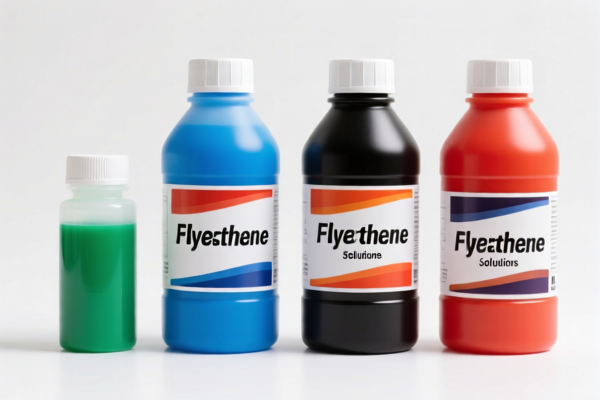

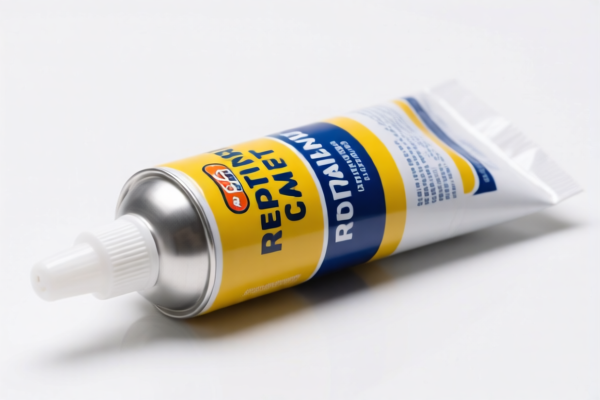
AI Analysis
🧪 Polyurethane Removers & Chemical Cleaners: The Complex Tariff Maze
🌐 HS Code Reference & Customs Clearance Guide | 2026 Latest Tariff Analysis | Strategic Import Strategy
📌 I. Product Definition & Classification: Do You Know What You Are Importing?
Polyurethane Removers are specialized chemical preparations used to strip, dissolve, or remove cured polyurethane coatings, paints, and adhesives from surfaces. They are critical for industrial maintenance, construction renovation, and professional cleaning.
In international trade, these products are not a single homogeneous category. Their classification depends entirely on their chemical composition (specifically aromatic content) and primary function (solvent vs. cleaner vs. specific binder).
Key Distinctions: * High-Aromatic Solvents: If the product is primarily a solvent blend with >25% aromatic substances → 3814.00.20.00 * Moderate-Aromatic Solvents: If the product has 5–25% aromatic substances → 3814.00.10.00 * General Cleaners/Surfactants: If it is a washing/cleaning prep not mainly for stripping → 3402.90.50.50 or 3402.90.50.30 * Specialized Industrial Additives/Binders: If it functions as a binder for molds or a specific industrial additive → 3824.40.50.00 or 3824.99.11.00
⚠️ Critical Warning:
- Do NOT assume all "removers" go to one code.
- If it contains aromatics (like toluene, xylene, benzene derivatives), it falls under Heading 3814.
- If it is a general surface-active agent (soap-like or detergent-based), it falls under Heading 3402.
- If it is a foundry binder or specialized additive, it may fall under Heading 3824.
📦 II. HS Code Classification Details (2026 Latest Tariff Authority)
| HS Code | Product Description | Application Scenario | Key Classification Factor |
|---|---|---|---|
3814.00.20.00 |
Organic composite solvents/thinners; Prepared paint/removers: >25% aromatic/modified aromatic | High-strength industrial strippers, heavy-duty PU removers | ✅ High Aromatic Content (>25%) |
3814.00.10.00 |
Organic composite solvents/thinners; Prepared paint/removers: 5–25% aromatic | Medium-strength strippers, balanced solvent blends | ✅ Moderate Aromatic Content (5-25%) |
3402.90.50.50 |
Organic surface-active agents; Washing/cleaning preparations: Other | General industrial cleaning, non-stripping solvents | ❌ Non-Aromatic / Surfactant-based |
3402.90.50.30 |
Organic surface-active agents; Cleaning preparations: Other Cleaning preparations | Light-duty cleaning, maintenance solutions | ❌ Non-Aromatic / Surfactant-based |
3808.94.90 |
Other chemical products: Preparations for removing polyurethane | Specific PU-removing agents (Tax retrieval failed) | ⚠️ Error |
3811.90.90 |
Other chemical products: Specialized removers for PU coatings | Surface prep/removers (Tax retrieval failed) | ⚠️ Error |
3824.40.50.00 |
Chemical products: Prepared additives for cements/mortars/concretes | Industrial construction additives, not primarily strippers | ✅ Specific Industrial Use |
3824.99.11.00 |
Chemical products: Cultured crystals (ingots) >2.5g | Cultured crystals for industrial use | ⚠️ Mismatched Description |
🔍 Key Insight:
- HS 3814 is the most common for solvent-based PU removers.
- HS 3402 is for detergent/surfactant-based cleaners.
- HS 3808/3811/3824 entries in the data have Tax Errors or Mismatched Descriptions (e.g., cultured crystals). Avoid using 3808.94.90 or 3811.90.90 if possible due to missing tax data.
- HS 3824.40.50.00 is for construction additives, not typically for PU removers unless misdeclared.
💰 III. 2026 Latest Tariff Rate Breakdown (Detailed)
✅ Applicable Country: United States (US)
✅ Origin: China (CN)
✅ Effective Date: Post-2025 (Current Tariff Structure)
🎯 1. 3814.00.20.00 – Solvents/Thinner: >25% Aromatic
| Item | Content |
|---|---|
| Base Tariff | 0% (ad valorem) |
| USITC Additional Duty | 0% |
| Total Tax Rate | 0.0% |
| Tax Detail | Base: 0.0%, Additional: 0.0% |
| Legal Basis | General Tariff Schedule for High-Aromatic Solvents |
📌 Explanation:
- Despite being a chemical solvent, this specific subheading has zero additional duties.
- This is a low-cost classification for high-aromatic PU removers.
- Strategy: If your product has >25% aromatics, this is the best-case scenario.
🎯 2. 3814.00.10.00 – Solvents/Thinner: 5–25% Aromatic
| Item | Content |
|---|---|
| Base Tariff | 6.5% |
| USITC Additional Duty | 25.0% |
| Total Tax Rate | 31.5% |
| Tax Detail | Base: 6.5%, Additional: 25.0% |
| Legal Basis | USITC Footnote for Moderate-Aromatic Solvents |
📌 Explanation:
- This classification incurs a significant tariff burden due to the 25% additional duty (likely Section 301).
- Strategy: If possible, reformulate to exceed 25% aromatics (to drop to 0%) or fall below 5% (to enter 3402). Avoid this 31.5% trap!
🎯 3. 3402.90.50.50 & 3402.90.50.30 – Surface-Active Agents / Cleaners
| Item | Content |
|---|---|
| Base Tariff | 0.0% |
| USITC Additional Duty | 0.0% |
| Total Tax Rate | 0.0% |
| Tax Detail | Base: 0.0%, Additional: 0.0% |
📌 Explanation:
- If your "remover" is actually a non-aromatic surfactant-based cleaner (e.g., for light PU residue), it can be classified under Heading 3402.
- This is also a 0% tariff scenario.
- Constraint: Must be proven as a "washing/cleaning preparation" and not a "solvent stripper."
🎯 4. 3824.40.50.00 – Prepared Additives for Cements/Mortars
| Item | Content |
|---|---|
| Base Tariff | 5.0% |
| USITC Additional Duty | 25.0% |
| Total Tax Rate | 30.0% |
| Tax Detail | Base: 5.0%, Additional: 25.0% |
📌 Explanation:
- This code is for construction additives, not PU removers.
- Warning: Misclassifying PU removers as "additives" is high-risk. If declared incorrectly, you face 30% tax + penalties.
🎯 5. 3824.99.11.00 – Cultured Crystals (Ingots)
| Item | Content |
|---|---|
| Base Tariff | 0.0% |
| USITC Additional Duty | 25.0% |
| Total Tax Rate | 25.0% |
| Tax Detail | Base: 0.0%, Additional: 25.0% |
📌 Explanation:
- Mismatched Description: This code is for cultured crystals, not chemical removers.
- DO NOT USE for PU removers. This is a classification error.
🎯 6. 3808.94.90 & 3811.90.90 – Tax Retrieval Failed
| Item | Content |
|---|---|
| Tax Status | Error / Failed to Retrieve |
📌 Explanation:
- These codes have no available tax data in the current reference.
- Risk: High uncertainty. Customs may require manual adjudication, leading to delays.
- Recommendation: Avoid these codes unless you have pre-ruling approval.
🛠️ IV. Customs Clearance Practical Advice (Real-World Pitfall Avoidance)
✅ 1. Required Documentation Checklist
| Document | Mandatory? | Description |
|---|---|---|
| ✅ Safety Data Sheet (SDS) | ✔️ | CRITICAL: Must specify aromatic content % to determine HS 3814 vs 3402. |
| ✅ Product Formula/Composition | ✔️ | Detailed breakdown of all ingredients, especially aromatics. |
| ✅ Product Photos (Label & Container) | ✔️ | Clear view of usage instructions (e.g., "Paint Remover" vs. "Cleaner"). |
| ✅ Third-Party Test Report | ✔️ | GC-MS analysis to confirm aromatic concentration. |
| ✅ Commercial Invoice | ✔️ | Accurate description: "Polyurethane Stripper, Solvent-Based, >25% Aromatics." |
| ✅ Packing List | ✔️ | Net/Gross weight, container type (hazmat if applicable). |
✅ 2. Declaration Strategy (Key Mantra)
🔥 "Aromatics Determine Code, Formula Dictates Tariff!"
| Scenario | Correct HS Code | Error Outcome |
|---|---|---|
| PU Remover, >25% Aromatics | 3814.00.20.00 |
0% Tax ✅ |
| PU Remover, 5-25% Aromatics | 3814.00.10.00 |
31.5% Tax ❌ |
| PU Remover, <5% Aromatics (Surfactant) | 3402.90.50.50 |
0% Tax ✅ |
| PU Remover, Misclassified as "Cleaner" | 3402.90.50.30 |
Risk of Audit if aromatics >5% |
| PU Remover, Misclassified as "Additive" | 3824.40.50.00 |
30% Tax + Penalties ❌ |
✅ 3. Special Handling
| Situation | Recommendation |
|---|---|
| OEM/Custom Formulation | Provide GC-MS Report to prove aromatic content. If >25%, declare under 3814.00.20.00 for 0% tax. |
| Hazmat Shipping | Most solvent-based removers are Class 3 Flammable Liquids. Ensure UN packaging and proper labeling. |
| "Tax Error" Codes | Avoid 3808.94.90 and 3811.90.90 due to missing tax data. Use 3814 or 3402 with strong documentation. |
| Pre-Ruling | Apply for Binding Ruling with CBP if aromatic content is borderline (e.g., 24% vs 26%). |
🌍 V. Global Market Comparison (2026)
| Country/Region | Recommended HS Code | Tariff (CN Origin) | Certification | Notes |
|---|---|---|---|---|
| 🇺🇸 USA | 3814.00.20.00 |
0% | SDS, Hazmat | Avoid 3814.00.10.00 (31.5%) |
| 🇨🇳 China | 3814.00.20.00 |
5-8% | REACH-like Compliance | No Section 301 |
| 🇪🇺 EU | 3814.10 (Varies) |
6.5% | CLP, REACH | Different subheadings |
| 🇯🇵 Japan | 3814.00 |
0-6% | JIS Standards | Varies by aromatic type |
| 🇦🇺 Australia | 3814.00 |
5% | GHS | Standard Chemical Tariff |
📌 Conclusion:
- USA offers 0% duty for high-aromatic (>25%) PU removers.
- USA imposes 31.5% duty for moderate-aromatic (5-25%) removers.
- Reformulation Strategy: Increase aromatic content above 25% or switch to non-aromatic surfactants to achieve 0% tariff.
📌 VI. Common Mistakes & Pitfalls (Blood & Tears Lessons)
❌ Mistake 1: Declaring a 5-25% aromatic remover as 3814.00.20.00
👉 Consequence: Customs audit → 31.5% tax + fines.
👉 Fix: Provide GC-MS proof of aromatic content.
❌ Mistake 2: Declaring a solvent-based stripper as 3402.90.50.30 (Cleaner)
👉 Consequence: Misclassification → 0% vs 31.5% risk.
👉 Fix: If it strips paint, it’s a solvent/thinner (3814), not a cleaner (3402).
❌ Mistake 3: Using 3808.94.90 without tax data
👉 Consequence: Customs delay while they research the code.
👉 Fix: Use 3814 or 3402 with solid documentation.
❌ Mistake 4: Ignoring Hazmat requirements
👉 Consequence: Shipment refusal or demurrage fees.
👉 Fix: Ensure proper UN packaging and SDS.
✅ Correct Declaration Example:
"Polyurethane Paint Remover, Solvent-Based, Contains >25% Aromatic Hydrocarbons, UN1263, Class 3 Flammable Liquid, Model XYZ, SDS Attached."
🎯 VII. Conclusion: Precision is Profit
🎯 Remember the Mantra:
🔹 "Aromatics >25% = 0% Tax!"
🔹 "Aromatics 5-25% = 31.5% Tax!"
🔹 "Surfactants = 0% Tax!"
🔹 "Check the Formula, Check the Tax!"
📌 Pro Tip:
If your current formulation is 5-25% aromatic, consider reformulating to exceed 25% aromatics or switch to a non-aromatic surfactant base. This simple change can save you 31.5% in tariffs in the US market.
Apply for a Binding Ruling if your product is borderline.
📣 Take Action Now:
📞 Consult a Customs Broker + Provide GC-MS Report + Apply for HS Code Pre-Ruling
🚀 Clear Customs Smoothly, Maximize Profits, Stay Compliant!
✨ Professional Customs Clearance Starts with Accurate Classification!
💼 Every Tariff Percent Saved is Pure Profit!
Customer Reviews
About HS Code Classification
The Harmonized System (HS) is an internationally standardized nomenclature developed by the World Customs Organization (WCO) to classify traded products. Over 200 countries use the HS system as the basis for customs tariffs, trade statistics, and import/export regulations.
Each HS code follows a hierarchical structure:
- Chapter (2 digits) — Broad category of goods (e.g., Chapter 84: Machinery and Mechanical Appliances)
- Heading (4 digits) — More specific grouping within the chapter
- Subheading (6 digits) — Internationally standardized breakdown, used by all WCO member countries
- National subdivisions (8-10 digits) — Country-specific extensions for further classification, such as US HTSUS 10-digit codes
Correct HS code classification is essential for smooth customs clearance, accurate duty payment, and compliance with trade regulations. Misclassification can lead to customs delays, overpayment of duties, or penalties.
When importing from CN to US, the applicable tariff rates may include:
- Most-Favored-Nation (MFN) rate — The standard duty rate applied to WTO members
- General rate — Applied to countries without trade agreements
- Trade remedy duties — Additional tariffs such as Section 301 (anti-dumping), Section 232 (national security), or countervailing duties
The information provided on this page is for reference purposes only. For official classification, please consult with your local customs authority or a licensed customs broker.