polyurethane textile composite flexible board
CN → US| HS Code | Tariff Rate | Origin | Destination | Doc |
|---|---|---|---|---|
| 6810990080 | 35.0% | CN | US | Official Doc |
| 5903202000 | 35.0% | CN | US | Official Doc |
| 5903202500 | 42.5% | CN | US | Official Doc |
| 3921131950 | 40.3% | CN | US | Official Doc |
Product Images
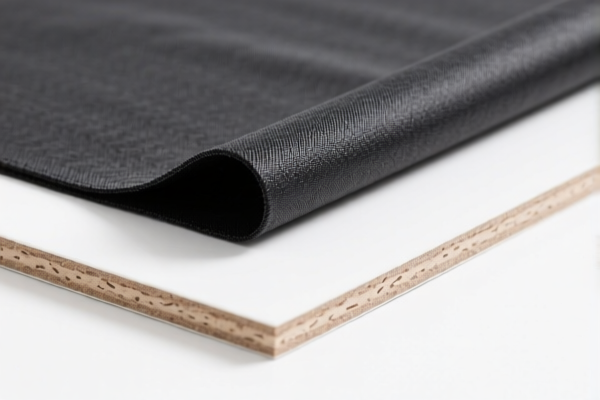
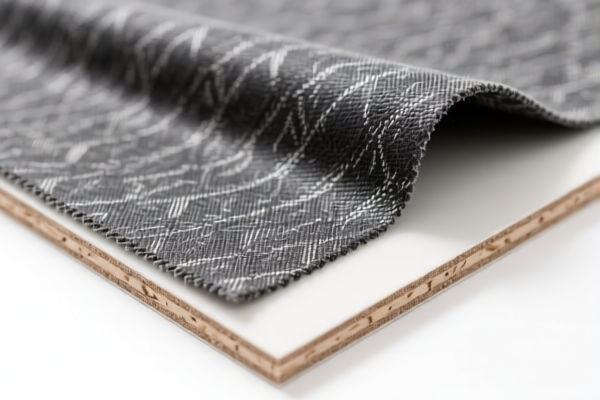
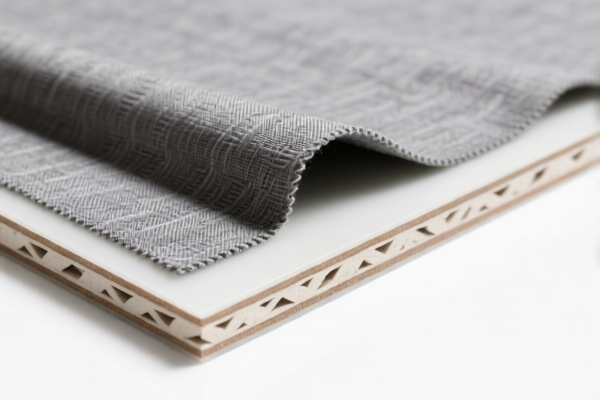

AI Analysis
🛠️ Polyurethane Textile Composite Flexible Board (建筑用板 / Construction Panels)
🌐 HS Code Reference & Customs Clearance Guide | 2026 Latest Tariff Analysis | Professional-Level Entry Strategy
📌 I. Product Definition & Classification: Do You Really Understand "Polyurethane Textile Composite Boards"?
This product is a composite construction panel consisting of a textile fabric impregnated or coated with polyurethane (PU), structured as a flexible board/panel. It sits at the intersection of textiles and plastics.
In international trade, its classification depends heavily on the primary material characteristic and manufacturing process:
1. Textile-Focused Classification (5903):
If the board is essentially a textile fabric (polyester, nylon, etc.) that has been impregnated, coated, or covered with polyurethane, and this impregnation/coating defines its essential character, it falls under Chapter 59.
2. Plastic-Focused Classification (3921):
If the PU layer is the dominant structural element, or if it is classified as a plastic plate/sheet/film combined with textile, it may fall under Chapter 39.
3. Cement/Stone-Focused Classification (6810):
If the product is interpreted as a cementitious or artificial stone product where PU is used as a composite binder or finish (less common for "textile composite" but possible if marketed as "artificial stone board"), it may fall under Chapter 68.
⚠️ Key Distinction Point:
- If the fabric structure is visible and integral, and PU is a coating →5903
- If it is a rigid/flexible plastic sheet with textile backing →3921
- If it is a construction material resembling cement/stone composite →6810
📦 II. HS Code Classification Details (2026 Latest Tariff Authority Comparison)
Based on the provided data, here are the four potential HS Codes, their matching logic, and tax implications.
| HS Code | Product Description | Matching Logic & Summary | Total Tax Rate |
|---|---|---|---|
6810.99.00.80 |
Other articles of cement, concrete, or artificial stone | Match Basis: Infers "construction board" as belonging to "other articles" in cement/concrete category. PU composite structure is considered "other" non-specific quartz aggregate board. No material conflict. | 35.0% |
5903.20.20.00 |
Textile fabrics, impregnated/coated with plastics | Match Success: "Polyurethane" corresponds to material; "Textile composite" fits impregnation/coating/layering form. "Construction board" is a downstream application, no material conflict. | 35.0% |
5903.20.25.00 |
Other textile fabrics impregnated/coated with plastics | Match Basis: Explicitly includes "Polyurethane" material and "Textile" form, fitting PU-treated artificial fiber textile fabric. Construction board application does not conflict. | 42.5% |
3921.13.19.50 |
Other plates, sheets, film, etc., of plastics | Match Basis: Material is "Polyurethane", form is "Board", use is "Construction" (fits combination with textile). Matches "PU", "Board/Sheet/Film", and "Other". Material and form fully match. | 40.3% |
🔍 Key Reminder:
-5903.20.20.00and5903.20.25.00are the most likely for textile-based composites.
-3921.13.19.50is for plastic-based composite plates/sheets.
-6810.99.00.80is for construction/mineral-based products.
- Classification depends on which component gives the product its essential character.
💰 III. 2026 Latest Tariff Rate Breakdown (Including Surtaxes & Policy Add-ons)
✅ Applicable Country: United States (US)
✅ Origin: China (CN)
✅ Effective Date: November 10, 2025 onwards (including subsequent imports)
🎯 1. 6810.99.00.80 — Other Articles of Cement/Concrete/Artificial Stone
| Item | Details |
|---|---|
| Base Duty Rate | 0% (ad valorem) |
| USITC Surtax (Section 301) | +25% |
| IEEPA Surcharge | +10% (China/HK products, from Nov 10, 2025) |
| Total Effective Rate | 35.0% |
| Tax Calculation | CIF Value × 35.0% |
| De Minimis Exemption | ❌ Not Eligible (deny_de_minimis) |
| Legal Basis Path | USITC:6810.99.00.80 → FOOTNOTE:301.88.01 → IEEPA:9903.01.25 |
📌 Explanation:
- 25% USITC Surcharge: From US Trade Act Section 301.
- 10% IEEPA Surcharge: Additional China-specific tariff.
- Total 35%: High duty, must be factored into pricing.
🎯 2. 5903.20.20.00 — Textile Fabrics Impregnated/Coated with Plastics
| Item | Details |
|---|---|
| Base Duty Rate | 0% (ad valorem) |
| USITC Surtax (Section 301) | +25% |
| IEEPA Surcharge | +10% (China/HK products, from Nov 10, 2025) |
| Total Effective Rate | 35.0% |
| Tax Calculation | CIF Value × 35.0% |
| De Minimis Exemption | ❌ Not Eligible (deny_de_minimis) |
| Legal Basis Path | USITC:5903.20.20.00 → FOOTNOTE:301.88.01 → IEEPA:9903.01.25 |
📌 Explanation:
- Textile composites with plastic coatings are heavily scrutinized.
- Total 35%: Same as cement category.
- Key: Ensure declaration clearly states "Impregnated/Coated Textile Fabric."
🎯 3. 5903.20.25.00 — Other Textile Fabrics Impregnated/Coated with Plastics
| Item | Details |
|---|---|
| Base Duty Rate | 7.5% |
| USITC Surtax (Section 301) | +25% |
| IEEPA Surcharge | +10% (China/HK products, from Nov 10, 2025) |
| Total Effective Rate | 42.5% |
| Tax Calculation | CIF Value × 42.5% |
| De Minimis Exemption | ❌ Not Eligible (deny_de_minimis) |
| Legal Basis Path | USITC:5903.20.25.00 → FOOTNOTE:301.88.01 → IEEPA:9903.01.25 |
📌 Explanation:
- This subheading has a 7.5% base duty, leading to a higher total rate (42.5%).
- Use only if the product does not fit5903.20.20.00(which has 0% base).
- Higher cost implication than5903.20.20.00.
🎯 4. 3921.13.19.50 — Other Plates/Sheets of Plastics (PU)
| Item | Details |
|---|---|
| Base Duty Rate | 5.3% |
| USITC Surtax (Section 301) | +25% |
| IEEPA Surcharge | +10% (China/HK products, from Nov 10, 2025) |
| Total Effective Rate | 40.3% |
| Tax Calculation | CIF Value × 40.3% |
| De Minimis Exemption | ❌ Not Eligible (deny_de_minimis) |
| Legal Basis Path | USITC:3921.13.19.50 → FOOTNOTE:301.88.01 → IEEPA:9903.01.25 |
📌 Explanation:
- Base duty 5.3% makes this category more expensive than5903.20.20.00(0% base) but slightly cheaper than5903.20.25.00(7.5% base).
- Total 40.3% is still significant.
- Applicable if the product is viewed as a plastic composite plate rather than a textile fabric.
🛠️ IV. Customs Clearance Practical Advice (Pitfall Avoidance Guide)
✅ 1. Required Documentation Checklist (All Are Mandatory)
| Document | Must Provide | Notes |
|---|---|---|
| ✅ Product Specification Sheet | ✔️ | Include dimensions, weight, PU content %, textile fiber type, flexibility rating. |
| ✅ Material Composition Report | ✔️ | Crucial for distinguishing between Chapter 39 (Plastics) and Chapter 59 (Textiles). |
| ✅ Product Photos (Including Label) | ✔️ | Show texture, layering, and any "Made in China" marking. |
| ✅ Commercial Invoice | ✔️ | Describe as "Polyurethane-Coated Textile Composite Board for Construction." |
| ✅ Packing List | ✔️ | Detail packaging to avoid breakage claims. |
| ✅ Certificate of Origin (CO) | ✔️ | If not China-origin, may qualify for lower rates (but unlikely for PU composites). |
✅ 2. Declaration Tips (Key Mantra)
🔥 "Material Defines Chapter, Form Defines Subheading, Use Defines Application!"
| Scenario | Correct Declaration | Wrong Approach |
|---|---|---|
| Textile-heavy, PU-coated | 5903.20.20.00 "Impregnated Textile Fabric" |
Misdeclare as "Plastic Sheet" → 3921 → Higher base duty? Or misclassify entirely. |
| Plastic-heavy, textile backing | 3921.13.19.50 "Plastic Composite Plate" |
Misdeclare as "Textile" → Potential penalty for misclassification. |
| Construction-specific branding | 6810.99.00.80 "Artificial Stone/Cement Composite" |
Only if truly mineral-based. If textile/PU, this is incorrect. |
| Generic "Flexible Board" | Avoid vague terms. Specify "Polyurethane Textile Composite." | "Construction Board" alone → Customs will ask for clarification, causing delays. |
✅ 3. Special Situation Handling
| Situation | Handling Advice |
|---|---|
| OEM Custom Boards | Provide client specs + material safety data sheet (MSDS) for PU. |
| Mixed Packaging (Boards + Accessories) | Declare boards separately. Do not bundle with unrelated items to avoid complex valuation. |
| Flexible vs. Rigid | Emphasize "Flexible" if applying to 3921 or 5903 for specific textile/plastic subheadings. |
| Origin Fraud Risk | Ensure PU and textile are genuinely processed in China. Transshipment via Vietnam/Malaysia without substantial transformation may still trigger 301/IEEPA duties. |
🌍 V. Global Market Comparison (2026 Latest)
| Country/Region | Recommended HS Code | Duty Rate (China Origin) | Certifications | Notes |
|---|---|---|---|---|
| 🇺🇸 United States | 5903.20.20.00 / 3921.13.19.50 |
35.0% – 40.3% | None Specific | High Surtax (301 + IEEPA). Must declare carefully. |
| 🇨🇳 China | 5903.20.20.00 |
0% – 5% | CCC (if electrical, not applicable) | Low duty for import into China, but high for export. |
| 🇪🇺 European Union | 5903.20.20.00 / 3921.10 |
0% – 6% | REACH, RoHS | No major surtaxes for PU/textile composites. |
| 🇦🇺 Australia | 5903.20.20.00 |
5% – 10% | None Specific | Moderate duty, no anti-dumping usually. |
| 🇯🇵 Japan | 5903.20.20.00 |
0% – 3% | JIS | Low duty, strict quality standards. |
📌 Conclusion:
- The US is the most expensive market due to 301 and IEEPA surtaxes.
- EU/Japan/Australia are more cost-effective for PU textile composites.
- Duty Savings Opportunity: Consider supply chain diversification to non-China origins (e.g., Vietnam, India) to avoid 301/IEEPA duties, but ensure substantial transformation occurs there.
📌 VI. Common Mistakes & Pitfalls (Lessons Learned)
❌ Mistake 1: Declaring as "Plastic Sheet" when it is primarily Textile-Coated.
👉 Consequence: Customs may reclassify to 5903, leading to duty adjustment + penalties if base rate differs significantly.
❌ Mistake 2: Ignoring IEEPA 10% Surcharge.
👉 Consequence: Underpayment by 10% → Fines + Interest upon audit.
❌ Mistake 3: Using "Construction Material" as HS Code without specificity.
👉 Consequence: Customs may apply worst-case scenario duty or delay shipment for inspection.
❌ Mistake 4: Assuming "Flexible" means it’s not a "Board."
👉 Consequence: No impact on classification if material definition is clear. "Board" is a shape descriptor, not a material one.
✅ Correct Approach:
"Polyurethane-Impregnated Polyester Textile Composite Board, Flexible, for Construction Wall Covering, Model XYZ, Made in China."
🎯 VII. Conclusion: Precise Declaration, Cost Control, Efficient Clearance!
🎯 Remember the Mantra:
🔹 "Textile + PU = 5903? Plastic + Textile = 3921? Cement + PU = 6810?"
🔹 "US Duty = Base + 25% (301) + 10% (IEEPA). Total is High!"
🔹 "Clear Material Description Saves Time and Money!"
📌 Tips:
- If your product is originally from Vietnam, India, or Thailand, you may avoid IEEPA 10% and possibly 301 25% if rules of origin are met.
- Apply for Advance Ruling (US CBP) to confirm HS Code before shipment. This provides legal certainty.
📣 Immediate Action:
📞 Contact a professional customs broker + Provide Material Composition Report + Apply for HS Code Advance Ruling
🚀 Let your Polyurethane Textile Composite Boards clear smoothly, efficiently, and profitably!
✨ Professional Clearance Starts with Accurate Classification!
💼 Every Cent of Duty Saved is Pure Profit!
Customer Reviews
About HS Code Classification
The Harmonized System (HS) is an internationally standardized nomenclature developed by the World Customs Organization (WCO) to classify traded products. Over 200 countries use the HS system as the basis for customs tariffs, trade statistics, and import/export regulations.
Each HS code follows a hierarchical structure:
- Chapter (2 digits) — Broad category of goods (e.g., Chapter 84: Machinery and Mechanical Appliances)
- Heading (4 digits) — More specific grouping within the chapter
- Subheading (6 digits) — Internationally standardized breakdown, used by all WCO member countries
- National subdivisions (8-10 digits) — Country-specific extensions for further classification, such as US HTSUS 10-digit codes
Correct HS code classification is essential for smooth customs clearance, accurate duty payment, and compliance with trade regulations. Misclassification can lead to customs delays, overpayment of duties, or penalties.
When importing from CN to US, the applicable tariff rates may include:
- Most-Favored-Nation (MFN) rate — The standard duty rate applied to WTO members
- General rate — Applied to countries without trade agreements
- Trade remedy duties — Additional tariffs such as Section 301 (anti-dumping), Section 232 (national security), or countervailing duties
The information provided on this page is for reference purposes only. For official classification, please consult with your local customs authority or a licensed customs broker.