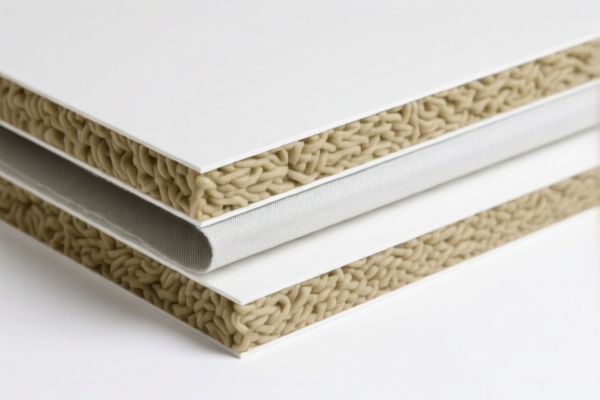
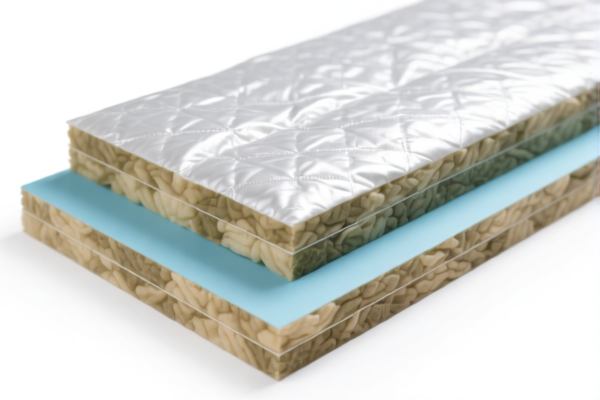
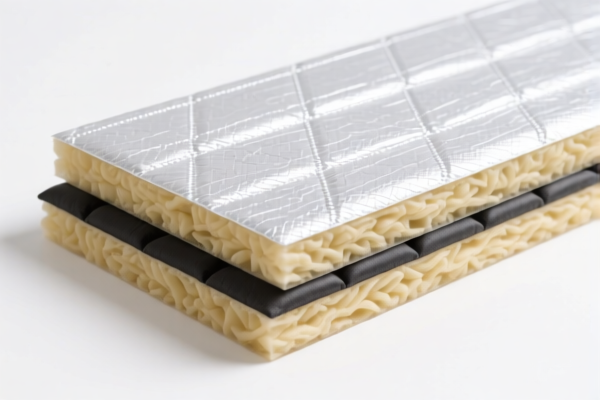
polyurethane textile composite insulation board
CN → US| HS Code | Tariff Rate | Origin | Destination | Doc |
|---|---|---|---|---|
| 3921131500 | 41.5% | CN | US | Official Doc |
| 6810990080 | 35.0% | CN | US | Official Doc |
| 6810195000 | 38.9% | CN | US | Official Doc |
| 3921131950 | 40.3% | CN | US | Official Doc |
| 5903202000 | 35.0% | CN | US | Official Doc |
Product Images

AI Analysis
🏗️ Polyurethane Textile Composite Insulation Board
🌐 HS Code Reference & Customs Clearance Guide | 2024/2026 Tariff Analysis | Professional通关 Strategy
📌 I. Product Definition & Classification: Understanding the "Composite" Nature
Polyurethane Textile Composite Insulation Board is a specialized building material combining the thermal insulation properties of polyurethane foam with the structural reinforcement of textile materials. In international trade, this product falls under complex classification rules due to its multi-material composition. It is neither purely a plastic product nor purely a textile, but a composite where the manufacturing process and material dominance determine the HS Code.
⚠️ Key Distinction Point:
- If the board is primarily polyurethane (plastic) with textile reinforcement → Likely Chapter 39 (Plastics).
- If the board is primarily textile impregnated/coated with polyurethane → Likely Chapter 59 (Textile Impregnated Products).
- If the board is considered a mineral/concrete-based composite (less likely for PU, but possible in some definitions) → Chapter 68 (Mineral Products).
📦 II. HS Code Classification Details (Based on Provided Data)
The provided data suggests five potential HS Codes for this product. Below is the detailed breakdown of why each code applies and the associated tax implications.
| HS Code | Product Description & Rationale | Total Tax Rate | Tax Breakdown |
|---|---|---|---|
| 3921.13.15.00 | Primary Plastic Composite: Classified as "Polyurethane textile composite building board." It is viewed as a plastic plate/sheet/board where polyurethane is the essential character, reinforced by textile. | 41.5% | Base: 6.5% +25% (Section 301) +10% (Section 122) |
| 6810.99.00.80 | Mineral/Concrete Alternative: Inferentially classified under "Cement, concrete, or artificial stone articles" as other non-specific quartz-aggregate boards. This is a less common but possible classification if the board mimics concrete properties or contains mineral fillers. | 35.0% | Base: 0.0% +25% (Section 301) +10% (Section 122) |
| 6810.19.50.00 | Mineral/Concrete Basic: Classified under "Cement, concrete, or artificial stone articles" based on material and form characteristics. Assumes the PU acts as a binder for a mineral-like composite. | 38.9% | Base: 3.9% +25% (Section 301) +10% (Section 122) |
| 3921.13.19.50 | General Plastic Plate/Sheet: Classified under "Polyurethane, plates, sheets, film, foil, and strip." Focuses on the polyurethane material and plate form, with textile reinforcement as a secondary feature. | 40.3% | Base: 5.3% +25% (Section 301) +10% (Section 122) |
| 5903.20.20.00 | Textile Impregnated: Classified under "Textile fabrics impregnated, coated, covered or laminated with plastics." Polyurethane matches the plastic requirement, and textile composite matches the impregnation/coating form. Building use is the downstream application. | 35.0% | Base: 0.0% +25% (Section 301) +10% (Section 122) |
🔍 Critical Note:
- Chapter 39 Codes (3921...): Apply if the board is predominantly plastic (polyurethane) with textile reinforcement.
- Chapter 59 Code (5903...): Apply if the textile is the essential character, and PU is just a coating/impregnation.
- Chapter 68 Codes (6810...): Apply only if the product is redefined as a mineral/concrete composite (rare for pure PU boards, but possible in specific industrial contexts).
💰 III. 2024/2026 Tariff Rate Details (Including Additional Taxes)
✅ Applicable Country: USA (US)
✅ Origin: China (CN)
✅ Effective Time: Ongoing (Section 301 and Section 122 tariffs apply)
🎯 1. 3921.13.15.00 & 3921.13.19.50 —— Plastic Composite Boards
| Item | Details |
|---|---|
| Base Duty Rate | 5.3% - 6.5% (Ad Valorem) |
| Section 301 Duty | +25.0% (Additional Tariff for Chinese origin) |
| Section 122 Duty | +10.0% (Additional Tariff for specific plastic/mineral products) |
| Total Duty Rate | 40.3% - 41.5% |
| Tax Calculation | CIF Value × Total Rate |
| De Minimis Exemption | ❌ Not Applicable (High rates prevent de minimis clearance) |
| Legal Basis Path | USITC:3921.13.15.00 → FOOTNOTE:301 + FOOTNOTE:122 |
📌 Explanation:
- The 25% Section 301 tariff is the standard penalty for Chinese plastic products.
- The 10% Section 122 tariff applies to certain plastic and mineral goods, further increasing the cost.
- Total 40.3% - 41.5% is a significant cost factor. Pre-classification is crucial to avoid overpayment or underpayment.
🎯 2. 6810.99.00.80 & 6810.19.50.00 —— Mineral/Concrete-Like Boards
| Item | Details |
|---|---|
| Base Duty Rate | 0.0% - 3.9% (Ad Valorem) |
| Section 301 Duty | +25.0% |
| Section 122 Duty | +10.0% |
| Total Duty Rate | 35.0% - 38.9% |
| Tax Calculation | CIF Value × Total Rate |
| De Minimis Exemption | ❌ Not Applicable |
| Legal Basis Path | USITC:6810.xxxx.xxxx → FOOTNOTE:301 + FOOTNOTE:122 |
📌 Note:
- These codes have lower base rates (0-3.9%) compared to Chapter 39.
- However, the 25% + 10% additional tariffs remain the same.
- Total 35.0% - 38.9% is still high, but slightly lower than Chapter 39 options.
- Risk: Misclassification from "Plastic" to "Mineral" without proper documentation can lead to customs penalties.
🎯 3. 5903.20.20.00 —— Textile Impregnated Board
| Item | Details |
|---|---|
| Base Duty Rate | 0.0% (Ad Valorem) |
| Section 301 Duty | +25.0% |
| Section 122 Duty | +10.0% |
| Total Duty Rate | 35.0% |
| Tax Calculation | CIF Value × 35.0% |
| De Minimis Exemption | ❌ Not Applicable |
| Legal Basis Path | USITC:5903.20.20.00 → FOOTNOTE:301 + FOOTNOTE:122 |
📌 Key Insight:
- This is the lowest total tariff (35.0%) among all options.
- Requirement: The product must be clearly defined as a textile fabric that has been impregnated, coated, or laminated with polyurethane. The textile must be the essential character.
- Caution: If the board is thick and rigid, CBP may argue it is a "plastic plate" (Chapter 39) rather than a "textile fabric" (Chapter 59).
🛠️ IV. Customs Clearance Practical Advice (Pitfall Avoidance Guide)
✅ 1. Documentation Checklist (Essential for Clearance)
| Document | Required? | Description |
|---|---|---|
| ✅ Product Specification Sheet | ✔️ | Must detail material composition (PU %, Textile %), thickness, density, and thermal conductivity. |
| ✅ Material Safety Data Sheet (MSDS) | ✔️ | Required for polyurethane-based products. |
| ✅ Product Photos | ✔️ | Clear images showing cross-section, surface texture, and any textile reinforcement. |
| ✅ Commercial Invoice | ✔️ | Must clearly state "Polyurethane Textile Composite Insulation Board" and HS Code. |
| ✅ Packing List | ✔️ | Detail net/gross weight and dimensions. |
| ✅ Certificate of Origin | ✔️ | Essential for verifying Chinese origin and applying Section 301/122 tariffs. |
| ✅ Third-Party Test Report | ✔️ | Optional but recommended: Show fire rating (e.g., UL94), tensile strength, and insulation value. |
✅ 2. Classification Strategy (Key Tips)
🔥 "Material Dominance Determines Chapter!"
| Scenario | Recommended HS Code | Reason |
|---|---|---|
| PU is dominant, textile is reinforcement | 3921.13.15.00 or 3921.13.19.50 |
Plastic chapter applies when plastic is the essential character. |
| Textile is dominant, PU is coating | 5903.20.20.00 |
Textile chapter applies when textile is the essential character. |
| Board mimics concrete/mineral | 6810.99.00.80 or 6810.19.50.00 |
Only if mineral fillers are present and define the character. |
⚠️ Warning:
- Do not arbitrarily choose5903.20.20.00for lower taxes if the product is structurally a plastic board. CBP may challenge this and apply higher duties + penalties.
- Accurate description is key: "PU-coated textile fabric" vs. "PU foam board with textile lamination."
✅ 3. Special Cases
| Case | Handling Advice |
|---|---|
| OEM/Custom Boards | Provide design drawings showing material layers. |
| Fire-Rated Boards | Ensure fire retardant additives are declared; may affect classification if they change material character. |
| Mixed Containers | If shipped with other goods, ensure PU textile boards are clearly separated in documentation. |
🌍 V. Global Market Comparison (2024/2026)
| Country/Region | Recommended HS Code | Base Duty | Additional Taxes | Total Rate | Notes |
|---|---|---|---|---|---|
| 🇺🇸 USA | 3921.13.15.00 |
6.5% | +25% (301) +10% (122) | 41.5% | Highest rate; strict classification. |
| 🇺🇸 USA | 5903.20.20.00 |
0.0% | +25% (301) +10% (122) | 35.0% | Lowest rate if textile character is proven. |
| 🇨🇳 China | 3921.13.15.00 |
6.5% | None | 6.5% | No additional tariffs for domestic imports. |
| 🇪🇺 EU | 3921.13.00 |
6.5% | None | 6.5% | No Section 301/122 equivalents. |
📌 Conclusion:
- USA is the most challenging market due to Section 301 and 122 tariffs.
- China and EU offer significantly lower duty rates.
- Strategy: For US imports, strive to justify5903.20.20.00(35.0%) over3921.13.15.00(41.5%) if technically accurate.
📌 VI. Common Errors & Pitfalls (Lessons Learned)
❌ Error 1: Classifying as 5903.20.20.00 without proving textile dominance.
👉 Consequence: CBP reclassifies to 3921.13.15.00 → 6.5% extra duty + penalties.
❌ Error 2: Ignoring Section 122 tariffs.
👉 Consequence: Underpayment of 10% → Audit risk and back taxes.
❌ Error 3: Incomplete product description ("Insulation Board" only).
👉 Consequence: CBP lacks information to classify → Delays or hold.
❌ Error 4: Using "Plastic Board" for a textile-dominated product.
👉 Consequence: Higher tax rate (41.5% vs 35.0%) unnecessarily.
✅ Correct Approach:
"Polyurethane-coated textile composite insulation board, 50mm thick, textile reinforcement, fire-rated, for building insulation."
🎯 VII. Conclusion: Precision Classification Saves Money!
🎯 Remember the Mantra:
🔹 "Textile Dominant = 5903 (35%);
🔹 "Plastic Dominant = 3921 (41.5%);
🔹 "Mineral-Like = 6810 (35-39%).
🔹 "Chapter 59 is the sweet spot if valid!"
📌 Pro Tip:
If your product is borderline between Chapter 39 and Chapter 59, consider applying for a Customs Ruling (Binding Ruling) before shipment. This provides legal certainty and avoids post-clearance audits.
📣 Immediate Action:
📞 Consult a licensed customs broker.
📄 Provide detailed material composition and manufacturing process.
🚀 Optimize HS Code classification to minimize tariff costs!
✨ Professional Customs Clearance Starts with Accurate Classification!
💼 Every Percentage Point Saved is Pure Profit!
Customer Reviews
About HS Code Classification
The Harmonized System (HS) is an internationally standardized nomenclature developed by the World Customs Organization (WCO) to classify traded products. Over 200 countries use the HS system as the basis for customs tariffs, trade statistics, and import/export regulations.
Each HS code follows a hierarchical structure:
- Chapter (2 digits) — Broad category of goods (e.g., Chapter 84: Machinery and Mechanical Appliances)
- Heading (4 digits) — More specific grouping within the chapter
- Subheading (6 digits) — Internationally standardized breakdown, used by all WCO member countries
- National subdivisions (8-10 digits) — Country-specific extensions for further classification, such as US HTSUS 10-digit codes
Correct HS code classification is essential for smooth customs clearance, accurate duty payment, and compliance with trade regulations. Misclassification can lead to customs delays, overpayment of duties, or penalties.
When importing from CN to US, the applicable tariff rates may include:
- Most-Favored-Nation (MFN) rate — The standard duty rate applied to WTO members
- General rate — Applied to countries without trade agreements
- Trade remedy duties — Additional tariffs such as Section 301 (anti-dumping), Section 232 (national security), or countervailing duties
The information provided on this page is for reference purposes only. For official classification, please consult with your local customs authority or a licensed customs broker.